Summary:
Why School Scoliosis Screenings Miss Early Warning Signs
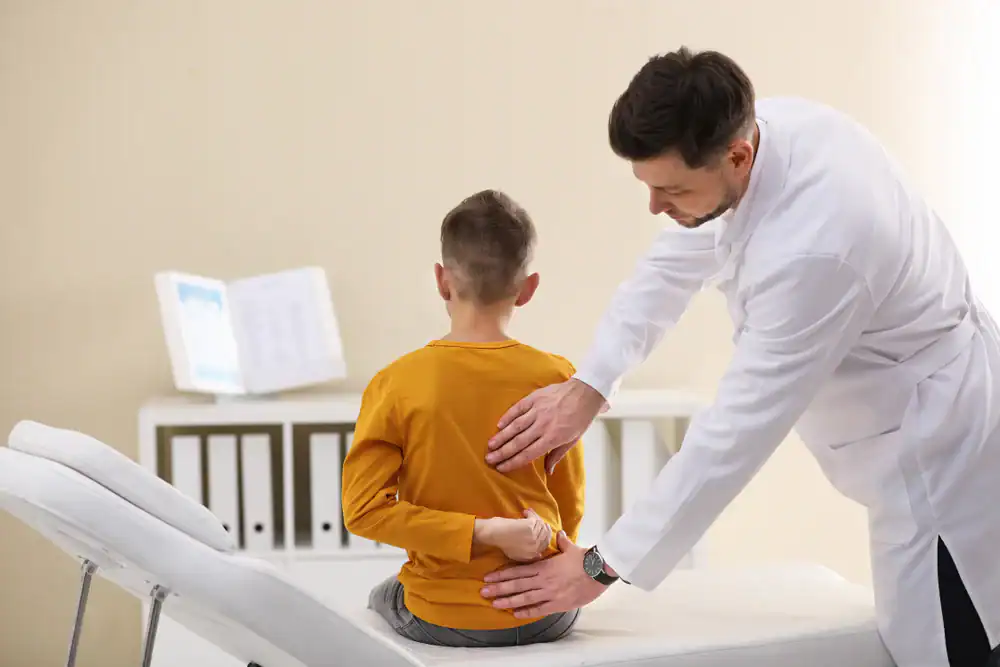
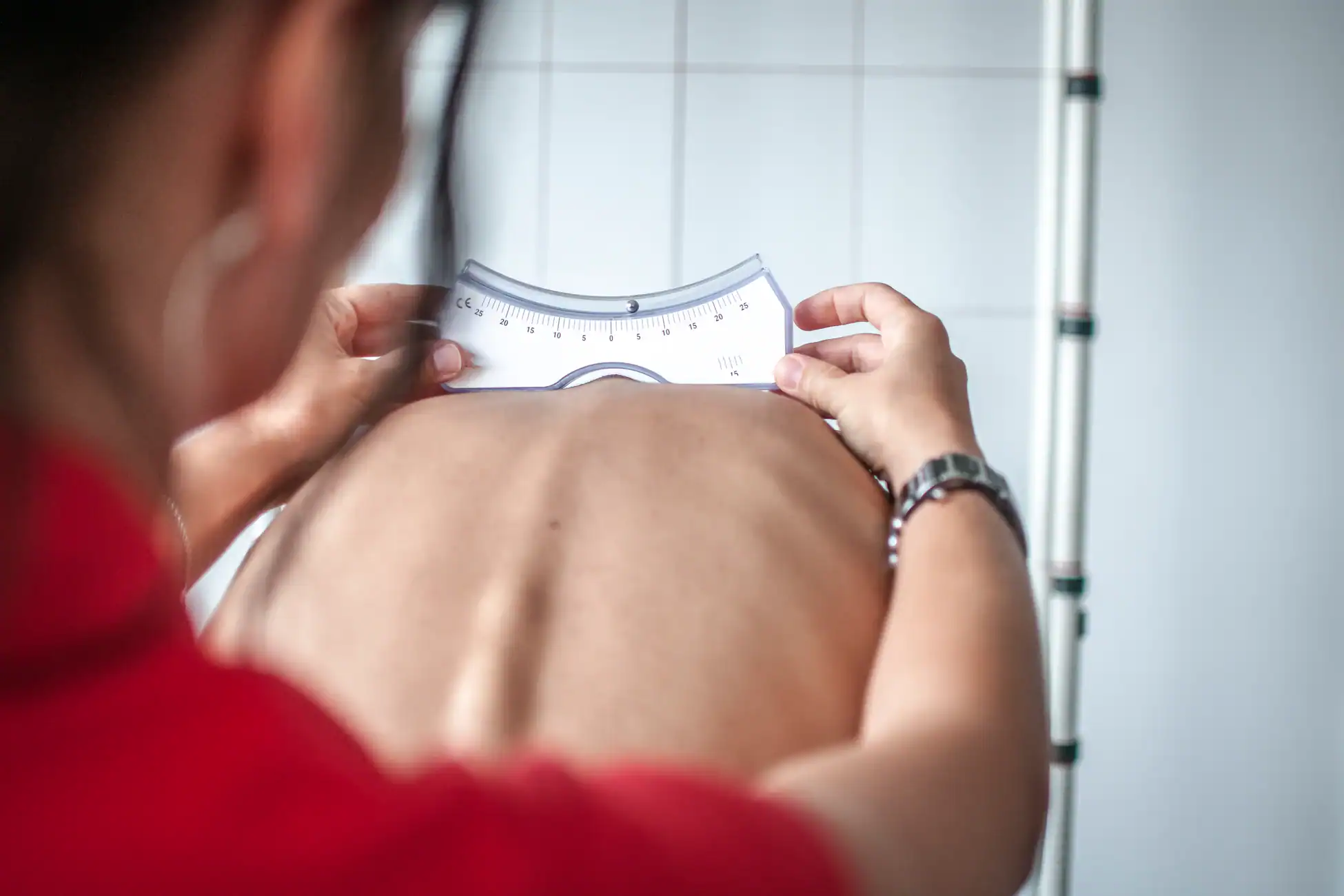
School scoliosis screenings sound thorough. A nurse checks your child’s back, maybe asks them to bend forward, looks for obvious asymmetry. Done in under two minutes.
The problem isn’t effort. It’s the method. These screenings rely heavily on visual assessment and the skill level of whoever’s doing the check. Some schools have one nurse for every 700 students. Others stretch that to 2,000 kids per nurse. There’s no national standard for training or technique.
Research shows these quick screenings produce a lot of false positives—kids flagged who don’t actually have scoliosis. But they also produce false negatives. Subtle curves, especially in early stages, get missed entirely because they don’t create obvious visual changes yet. By the time those curves become noticeable, you’ve lost valuable time.
How Screen Time Is Changing the Scoliosis Picture
Here’s where things get complicated. Kids in Hudson County, like everywhere else, are spending massive amounts of time on devices. The average 8 to 12-year-old logs four to six hours daily on screens. Most of that time, they’re sitting in a slouched position, head tilted down.
This posture puts serious stress on developing spines. Forward head posture, neck discomfort, increased spinal loading—all documented in recent studies on children and screen time. What’s tricky is that these postural issues can create asymmetries that look like scoliosis during a quick screening, or they can mask actual scoliosis by creating competing visual patterns.
Research is now showing a potential link between excessive screen time and increased scoliosis risk, particularly when kids spend more than two hours daily on devices. The mechanism isn’t fully understood yet, but the correlation is there. Poor posture from screens can aggravate existing curves or create muscular imbalances that affect spinal alignment.
For parents, this creates a confusing situation. Your child’s shoulders are uneven—is that from six hours of iPad use, or is it the start of a structural curve? A two-minute school screening can’t answer that question. You need someone who understands pediatric spinal development, who can differentiate between postural dysfunction and true scoliosis, and who has time to actually assess what’s happening.
That’s not a criticism of school nurses. They’re doing their best with limited time and resources. It’s just reality.
What Happens When Scoliosis Goes Undetected During Growth Spurts
Timing matters more than most parents realize. Scoliosis doesn’t progress at a steady rate. It accelerates during growth spurts, which typically happen between ages 9 and 13 for girls, and 12 to 16 for boys.
During these periods, some kids’ curves progress at more than one degree per week. That’s not a typo. One degree per week. A mild 15-degree curve that wasn’t caught early can become a 30 or 40-degree curve in just a few months if it coincides with rapid growth.
Once a curve reaches certain thresholds, your options narrow. Curves under 25 degrees can often be managed with observation, specific exercises, or minimal intervention. Curves between 25 and 45 degrees typically require bracing—a rigid back brace your child wears 18-plus hours daily for years. Curves over 45 to 50 degrees often mean surgery is the only option left.
Here’s the part that keeps orthopedic specialists up at night: mild scoliosis doesn’t hurt. Your child won’t complain. They won’t know anything’s wrong. The condition progresses silently, and by the time visual signs are obvious enough for a parent to notice, you’re often already past the easiest intervention window.
Girls face additional risk. They’re seven to eight times more likely than boys to develop progressive curves. If your daughter has a family history of scoliosis, even a distant relative, her risk increases further.
Early detection—real, thorough early detection—gives you the widest range of treatment options. It lets you intervene when curves are small and more responsive to conservative care. It potentially helps you avoid bracing altogether, or at minimum, reduces how long bracing is needed. Most importantly, it can help you avoid surgery.
But you can’t detect what you’re not looking for carefully enough.
Want live answers?
Connect with a DR Roses expert for fast, friendly support.
What We Look for During Scoliosis Screening
We approach spinal screening differently than a school nurse with 200 kids to check in an afternoon. Our exam is thorough, hands-on, and designed specifically for growing bodies.
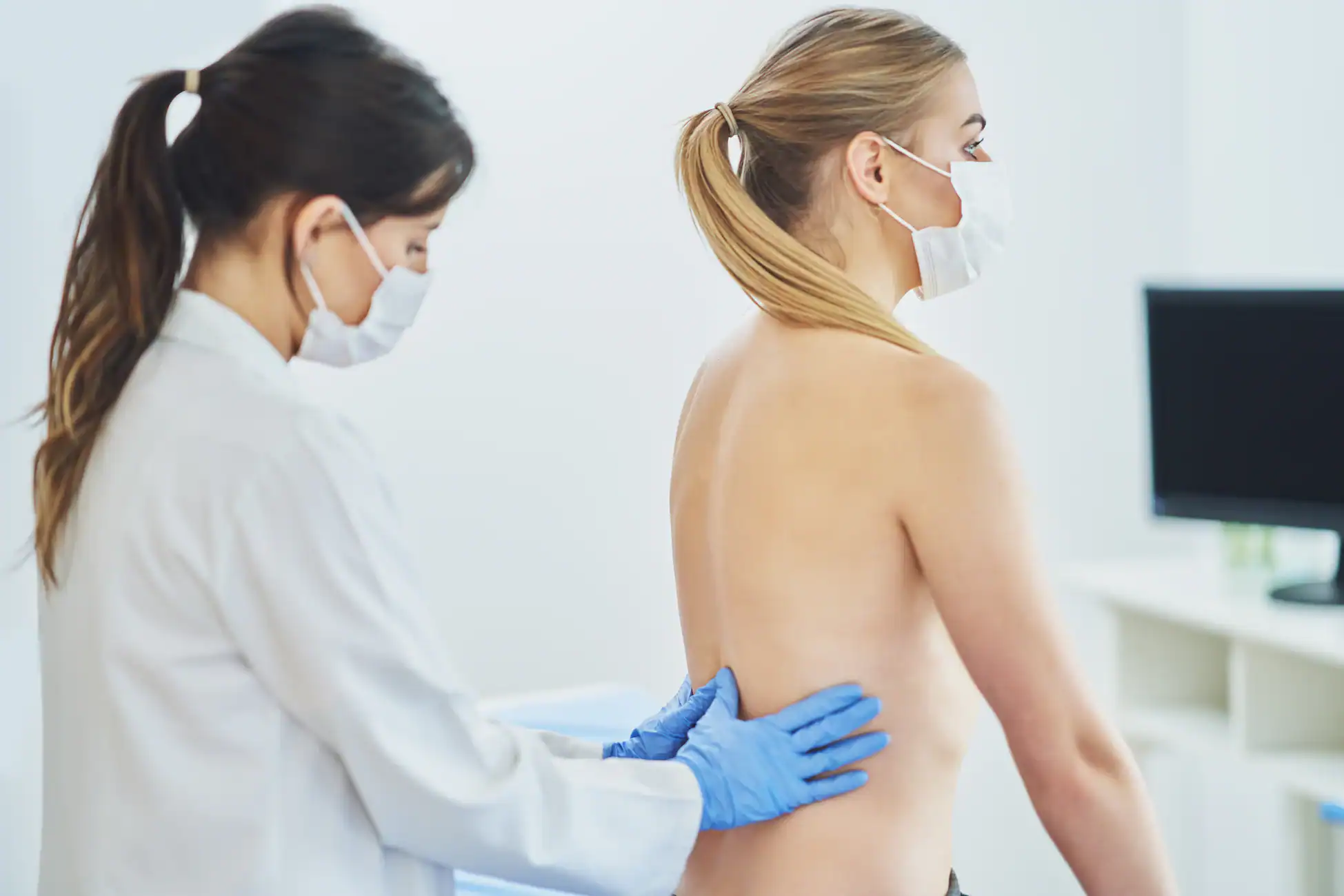
You’re looking at a detailed postural assessment from multiple angles. We check shoulder height, hip alignment, how your child’s head sits relative to their pelvis. We palpate the spine, feeling for rotation or asymmetry that isn’t visible to the eye. We watch how your child moves, stands, and bends.
This isn’t a two-minute visual check. It’s a comprehensive evaluation that can differentiate between muscular imbalances from poor posture and actual structural spinal curvature. That distinction matters enormously for treatment planning.
Signs of Scoliosis in Kids That Parents Can Monitor at Home
You don’t need to wait for a screening to start paying attention. There are specific things you can watch for at home, especially if your child is approaching or in the middle of a growth spurt.
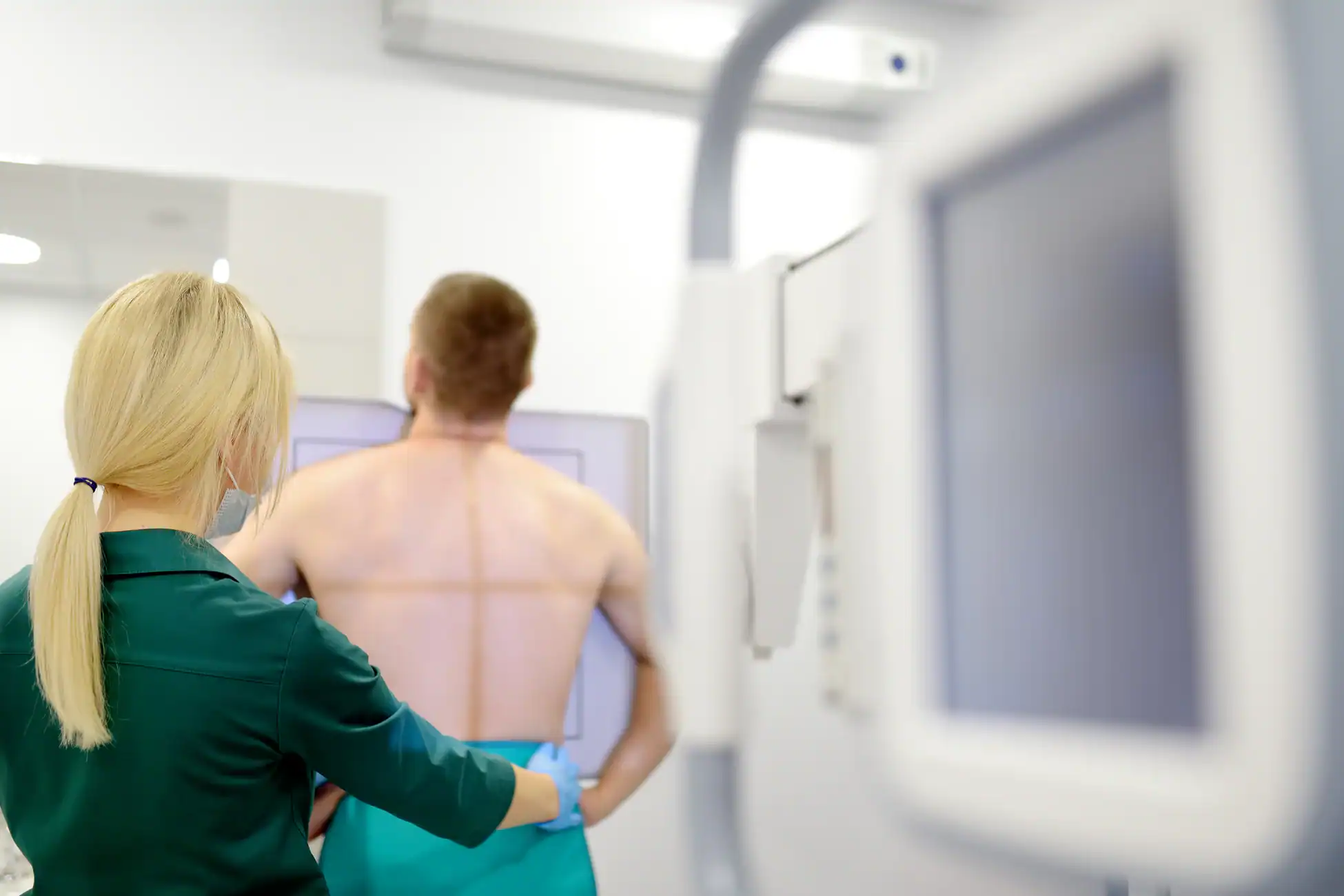
Have your child stand normally, arms at their sides, and look from behind. Are their shoulders level, or does one sit noticeably higher? Check the shoulder blades—does one stick out more prominently than the other? Look at their waistline. Does one side appear higher, or is there more space between their arm and body on one side?
Now have them bend forward at the waist, arms hanging down, as if they’re trying to touch their toes. Look at their back from behind. Do you see a hump or raised area on one side of the rib cage or lower back? That’s called a rib hump, and it’s one of the clearer signs of scoliosis with rotation.
Check their hips. When they’re standing straight, is one hip visibly higher than the other? Does their head tilt to one side, or does it not center over their pelvis?
These observations don’t diagnose scoliosis. But they tell you it’s time for a professional evaluation. Catching these signs early, before they become pronounced, is exactly the window you’re aiming for.
Also pay attention to complaints that seem minor. Back fatigue after sitting in class. One-sided discomfort. Clothes that fit unevenly. Kids often don’t connect these things to a spinal issue, so they might mention them casually or not at all. You have to listen for the subtle cues.
How Early Intervention Changes the Trajectory for Kids with Scoliosis
Let’s talk about what happens when you catch scoliosis early versus late. The difference in outcomes is significant.
When a curve is detected at 15 or 20 degrees in a child who still has years of growth ahead, you have options. Specific exercises can strengthen supporting muscles and improve spinal mechanics. Postural training can address contributing factors like screen time habits. Close monitoring lets you track whether the curve is stable or progressing, and intervene the moment it starts moving in the wrong direction.
If bracing becomes necessary, starting early with a smaller curve means better correction potential. Studies show that bracing can reduce progression to the surgical threshold by a significant margin when initiated at the right time and worn consistently. The success rate for bracing in adolescent idiopathic scoliosis is around 72% when compliance is good—meaning nearly three out of four kids avoid surgery.
But here’s the catch: that success rate drops dramatically when bracing starts late or when the initial curve is already large. For curves over 46 degrees, brace effectiveness plummets. At that point, you’re looking at a 94% progression rate, meaning the brace is mostly just buying time until surgery.
Early intervention also matters for your child’s quality of life during treatment. A younger child wearing a brace for a 20-degree curve might need it for two or three years. A child whose 40-degree curve wasn’t caught until age 14 might need that brace through the rest of high school, during some of the most socially sensitive years of their life.
Surgery, when it becomes necessary, is more complex and carries more risk when curves are severe. Straightening a 60-degree curve requires more extensive spinal fusion than correcting a 50-degree curve. Recovery is longer. The impact on spinal mobility is greater.
None of this is meant to catastrophize. Most kids with scoliosis do fine. But the ones who do best are almost always the ones whose curves were found early and managed proactively. That’s not luck. That’s the result of thorough screening and timely action.
Taking the Next Step for Your Child's Spinal Health in Hudson County
School screenings serve a purpose, but they’re not designed to catch everything. If your child is approaching a growth spurt, spending hours daily on screens, or showing any subtle signs of asymmetry, waiting for the next school check isn’t a strategy.
A spinal and postural screening with us gives you a clearer picture. It’s thorough, it’s specific to your child’s developmental stage, and it can identify issues while they’re still manageable with non-invasive approaches.
You’re not looking for someone to tell you everything’s fine when it might not be. You’re looking for someone with the training and time to actually know the difference. We’ve been providing this type of care to Hudson County families for over 30 years, with a focus on catching problems early and supporting healthy development without drugs or surgery.
If you’ve been wondering whether your child’s posture is normal, or if that unevenness you noticed is something to worry about, now’s the time to find out. Before the next growth spurt. Before options narrow. While early intervention can still make the biggest difference.