
Hear from Our Customers

You’re not looking for temporary relief. You want to bend down without bracing yourself first. You want to sit through a meeting without shifting every few minutes. You want to wake up without that stiffness that takes twenty minutes to work through.
Spinal traction in Western Slope, NJ does something most treatments don’t—it creates space where your body needs it most. When compressed discs get decompressed, nutrients and oxygen flow back in. Nerves stop firing. Inflammation starts to settle.
That sciatic pain shooting down your leg? It’s usually nerve compression, and lumbar traction for sciatica in Western Slope, NJ addresses the root cause instead of masking symptoms. Same goes for neck pain—cervical traction for neck pain in Western Slope, NJ relieves pressure on cervical discs so your head doesn’t feel like it weighs fifty pounds by 3 PM.
Over 70% of patients experience significant pain relief with this approach. Not because it’s magic, but because it gives your body the conditions it needs to actually heal.
Dr. Paul Roses has been practicing chiropractic care in Hudson County since graduating from Life Chiropractic College over forty years ago. That’s not a sales point—it’s context for why we don’t oversell or overcomplicate things.
Western Slope has a workforce that sits most of the day. Professionals between 25 and 64 make up the majority of this area, and that demographic deals with more disc issues than almost any other. We see it constantly.
Our approach combines computer-controlled spinal decompression with chiropractic adjustments and targeted therapy. We’re not trying to be everything to everyone. We’re focused on spinal health, and we’ve built our practice around giving people in Western Slope, NJ access to the same advanced technology that used to only exist in surgical centers.
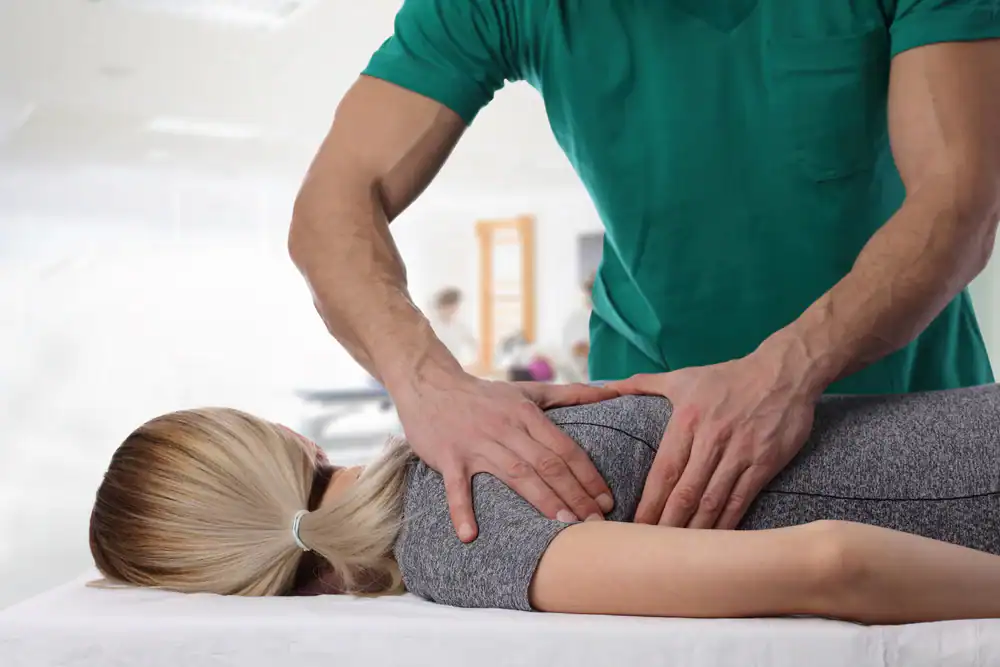
First, we do a baseline assessment. That includes imaging if needed and a conversation about what’s been going on—how long, how often, what makes it worse. We’re not guessing.
Then comes the actual spinal traction. You’re positioned on a computer-controlled table that applies gentle, motorized decompression to the specific area causing problems. Sessions last up to 45 minutes. The pull is gradual, controlled, and completely painless. It’s not a stretch—it’s decompression, which means creating negative pressure inside the disc so it can rehydrate and heal.
Most treatment plans in Western Slope, NJ run 5 to 7 weeks depending on severity. Some people feel relief after a few sessions. Others take longer. But the goal is always the same: get you off the table and back to your life without needing us anymore.
Between sessions, we might add adjustments or soft tissue work to support what the traction is doing. Everything works together, and nothing is random.
Ready to get started?
Mechanical spinal traction benefits in Western Slope, NJ extend to a range of conditions: herniated discs, bulging discs, sciatica, spinal stenosis, degenerative disc disease, pinched nerves, and chronic neck or back pain that hasn’t responded to other treatments.
If you’ve tried physical therapy, injections, or medications and you’re still dealing with pain, this is worth considering. It’s also an option if you’ve been told surgery is next but you want to exhaust non-invasive options first.
Western Slope residents deal with a specific kind of wear and tear. Long commutes into Manhattan. Desk jobs. Repetitive strain. According to CDC data, nearly 40% of adults experienced back pain in the past three months, and that number is even higher in areas with professional workforces like this one.
Non-surgical spinal decompression therapy in Western Slope, NJ gives you an alternative that doesn’t involve downtime, risk, or recovery. You can come in during lunch and go back to work the same day. That matters when you can’t afford to miss weeks for surgery or spend months in post-op rehab.
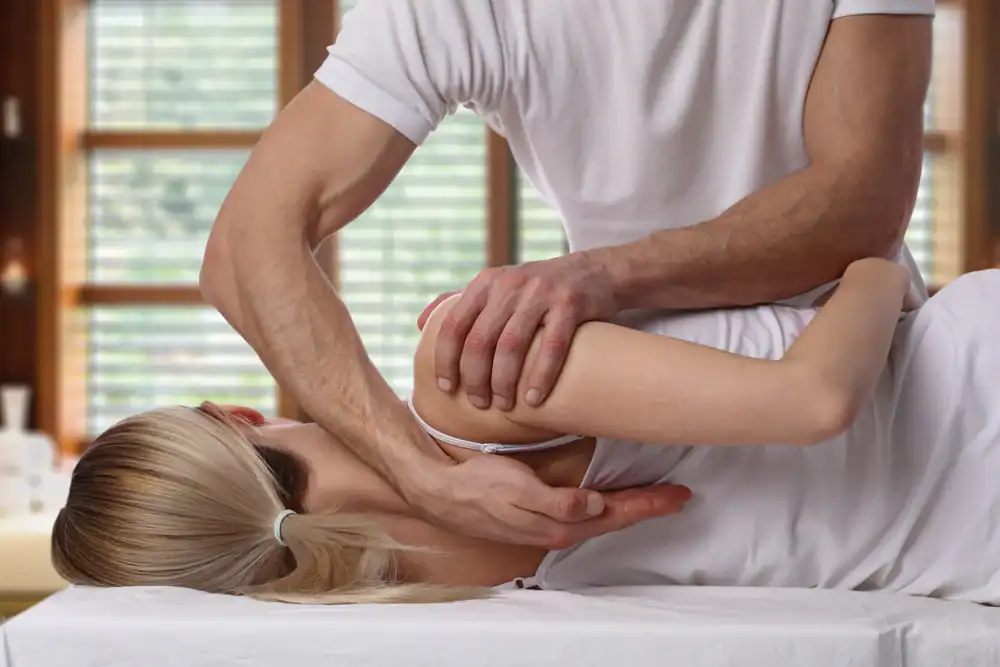
Physical therapy focuses on strengthening muscles, improving flexibility, and teaching movement patterns. That’s helpful, but it doesn’t directly address disc compression.
Spinal traction uses computer-controlled decompression to create negative pressure inside the disc itself. That allows water, nutrients, and oxygen to flow back into areas that have been starved of circulation. It’s a mechanical intervention, not just exercise or manual manipulation.
Research shows that mechanical spinal traction produces significantly better outcomes for disc-related pain than conventional physical therapy alone. You’re not choosing one over the other—they work well together. But if the root issue is a compressed or herniated disc, traction addresses that in a way stretching and strengthening can’t.
Most patients complete a treatment plan over 5 to 7 weeks and then transition to maintenance care or stop altogether. This isn’t something you do indefinitely.
The goal is to decompress the disc enough that your body’s natural healing process can take over. Once pressure is off the nerve and the disc is rehydrated, inflammation decreases and pain subsides. At that point, you might continue with periodic adjustments or exercises to maintain spinal health, but the intensive traction phase ends.
Some people come back if they reinjure themselves or if degenerative changes progress over time. But that’s not the norm. The majority of patients in Western Slope, NJ finish their plan and move on without needing ongoing decompression.
It doesn’t hurt. Most people describe it as a gentle pulling sensation—some even fall asleep during sessions.
The table uses computerized controls to apply traction in a very gradual, measured way. There’s no sudden jerking or cracking. You’re strapped in securely, and the machine does all the work. The pressure cycles on and off throughout the session to prevent muscle guarding, which is your body’s natural response to sustained pulling.
If at any point something feels off, you can stop the session. But that’s rare. The treatment is designed to be comfortable enough that your nervous system stays relaxed, which is necessary for the decompression to work. Tension defeats the purpose.
Yes, in many cases. Some people develop scar tissue or adjacent segment degeneration after spinal surgery, and non-surgical decompression can address those issues without another operation.
That said, it depends on what type of surgery you had and how your spine responded. If you have hardware, fusion, or significant structural changes, we’ll need imaging and a thorough evaluation before moving forward.
But the short answer is that spinal traction has helped plenty of people who had surgery that didn’t fully resolve their pain. It’s not a guarantee, but it’s worth exploring if you’re trying to avoid a second procedure or if your surgeon has told you there’s nothing else they can do.
Some people feel better after three or four sessions. Others take a few weeks. It’s not instant, but it’s also not a months-long guessing game.
A lot depends on how long you’ve been dealing with the problem and how severe the compression is. Acute injuries tend to respond faster than chronic degeneration. But even long-term issues can improve—it just takes more time for the disc to rehydrate and for inflammation to calm down.
We track progress throughout your treatment plan. If you’re not seeing any improvement after a reasonable number of sessions, we’ll reassess and adjust the approach. The goal is measurable relief, not just hoping things get better on their own.
Coverage varies depending on your plan. Some insurance companies cover spinal decompression under chiropractic care, while others don’t. We recommend calling your provider with the specific CPT codes we use so you know what to expect.
We can provide documentation and work with your insurance company if pre-authorization is required. But even if it’s not fully covered, many patients find the out-of-pocket cost is still less than surgery, ongoing medications, or repeated injections that only provide temporary relief.
If cost is a concern, talk to us. We’d rather have an honest conversation up front than have you avoid treatment because you’re not sure what it’ll cost. Payment plans and financing options are available for patients in Western Slope, NJ who need them.