
Hear from Our Customers
Your back pain isn’t just annoying. It’s limiting what you can do with your kids, how you sleep, whether you can work without wincing every time you stand up.
Spinal traction in West Side, NJ works by creating space between compressed vertebrae. That space lets herniated discs retract, takes pressure off pinched nerves, and allows nutrient-rich fluid back into areas that have been starved of it. The result isn’t just less pain—it’s actual healing at the source.
Most people notice they can move differently within the first few sessions. Bending doesn’t hurt. Sitting through dinner becomes normal again. You’re not planning your day around your back anymore.
This is mechanical spinal traction benefits in action: targeted, measurable, and designed to let your body do what it’s been trying to do all along—heal itself. No prescriptions. No incisions. Just consistent, progressive relief that builds over time.
Dr. Paul Roses has been practicing in Hudson County since 1981. That’s four decades of treating real people with real pain—not just adjusting spines, but understanding how chronic discomfort reshapes your entire life.
West Side, NJ is home to working families, young professionals, and active adults who don’t have time to be sidelined by back or neck pain. We know that. Our approach combines advanced spinal decompression technology with the kind of straightforward care that comes from decades of clinical experience.
You’re not getting a one-size-fits-all adjustment here. You’re getting a treatment plan built around what’s actually wrong, what your body needs to heal, and how quickly you need to get back to normal life.
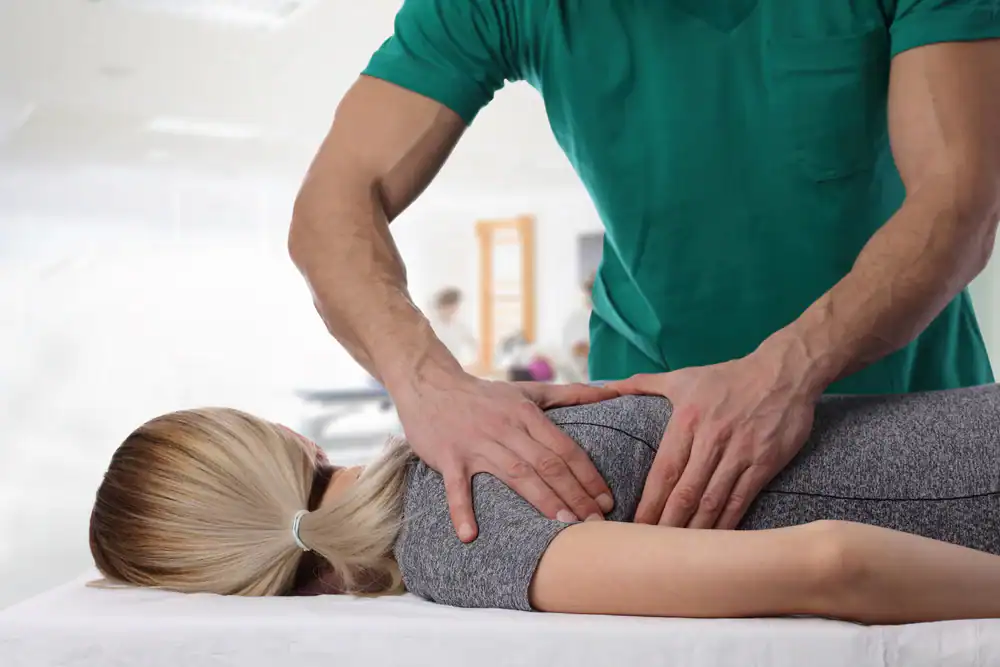
You’ll start with a full evaluation. We need to understand where the pain is coming from—whether it’s a herniated disc, sciatica, degenerative disc disease, or nerve compression. That determines how the traction is applied and what results you can expect.
During the session, you’re positioned on a specialized table that applies controlled, gentle traction to your spine. For lumbar traction for sciatica in West Side, NJ, the focus is on your lower back. For cervical traction for neck pain in West Side, NJ, it’s your neck. The machine creates negative pressure between your vertebrae, which pulls herniated or bulging disc material back into place and increases blood flow to the area.
Each session lasts about 20 to 30 minutes. You’re awake, comfortable, and some people even fall asleep. There’s no downtime after—you walk out and go back to your day.
Most treatment plans involve multiple sessions over several weeks. That’s because real healing takes time. But the pain relief? That often starts much sooner. You’ll know within the first few visits whether this is working for you.
Ready to get started?
Spinal traction in West Side, NJ is effective for herniated discs, bulging discs, sciatica, pinched nerves, degenerative disc disease, and chronic neck or back pain that hasn’t responded to other treatments. If you’ve been told surgery is your only option, this is worth exploring first.
Hudson County has a median age of 35.8, which means a lot of active people dealing with pain that’s slowing them down too early. Whether you’re lifting at work, chasing kids around, or just trying to get through a workout without your back locking up, non-surgical spinal decompression therapy in West Side, NJ gives you an option that doesn’t involve going under the knife.
The treatment also works well for people who’ve tried physical therapy, injections, or medications and found only temporary relief. Traction addresses the mechanical problem—the physical compression and misalignment—so the improvements tend to last longer.
We also incorporate targeted exercises into your care plan. These aren’t generic stretches. They’re designed specifically for your condition to strengthen the muscles supporting your spine and prevent future injuries. You can do them at home, and they make a real difference in how quickly you recover.
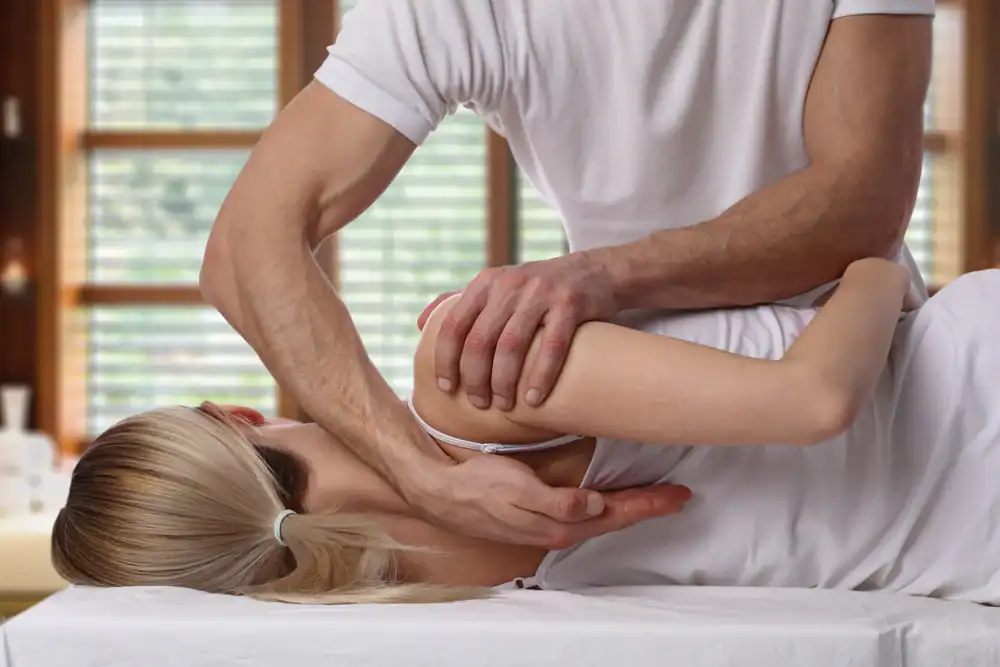
A chiropractic adjustment realigns the vertebrae and restores joint mobility. Spinal traction, or non-surgical spinal decompression therapy, goes a step further by creating space between the vertebrae using controlled mechanical force.
That space is what allows herniated discs to retract, reduces pressure on compressed nerves, and improves circulation to damaged areas. Adjustments are often part of the treatment plan, but traction specifically targets disc-related issues and nerve compression in a way that manual adjustments alone can’t.
If your pain is coming from a bulging disc or sciatica, traction is usually more effective because it directly addresses the root cause. We’ll evaluate your condition and determine whether spinal traction in West Side, NJ is the right approach for you, or if a combination of treatments makes more sense.
No. Most people find it relaxing. You’re lying on a comfortable table while the machine applies slow, controlled traction to your spine. There’s no jerking, no cracking, and no sudden movements.
Some patients feel a gentle stretch or mild pulling sensation, but it’s not painful. In fact, many people fall asleep during treatment because it’s so comfortable. If at any point something doesn’t feel right, you can stop the session immediately.
The goal is to relieve pain, not create more of it. We adjust the traction settings based on your tolerance and what your body needs. You’re in control the entire time, and the treatment is designed to feel therapeutic, not stressful.
It depends on your condition, how long you’ve been in pain, and how your body responds to treatment. Most people start feeling relief within the first few sessions, but lasting results usually require 12 to 20 sessions spread over several weeks.
Herniated discs and sciatica tend to respond well to lumbar traction for sciatica in West Side, NJ, but healing takes time. You’re not just masking symptoms—you’re giving damaged tissue the space and circulation it needs to repair itself.
We’ll give you a realistic timeline after your initial evaluation. Some patients feel significantly better after a handful of visits. Others need the full course of treatment to see maximum improvement. Either way, you’ll know early on whether it’s working for you, and the plan adjusts based on your progress.
Many insurance plans cover chiropractic care, including spinal traction, but coverage varies depending on your provider and policy. Some plans require a referral or prior authorization, while others cover it as part of standard chiropractic treatment.
We can help you verify your benefits before you start treatment. Our front desk staff will contact your insurance company, explain what the treatment involves, and let you know what’s covered and what your out-of-pocket cost might be.
Even if your insurance doesn’t fully cover it, non-surgical spinal decompression therapy in West Side, NJ is still significantly less expensive than surgery, ongoing pain medication, or repeated injections. You’re also avoiding the lost income and recovery time that comes with invasive procedures. It’s worth a conversation to understand your options.
Sometimes, yes. It depends on what type of surgery you had, how long ago it was, and whether you’re dealing with scar tissue, adjacent segment degeneration, or failed back surgery syndrome.
Spinal traction can be effective for people who’ve had surgery but are still experiencing pain or limited mobility. The decompression helps reduce pressure on areas that may have been affected by the surgery or that have deteriorated since.
We’ll review your surgical history and imaging during your evaluation. If traction is appropriate, we’ll design a treatment plan that takes your previous surgery into account. If it’s not the right fit, we’ll tell you that too and recommend other options. The goal is to help you move forward, not repeat what didn’t work.
Wear comfortable, loose-fitting clothing. You’ll be lying on a treatment table, so you want to be able to move easily without anything restrictive.
Bring any recent imaging—X-rays, MRIs, or CT scans—if you have them. That helps us see exactly what’s going on with your spine and tailor the treatment accordingly. If you don’t have imaging, that’s fine. We can order it if needed.
Be ready to talk about your pain: when it started, what makes it worse, what you’ve already tried, and how it’s affecting your daily life. The more specific you are, the better we can target the treatment to your situation. This isn’t a quick fix, but it’s a real one—and it starts with understanding exactly what you’re dealing with.