
Hear from Our Customers

You’re not looking for temporary relief that wears off by dinner. You want to bend down without wincing. Walk without that limp. Sleep through the night without repositioning every hour.
Non-surgical spinal decompression therapy in Waverly, NJ works by gently separating the vertebrae to reduce the pressure crushing down on your discs and nerves. That pressure is what’s causing the shooting pain down your leg, the stiffness in your lower back, the numbness in your toes.
When that compression eases, your body finally gets the chance to heal. Discs can rehydrate. Nerves stop firing pain signals. Blood flow returns to areas that have been starved of oxygen and nutrients for months or even years.
Most people notice they’re moving differently within the first few sessions. Not because we’re masking symptoms, but because the mechanical problem causing your pain is being addressed. You’ll feel less stiff getting out of bed. You’ll notice your range of motion improving when you reach for something or twist to look behind you.
This isn’t about learning to live with pain. It’s about removing what’s causing it so your body can do what it’s designed to do.
Dr. Paul Roses has been practicing in this area for over 30 years. That’s three decades of seeing what works, what doesn’t, and what people in Waverly, NJ actually need when they’re dealing with chronic back pain.
He’s not new to this. He’s seen patients who’ve tried other chiropractors for over a year with little progress. He’s worked with people whose pain management doctors recommended epidural shots just to mask the problem. He’s helped patients avoid surgery they were told was their only option.
Waverly residents deal with the same challenges many New Jersey communities face—long commutes, desk jobs, physical labor, aging infrastructure that keeps you on your feet. We understand that your back pain isn’t just about your spine. It’s about whether you can work, take care of your family, and live without constant discomfort.
Our approach is straightforward. No pressure to sign up for treatments you don’t need. No overselling. Just honest assessment and a clear plan based on what your body is telling us.
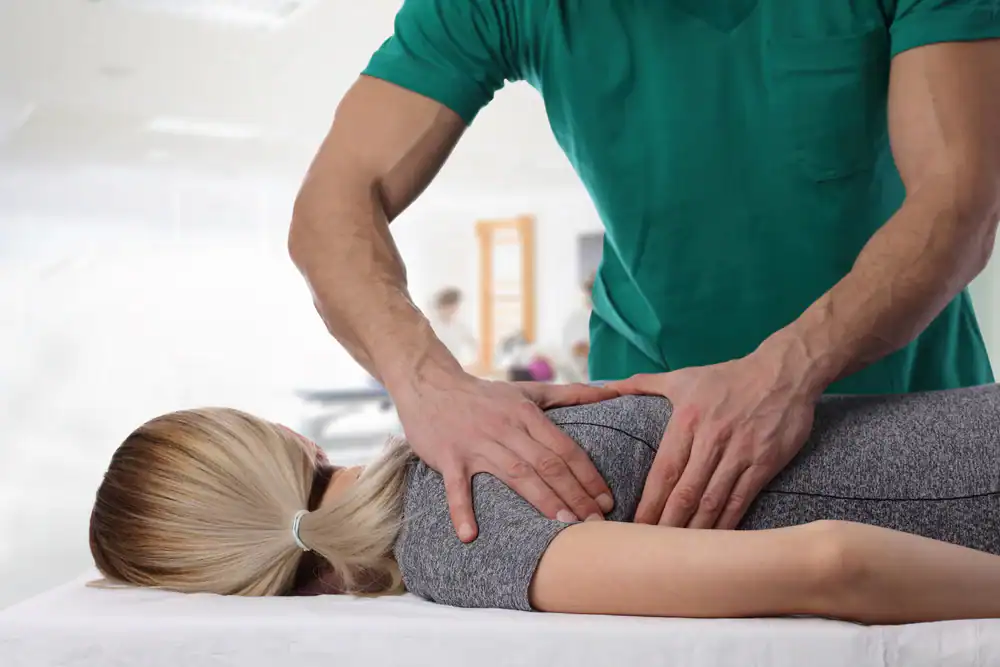
Your first visit starts with a diagnostic evaluation. We need to know which discs are involved, where the nerve compression is happening, and whether spinal traction is the right approach for your specific condition.
Once that’s clear, you’ll lie comfortably on a computerized traction table. This isn’t the old-school traction you might be picturing. Modern mechanical spinal traction uses gradual, controlled force that your muscles don’t fight against. The table applies gentle pulling force to specific segments of your spine—exactly where the problem is.
Each session typically lasts about 15 minutes. During that time, the traction creates negative pressure in your disc space. That negative pressure does two things: it takes compression off the nerves that are screaming at you, and it creates an environment where herniated or bulging disc material can start to retract.
You’re not going to feel a dramatic pop or sudden shift. What you’ll notice is that over the course of several treatments, things that hurt start to hurt less. Movements that were restricted start to open up. The constant background pain that’s been with you for months starts to fade.
Lumbar traction for sciatica in Waverly, NJ works the same way—by addressing the root cause of that shooting leg pain instead of just treating the symptoms. If your issue is in your neck, cervical traction for neck pain in Waverly, NJ uses the same principle applied to your upper spine.
Most patients need a series of treatments. How many depends on how severe your condition is and how long you’ve been dealing with it. Some people notice improvement after just a few visits. Others need more time for their body to respond and heal.
Ready to get started?
Mechanical spinal traction benefits in Waverly, NJ go beyond just pain relief. You’re getting a treatment that clinical research backs up—studies show it effectively reduces pain scores, improves disability ratings, and in many cases, actually decreases the size of herniated disc material visible on CT scans.
You’re getting a drug-free option. No prescriptions to fill, no side effects to manage, no dependency issues. Your body does the healing once the mechanical interference is removed.
You’re getting treatment that most insurance companies cover. This isn’t thousands of dollars out of pocket. For patients without insurance, payment plans are available so cost doesn’t keep you stuck in pain.
Here in Waverly, NJ, where nearly 40% of adults deal with back pain at some point, you need an approach that fits into your life. Sessions are quick—about 15 minutes. You’re not losing half your day sitting in a waiting room. We respect your time, with an average wait time that patients rate 4.83 out of 5.
You’re also getting treatment for multiple conditions. Spinal traction helps with herniated discs, bulging discs, degenerative disc disease, sciatica, pinched nerves, foraminal stenosis, and bone spurs. If your pain is coming from compression, this addresses it.
And you’re getting someone who follows up. Dr. Roses has been known to call patients later in the day to check on their progress. That’s not standard practice everywhere, but it matters when you’re trusting someone with your health.
Most people notice some improvement within the first few sessions, but everyone’s timeline is different. If you’ve been dealing with pain for months or years, your body needs time to respond and heal.
Some patients report feeling less stiff and moving better after just three treatments. Others need a couple of weeks before they notice significant changes. The key factor is how severe your disc herniation or nerve compression is when you start.
What you won’t get is an overnight miracle. Spinal traction works by creating the right conditions for your body to heal itself. That takes consistency. Plan on committing to the treatment schedule we recommend, and you’ll give yourself the best chance at lasting relief instead of just temporary improvement.
No. Old-school traction used constant, static pulling that often triggered your muscles to tighten up and resist. That’s why it didn’t work well for a lot of people.
Modern computerized spinal decompression uses intermittent traction with gradual force adjustments. The table applies and releases pressure in a controlled pattern that prevents your muscles from going into protective spasm. That’s the difference between your body fighting the treatment and actually accepting it.
The technology also allows us to target specific spinal segments. We’re not just pulling on your whole spine and hoping for the best. We can apply the right amount of force exactly where your discs need it, based on what your diagnostic evaluation shows.
It shouldn’t. Most patients describe it as a gentle pulling sensation or a feeling of stretch. Some people find it relaxing enough that they close their eyes during the session.
If you feel sharp pain or significant discomfort during traction, that’s a sign something needs to be adjusted. We can modify the force, the angle, or the targeted area to make sure you’re comfortable while still getting therapeutic benefit.
The goal is to reduce your pain, not add to it. Spinal traction is non-invasive and designed to be painless. What you might feel afterward is similar to the mild soreness you’d get after a good stretch—your body adjusting to the changes. That’s normal and typically fades quickly.
Most insurance companies do cover spinal decompression and traction therapy when it’s medically necessary. That means if you have a diagnosed condition like a herniated disc, sciatica, or degenerative disc disease, there’s a good chance your plan will cover at least part of the treatment.
The specifics depend on your individual policy, your deductible, and whether you need a referral. Our office can verify your coverage before you start treatment so you know what to expect.
For patients without insurance or those whose plans don’t cover the full cost, payment plans are available. The point is to make sure cost isn’t the reason you stay stuck in pain when there’s a treatment option that could help.
Yes, especially if your sciatica is caused by a herniated or bulging disc pressing on the nerve roots in your lower back. That’s the most common cause of sciatic nerve pain—compression at the spine level.
Lumbar traction works by creating space between your vertebrae and reducing the pressure on those nerve roots. When the compression eases, the inflammation settles down and the pain signals traveling down your leg start to decrease.
You might notice the leg pain improving before your back pain does, or vice versa. Everyone responds a little differently. But if your sciatica is mechanical—meaning it’s caused by physical compression rather than something like diabetes or a tumor—then addressing that compression with traction gives you a real shot at relief without injections or surgery.
Spinal traction is commonly used for bulging discs, degenerative disc disease, sciatica, pinched nerves, foraminal stenosis, and bone spurs. Basically, if your pain is coming from compression or pressure on your spinal structures, traction can help.
It’s also effective for chronic lower back pain that hasn’t responded to other treatments, neck pain caused by cervical disc issues, and radiating pain into your arms or legs. The key is that there’s a mechanical component—something physically pressing on nerves or discs that need space to heal.
We’ll evaluate whether your specific condition is a good fit for traction during your initial visit. Not every type of back pain responds to this treatment, and we’re not going to recommend it if it’s not right for you. But for the conditions it does treat, the clinical evidence shows it works—and works well.