

Hear from Our Customers

You’re not looking for temporary fixes or another prescription. You want to move without wincing. Sleep through the night. Get through your workday without that constant ache reminding you it’s there.
Non-surgical spinal decompression therapy in Washington Village, NJ creates negative pressure between your vertebrae. That pressure pulls herniated disc material back into place and allows nutrient-rich fluids to flow back in. Your discs rehydrate. Your nerves decompress. The shooting pain down your leg starts to fade.
Most people notice relief within a few sessions. Not because we’re masking symptoms, but because we’re addressing what’s actually wrong. Your spine gets the space it needs to function the way it should.
This matters in Washington Village, NJ, where 78% of workers sit at desks all day. That’s hours of compression on your lower back, day after day. Spinal traction reverses that damage without surgery, without months of recovery, and without the risks that come with going under the knife.
Dr. Paul Roses has been practicing chiropractic care in this area since 1981. That’s over 30 years of treating the exact conditions you’re dealing with right now.
After 9/11, he provided on-site care for fire and police department personnel. He’s seen what chronic pain does to people who can’t afford to slow down. He knows the difference between patients who need aggressive treatment and those who need a gentler approach.
Washington Village, NJ has one of the most diverse populations in Hudson County, with workers in everything from warehousing to finance. We treat them all. We’re not running you through a cookie-cutter protocol. We’re looking at your specific condition, your imaging, your pain patterns, and building a treatment plan that actually fits what’s wrong.
You’re not a number here. You’re someone who needs their back to work again.
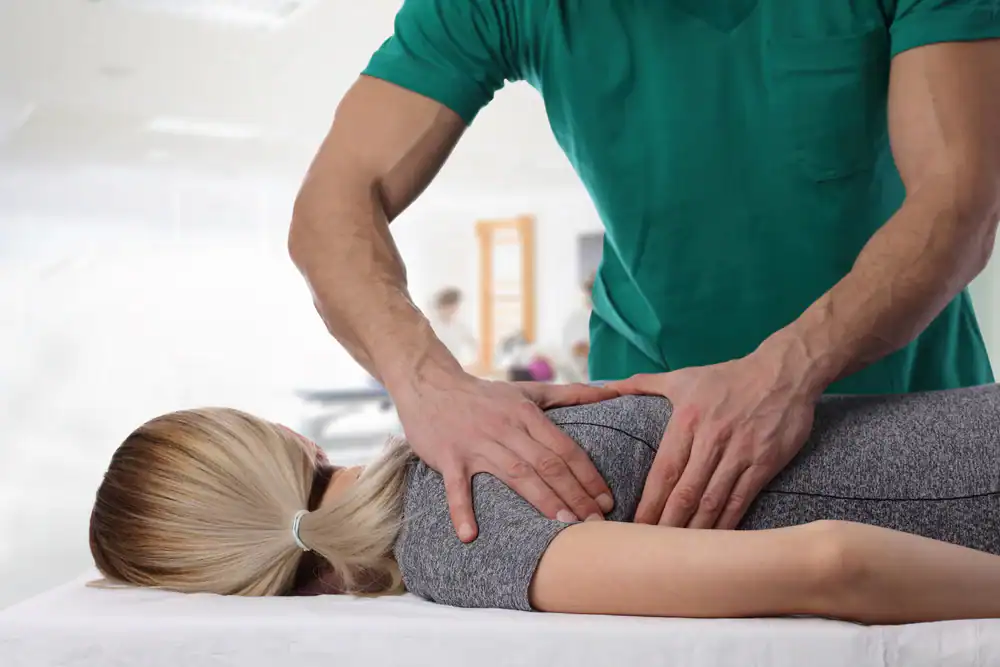
Here’s what actually happens during spinal traction in Washington Village, NJ.
First, we assess your condition. That means a thorough exam, reviewing any imaging you have, and in some cases, taking new x-rays. We use Titron Infrared Imaging to get a baseline of what’s happening in your spine. You’re not getting treatment until we know exactly what we’re treating.
Then comes the traction itself. You’ll lie on a specialized table that gently stretches your spine in a controlled, measured way. For lumbar traction for sciatica, we’re targeting your lower back. For cervical traction for neck pain, we’re focusing on your neck and upper spine. The table creates that negative pressure we mentioned earlier, the kind that pulls herniated discs back into position and takes pressure off compressed nerves.
Sessions typically last 20 to 30 minutes. You’re not in pain during treatment. Most people find it relaxing. Some even fall asleep.
Between sessions, you’ll get specific exercises designed for your condition. These aren’t generic stretches. They’re movements that strengthen the muscles supporting your spine so you’re not right back where you started in six months.
Most treatment plans run several weeks. How many sessions you need depends on how severe your condition is and how your body responds. Some people feel relief after three sessions. Others need more time. We adjust as we go based on what’s actually working.

Ready to get started?
Mechanical spinal traction benefits extend to a range of conditions that all share one thing in common: compressed or misaligned vertebrae putting pressure where it shouldn’t be.
Herniated discs respond well to traction because the negative pressure literally pulls the bulging material back toward the center of the disc. Sciatica improves because we’re decompressing the nerve root that’s causing that shooting pain down your leg. Degenerative disc disease gets relief because rehydrating those discs slows the breakdown and reduces inflammation.
We also treat bone spurs, facet disease, foraminal stenosis, and pinched nerves. All conditions where space in your spine has been compromised and your body is paying the price.
In Washington Village, NJ, where the median age is 36 and most workers are in white-collar jobs, we see a lot of lower back pain from prolonged sitting. We also see neck pain from screen time and poor ergonomics. Both respond to spinal traction when it’s done correctly.
Success rates for non-surgical spinal decompression therapy range from 71% to 89%, depending on the study. A Mayo Clinic study found 88.9% of patients improved after a six-week protocol. These aren’t miracle numbers. They’re what happens when you treat the actual problem instead of just managing symptoms.
You’re looking at a non-surgical option that costs a fraction of what surgery runs and doesn’t require months of recovery. That matters when you’ve got work, family, and a life that can’t be put on hold.
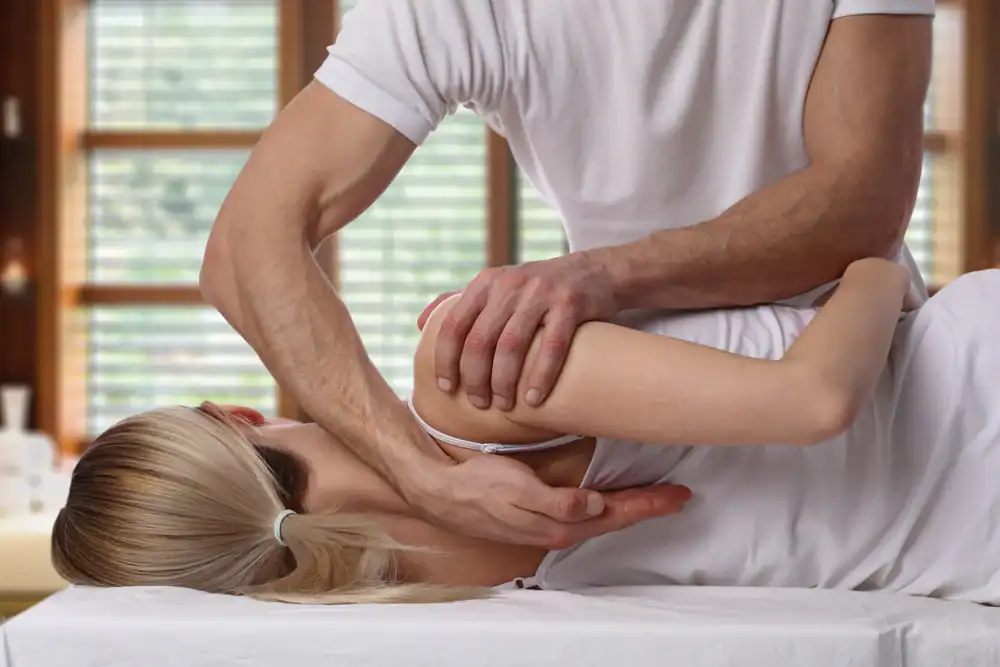
Adjustments realign vertebrae that are out of position. Traction decompresses the space between those vertebrae.
Think of it this way: if your disc is herniated and pressing on a nerve, an adjustment might relieve some pressure by improving alignment. But traction creates negative pressure that actually pulls that herniated material back where it belongs. It’s a different mechanism addressing a different part of the problem.
Most effective treatment plans use both. We adjust to correct alignment issues, then use spinal traction in Washington Village, NJ to decompress and rehydrate the discs themselves. You get better results when you’re addressing the full picture, not just one piece of it.
Most people start noticing relief within the first few sessions. That doesn’t mean you’re done with treatment.
Early relief usually means inflammation is decreasing and pressure is coming off the affected nerves. That’s good. But if you stop there, you’re likely to end up right back where you started. Real improvement means rehydrating discs, strengthening supporting muscles, and giving your body time to heal the underlying damage.
A typical treatment plan for lumbar traction for sciatica or cervical traction for neck pain runs anywhere from 12 to 24 sessions over several weeks. Severe cases take longer. Mild cases sometimes resolve faster. We track your progress and adjust the plan based on how you’re actually responding, not some predetermined schedule.
Spinal traction is non-invasive and safe when performed by someone who knows what they’re doing. You’re lying on a table. There are no incisions, no injections, no medications.
Does it hurt? No. Most people describe it as a gentle stretch. Some feel immediate relief during the session itself as pressure comes off compressed nerves. You might feel sore afterward, similar to how you’d feel after a good workout, but that’s your body adjusting to the decompression.
Compare that to surgery, which comes with infection risk, anesthesia complications, and months of recovery. Or compare it to long-term painkiller use, which doesn’t fix anything and comes with its own set of problems. Mechanical spinal traction benefits include relief without those risks. That’s why success rates are high and complication rates are nearly nonexistent.
Many insurance plans cover chiropractic care, including spinal traction, but coverage varies depending on your specific plan and provider.
We recommend calling your insurance company before your first visit to confirm what’s covered. Ask specifically about non-surgical spinal decompression therapy and how many sessions they’ll authorize. Some plans require a referral. Others have a cap on visits per year.
If your plan doesn’t cover it or you don’t have insurance, we can discuss payment options. Even paying out of pocket, spinal traction costs a fraction of what surgery runs. The average back surgery costs tens of thousands of dollars and comes with months of lost work. Non-surgical treatment costs less than a tenth of that and requires no recovery downtime. When you factor in lost wages and surgical risks, traction is the more affordable option even without insurance.
Follow the exercises we give you. They’re not optional.
We design specific movements for your condition that strengthen the muscles supporting your spine. If those muscles stay weak, your vertebrae won’t hold the alignment we’re creating during traction. You’ll slide back into the same patterns that caused the problem in the first place.
Beyond exercises, pay attention to how you’re sitting, standing, and moving throughout the day. If you’re working a desk job in Washington Village, NJ, that means taking breaks to stand and stretch. It means adjusting your monitor height so you’re not craning your neck forward. Small changes add up.
Avoid heavy lifting during treatment. Don’t do anything that aggravates your symptoms. And if something we’re doing isn’t working or makes things worse, tell us immediately. We adjust your treatment based on your feedback, not some rigid protocol that ignores what your body is telling us.
Sometimes, yes. It depends on what surgery you had and what’s causing your current pain.
If you had a discectomy or fusion and you’re still dealing with pain, there’s a chance adjacent vertebrae are now compensating for the surgical site and developing their own issues. Spinal traction in Washington Village, NJ can address those new problem areas without requiring another surgery.
That said, we need to see your surgical records and any recent imaging before we can say whether traction is appropriate for your specific situation. Some post-surgical spines respond well to decompression. Others need a different approach.
What we won’t do is promise you results before we’ve evaluated your condition. If traction isn’t the right fit, we’ll tell you. If it is, we’ll build a plan based on what’s actually wrong, not what we wish were wrong. You’ve already been through surgery once. You deserve straight answers about whether this will actually help.