
Hear from Our Customers

You’re not looking for another temporary fix. You’ve tried the heating pads, the over-the-counter pills, maybe even the injections that only mask what’s really wrong.
What you need is treatment that creates the conditions for your body to heal itself. Mechanical spinal traction benefits Van Leer, NJ residents by reducing the pressure on compressed discs and pinched nerves—the actual source of your pain.
When your spine decompresses properly, you get more than just relief. You get your mobility back. You sleep through the night again. You can pick up your kids, work at your desk, or take a walk without that constant reminder that something’s wrong.
Studies show 71% of patients with herniated discs experience significant symptom reduction with spinal decompression. That’s not because it hides the pain—it’s because the treatment allows damaged discs to pull in the hydration and nutrients they need to repair. Your body does the healing. The traction creates the space for it to happen.
Dr. Paul Roses has been practicing chiropractic care since 1981. That’s over three decades of treating herniated discs, sciatica, spinal stenosis, and chronic neck and back pain without surgery.
His approach is straightforward: move bones away from nerves, reduce pressure on your spine, and let your body heal the way it’s designed to. No unnecessary drugs. No pushing you toward surgery when there’s a better option.
Van Leer, NJ residents come to us because they want someone who listens, explains what’s actually happening in their spine, and delivers treatment that works. Our patients report walking normally after just three adjustments. Others say they feel better than they have in years. That doesn’t happen by accident—it happens through experience and a genuine commitment to getting you out of pain.
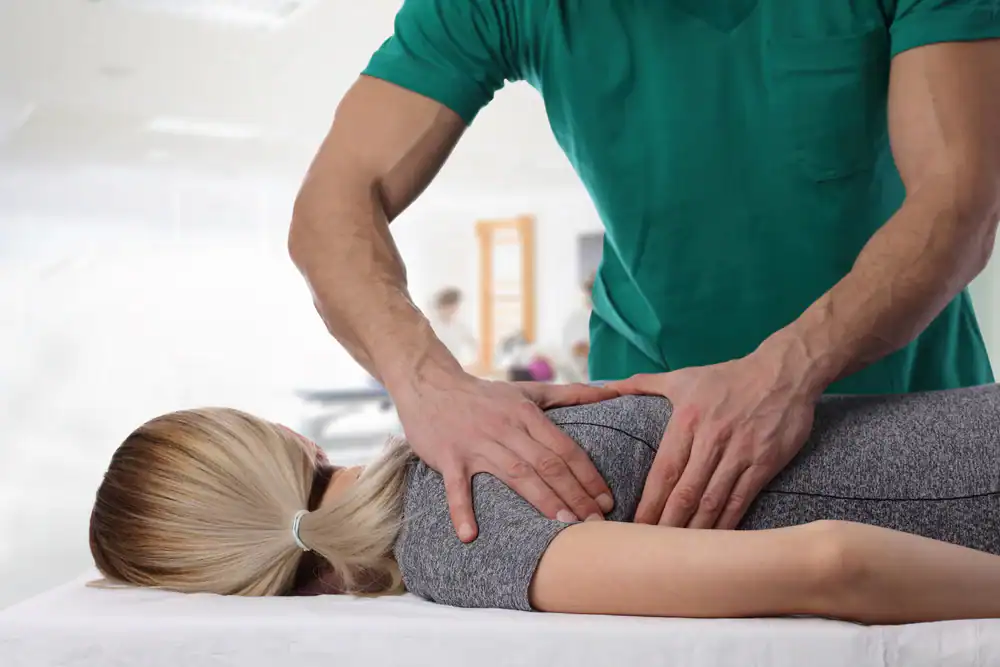
Your first visit starts with an evaluation. Dr. Roses needs to understand where your pain is coming from—whether it’s a herniated disc, nerve compression, sciatica, or something else. He’ll ask about your symptoms, your history, and what you’ve already tried.
From there, he’ll create a treatment plan specific to your condition. Lumbar traction for sciatica in Van Leer, NJ works differently than cervical traction for neck pain in Van Leer, NJ. The angle, the force, the duration—it all gets adjusted based on what your spine needs.
During the session, you’ll lie on a specialized table that uses controlled, computer-guided traction to gently stretch your spine. This creates negative pressure inside your discs—around -100 mmHg, compared to the +140 mmHg of pressure your discs experience when you’re sitting. That negative pressure is what allows bulging or herniated discs to retract and pull in oxygen, nutrients, and hydration.
Most patients need 20 to 30 sessions, typically three times a week. You won’t need downtime. You can go right back to work or home afterward. The treatment builds over time as your body responds and heals.
Ready to get started?
Spinal traction in Van Leer, NJ isn’t a one-size-fits-all solution. It’s effective for specific conditions where nerve compression or disc issues are causing your pain.
If you have a herniated or bulging disc, this treatment can help retract the disc material that’s pressing on your nerves. If you’re dealing with sciatica—that shooting pain down your leg—lumbar traction reduces the pressure on the sciatic nerve. For spinal stenosis, where the spaces in your spine narrow and pinch nerves, decompression opens up that space.
Cervical traction for neck pain in Van Leer, NJ works the same way but targets the upper spine. If you’re experiencing headaches, shoulder pain, or arm numbness from a neck issue, this can address the root cause.
Van Leer residents dealing with chronic pain often face long commutes, desk jobs, or physically demanding work—all of which put constant stress on the spine. One in four working adults reports current back pain, and many have tried multiple treatments that only work temporarily. We offer non-surgical spinal decompression therapy in Van Leer, NJ as an alternative that targets the underlying problem, not just the symptoms. You’re not covering up the pain. You’re giving your spine the chance to heal.
Traditional traction pulls on your spine with constant force. It can provide some relief, but it doesn’t create the negative pressure needed for discs to actually heal.
Spinal decompression uses computer-controlled systems that adjust the force in cycles. This prevents your muscles from tensing up and resisting the stretch. More importantly, it creates negative pressure inside the disc—something traditional traction can’t do.
Research shows that spinal decompression achieves an 86% improvement rate compared to 55% with traditional traction. That’s because the negative pressure acts like a vacuum, pulling hydration and nutrients back into damaged discs. Over time, this can help reverse disc degeneration and reduce the bulging or herniation that’s compressing your nerves.
Most patients start noticing improvement within the first few weeks, but the full treatment protocol typically involves 20 to 30 sessions over several weeks. You’ll usually come in three times a week.
Your body needs time to heal. Each session creates the conditions for your discs to rehydrate and repair, but that process doesn’t happen overnight. Some patients feel relief after just a few adjustments. Others take longer depending on the severity of their condition and how long they’ve been dealing with pain.
Dr. Roses will track your progress and adjust your treatment plan as needed. The goal isn’t just to get you feeling better temporarily—it’s to address the underlying issue so the pain doesn’t keep coming back.
In many cases, yes—if it’s deemed medically necessary. Both traditional traction and spinal decompression may be covered when prescribed by a chiropractor for conditions like herniated discs, sciatica, or spinal stenosis.
Coverage varies depending on your insurance provider and your specific plan. Some insurers are increasingly recognizing non-surgical spinal decompression therapy as a valid treatment option, especially as an alternative to more invasive procedures.
It’s worth calling your insurance company to ask about coverage for chiropractic spinal traction. Our office can also help verify your benefits and explain what costs you might be responsible for. The key is making sure the treatment is documented as medically necessary for your condition.
Not necessarily. Surgery is typically considered a last resort, and many patients find relief through non-surgical options like spinal decompression, physical therapy, or other conservative treatments.
Clinical studies show that 71% of patients with herniated discs and 86% of patients with ruptured discs experience significant improvement with spinal decompression. Those are strong odds, especially compared to the risks and recovery time associated with surgery.
If spinal traction doesn’t provide the relief you need, Dr. Roses will discuss other options with you. The goal is always to avoid surgery if possible. But if it becomes necessary, you’ll know you tried a proven, non-invasive approach first. Most people never get to that point.
Yes. One of the biggest advantages of non-surgical spinal decompression therapy in Van Leer, NJ is that there’s no downtime. You can return to your normal activities immediately after treatment.
You’re not recovering from an invasive procedure. You’re not dealing with anesthesia or surgical wounds. The treatment itself is gentle and controlled, so most patients feel fine—often better—right after a session.
That said, Dr. Roses may recommend avoiding heavy lifting or strenuous activity for a short period, depending on your condition. But for most people, you can go straight back to work, run errands, or pick up your kids without any issues. The treatment fits into your life instead of disrupting it.
Most patients describe it as a gentle, painless stretch. You’ll lie on a specialized table, and the machine applies controlled traction to your spine. You might feel a pulling sensation, but it shouldn’t hurt.
The treatment is designed to be comfortable. If you feel any discomfort, you can let Dr. Roses know, and he’ll adjust the force or angle. The goal is to decompress your spine without triggering muscle spasms or resistance.
Sessions typically last 20 to 30 minutes. Many patients find it relaxing. You’re not gritting your teeth through pain—you’re lying still while the machine does the work. Afterward, some people feel immediate relief. Others notice gradual improvement over the course of several sessions as their body heals.