
Hear from Our Customers

You’re not looking for temporary relief. You want to bend down without bracing yourself. Walk without that sharp pull down your leg. Sleep through the night without repositioning every hour.
Mechanical spinal traction benefits go beyond just reducing pain. When your spine decompresses properly, herniated discs have space to heal. Pinched nerves get relief. Your body can actually do what it’s designed to do—repair itself.
That means fewer days where you can’t work. Fewer times you have to cancel plans because your back won’t cooperate. And no more wondering if surgery is your only option when you’ve barely tried anything else.
The goal isn’t to manage your pain forever. It’s to fix what’s causing it so you can get back to your life without constantly thinking about your back.
Dr. Roses has been practicing since 1981, and in that time, he’s seen what works and what doesn’t. We serve The Heights, NJ and the surrounding Hudson County area from our Bayonne location, just minutes away.
This isn’t a practice built on quick adjustments and sending you on your way. You get baseline imaging with Titron Infrared technology to see exactly what’s happening in your spine. Then you get a treatment plan designed around your specific problem—not a generic protocol.
The Heights community deals with the same issues as the rest of Hudson County: long commutes, physical jobs, old injuries that never fully healed. We’ve worked with all of it. Our approach is straightforward—find the root cause, treat it without drugs or surgery, and give you exercises you can do at home to keep the results.
First, you get a proper assessment. That means Titron Infrared Imaging to map out where the inflammation and nerve interference actually are. No guessing.
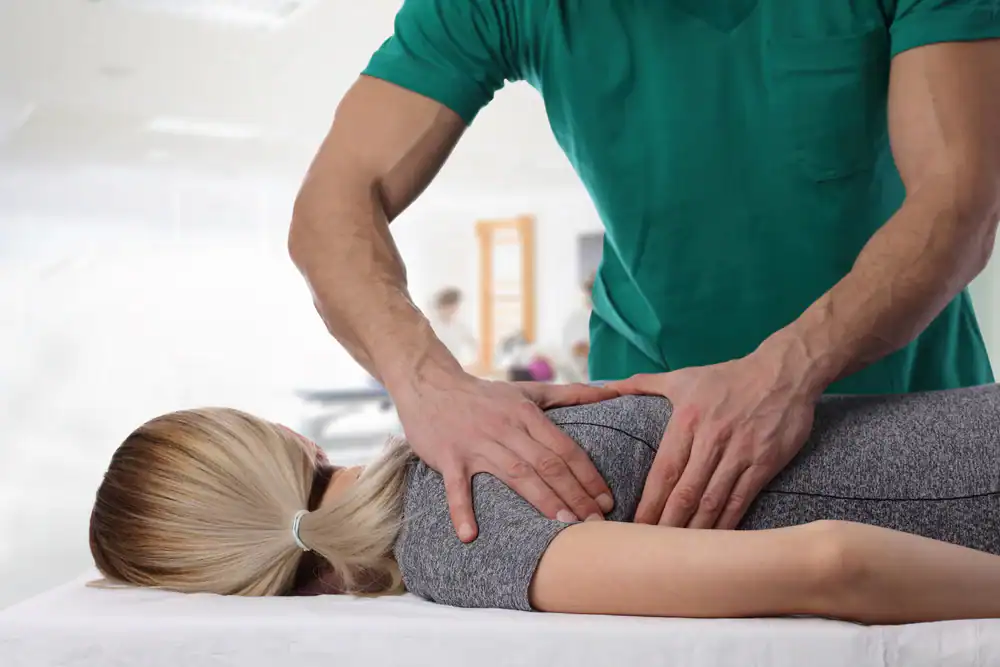
Once Dr. Roses knows what’s going on, spinal traction in The Heights, NJ starts with controlled decompression. You’re positioned on a table that gently stretches your spine, creating negative pressure inside the discs. That pressure change allows herniated or bulging material to retract and lets oxygen and nutrients flow back into the area.
Lumbar traction for sciatica targets the lower back and takes pressure off the sciatic nerve. Cervical traction for neck pain does the same for your upper spine and shoulders. Both are non-invasive, and both give your body the environment it needs to heal.
You’ll also get a customized exercise plan—movements that support what’s happening during treatment and help prevent the problem from coming back. These aren’t complicated. They’re designed so you can do them at home without equipment.
Most patients notice improvement within the first few sessions. Some walk normally after three adjustments. It depends on how long you’ve been dealing with the issue and how severe it is, but the process is consistent.
Ready to get started?
Every session includes hands-on spinal adjustment using advanced techniques that are safer and more effective than older methods. You’re not getting the same cookie-cutter approach every visit—treatment adjusts based on how you’re responding.
Non-surgical spinal decompression therapy in The Heights, NJ also includes that customized exercise blueprint. These movements are specific to your condition, whether it’s a herniated disc, sciatica, or chronic neck pain. The goal is to reinforce what’s happening in the office so your progress doesn’t stall between visits.
You also get access to Dr. Roses’ experience. He’s worked with patients who couldn’t walk, who were told surgery was their only option, who tried other chiropractors without results. He’s seen severe cases—patients with MS who regained mobility, people who avoided repeated back surgeries, individuals who got off pain meds entirely.
The Heights, NJ is a tight-knit area where people work hard and don’t have time for drawn-out recoveries. That’s why our approach focuses on results, not endless maintenance visits. You come in with a problem, you get a plan, and you get measurable improvement.
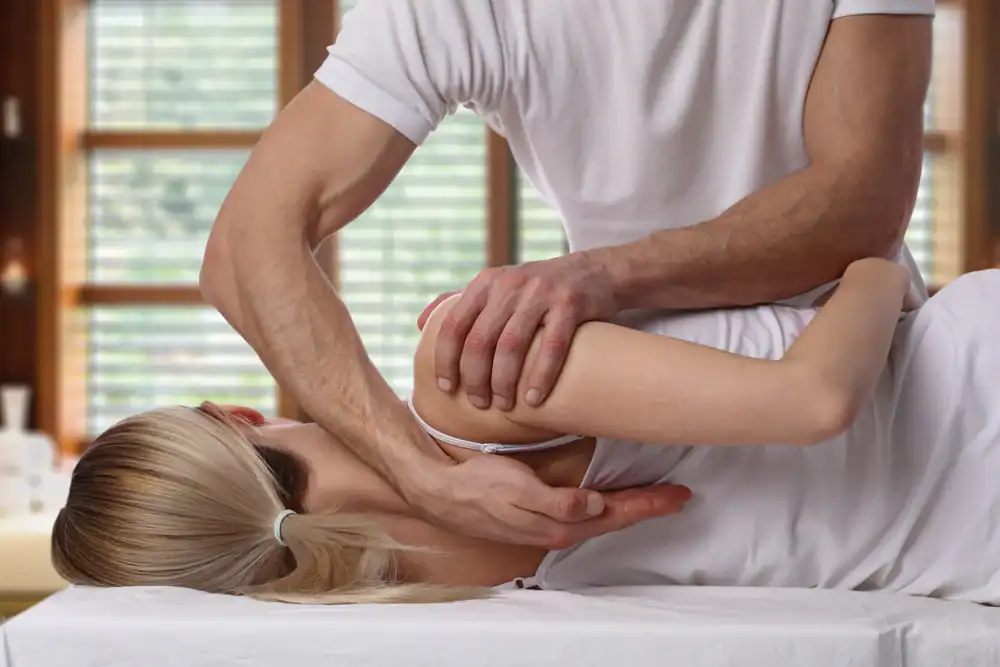
Regular chiropractic adjustments realign the vertebrae and restore joint mobility. Spinal traction goes a step further by decompressing the discs themselves.
When you have a herniated or bulging disc, the material inside is pressing on nerves or pushing out of place. An adjustment can help with alignment, but it doesn’t always create the space needed for that disc to heal. Mechanical spinal traction benefits include creating negative pressure inside the disc, which encourages the herniated material to retract and allows nutrients to flow back in.
Think of it this way: an adjustment fixes the position of the bones. Traction fixes the environment around the discs so your body can actually repair the damage. Both work together, but traction is what makes the difference when you’re dealing with disc issues, sciatica, or nerve pain that won’t go away with adjustments alone.
Yes. A lot of patients come to us after being told surgery is their only option, and many of them avoid it entirely.
Non-surgical spinal decompression therapy in The Heights, NJ is designed for exactly that—giving your body a chance to heal before you commit to an invasive procedure. Surgery comes with risks: infection, failed back surgery syndrome, long recovery times, and no guarantee the pain won’t come back. Traction is non-invasive, has no recovery period, and works with your body’s natural healing process.
That said, there are cases where surgery is necessary. But if you haven’t tried decompression therapy yet, you owe it to yourself to explore it first. Dr. Roses has worked with patients who were scheduled for surgery and canceled it after seeing results from treatment. It’s not about avoiding surgery at all costs—it’s about making sure you’ve actually tried everything before you go under the knife.
Some patients notice improvement after the first session. Others take a few weeks. It depends on how long you’ve been dealing with the problem and how severe it is.
If you’ve had chronic pain for years, your body needs time to reverse that damage. But if you’re dealing with a recent injury or a flare-up, you might respond faster. Dr. Roses has had patients walk normally after just three adjustments, but that’s not a guarantee—it’s an example of what’s possible when the treatment is done right.
What matters more than speed is consistency. Spinal traction in The Heights, NJ works because it’s giving your discs and nerves the environment they need to heal. That doesn’t happen overnight, but it also doesn’t take months of endless visits. You’ll know within the first few sessions whether it’s working, and Dr. Roses will adjust the plan based on your progress.
No, it doesn’t hurt. Most patients describe it as a gentle stretch or a relieving pull.
You’re positioned on a specialized table, and the traction is applied slowly and in a controlled way. There’s no sudden jerking or cracking like you might expect from an adjustment. The goal is to create space in your spine, not force anything.
Lumbar traction for sciatica focuses on your lower back and hips. Cervical traction for neck pain targets your upper spine and shoulders. Both feel similar—like someone is gently pulling tension out of your body. Some people even fall asleep during treatment because it’s that relaxing.
Afterward, you might feel a little sore, similar to how you’d feel after a good stretch or a massage. That’s normal and usually goes away within a day. If anything feels off, Dr. Roses adjusts the intensity for your next session. The whole process is designed to be comfortable and safe.
The goal is to fix the problem, not create a dependency. Most patients go through an initial treatment plan and then move into maintenance or stop altogether.
How long you need treatment depends on your condition. A recent herniated disc might respond in a few weeks. Chronic degeneration or multiple bulging discs might take longer. Dr. Roses will give you a realistic timeline based on your imaging and assessment—not a vague “we’ll see how it goes.”
Once your symptoms improve and your spine stabilizes, you’ll shift to at-home exercises and periodic check-ins. Some people come back once a month for maintenance. Others don’t need to come back at all unless something flares up again.
Non-surgical spinal decompression therapy in The Heights, NJ is about giving your body what it needs to heal, then teaching you how to keep it healthy. You’re not signing up for years of appointments. You’re getting a solution.
Coverage depends on your insurance plan. Some policies cover spinal decompression therapy under chiropractic care, others don’t. It’s worth calling your provider to ask specifically about non-surgical spinal decompression or mechanical traction.
We can help you navigate that conversation and provide any documentation your insurance company needs. If your plan doesn’t cover it, Dr. Roses will go over the cost upfront so there are no surprises.
Even if you’re paying out of pocket, compare it to the cost of surgery: hospital fees, anesthesia, time off work, physical therapy afterward, and the risk of needing another surgery down the line. Spinal traction is a fraction of that cost, with none of the risks and a much faster return to normal life.
The bigger question isn’t whether insurance covers it. It’s whether you’re willing to invest in a treatment that actually fixes the problem instead of just masking the pain or jumping straight to surgery.