
Hear from Our Customers
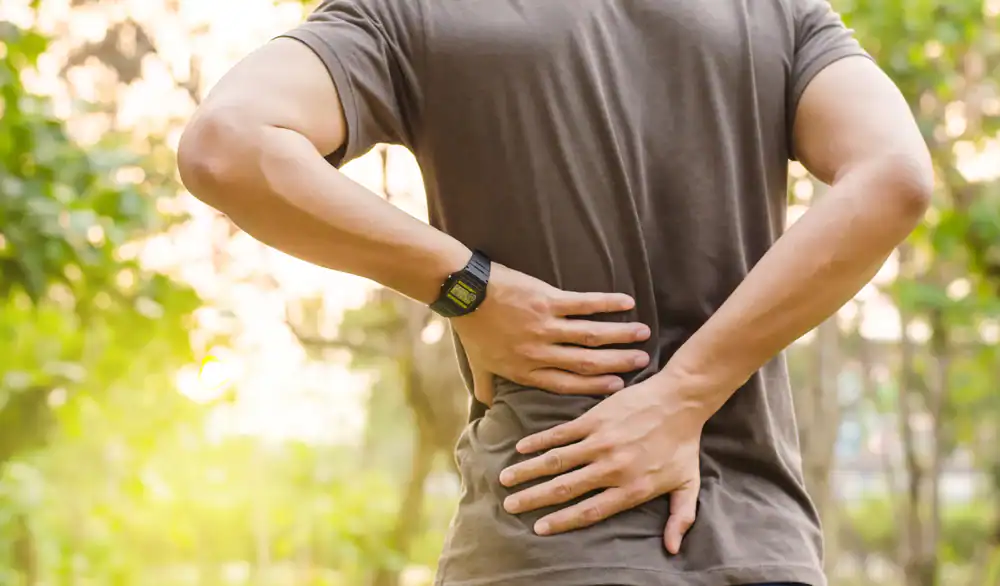
You’re not imagining it—that shooting pain down your leg, the stiffness that won’t quit, the way bending over feels like a gamble. When discs compress or herniate, nerves get pinched. Blood flow drops. Inflammation builds.
Spinal traction in St. Joseph, NJ creates space between your vertebrae. That space means less pressure on nerves, better circulation to damaged discs, and room for your body to actually heal instead of just coping.
Most people notice a difference within the first few sessions. Not because we’re masking pain—because we’re changing what’s happening inside your spine. You move easier. Sleep better. Get back to the stuff that matters without planning your day around your back.
This isn’t about managing symptoms forever. It’s about giving your body the mechanical advantage it needs to recover.
Dr. Paul Roses has been treating spinal conditions in the Hudson County area since 1981. That’s over four decades of herniated discs, pinched nerves, and chronic pain cases—not in a textbook, but in real patients who needed real results.
We use FDA-cleared spinal traction equipment, not outdated tables that jerk your spine around. Our approach combines mechanical spinal traction benefits in St. Joseph, NJ with complementary therapies that support healing, not just temporary relief.
St. Joseph residents deal with the same issues we see across New Jersey—long commutes, physical jobs, aging spines that don’t bounce back like they used to. Dr. Roses gets it. He’s treated thousands of cases, and he knows what works when you’ve already tried everything else.
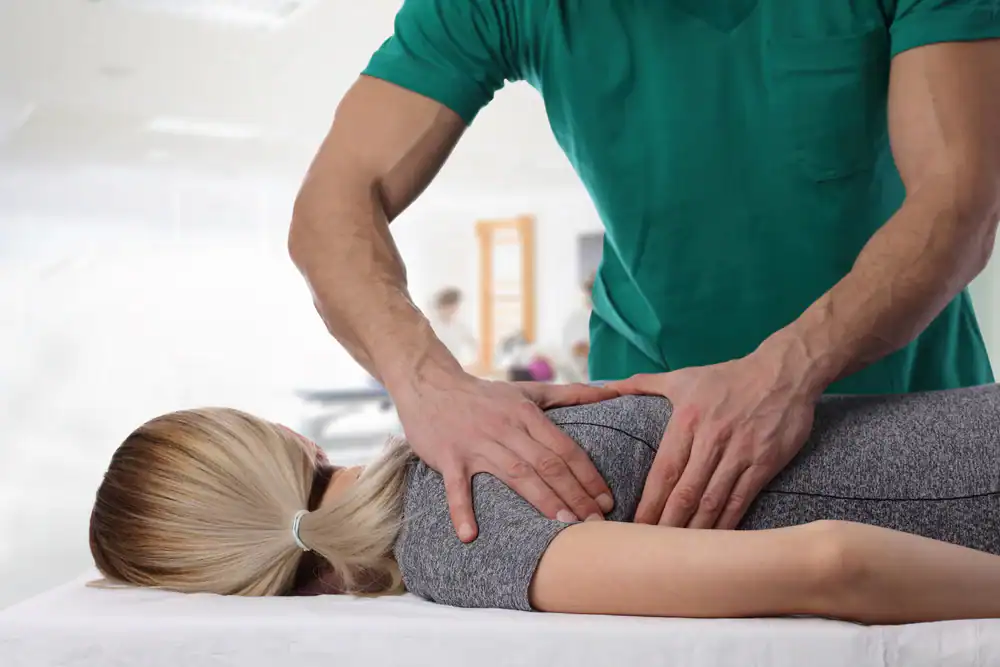
You lie on a computerized traction table designed to apply precise, gradual force to your spine. No sudden jerks. No guessing. The system slowly stretches your spine to create negative pressure inside the discs.
That negative pressure does two things: it pulls herniated or bulging disc material back toward the center, and it increases blood flow to areas that normally don’t get much circulation. More blood means more oxygen, more nutrients, and faster healing.
Each session lasts 10 to 30 minutes. Most people find it so comfortable they fall asleep. You’ll likely start with multiple sessions per week, then taper as your body responds.
Lumbar traction for sciatica in St. Joseph, NJ targets your lower back and legs. Cervical traction for neck pain in St. Joseph, NJ focuses on your neck and shoulders. Both use the same principle—controlled decompression that gives your spine room to heal.
Between sessions, we may add electrotherapy or heat to relax muscles and support the traction work. It’s not complicated. It’s just methodical, evidence-based care.
Ready to get started?
Spinal traction treats herniated discs, bulging discs, sciatica, pinched nerves, spinal stenosis, and degenerative disc disease. If your pain shoots down your arm or leg, or if standing and walking make it worse, you’re likely a candidate.
The treatment itself uses FDA-cleared equipment—the Triton Decompression Traction System, built by Chattanooga, one of the largest hospital-grade therapy equipment manufacturers in the world. This isn’t some fly-by-night device.
Clinical data shows 86% effectiveness in patients treated with this type of therapy. That’s not a guarantee, but it’s a hell of a lot better than hoping your pain just goes away on its own.
Most insurance plans cover spinal traction. If you’re uninsured, payment plans are available. The goal is to get you treated, not to make you choose between rent and your back.
You’re not locked into surgery. You’re not stuck on pills. You’re giving your body a legitimate shot at healing with a method that’s been studied, refined, and proven effective for decades.
Most people notice some improvement within the first three to five sessions. That might mean less shooting pain, better range of motion, or just being able to sit through dinner without constantly shifting positions.
Full treatment plans typically run 15 to 20 sessions over several weeks. Your body didn’t break overnight, and it won’t heal overnight either. But the timeline is measured in weeks, not months or years.
Some conditions respond faster than others. A recent herniation often improves quicker than chronic degeneration. Dr. Roses will give you a realistic expectation based on your specific case—not a sales pitch.
No. Most patients describe it as a mild stretching sensation—like a good stretch after sitting too long, but controlled and consistent.
The computerized system applies force gradually, which prevents your muscles from tensing up or guarding. Older traction tables used to yank too hard too fast, which caused discomfort. Modern spinal decompression therapy in St. Joseph, NJ doesn’t work that way.
If anything, people tend to relax so much during treatment that they doze off. You’re strapped in securely, but comfortably. If something feels off, you can stop the session immediately.
Spinal traction is effective for herniated discs, bulging discs, sciatica, pinched nerves, spinal stenosis, degenerative disc disease, and chronic neck or back pain caused by compression.
If your pain radiates—down your leg, into your hip, down your arm—that’s a sign of nerve involvement, which traction addresses directly. If you’ve been told you have a “slipped disc” or “compressed nerves,” this treatment is designed for exactly that.
It won’t fix fractures, infections, or severe osteoporosis. Dr. Roses will evaluate your case during your initial visit to confirm you’re a good candidate. If traction isn’t right for you, he’ll tell you straight.
Most insurance plans cover spinal decompression therapy, including Medicare. Coverage varies by plan, so it’s worth calling your provider or asking our office to verify your benefits before starting treatment.
If you’re uninsured or your plan doesn’t cover it, we offer payment plans. The cost of treatment is a fraction of what surgery runs, and there’s no hospital stay or recovery time eating into your income.
We’re not interested in surprise bills or runarounds. You’ll know what you’re paying before you commit to anything.
Adjustments realign joints and restore mobility through quick, controlled movements. Spinal traction decompresses the spine using sustained, gentle force over 10 to 30 minutes.
They’re complementary, not competing. Some patients need both. Some respond better to one or the other. Traction is particularly effective when the issue is disc-related—herniation, bulging, degeneration—because it directly addresses the pressure inside the disc.
Adjustments are great for joint dysfunction and alignment issues. Traction is better for nerve compression and disc problems. Dr. Roses uses both depending on what your spine actually needs, not what fits a one-size-fits-all protocol.
In many cases, yes. Surgery is sometimes necessary, but it’s not always effective—and it’s irreversible. Spinal traction offers a non-surgical option that’s proven effective in 86% of cases.
If you’ve been told surgery is your only option, it’s worth getting a second opinion and trying conservative treatment first. Traction won’t work for everyone, but when it does, you avoid the risks, costs, and recovery time of an operation.
Dr. Roses has treated patients who were scheduled for surgery and ended up canceling it because traction gave them their life back. That’s not a guarantee, but it’s a real possibility worth exploring before going under the knife.