
Hear from Our Customers
You’re not looking for another temporary fix. You’ve already tried the epidurals that wore off, the adjustments that didn’t hold, maybe even the medications that just masked what’s really going on.
Spinal traction in St. Aedens, NJ works differently. It creates negative pressure inside the disc itself—a vacuum effect that pulls hydration, oxygen, and nutrients back into the damaged area. That’s not just pain relief. That’s your body getting what it needs to repair the problem causing the pain in the first place.
Most patients notice improvements in back discomfort and the radiating symptoms down their legs or arms. The numbness starts to fade. The sharp shooting pain when you bend or twist starts to quiet down. You’re not limping to your car or asking someone else to pick things up off the floor for you.
Research shows 86% of patients with ruptured discs see good or excellent results with decompression therapy. Compare that to 55% with traditional traction. The difference isn’t small—it’s the difference between managing pain and actually addressing what’s broken.
Dr. Paul Roses has been practicing chiropractic care in the Hudson County area since 1981. That’s over four decades of treating herniated discs, bulging discs, sciatica, spinal stenosis, and the kind of chronic pain that makes you wonder if you’ll ever feel normal again.
He’s seen what works and what doesn’t. He’s treated patients who were told surgery was their only option—and helped them avoid it. He’s worked with people who had surgery and still came back with the same pain months later, looking for something that actually lasts.
St. Aedens residents deal with the same issues you see across Hudson County: long commutes, desk jobs, physical labor, old injuries that never fully healed. We understand that your pain isn’t just a medical issue—it’s affecting your work, your family, your ability to do basic things without wincing. Our approach is straightforward: remove the nerve interference, give your body what it needs to heal, and skip the drugs whenever possible.
Your first visit includes a baseline assessment. We use Titron Infrared Imaging—it takes a few seconds, completely painless—to see exactly where the problem is. If we need X-rays to get a complete picture, we’ll let you know. No guessing.
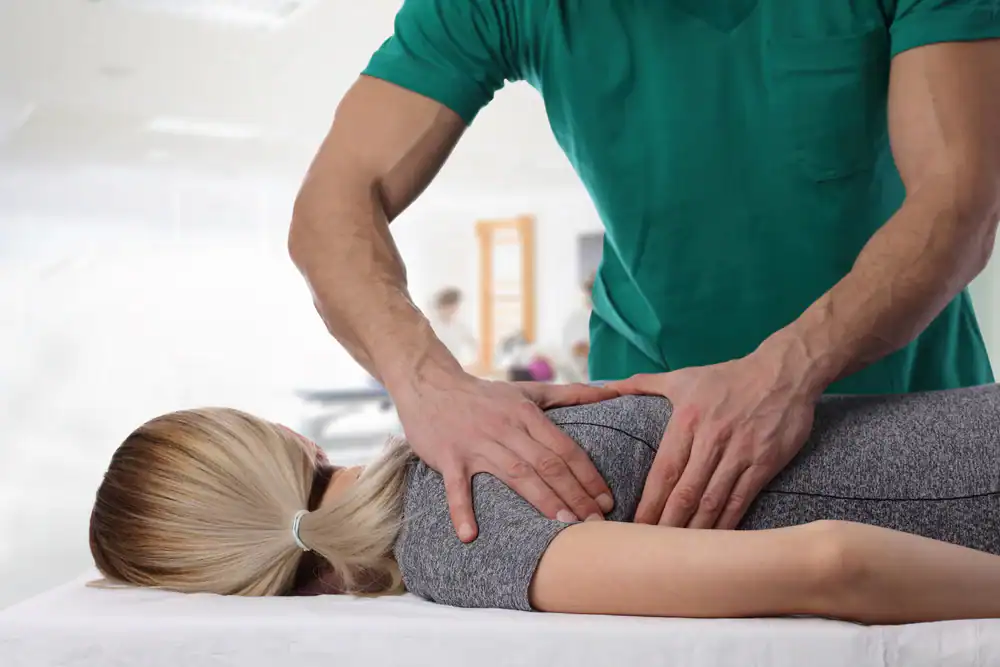
Once we know what we’re dealing with, you’ll lie on the decompression table. The system uses computerized sensors that monitor your spine’s response hundreds of times per second. It measures muscle tension and resistance, then adjusts the pull in real time. This isn’t the old-school traction that just yanks on your spine with constant force.
The table alternates between pulling and releasing. That’s critical. The release phase lets your spine relax, which prevents your muscles from fighting the treatment. The pull phase creates that negative pressure inside the disc—the vacuum effect that encourages rehydration and healing.
We can angle the pull to isolate individual discs. If it’s your L4-L5 causing the sciatica, we’re treating that exact spot. If it’s cervical traction for neck pain in St. Aedens, NJ that you need, we’re targeting the neck. Most patients find it relaxing. Some even fall asleep.
After the session, you’ll get specific exercises designed for your condition. These aren’t generic stretches. They’re built to strengthen and correct the unique problem your spine is dealing with.
Ready to get started?
Mechanical spinal traction benefits in St. Aedens, NJ go beyond just feeling better for a few days. You’re getting treatment that addresses disc degeneration, not just inflammation. The technology creates space between your vertebrae, takes pressure off pinched nerves, and allows damaged discs to pull in the nutrients they’ve been starved of.
For patients dealing with lumbar traction for sciatica in St. Aedens, NJ, that means the shooting pain down your leg can actually resolve—not because we’re numbing it, but because we’re removing the compression on the nerve root. Same goes for cervical issues. When a bulging disc in your neck is pressing on a nerve, you feel it in your shoulders, arms, even your hands. Decompression pulls that disc material back where it belongs.
Hudson County has seen a sharp increase in musculoskeletal complaints over the past few years. Remote work, more sitting, poor ergonomics—it all adds up. You’re not imagining that your back got worse. The data backs it up. What also backs it up: studies showing medium to large effect sizes favoring decompression therapy for pain intensity, functional disability, and lumbar range of motion.
This is a non-surgical option that works when other treatments haven’t. It’s drug-free. And when you compare the long-term costs of repeated injections, medications, or surgery, decompression often ends up being the smarter financial decision too.
Regular traction pulls with constant force. Your muscles sense that and tighten up to protect your spine. It’s a reflex—you can’t control it. That tension limits how effective the treatment can be.
Spinal decompression alternates between pulling and releasing. The computerized system monitors your body’s response in real time and adjusts accordingly. When it releases, your muscles relax. When it pulls again, there’s less resistance, so the treatment can actually reach the disc and create that negative pressure inside it.
That negative pressure is the key. It’s what allows the disc to rehydrate and pull in oxygen and nutrients. Traditional traction doesn’t create that vacuum effect. Decompression does. That’s why research shows significantly better outcomes—86% good or excellent results for ruptured discs with decompression versus 55% with traditional methods.
Yes, and it’s more common than you’d think. Up to half of people who have spinal surgery see their original symptoms come back months or years later. Sometimes it’s the same disc. Sometimes it’s a different level of the spine that’s now compensating for the surgery.
Non-surgical spinal decompression therapy in St. Aedens, NJ can help with post-surgical pain, especially if the issue is a herniated or bulging disc at a different level, or if scar tissue is contributing to nerve compression. It’s also a way to avoid a second surgery if you’re facing that recommendation.
We’ve worked with plenty of patients in exactly this situation. The approach is the same: identify where the current problem is, use decompression to relieve the pressure, and give your body the support it needs to heal. Surgery isn’t always a permanent fix, and decompression offers a legitimate alternative when symptoms return.
Most people notice some improvement within the first few sessions. Some feel it after the first one. But real, lasting change typically takes a series of treatments—usually somewhere between 15 and 25 sessions, depending on the severity of your condition.
This isn’t a one-and-done situation. Discs don’t heal overnight. Decompression works by creating the right environment for your body to repair itself over time. Each session builds on the last one. You’re rehydrating the disc, reducing inflammation, and retraining your spine to function without that constant compression.
We’ll give you a clearer timeline after your initial assessment. We’re not going to drag out treatment unnecessarily, but we’re also not going to promise a miracle cure in three visits. The goal is to get you better and keep you better—not just patch you up temporarily.
No. Most patients describe it as gentle, even relaxing. You’re lying on a table while the system does the work. There’s no cracking, no sudden movements, no force being applied in a way that makes you tense up.
The computerized sensors adjust the pull based on how your body is responding. If your muscles start to resist, the system backs off. If you’re relaxed, it continues. You’re in control the entire time—if something doesn’t feel right, you can stop the session.
Some people feel a mild stretch sensation. Others feel nothing at all and end up falling asleep. After the session, you might feel a little looser or even slightly fatigued, similar to how you’d feel after a good workout. That’s normal. It’s your body adjusting to the decompression and starting the healing process.
It depends on your plan. Some insurance companies cover spinal decompression under chiropractic care. Others don’t, or they have specific requirements you need to meet first—like trying other treatments or getting a referral.
The best move is to call your insurance provider and ask specifically about non-surgical spinal decompression or mechanical traction. Have your policy number ready and ask what’s covered, what your copay or deductible is, and if there’s a limit on the number of sessions.
Our office can also help verify your benefits. We’ve worked with most major insurers in the Hudson County area, and we know what questions to ask. Even if your insurance doesn’t cover it fully, we can discuss payment options. The cost of decompression is often less than surgery, ongoing injections, or long-term medication use—especially when you factor in time off work and recovery.
Spinal traction is most effective for conditions caused by disc problems or nerve compression. That includes herniated discs, bulging discs, degenerative disc disease, sciatica, spinal stenosis, and pinched nerves in the neck or lower back.
If you’re dealing with pain that radiates down your leg or arm, numbness, tingling, or weakness, there’s a good chance a compressed nerve is involved. Lumbar traction for sciatica in St. Aedens, NJ targets the lower back and relieves pressure on the sciatic nerve. Cervical traction for neck pain in St. Aedens, NJ does the same for the upper spine and nerves that run into your shoulders and arms.
It’s not the right fit for every back issue. Fractures, infections, tumors, or severe osteoporosis aren’t treated with decompression. That’s why the initial assessment matters. We’ll review your history, look at imaging if needed, and tell you straight up whether spinal traction is the right move for your specific condition.