
Hear from Our Customers

You’re not looking for temporary relief. You want to bend over without bracing yourself first. You want to sleep through the night. You want to get back to work, back to the gym, back to playing with your kids without that constant reminder that something’s wrong.
Spinal traction in Powerhouse, NJ works by gently creating space between your vertebrae. That space matters more than you might think. When discs decompress, herniated material can retract. Pinched nerves get room to breathe. Nutrient-rich fluid flows back into damaged tissue. Your body gets the chance to actually heal instead of just managing symptoms.
Most people notice the difference within a few sessions. Not just less pain—better movement. More confidence in your body. The kind of improvement that makes you realize how much you’d been compensating without even knowing it.
Dr. Paul Roses has been serving Hudson County since 1981. That’s over 40 years of seeing what works and what doesn’t when it comes to back pain, neck pain, and the frustration that comes with both.
We’re not about quick fixes or covering up symptoms. Our approach is straightforward: find what’s causing the problem, address it directly, and give your body what it needs to heal. No unnecessary drugs. No pushing you toward surgery when there’s a better option.
Located right at 901-899 Avenue C in Bayonne, we serve Powerhouse, NJ and surrounding communities with advanced spinal correction techniques that weren’t available even a decade ago. You’re getting experience that matters and technology that works.
Your first visit starts with understanding what’s going on. That means a baseline assessment using Titron Infrared Imaging—completely painless, takes just seconds. If needed, X-rays give us a clearer picture of what we’re dealing with. You’re not getting a one-size-fits-all approach here.
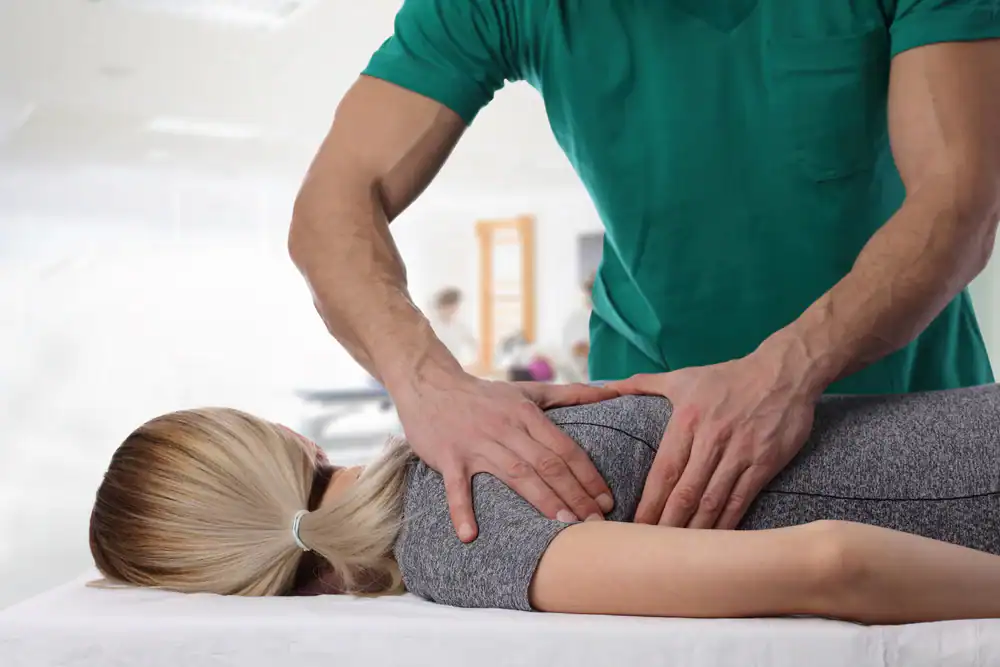
Once we know what’s causing your pain, treatment begins with mechanical spinal traction. You’ll lie comfortably on a specialized table that uses controlled, motorized traction to gently stretch your spine. Sessions typically last 15 to 30 minutes. Most treatment plans start with 2-3 sessions per week.
What you’ll feel is a gentle pulling sensation—not painful, just different. The table creates negative pressure in your discs, which allows herniated or bulging material to move back where it belongs. That takes pressure off nerves. Reduces inflammation. Lets healing happen. Between sessions, you’ll learn specific exercises designed for your particular issue—movements you can do at home that strengthen and support the progress you’re making here.

Ready to get started?
Spinal traction in Powerhouse, NJ treats the conditions that make daily life difficult. Herniated discs. Sciatica that shoots down your leg. Degenerative disc disease. Pinched nerves. Spinal stenosis. Chronic neck pain that won’t quit.
If you’re dealing with lower back pain, lumbar traction for sciatica in Powerhouse, NJ specifically targets that sciatic nerve compression that makes sitting, standing, or walking miserable. For neck issues, cervical traction for neck pain in Powerhouse, NJ addresses the same principle—creating space, reducing pressure, allowing healing.
Here’s what matters for people in Powerhouse and Hudson County: around 28% of adults report chronic lower back or sciatic pain. Nearly 9 out of 10 Americans will experience back pain at some point. You’re not alone in this, and you’re not out of options. Studies show that non-surgical spinal decompression therapy leads to satisfactory pain relief in up to 88% of patients—many who had already tried other treatments without success. Recent clinical data on 778 patients showed more than 70% success rates for herniated discs, degenerative disc disease, and sciatica, with 92% reporting meaningful pain reduction.
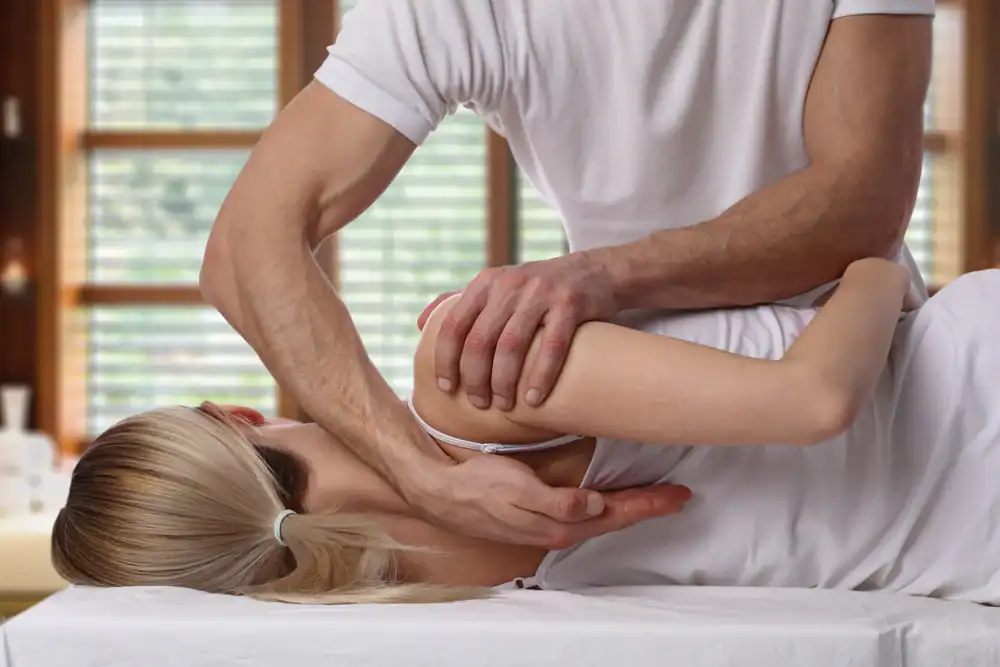
Adjustments and traction do different things, and you often need both. A chiropractic adjustment realigns vertebrae that have shifted out of position. It’s quick, targeted, and restores proper joint movement.
Spinal traction works over a longer period—15 to 30 minutes per session. It uses sustained, gentle pulling force to decompress your discs. Think of it this way: adjustments fix the alignment, traction creates the space your discs need to heal. When you combine both, you’re addressing the structural problem and giving damaged tissue the environment it needs to recover.
Most people get the best results when both techniques work together. We’ll assess your specific situation and recommend what makes sense for your condition.
Spinal traction shouldn’t hurt. You’ll feel a gentle pulling or stretching sensation, but it’s controlled and gradual. Most people find it surprisingly comfortable—some even fall asleep during sessions.
As for results, many people notice improvement after just a few treatments. That doesn’t mean you’re done—it means the treatment is working. Real healing takes time. Your discs didn’t herniate overnight, and they won’t fully heal in one session.
A typical treatment plan runs several weeks with 2-3 sessions per week initially. Some people feel significant relief within the first week. Others need a few weeks before the change becomes obvious. What matters is the trend: less pain, better movement, more confidence that you’re actually getting better instead of just covering up the problem.
Coverage varies depending on your specific insurance plan. Some plans cover spinal decompression therapy when it’s medically necessary. Others don’t, or they require documentation that you’ve tried other treatments first.
The best approach is to call your insurance company before your first visit. Ask specifically about coverage for “non-surgical spinal decompression” or “mechanical spinal traction” performed by a chiropractor. Get the details on copays, deductibles, and how many sessions they’ll cover.
We can provide any documentation your insurance needs, including diagnosis codes and treatment plans. Even if your insurance doesn’t cover it fully, many people find the out-of-pocket cost is worth it compared to ongoing pain medication, missed work, or the risk and expense of surgery. We can discuss payment options during your consultation.
Spinal traction works best for conditions caused by disc problems or nerve compression. Herniated discs respond well because the negative pressure helps bulging material retract. Sciatica improves when that pressure comes off the sciatic nerve. Degenerative disc disease benefits from increased nutrient flow to damaged discs.
You’ll also see good results with pinched nerves, spinal stenosis, and certain types of chronic neck or back pain—especially if the pain radiates down your arms or legs. Facet syndrome, where the small joints in your spine become inflamed, often improves with decompression combined with adjustments.
What doesn’t respond as well: pain caused purely by muscle strain, arthritis that’s too advanced, or structural issues that need surgical correction. That’s why the initial assessment matters. We won’t recommend spinal traction if it’s not the right tool for your specific problem. You need an honest evaluation, not a sales pitch.
That depends on what you do after treatment ends. Spinal traction creates the conditions for healing, but maintaining those results requires some effort on your part.
If you complete your treatment plan, do the home exercises you’re given, and make reasonable changes to avoid re-injury, results can last years. Many people stay pain-free indefinitely. Some need occasional maintenance sessions—maybe once a month or every few months—to keep things in check.
If you go right back to the habits or activities that caused the problem in the first place, you’re likely to have issues again. That’s not a failure of the treatment. That’s just reality. The good news is that you’ll learn what your spine needs during the treatment process. Most people find that the exercises and adjustments they make become second nature, and staying pain-free becomes easier than they expected.
Yes. In fact, many people who come in for spinal traction in Powerhouse, NJ have already tried physical therapy, pain medication, injections, or other chiropractic care without getting the relief they needed.
Non-surgical spinal decompression therapy works differently than those approaches. Physical therapy strengthens muscles but doesn’t always address disc compression. Pain medication masks symptoms without fixing the cause. Injections can reduce inflammation temporarily, but they don’t create the space your discs need to heal.
Studies specifically show that spinal decompression helps patients who haven’t responded to conventional treatments. One clinical study found that 88% of patients experienced satisfactory pain relief—and many of those had failed other approaches first. If what you’ve tried hasn’t worked, that doesn’t mean nothing will. It might just mean you haven’t tried the right thing yet.