
Hear from Our Customers

Spinal traction works by gently stretching your spine to create space between compressed vertebrae. That space matters because it takes pressure off pinched nerves, allows herniated discs to retract, and lets oxygen and nutrients flow back into areas that have been starved of circulation.
You’re not just masking pain. You’re giving your body the conditions it needs to heal itself.
Most people notice improved mobility within the first few sessions. The shooting pain down your leg starts to quiet. You can sit through a meeting or drive without constantly shifting positions. Sleep improves because you’re not waking up every time you roll over.
Non-surgical spinal decompression therapy in Palisade, NJ is especially effective for sciatica, herniated discs, degenerative disc disease, and chronic lower back pain that hasn’t responded to other treatments. It’s not a quick fix, but it’s a real one—and you can return to your normal routine immediately after each session.
Dr. Paul Roses has been treating patients in Hudson County since the early 1980s. He grew up in Bayonne, went to school here, and built our practice on the idea that your body already knows how to heal—it just needs the interference removed.
That’s not marketing talk. It’s how chiropractic actually works.
We’ve treated everyone from firefighters and police officers during the 9/11 response to families across Palisade, NJ dealing with everyday pain that won’t go away. Our approach is straightforward: listen to what’s wrong, explain what’s happening in your spine, and use proven techniques to fix it. No unnecessary drugs, no overselling, no runaround.
Patients consistently mention that Dr. Roses follows up after adjustments to see how they’re doing. That level of care doesn’t happen at corporate clinics where you’re shuffled through in 15 minutes.
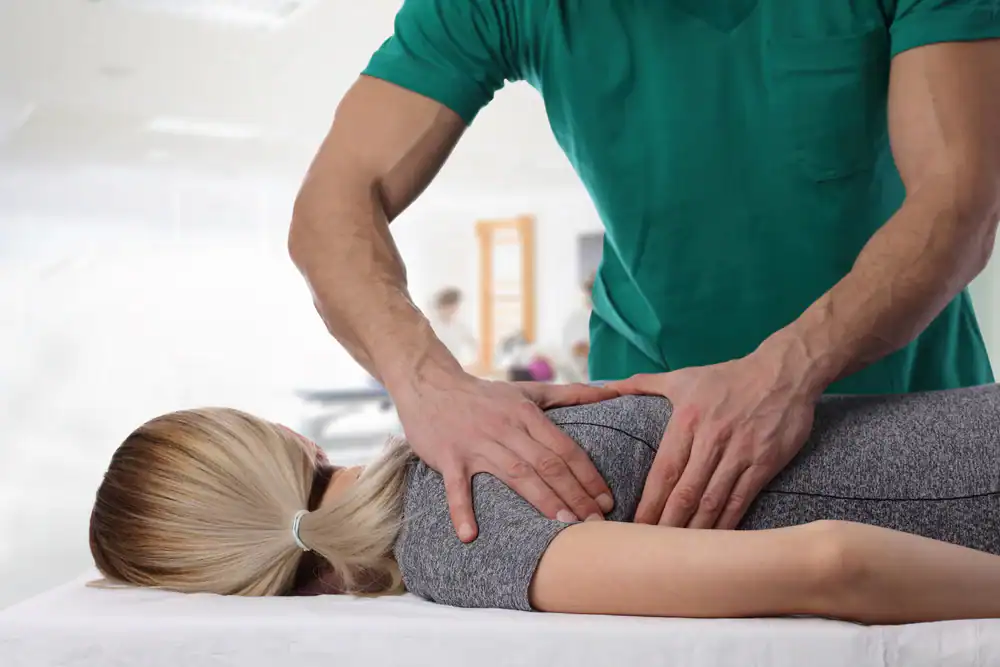
Your first visit starts with an assessment. Dr. Roses will review your history, ask about your pain patterns, and may use Titron Infrared Imaging to get a baseline of what’s happening in your spine. This isn’t guesswork—it’s data that shows where the problem actually is.
Once we understand what’s going on, you’ll lie on a specialized traction table. The table uses controlled, gentle stretching to create negative pressure in your spinal discs. It’s not uncomfortable—most people find it relaxing. The session lasts about 20 to 30 minutes, and there’s an auto-shutoff safety feature to prevent any overstretching.
The goal is to gradually decompress the affected area over multiple sessions. As the discs retract and pressure comes off the nerves, your body starts the repair process. You’ll likely need a series of treatments depending on severity, but each one builds on the last.
You walk out the same day. No downtime, no restrictions. Just steady progress toward getting your life back.
Ready to get started?
Spinal traction isn’t just one technique. Depending on where your pain is, treatment may focus on lumbar traction for sciatica in Palisade, NJ or cervical traction for neck pain in Palisade, NJ. Both use the same principle—controlled decompression—but target different areas of your spine.
Lumbar traction addresses lower back issues: herniated discs, sciatica, degenerative disc disease, and chronic pain that radiates into your legs. Cervical traction handles neck pain, pinched nerves in the upper spine, and issues that cause headaches or shoulder discomfort.
Hudson County has one of the highest rates of workplace-related back injuries in New Jersey, largely due to the number of residents commuting into New York City or working in logistics and healthcare. Long commutes, repetitive lifting, and sitting for hours create the exact conditions that lead to disc compression. That’s why mechanical spinal traction benefits in Palisade, NJ are so relevant here—this is a community that needs real solutions for real problems.
Each session is personalized based on your condition. You’re not getting a one-size-fits-all protocol. Dr. Roses adjusts the treatment as your body responds, which is how you get lasting results instead of temporary relief.
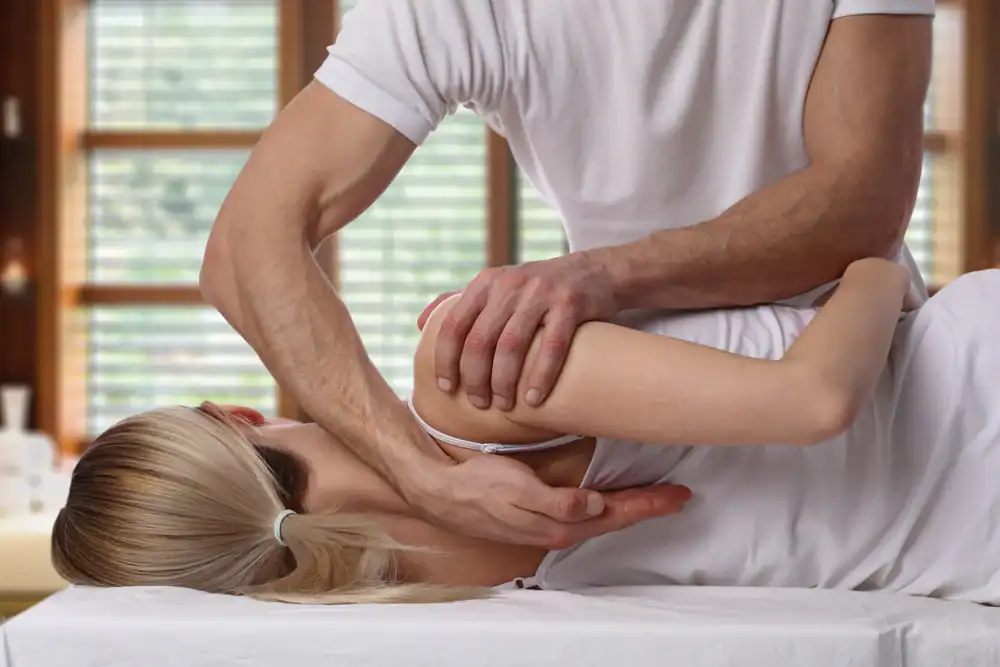
A chiropractic adjustment realigns the vertebrae and restores proper movement to joints that aren’t functioning correctly. Spinal traction, on the other hand, creates space between the vertebrae by gently stretching the spine under controlled tension.
Think of it this way: an adjustment fixes the position and movement of the bones. Traction fixes the pressure on the discs and nerves between those bones.
They work well together. Many patients benefit from both, especially if they’re dealing with a herniated disc or sciatica. The traction decompresses the area, and the adjustment keeps everything aligned so the problem doesn’t come right back. Dr. Roses will recommend what makes sense based on what’s actually wrong with your spine, not based on what’s easiest to bill.
Spinal traction is one of the safest non-surgical treatments available for back and neck pain. The equipment we use at Roses Chiropractic has built-in safety features, including auto-shutoff mechanisms that prevent overstretching or injury.
Most people describe the sensation as a gentle pull or stretch—similar to a good yoga pose, not painful. You’re in control the entire time, and if anything feels off, the treatment stops immediately.
There are no long-term risks associated with spinal traction. Some patients experience minor soreness after their first session, similar to what you’d feel after starting a new exercise routine. That usually goes away within a day. Serious side effects are extremely rare and typically only occur if someone has a condition that makes traction inappropriate—which is why the initial assessment matters. Dr. Roses won’t move forward with treatment if it’s not the right fit for your situation.
It depends on what’s causing your pain and how long you’ve been dealing with it. Acute issues—like a recent herniated disc—often respond faster than chronic conditions that have been building for years.
Most patients start noticing improvement within the first three to five sessions. You might feel less pain, better range of motion, or an easier time getting through your day without constantly adjusting how you sit or stand.
A typical treatment plan involves 12 to 20 sessions over several weeks. That might sound like a lot, but remember: you’re retraining your spine and giving damaged discs time to heal. This isn’t a one-and-done situation. The goal is lasting relief, not a temporary patch. Dr. Roses will give you a realistic timeline during your first visit based on what he sees in your assessment. If you’re not progressing the way you should be, he’ll tell you that too.
Yes, and it’s one of the most common reasons people come in for lumbar traction for sciatica in Palisade, NJ. Sciatica happens when the sciatic nerve gets compressed, usually by a herniated disc or bone spur in the lower spine. That compression sends pain shooting down your leg, sometimes all the way to your foot.
Traction creates negative pressure in the disc space, which allows the herniated material to retract away from the nerve. As that pressure comes off, the pain and numbness start to fade.
Research shows that lumbar traction combined with other therapies is more effective than pain medication alone for long-term sciatica relief. You’re not just covering up the symptoms—you’re addressing the mechanical problem causing them. If you’ve already tried physical therapy, injections, or medications without success, spinal traction offers a different approach that actually changes what’s happening in your spine. It won’t work for everyone, but for the right candidate, it can be the difference between living with chronic pain and getting back to normal.
Many insurance plans cover spinal decompression therapy when it’s deemed medically necessary, but coverage varies depending on your provider and specific plan. Some plans categorize it under chiropractic care, while others list it separately as a physical therapy modality.
The best approach is to call your insurance company and ask specifically about coverage for non-surgical spinal decompression or mechanical traction. Have your policy number ready and ask about any copays, deductibles, or session limits.
We can provide the documentation and codes your insurance company needs to process the claim. Dr. Roses has been working with Hudson County patients and their insurance providers for decades, so our office knows how to navigate the process. If your plan doesn’t cover the full cost, we’ll let you know upfront what your out-of-pocket responsibility will be. No surprises, no hidden fees—just a clear answer so you can make an informed decision about your care.
Wear comfortable, loose-fitting clothing. You’ll be lying on a traction table, so anything restrictive around your waist or neck will just get in the way. Athletic wear or casual clothes work fine.
Bring any recent imaging results if you have them—MRIs, X-rays, or CT scans. They help Dr. Roses see exactly what’s going on in your spine before treatment starts. If you don’t have imaging, that’s okay. We’ll determine whether it’s needed based on your exam.
Eat normally before your appointment. Some people worry they need to fast or avoid certain foods, but that’s not the case with spinal traction. Just show up as you are, ready to talk honestly about your pain, when it started, and what makes it better or worse. The more details you provide, the more accurately Dr. Roses can assess your condition and build a treatment plan that actually works for your situation.