
Hear from Our Customers

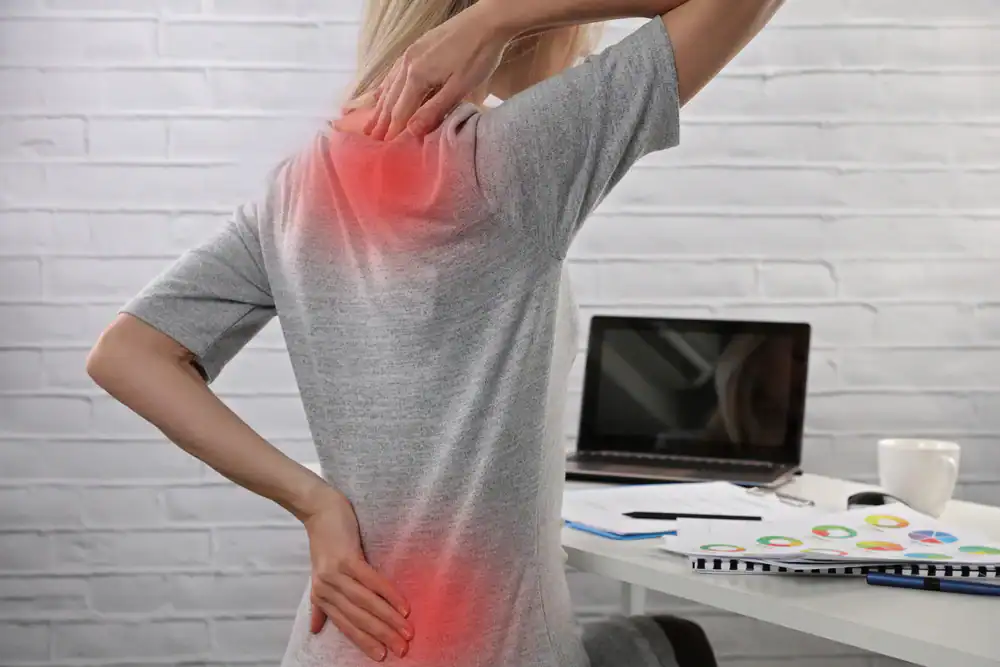
You stop planning your day around pain. That’s what happens when mechanical spinal traction benefits actually kick in—the constant ache in your lower back eases up, the shooting pain down your leg starts to fade, and you can finally sleep through the night without waking up stiff.
Spinal traction works by gently stretching your spine to reduce pressure on pinched nerves and compressed discs. When that pressure lifts, inflammation goes down, blood flow improves, and your body gets the chance to repair itself. You’re not masking symptoms with medication—you’re addressing what’s causing the problem in the first place.
Most people notice they can move more freely within the first few sessions. Bending over to tie your shoes doesn’t feel like a gamble anymore. Sitting at your desk or driving through Hudson County traffic doesn’t leave you wincing. You get your mobility back, and with it, the confidence to do normal things again without second-guessing every movement.
Dr. Paul Roses has been treating spinal conditions in Metroplaza, NJ since 1981. That’s over 40 years of hands-on experience with patients who’ve tried everything else—physical therapy, injections, medications—and still couldn’t get lasting relief.
What sets our practice apart isn’t flashy marketing. It’s results. Patients who couldn’t walk without assistance have left here moving freely again. People who were told surgery was their only option found another way forward through lumbar traction for sciatica Metroplaza, NJ and other targeted treatments.
Our approach is straightforward: figure out what’s actually wrong using proper diagnostics like x-rays and infrared imaging, then treat the root cause instead of just numbing the pain. You’re not getting a one-size-fits-all adjustment—you’re getting a treatment plan built around your specific condition, your body, and your goals.
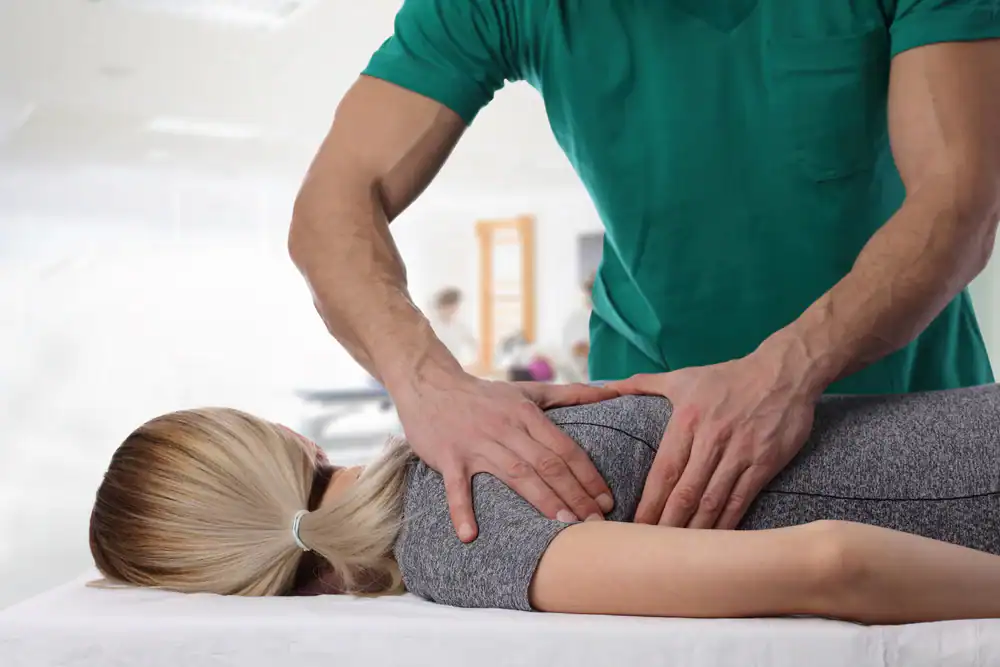
Your first visit starts with a real conversation about what’s going on—where it hurts, how long it’s been happening, what makes it worse. Then comes the diagnostic work: x-rays if needed, infrared imaging to see where inflammation is hiding, and a physical exam to understand how your spine is moving (or not moving).
Once Dr. Roses knows what he’s dealing with, he’ll explain what spinal traction can do for your specific condition. If you’ve got a herniated disc pressing on a nerve, the goal is to create negative pressure that pulls the disc material back and takes pressure off that nerve. If it’s cervical traction for neck pain Metroplaza, NJ you need, the focus shifts to your upper spine and the nerves running into your shoulders and arms.
During the actual treatment, you’re lying comfortably while the traction table does controlled, gentle stretching. It’s not painful—most people find it relaxing. Sessions typically last 15-30 minutes, and you’ll likely need multiple visits over several weeks. Progress isn’t always linear, but most patients start feeling real improvement within the first handful of treatments. You’ll know it’s working when you realize you made it through the afternoon without thinking about your back.

Ready to get started?
Non-surgical spinal decompression therapy Metroplaza, NJ includes a full evaluation before any treatment starts. You’re not walking in and getting strapped to a table—you’re getting a proper assessment first. That means understanding your medical history, looking at imaging, and mapping out a plan that makes sense for your situation.
Treatment itself combines mechanical spinal traction with other chiropractic techniques when appropriate. If your lower back is the issue, lumbar traction for sciatica Metroplaza, NJ targets that specific area to relieve nerve compression. If you’re dealing with neck problems—maybe from years of desk work or an old whiplash injury—cervical traction addresses the upper spine differently.
Hudson County has its share of people dealing with work-related injuries, whether from the ports, construction sites, or just sitting in traffic commuting to New York City every day. Our treatment approach accounts for that—it’s not just about getting you out of pain, it’s about keeping you functional for the demands of your actual life. You’ll also get guidance on what to do (and what not to do) between sessions so you’re not undoing progress the moment you leave the office.
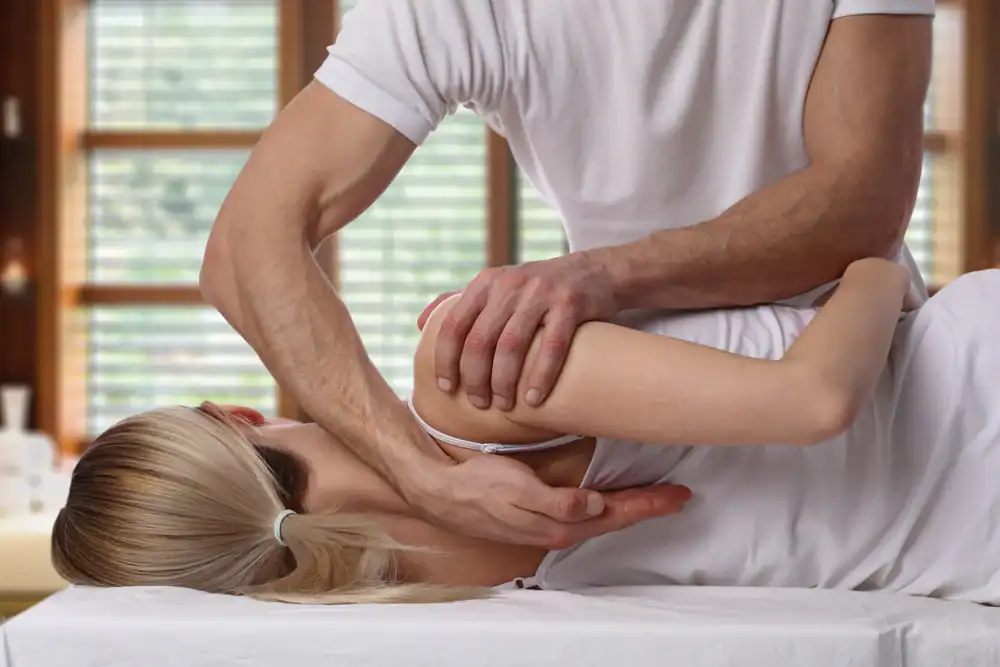
Spinal traction and manual adjustments work on different problems, and sometimes you need both. An adjustment is a quick, targeted movement to realign a vertebra or restore joint mobility. Traction is a sustained, gentle stretch that creates space between vertebrae over several minutes.
Think of it this way: if a bone is out of position, an adjustment can fix that. But if a disc is bulging or a nerve is compressed from years of degeneration, you need traction to decompress that area and give it room to heal. Traction is especially useful when someone can’t tolerate the force of a manual adjustment—maybe because they’re in too much pain, or they have osteoporosis, or they’re just nervous about the “cracking” sensation.
Many patients get the best results from combining both approaches. Dr. Roses will determine what your spine actually needs based on your exam and imaging, not based on what’s easiest to bill for or what he feels like doing that day.
Surgery isn’t inevitable for most sciatica cases, even severe ones. Sciatica happens when something—usually a herniated disc or bone spur—compresses your sciatic nerve. Lumbar traction for sciatica Metroplaza, NJ works by creating negative pressure in the disc space, which can pull herniated material back and reduce that nerve compression.
Research shows that many patients with disc herniations improve significantly with conservative treatment like spinal decompression. You might not need surgery if the herniation isn’t causing severe neurological problems like foot drop or loss of bladder control. Those are red flags that need immediate medical attention, possibly surgical intervention.
But if you’re dealing with pain, numbness, and tingling without those severe symptoms, traction gives your body a real chance to heal on its own. The treatment creates an environment where inflammation can decrease, nutrients can reach the damaged disc, and pressure comes off the nerve. Some people see dramatic improvement in weeks. Others take longer. Either way, it’s worth trying before you let someone cut into your spine.
Most people start noticing some relief within 4-6 sessions, but that’s not a guarantee—it depends on what’s wrong and how long it’s been wrong. Someone with a recent injury might respond faster than someone who’s had degenerative disc disease for 20 years.
A typical treatment plan runs 12-20 sessions over 4-6 weeks. You’ll usually come in 2-3 times per week at first, then taper down as you improve. Some patients feel significantly better halfway through and wonder if they should stop. Don’t. You’re not just chasing pain relief—you’re trying to create lasting change in your spine, and that takes time.
Dr. Roses will track your progress and adjust the plan if needed. If you’re not seeing any improvement after a reasonable number of sessions, he’ll tell you straight up and discuss other options. The goal isn’t to string you along for months of treatment that isn’t working—it’s to get you better and keep you better.
Spinal traction shouldn’t hurt. You’ll feel a gentle pulling or stretching sensation, but it’s typically not painful—most people find it relaxing enough that they doze off during sessions. If you do feel pain during treatment, that’s a signal something needs adjusting, and you should speak up immediately.
The table is designed to apply controlled, gradual force. It’s not yanking on your spine—it’s creating a slow, sustained stretch that your muscles and ligaments can tolerate. Some people feel a bit sore afterward, similar to how you might feel after a good stretch or a massage. That usually passes within a day.
Cervical traction for neck pain Metroplaza, NJ uses even gentler force since your neck is more delicate than your lower back. You might feel some tension release in your shoulders and upper back as the treatment progresses. The key is communication—if something doesn’t feel right, say so. The treatment can be adjusted in real-time to keep you comfortable while still being effective.
Spinal traction can absolutely help a herniated disc heal, but “fix” is complicated. A herniation happens when the soft inner material of your disc pushes through a tear in the outer layer. Traction creates negative pressure that can pull that material back in and take pressure off nearby nerves. As inflammation decreases and the area heals, many people see their symptoms resolve completely.
But here’s the reality: the tear in the disc doesn’t magically seal up like new. Your disc has been damaged, and while it can heal and stabilize, it’s now a vulnerable spot. If you go back to the same activities or postures that caused the herniation in the first place—heavy lifting with poor form, sitting hunched over for hours, ignoring your core strength—you’re at higher risk for it happening again.
That’s why our treatment doesn’t end when the pain stops. You’ll get guidance on how to protect your spine long-term: proper lifting mechanics, posture corrections, exercises to support your back. Think of traction as giving your body the chance to heal, and everything else as keeping it healed. Some patients do great for years. Others need periodic maintenance care. It depends on your body, your lifestyle, and how well you take care of yourself after treatment.
Coverage varies wildly depending on your insurance plan. Some plans cover spinal decompression therapy as part of chiropractic care, others don’t. Some require a referral from your primary care doctor, others let you come in directly. The only way to know for sure is to call your insurance company and ask specifically about coverage for chiropractic spinal traction or decompression therapy.
We can verify your benefits before you start treatment so you know what you’re looking at cost-wise. If insurance doesn’t cover it or you don’t have coverage, ask about cash pay rates. Many practices offer package pricing for multiple sessions since you’re not doing just one visit.
Here’s what you should consider: compare the cost of a few weeks of traction therapy to the cost of ongoing pain medications, repeated injections, or surgery. Factor in time off work, recovery periods, and the risk that surgery might not even solve the problem. Non-surgical spinal decompression therapy Metroplaza, NJ is typically a fraction of the cost of surgical intervention, with far less risk and downtime. Even if you’re paying out of pocket, it’s often the smarter financial move if it means avoiding a $50,000 surgery and months of recovery.