
Hear from Our Customers

You’re not looking for temporary relief that wears off by Tuesday. You want to bend down without wincing, sleep through the night, and get through your shift without that constant ache reminding you it’s there.
Non-surgical spinal decompression therapy in LSP Industrial, NJ works by gently stretching your spine to take pressure off compressed discs and pinched nerves. When that pressure releases, your body can actually start healing instead of just managing symptoms.
The difference shows up in how you move. Standing for longer stretches becomes possible again. Putting on your shoes doesn’t require help. Walking without that limp you’ve gotten used to feels normal again. Research shows 86% of patients with ruptured discs achieve good-to-excellent results with decompression compared to just 55% with traditional approaches.
This isn’t about masking pain. It’s about addressing what’s causing it so your body can do what it’s designed to do—heal itself when the interference is removed.
Dr. Roses has been serving Hudson County since 1981. That’s over 40 years of seeing what works and what doesn’t when it comes to back pain, sciatica, and herniated discs.
He doesn’t view chiropractic as just pain management. His approach centers on removing the nerve interference that keeps your body from healing properly—no unnecessary drugs, no quick fixes that don’t last.
LSP Industrial has one of the highest concentrations of industrial workers in Jersey City, and nearly 70% will deal with low back pain in any given year. We understand the physical demands you face daily. We’ve treated workers who’ve tried epidural shots, seen other chiropractors for over a year with little progress, and were told surgery was their only option. Many of those patients are walking normally again, sleeping better, and back to work without limitations.
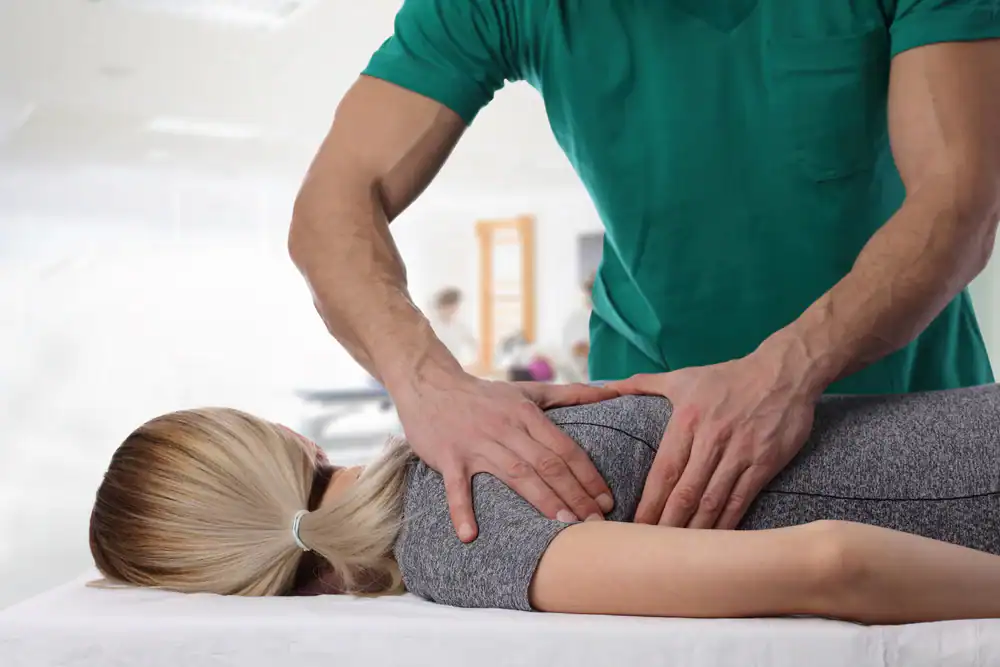
Your first visit starts with a real assessment. Dr. Roses uses baseline imaging when needed and takes the time to understand what you’re dealing with—how long you’ve had pain, what makes it worse, what you’ve already tried.
Mechanical spinal traction benefits in LSP Industrial, NJ come from the controlled stretching that happens during treatment. You’ll lie comfortably while the traction device applies gentle, measured force to your spine. This creates negative pressure inside your discs, which can pull herniated material back into place and increase blood flow to the area.
Sessions typically last 20-30 minutes. Most people feel some relief quickly—often within the first few treatments. But real, lasting improvement builds over time as your body responds and heals.
Dr. Roses also provides specific exercises designed for your particular problem. These aren’t generic stretches. They’re targeted movements that support what’s happening during your adjustments and help your progress stick between visits.
Ready to get started?
Lumbar traction for sciatica in LSP Industrial, NJ specifically targets the nerve compression that causes that shooting pain down your leg. When a herniated disc or bone spur presses on your sciatic nerve, traction creates the space needed to relieve that pressure.
You’ll also get cervical traction for neck pain in LSP Industrial, NJ if that’s part of your issue. Neck problems often contribute to headaches, shoulder pain, and arm numbness. The same principle applies—gentle stretching creates space, reduces pressure, allows healing.
Around 28% of adults in the U.S. deal with chronic low back or sciatic pain, and 44% have been suffering for five years or longer. Most wish better treatment options existed. The reality is they do exist—you just need someone who knows how to use them effectively.
Treatment here isn’t cookie-cutter. Dr. Roses adjusts the approach based on how you’re responding. Some patients need more frequent visits initially, others progress faster. The goal isn’t to keep you coming forever. It’s to get you better and give you the tools to stay that way.
Most people notice some improvement within the first few sessions. You might feel less pain, move more easily, or sleep better after just 2-3 treatments.
But here’s the honest answer: real, lasting relief builds over several weeks. Your body needs time to heal once the pressure is off. Quick symptom relief is common, especially with cervical traction for neck pain—some patients experience instant improvement. But if you’ve been dealing with this for months or years, expect a treatment plan that spans weeks, not days.
Dr. Roses will give you a realistic timeline based on your specific condition. Herniated discs respond differently than general muscle pain. Sciatica that’s been around for six months needs a different approach than something that started last week. The key is consistent treatment that gives your body the chance to actually repair itself.
Spinal traction is one of the safest non-surgical treatments available for back and neck pain. It’s non-invasive, drug-free, and has very few side effects when performed correctly.
Some people feel mild soreness after their first session or two, similar to how you might feel after starting a new exercise routine. This typically goes away quickly as your body adjusts. Occasionally, patients feel slight muscle fatigue or temporary increased stiffness, but these are normal responses that resolve within a day.
Compare that to surgery, where nearly 30% of spinal surgery patients experience postoperative complications, or to long-term pain medication use with its own set of risks. Traction offers a conservative approach that lets your body heal naturally. Dr. Roses monitors your response at every visit and adjusts treatment if needed. If something doesn’t feel right, you speak up, and the approach changes.
Spinal traction effectively treats herniated discs, bulging discs, sciatica, pinched nerves, degenerative disc disease, and chronic neck or back pain from nerve compression.
It works particularly well when your pain comes from a disc pressing on a nerve. That shooting pain down your leg, the numbness in your arm, the constant ache that gets worse when you sit too long—those are often signs of nerve compression that traction can address.
Research shows traction therapy demonstrates the largest effect size among conservative therapies for lumbar disc herniation. It’s also recommended specifically for lumbosacral spine pain in patients with nerve root compression. If you’ve been told you have a herniated disc, spinal stenosis, or sciatica, traction is worth considering before more invasive options. Dr. Roses will tell you straight whether your specific condition is likely to respond well to this treatment.
Home stretching can help with flexibility and general muscle tension, but it can’t create the controlled decompression that mechanical traction provides.
Spinal traction uses measured force to create negative pressure inside your discs. This is what pulls herniated material back into place and increases nutrient-rich blood flow to damaged areas. You can’t replicate that level of precise, sustained force on your own, no matter how good your stretching routine is.
The equipment also ensures the force is applied at the right angle, for the right duration, with the right amount of pressure for your specific condition. Too much force or the wrong angle can make things worse. Dr. Roses controls every variable to match what your body needs. That said, the exercises he gives you to do at home are important—they support what’s happening during treatment and help maintain your progress between visits.
Many insurance plans do cover chiropractic care including spinal traction, but coverage varies significantly between plans and providers.
The best approach is to call us directly and bring your insurance information. Our office can verify your specific benefits, explain what’s covered, and let you know about any out-of-pocket costs before you commit to treatment.
Even if your coverage is limited, consider the alternative costs. Failed conservative treatment often leads to more expensive interventions down the road—epidural injections, pain management programs, surgery. Nearly half of spinal surgery patients experience return of symptoms, sometimes requiring additional surgery. Investing in effective conservative care now can save you significant money, time, and complications later. We focus on affordable, effective treatment that actually addresses the problem instead of just managing symptoms indefinitely.
Yes. Many patients come to us after trying other chiropractors, physical therapy, pain management injections, or medications with limited success.
Spinal traction offers a different mechanism of relief than adjustments alone or standard physical therapy exercises. If you haven’t experienced true decompression therapy, you haven’t tried everything yet.
We’ve treated patients who walked with limps for years, couldn’t bend down without help, and were facing surgery as their “only option.” Some were walking normally after just three adjustments combined with traction. Others felt better than they had in years after a month of consistent treatment. The difference often comes down to whether the root cause—nerve compression from disc problems—has actually been addressed. If previous treatments focused only on symptoms or muscle issues without creating the space your nerves need, traction might be exactly what’s been missing from your care.