
Hear from Our Customers

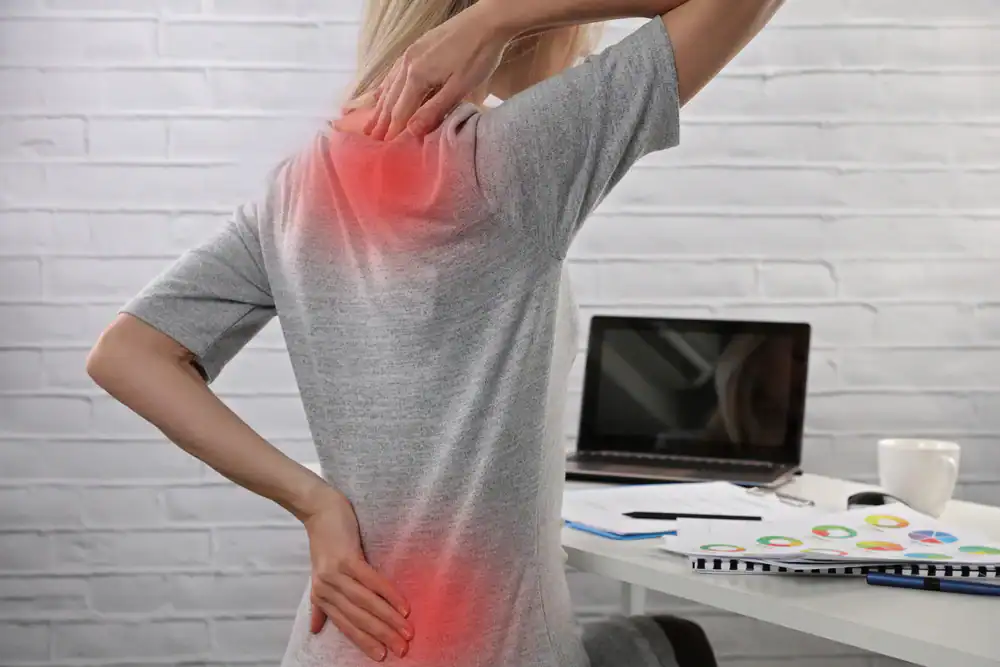
Your back pain isn’t just limiting your movement. It’s changing how you sleep, how you work, and whether you can pick up your kids without wincing.
Non-surgical spinal decompression therapy in Liberty Harbor, NJ creates negative pressure in your spinal discs. That pressure allows herniated or bulging material to retract. It also pulls oxygen, nutrients, and healing fluid back into the damaged area.
Clinical studies show 88.9% success rates after six weeks of treatment. Most patients feel measurable relief within the first six sessions. You’re not masking pain—you’re creating the conditions for your body to actually heal.
This works for sciatica, herniated discs, degenerative disc disease, and chronic lower back pain that hasn’t responded to other treatments. If you’ve been told surgery is your only option, you haven’t explored all your options yet.
Dr. Paul Roses grew up in Bayonne and has been practicing chiropractic care in this area since 1981. He’s not new to Liberty Harbor or the kinds of injuries and pain patterns common here.
He provided on-site care for first responders after 9/11. He’s worked with infants at St. Clare’s Home for Children and witnessed healing outcomes that changed how he approaches every patient. His bedside manner scores a perfect 5.0, and his wait times are among the shortest you’ll find.
You’re not walking into a high-volume clinic where you’re rushed through a script. You’re working with someone who checks in after your appointments, answers his phone on off days for emergencies, and actually wants to see you get better.
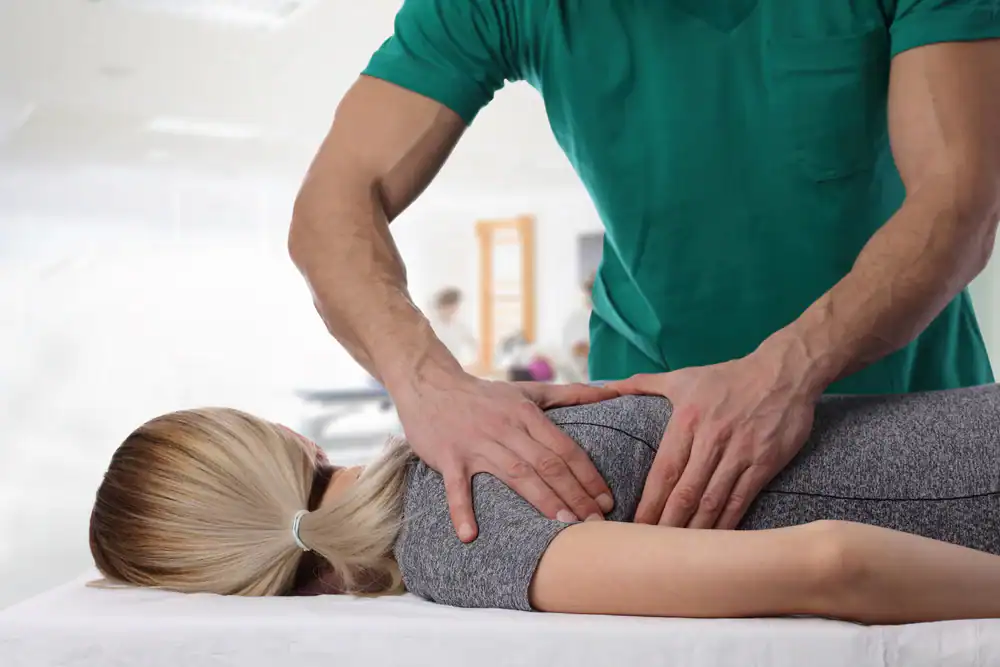
You’ll lie comfortably on an FDA-cleared spinal decompression table. A harness system gently applies controlled traction to your spine—either lumbar traction for sciatica and lower back pain, or cervical traction for neck pain and upper spine issues.
The table uses precise, computer-controlled cycles to stretch and relax your spine. This creates a vacuum effect inside the disc, which encourages retraction of herniated material and increases nutrient flow. Each session lasts about 30 minutes. Most patients say it’s relaxing enough that they fall asleep.
You’ll typically start with 8 to 12 sessions depending on your condition. Some people feel relief after two weeks. Others need the full course to see sustained improvement.
Between sessions, we may combine mechanical spinal traction benefits with deep tissue laser therapy, muscle work, or targeted adjustments. The goal isn’t just short-term relief—it’s restoring function so you can move without limitation again.
Ready to get started?
Spinal traction in Liberty Harbor, NJ isn’t a one-size-fits-all approach. We evaluate your specific condition first—your imaging, your pain patterns, how long you’ve been dealing with this, and what you’ve already tried.
Liberty Harbor has one of the highest median incomes in the state and some of the longest commutes in Hudson County. That means you’re likely sitting for extended periods, dealing with repetitive stress, or compensating for old injuries that never fully healed. All of that shows up in your spine.
Treatment here includes access to the DRX9000, one of the most advanced spinal decompression systems available. It’s the same technology used at Mayo Clinic, Johns Hopkins, and Stanford. It’s FDA-cleared and backed by clinical research showing over 70% of patients experience significant pain relief.
You’ll also get a realistic timeline. If you’re going to respond well to lumbar traction for sciatica or cervical traction for neck pain, you’ll know within the first few sessions. If this isn’t the right fit, we’ll tell you that too.
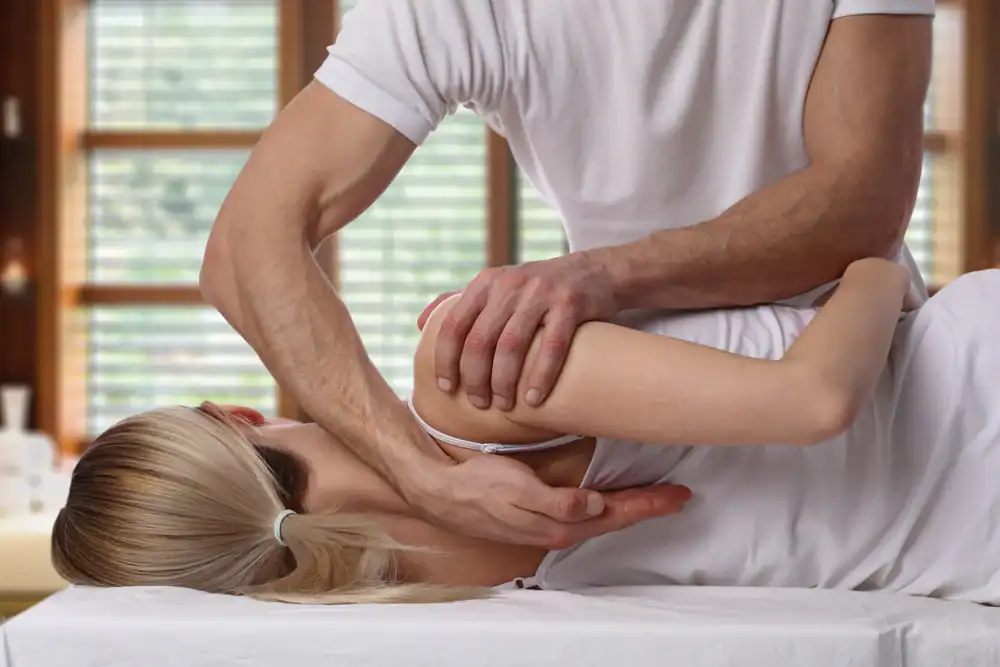
Adjustments realign the vertebrae and restore joint mobility. Spinal traction addresses the discs between those vertebrae.
If you have a herniated or bulging disc, an adjustment alone won’t fix it. The disc material is still pressing on nerves, which is why you’re feeling pain, numbness, or tingling down your leg or arm.
Non-surgical spinal decompression therapy in Liberty Harbor, NJ uses controlled traction to create space inside the disc. That space allows the bulge to retract and reduces pressure on the nerve. It also increases circulation to the disc, which promotes healing from the inside out.
We often combine both approaches depending on what your spine needs. You’re not choosing one or the other—you’re getting a complete plan.
Yes, especially when your sciatica is caused by a herniated disc, degenerative disc disease, or spinal stenosis.
Lumbar traction for sciatica in Liberty Harbor, NJ reduces the pressure on your sciatic nerve by decompressing the lower spine. Studies show pain reductions of 30 to 40% in many cases, with some patients experiencing complete relief after a full treatment course.
If your sciatica is coming from piriformis syndrome or another soft tissue issue, traction may not be the primary solution. That’s why the initial evaluation matters. We’ll determine where the nerve compression is actually happening and whether spinal traction is the right move.
Most sciatica patients notice less radiating pain and improved mobility within the first two weeks of treatment.
Most patients feel some level of relief within six sessions. Full treatment typically runs between 8 and 12 sessions, depending on the severity of your condition.
If you’ve been dealing with chronic pain for years, it’s going to take longer than someone with a recent injury. Your body needs time to heal, and that process can’t be rushed.
Clinical data shows that 50% of patients report significant pain reduction after two weeks. By six weeks, success rates jump to 88.9%. Those aren’t guarantees, but they’re based on real outcomes from FDA-cleared spinal decompression technology used across the country.
We track your progress throughout. If you’re not responding the way you should, we’ll adjust the plan or recommend a different approach. You’re not locked into a protocol that isn’t working.
It depends on your plan, but spinal decompression is covered by 60 to 70% of insurance carriers when it’s deemed medically necessary.
Medical necessity usually means you’ve tried conservative treatments like physical therapy or medication without success, and surgery has been recommended or considered. Our office will verify your coverage before you start treatment.
Even if your insurance doesn’t cover it fully, many patients in Liberty Harbor choose to move forward because the alternative—surgery, ongoing pain meds, or just living with the pain—costs more in the long run. You’re looking at a few thousand dollars for a full course of treatment versus tens of thousands for surgery and recovery.
We work with you on payment options. The goal is to make this accessible if it’s the right clinical fit.
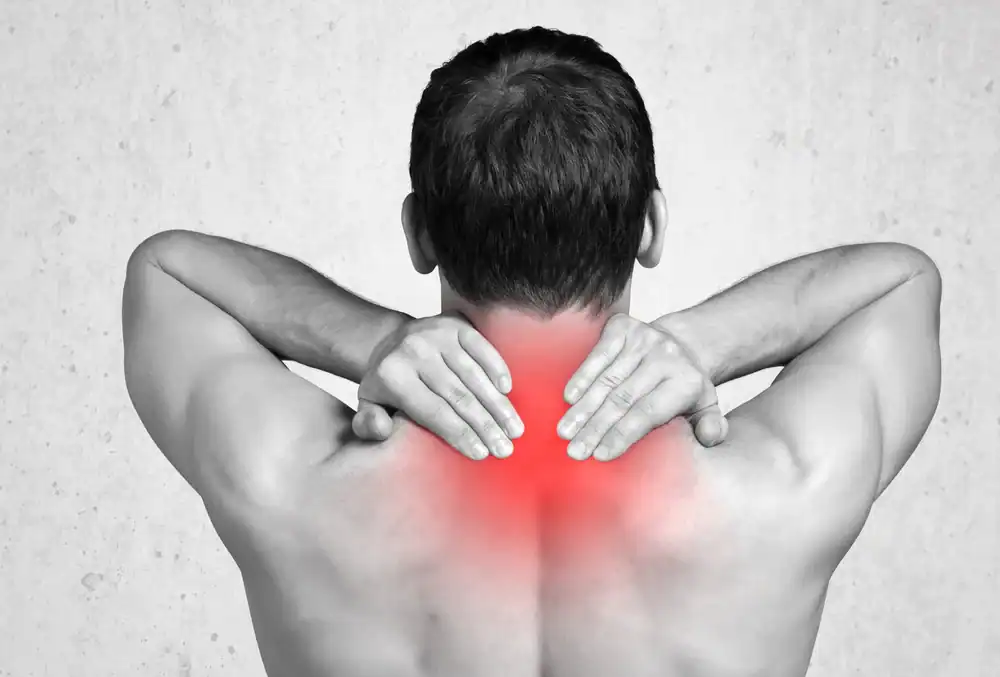
Cervical traction for neck pain in Liberty Harbor, NJ is highly effective for disc herniations in the upper spine, chronic neck pain from poor posture, and radiating arm pain caused by nerve compression.
It also treats degenerative disc disease, failed back surgery syndrome, posterior facet syndrome, and some cases of spinal stenosis. If you’ve been told you need surgery for any of these, spinal decompression is worth exploring first.
It won’t help with fractures, tumors, or severe osteoporosis. We review your imaging and history during the consultation to make sure you’re a candidate. Not everyone is, and we’ll tell you upfront if that’s the case.
The treatment works because it addresses the mechanical problem—compressed discs and pinched nerves—not just the pain signals.
Your first session starts with a thorough evaluation. We’ll review any imaging you have, ask about your pain patterns, and test your range of motion and nerve function.
Once we confirm you’re a good candidate for mechanical spinal traction benefits, you’ll lie down on the decompression table. A harness fits around your pelvis or neck depending on where the problem is. The table applies gentle, controlled traction in cycles—pulling and releasing to create that negative pressure inside the disc.
Most people say it feels like a gentle stretch. Some fall asleep. Sessions last about 30 minutes, and you can go back to your normal routine right after.
You might feel some soreness after the first session as your body adjusts, but that usually fades quickly. We’ll call to check in and make sure you’re tolerating it well. That’s standard here, not an exception.