
Hear from Our Customers

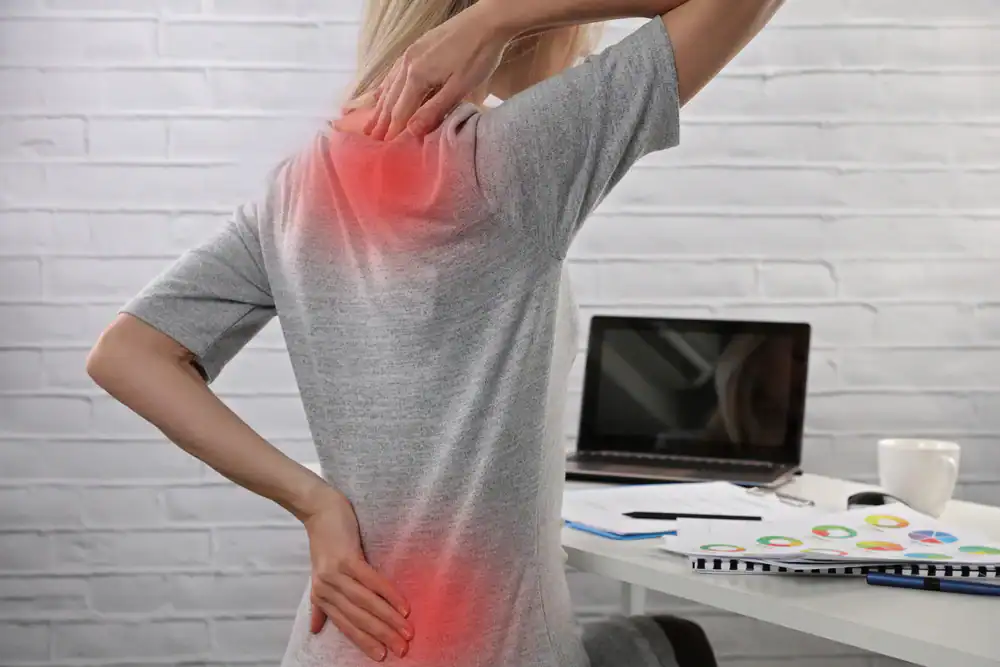
You’re not looking for temporary relief. You want to bend down without wincing, sleep through the night, and move like you used to.
Non-surgical spinal decompression therapy in Lafayette Industrial works by gently stretching your spine in controlled cycles. This creates negative pressure inside the disc, which does two things: it pulls herniated or bulging material back into place, and it brings nutrient-rich fluid into the disc so it can heal. That’s not masking pain—that’s fixing the problem.
Research shows 86% of patients with ruptured discs saw good-to-excellent results with decompression therapy. Compare that to 55% with standard traction. The difference isn’t subtle.
You’ll notice changes in stages. Some people walk better after a few sessions. Others sleep better first. But the real shift happens when you realize you’re not planning your day around your back anymore.
Dr. Paul Roses has been practicing in Bayonne for over 30 years, serving Lafayette Industrial and the surrounding Hudson County area. He’s not new to complicated cases or patients who’ve already tried everything else.
After September 11th, he provided on-site care for first responders pulling victims from the rubble. He’s treated patients who couldn’t put on their own socks, people told they needed surgery, and folks who’d given up on feeling normal again.
Lafayette Industrial sits in an area where people work hard—manufacturing, logistics, warehousing. That means repetitive strain, lifting injuries, and bodies that don’t get a break. We understand what daily pain does to your work, your mood, and your family. Our approach is straightforward: find the interference, remove it, and let your body do what it’s built to do.
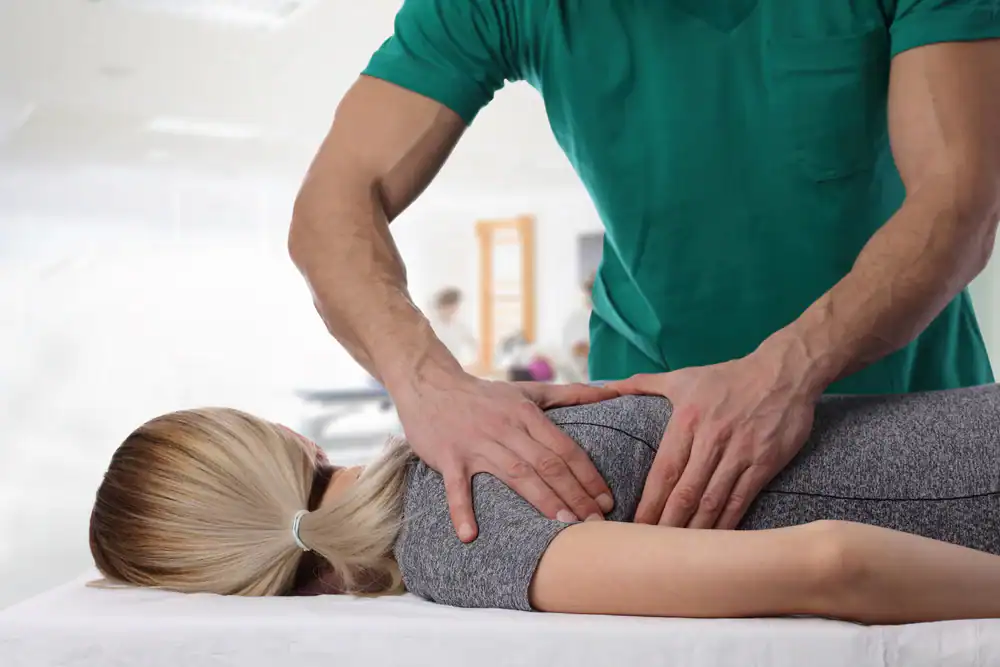
Your first visit starts with an exam. Dr. Roses needs to see how your spine moves, where the restriction is, and what’s causing your pain. He’ll look at your history, any imaging you’ve had, and ask questions that matter—not just “does it hurt,” but “what can’t you do anymore?”
If spinal traction is right for you, treatment involves lying on a specialized table that uses computerized sensors to monitor your body’s response. The system applies gentle, controlled stretching to your spine in cycles—pull and release, pull and release. It’s not uncomfortable. Most people relax during it.
The sensors adjust in real time based on how your muscles respond. If you tense up, the system backs off. This precision is what separates modern decompression therapy from old-school traction. The goal is to create space between your vertebrae without triggering your body’s defense mechanisms.
Sessions typically last 20 to 30 minutes. You’ll likely need multiple visits over several weeks, depending on your condition. Some people feel improvement quickly. Others take longer. But mechanical spinal traction benefits in Lafayette Industrial are consistent: reduced pain, better mobility, and a real chance to avoid surgery.

Ready to get started?
Spinal traction is effective for herniated discs, bulging discs, degenerative disc disease, sciatica, pinched nerves, and spinal stenosis. If you’ve got shooting pain down your leg, numbness in your arms, or chronic lower back pain that won’t quit, this is worth considering.
Lumbar traction for sciatica in Lafayette Industrial specifically targets the lower spine where most disc problems occur. When a disc presses on your sciatic nerve, you feel it everywhere—your hip, your leg, sometimes all the way to your foot. Decompression pulls that pressure off so the nerve can calm down and the disc can heal.
Cervical traction for neck pain in Lafayette Industrial works the same way, but for your upper spine. If you’ve got neck pain that radiates into your shoulders or arms, or if turning your head is a problem, cervical decompression can create the space your nerves need.
Hudson County has a higher-than-average rate of musculoskeletal complaints, likely tied to the industrial and logistics work common in areas like Lafayette Industrial. That means more lifting injuries, more repetitive strain, and more people dealing with chronic pain. We’ve built our practice around treating these exact issues without drugs or surgery.
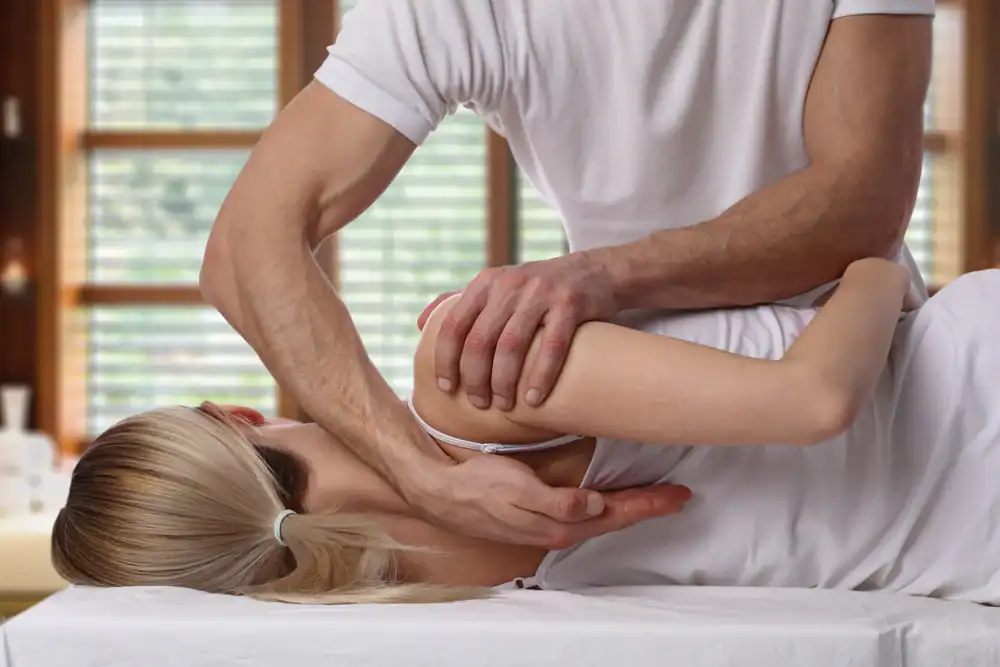
Regular traction pulls on your spine with constant force. Your muscles sense that and tighten up to protect you, which limits how effective it can be.
Spinal decompression uses computerized cycles—gentle pulling and releasing—that prevent your muscles from engaging that protective response. The system monitors your body hundreds of times per second and adjusts based on what it detects. That means deeper decompression, better nutrient flow to the disc, and higher success rates.
Studies back this up. Decompression therapy shows an 86% improvement rate for ruptured discs compared to 55% for standard traction. That’s not a small difference. It’s the difference between managing pain and actually healing the injury.
It depends on your condition, how long you’ve had it, and how your body responds. Most treatment plans run between 15 and 30 sessions over four to eight weeks.
Some people notice relief within the first few visits—better sleep, less stiffness, easier movement. Others take longer to turn the corner. Disc injuries don’t heal overnight, and if you’ve been dealing with pain for months or years, your body needs time to rebuild.
Dr. Roses will give you a realistic timeline after your exam. We’re not interested in dragging out treatment or overpromising results. You’ll know what to expect, and adjustments to the plan happen based on how you’re actually progressing—not some generic protocol.
No. Most people find it relaxing. You’re lying down on a comfortable table while the system does the work. The stretch is gentle and controlled—nothing sudden or jarring.
You might feel a mild pulling sensation, but it shouldn’t hurt. If you do feel discomfort, the computerized sensors detect that tension and automatically adjust. The whole point is to decompress your spine without triggering a protective muscle response.
After a session, some people feel a little sore—similar to the feeling after a good stretch or workout. That’s normal and usually fades quickly. You’re not going to leave in more pain than you came in with.
It depends on your plan. Some insurance companies cover spinal decompression under chiropractic care, while others don’t. Coverage often comes down to how the treatment is coded and whether it’s deemed medically necessary.
Our office can verify your benefits before you start treatment. We’ll contact your insurance, find out what’s covered, and let you know what your out-of-pocket cost will be. No surprises.
Even if insurance doesn’t cover it fully, many patients find the cost worth it compared to surgery, ongoing medications, or just living with the pain. You’re looking at a few thousand dollars for a full treatment plan versus tens of thousands for surgery—and no recovery time, no anesthesia risks, and no surgical complications.
Spinal traction works best for disc-related problems: herniated discs, bulging discs, degenerative disc disease, and sciatica caused by nerve compression. It’s also effective for spinal stenosis, pinched nerves, and some cases of chronic neck or lower back pain.
If your pain is coming from a disc pressing on a nerve, decompression directly addresses that. It creates space, reduces pressure, and allows healing to happen. That’s why success rates are so high for these specific conditions.
It’s not a fit for everything. If your pain is from a fracture, infection, tumor, or severe osteoporosis, decompression isn’t the right approach. That’s why the initial exam matters. Dr. Roses will tell you honestly whether this treatment makes sense for your situation or if you need a different approach.
For many people, yes. Research shows that non-surgical spinal decompression has success rates above 80% for conditions like herniated discs—problems that often lead to surgery recommendations.
Surgery should be a last resort. It’s invasive, expensive, and comes with real risks: infection, nerve damage, failed back surgery syndrome. Recovery can take months, and there’s no guarantee it solves the problem.
Decompression gives you a legitimate alternative. If it works, you avoid all of that. If it doesn’t, surgery is still an option—you haven’t lost anything by trying a conservative approach first. Most surgeons will actually respect that you explored non-invasive options before going under the knife.