
Hear from Our Customers

You’re not looking for temporary relief that wears off by dinner. You need your spine to function the way it’s supposed to so you can work, move, and sleep without constantly managing pain.
Non-surgical spinal decompression therapy in Jackson Hill works by gently stretching your spine to reduce pressure on compressed discs and nerves. When that pressure decreases, inflammation goes down, nutrient flow improves, and your body can actually start healing instead of just coping.
Most people notice improved mobility within the first few sessions. That tightness in your lower back eases up. Sciatica symptoms that shoot down your leg start to fade. You’re not wincing every time you bend over or get out of the car.
This isn’t about masking symptoms. Mechanical spinal traction benefits in Jackson Hill include creating the conditions your spine needs to recover, whether you’re dealing with a herniated disc, degenerative changes, or nerve compression that’s been limiting your life for months.
Dr. Paul Roses has been practicing chiropractic care since 1981. He’s a Bayonne native who’s treated thousands of patients across Hudson County, including right here in Jackson Hill, NJ.
After September 11, 2001, Dr. Roses provided on-site care for first responders at the World Trade Center. That’s the kind of commitment we bring—showing up when it matters and knowing how to help people in real pain.
Our approach is straightforward. No unnecessary treatments. No pressure to commit to plans that don’t make sense. Just focused, drug-free care designed to get you functioning again so you can get back to your life.
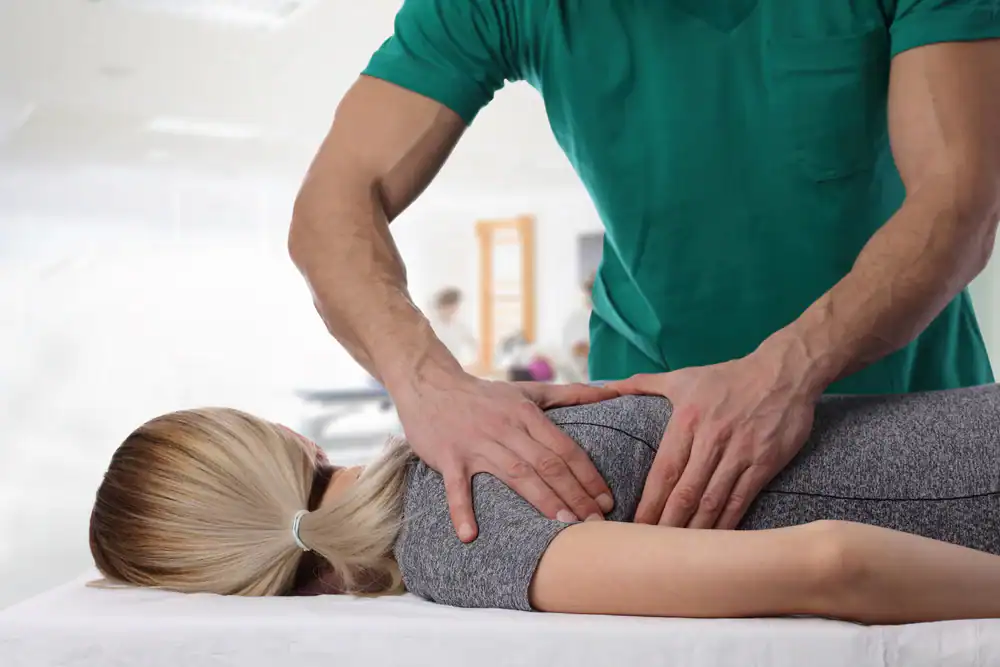
Your first visit starts with an evaluation. Dr. Roses needs to understand what’s causing your pain, where it’s located, and how it’s affecting your daily routine. He’ll review your history, perform an exam, and determine if spinal traction is the right fit for your condition.
If it is, you’ll lie comfortably on a specialized table designed for controlled spinal decompression. The table applies gentle, measured traction to specific areas of your spine. You’ll feel a stretching sensation, but it shouldn’t hurt. Most patients find it relaxing.
Each session typically lasts 20 to 30 minutes. The goal is to create negative pressure within the discs, which helps retract herniated or bulging material and brings oxygen and nutrients back into the area. That’s what allows healing to actually occur.
Treatment plans vary depending on your condition. Some people feel significant relief within a few visits. Others need a longer course of care to see lasting results. Dr. Roses will map out a realistic timeline based on what your spine needs, not what sounds good on paper.

Ready to get started?
Lumbar traction for sciatica in Jackson Hill is one of the most common reasons people seek this treatment. When a herniated or bulging disc compresses the sciatic nerve, the pain can radiate down your leg and make it nearly impossible to sit, stand, or walk comfortably. Traction reduces that compression and gives the nerve room to calm down.
Cervical traction for neck pain in Jackson Hill addresses similar issues in your upper spine. Disc problems, nerve impingement, and chronic tension in the neck respond well to controlled decompression. If you’ve been dealing with headaches, shoulder pain, or numbness in your arms, this could be part of the solution.
You might also benefit if you have degenerative disc disease, spinal stenosis, or chronic lower back pain that hasn’t improved with other treatments. Jackson Hill has a working population—77% white-collar, many spending hours at desks or commuting. That kind of daily strain adds up, and spinal traction offers a way to address the underlying mechanical problems instead of just treating symptoms.
The treatment is drug-free, non-invasive, and designed to work with your body’s natural healing process. Studies show an 86% success rate for pain reduction with spinal decompression, and many patients report improved range of motion and quality of life after completing their care plan.
Some people feel relief after just a few sessions. Others need several weeks of consistent treatment before they notice significant improvement.
It depends on what’s wrong with your spine. If you have acute pain from a recent injury, you might respond faster. Chronic conditions that have been building for years usually take longer to resolve.
Dr. Roses will give you a realistic timeline during your evaluation. Most treatment plans involve multiple sessions per week initially, then taper off as your symptoms improve. The key is consistency—skipping sessions or stopping too early can limit your results.
No, it shouldn’t be painful. You’ll feel a gentle stretching sensation as the table applies traction to your spine, but most patients find it comfortable and even relaxing.
If you do feel pain during treatment, that’s a sign something needs to be adjusted. Dr. Roses can modify the amount of traction, the angle, or the duration to make sure you’re getting the therapeutic benefit without discomfort.
The whole point is to reduce pain, not create it. If the treatment isn’t working for you or feels wrong, speak up. Adjustments can be made on the spot.
Yes. Spinal traction is one of the most effective non-surgical treatments for herniated discs. It works by creating negative pressure inside the disc, which can help retract the herniated material and take pressure off nearby nerves.
When that pressure decreases, inflammation goes down and your body has a better chance to heal. Many people with herniated discs experience significant pain relief and improved mobility after a course of traction therapy.
That said, not every herniated disc responds the same way. Severe cases or those involving certain complications may require additional treatment or a different approach. Dr. Roses will assess your specific situation and let you know what to expect.
Chiropractic adjustments focus on realigning the spine and restoring proper joint function. Spinal traction focuses on decompressing the discs and relieving nerve pressure through controlled stretching.
They’re complementary treatments. In many cases, we’ll use both—adjustments to correct alignment issues and traction to address disc problems and nerve compression. Together, they create a more complete approach to spinal care.
Traction is particularly useful when adjustments alone aren’t enough, especially if you’re dealing with disc herniations, sciatica, or chronic nerve pain. It’s another tool in the toolkit, and it’s one that’s been part of effective spinal care for decades.
Most people don’t need ongoing traction indefinitely. The goal is to resolve the underlying problem so your spine can function normally without constant intervention.
A typical treatment plan might last several weeks to a few months, depending on your condition. Once you’ve achieved the desired results, you may transition to maintenance care or stop treatment altogether.
Some patients do benefit from periodic sessions if they have degenerative conditions or high-stress jobs that put ongoing strain on their spine. But that’s determined on a case-by-case basis. We’re not interested in keeping you coming back longer than necessary—we’re interested in getting you better.
Coverage varies depending on your insurance plan and the specifics of your condition. Many plans do cover chiropractic care, including spinal traction, especially when it’s deemed medically necessary.
The best approach is to contact your insurance provider directly and ask about coverage for non-surgical spinal decompression or mechanical traction. You can also reach out to us at Roses Chiropractic, and our office can help verify your benefits.
Even if insurance doesn’t cover the full cost, spinal traction is often far more affordable than surgery, ongoing pain medication, or long-term physical therapy. It’s worth comparing the actual numbers before assuming it’s out of reach.