
Hear from Our Customers

You’re not looking for another temporary fix. You’ve tried rest, medication, maybe even injections. What you need is something that addresses why your back or neck hurts in the first place.
Mechanical spinal traction benefits in Hoboken, NJ go beyond masking symptoms. The treatment creates space between compressed vertebrae, reducing pressure on nerves and discs. That means less pain shooting down your leg, fewer mornings where you can’t turn your head, and actual improvement in how your spine functions.
Most people notice a difference after just a few sessions. Pain starts to ease. Movement becomes less guarded. Within two weeks, you’re sleeping better and getting through your workday without constantly shifting positions. After five to six weeks of consistent treatment, the improvements tend to stick because you’ve given your body time to heal properly.
This isn’t about learning to live with pain. It’s about removing what’s causing it so you can get back to your life.
We’ve been treating Hoboken residents who need real solutions, not just symptom management. We’re not the practice that rushes you through appointments or offers the same treatment plan to everyone who walks in.
Hoboken’s population skews young—median age 31—and professional. That means long commutes, desk jobs, and bodies that are expected to perform without complaint. We see the fallout from that daily: herniated discs in your early 30s, chronic neck pain from hours hunched over a laptop, sciatica that makes your 37-minute commute unbearable.
We use advanced spinal decompression technology that monitors your spine’s response hundreds of times per second and adjusts automatically. You’re not getting a one-size-fits-all approach. You’re getting treatment that adapts to what your body needs in real time.
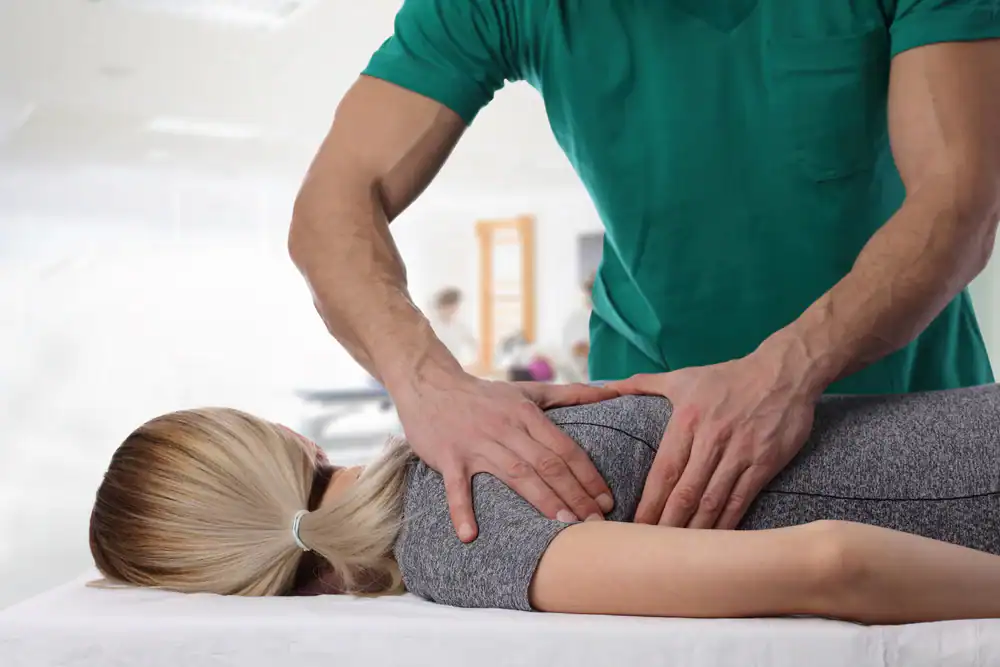
You’ll start with an evaluation. We need to understand where the pain is coming from, what’s causing the compression, and whether spinal traction is the right approach for your specific condition. Not everyone needs the same treatment, and we’re not going to recommend something that won’t work for you.
During the actual treatment, you’re positioned on a specialized table that applies controlled, gentle traction to your spine. The system can angle the pull to isolate individual discs—targeting exactly where the problem is. You’ll feel a stretching sensation, but it shouldn’t hurt. Most people find it surprisingly comfortable.
Each session typically lasts 20 to 30 minutes. The traction creates negative pressure inside the disc, which does two things: it pulls herniated or bulging material back into place, and it creates a vacuum effect that draws in blood flow, oxygen, and nutrients your spine needs to heal. That’s not just pain relief—that’s actual repair happening.
Most treatment plans involve 15 to 30 sessions over several weeks. Frequency depends on your condition and how you respond, but consistency matters. You’re retraining your spine and giving damaged tissue time to recover properly.
Ready to get started?
Lumbar traction for sciatica in Hoboken, NJ is one of the most common reasons people seek this treatment. When a disc in your lower back herniates or bulges, it can press on the sciatic nerve. That’s what causes the shooting pain down your leg, the numbness in your foot, the feeling that your leg might give out.
Traction relieves that nerve pressure. As the vertebrae separate, the disc has room to move back into position and inflammation decreases. For many patients, that means sciatica pain reduces significantly within the first few weeks.
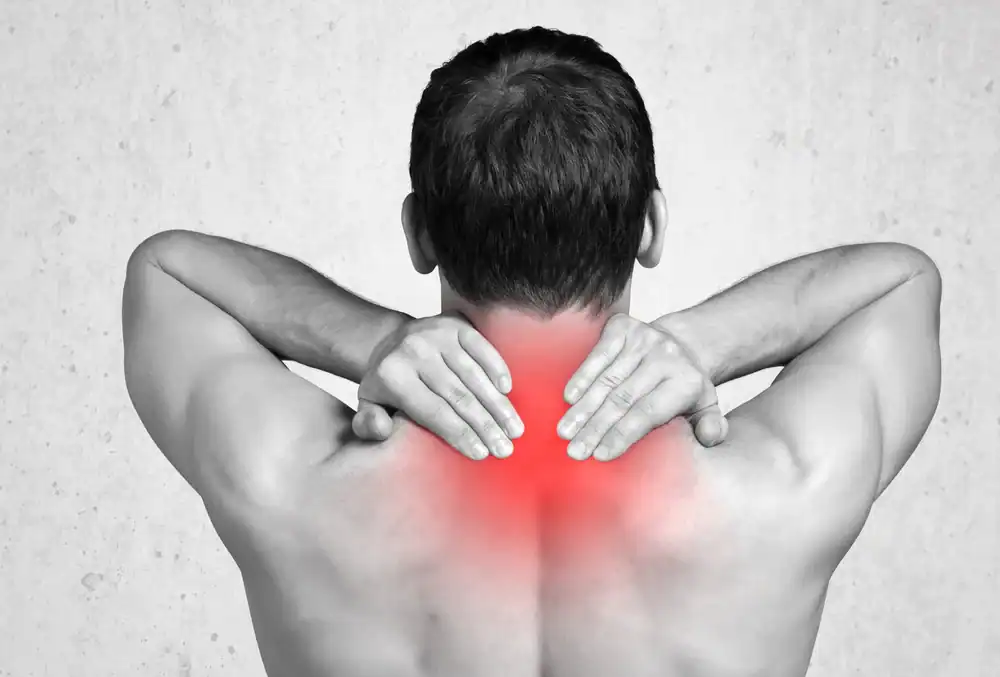
We also treat cervical traction for neck pain in Hoboken, NJ. Neck issues often stem from degenerative disc disease, arthritis, or pinched nerves—common problems for people who spend hours at a desk or commuting. Cervical traction works the same way as lumbar traction, just applied to your neck. It reduces compression, improves mobility, and addresses the stiffness that makes it hard to check your blind spot or look down at your phone.
Other conditions that respond well: herniated discs, degenerative disc disease, spinal stenosis, and chronic lower back pain that hasn’t improved with other treatments. The key is that your pain has a mechanical cause—something that compression and decompression can influence.
Most people notice some pain reduction after the first few visits. That doesn’t mean you’re done—it means the treatment is working and your body is starting to respond.
Significant improvement usually shows up around the two-week mark. You’ll move more easily, sleep better, and get through your day with less discomfort. By five to six weeks, if you’ve stuck with the treatment plan, the results tend to be lasting because the underlying issue has had time to heal.
Everyone’s different. If you’ve been dealing with chronic pain for years, it may take longer than someone with a recent injury. But the timeline is generally predictable, and we’ll track your progress so you know whether you’re on the right path.
Not quite. Older traction methods were fairly basic—constant pull, no real customization, and results were hit or miss. Modern spinal decompression therapy uses computerized systems that adjust in real time based on how your spine responds.
The technology monitors resistance and muscle tension hundreds of times per second. If your body starts to tense up, the system compensates automatically. That means you get a more effective treatment with less discomfort and better outcomes.
Research backs this up. A study of 778 patients found that spinal decompression was more than 70% successful in treating herniated discs, degenerative disc disease, and sciatica. Another study showed 86% of patients with ruptured discs achieved good-to-excellent results with modern decompression, compared to 55% with traditional traction. The difference is real.
Most insurance plans offer some level of coverage for chiropractic care and spinal decompression, but the specifics vary by plan. Some cover the full course of treatment, others cover a portion, and a few require prior authorization.
We’ll verify your benefits before you start treatment so there are no surprises. If you have workers’ compensation coverage, that typically includes spinal decompression since back pain is the leading cause of job-related disability in the U.S.
If insurance doesn’t cover everything, we’ll talk through your options. The goal is to make sure cost doesn’t keep you from getting relief, especially when the alternative—surgery, ongoing medication, or just living with pain—often costs more in the long run.
You’ll feel a gentle pulling or stretching sensation in your spine. It’s not painful—most people describe it as a relief, especially if you’ve been dealing with constant compression and tightness.
You’re lying on a table, fully clothed, and the system applies controlled traction for 20 to 30 minutes. Some people relax enough to doze off. Others just enjoy the break from pain. There’s no cracking, no sudden movements, and no discomfort that makes you tense up.
After the session, you might feel a bit of soreness—similar to what you’d feel after a good stretch or light workout. That usually fades within a few hours. The pain you came in with, though, often starts to ease after just a few treatments.
Yes. Spinal traction works differently than physical therapy or injections, so it can be effective even if those treatments didn’t give you the relief you needed.
Physical therapy focuses on strengthening and mobility, which is valuable—but if a disc is still compressing a nerve, no amount of stretching will fix that. Injections reduce inflammation temporarily, but they don’t address the mechanical problem causing the inflammation in the first place.
Spinal traction targets the source: it creates space, reduces pressure on nerves and discs, and allows your body to heal. Many patients come to us after other treatments have plateaued. They’re not looking for another band-aid. They want something that actually changes the underlying issue, and that’s what decompression is designed to do.
The best candidates are people dealing with pain caused by compression—herniated discs, bulging discs, sciatica, degenerative disc disease, spinal stenosis, or pinched nerves. If your pain is mechanical and related to how your spine is structured or functioning, traction can help.
You’re probably not a good candidate if you have certain conditions like fractures, tumors, severe osteoporosis, or if you’re pregnant. We’ll go over your medical history and imaging results during your evaluation to make sure this is the right approach.
Most people who come in have already tried other treatments without success. They’re tired of managing symptoms and want to address the root cause. If that sounds like you, there’s a good chance spinal traction will make a real difference. We’ll tell you honestly whether it’s the right fit or if another approach makes more sense for your situation.