
Hear from Our Customers

You’re not looking for temporary relief. You want to bend down without wincing, sleep through the night, and stop planning your day around pain.
Spinal traction in Harrison, NJ works by gently creating space between your vertebrae. That space reduces pressure on compressed nerves and discs, which is often what’s causing your sciatica, numbness, or that sharp pain down your leg. It’s mechanical spinal traction—controlled, targeted, and designed to address the root issue, not just mask symptoms.
Most people notice a difference within the first few visits. The pain starts to ease. Movement gets easier. After a few weeks of consistent treatment, many patients report feeling better than they have in months—sometimes years. No surgery. No extended recovery. Just a treatment that works with your body’s natural ability to heal when given the right conditions.
Dr. Paul Roses grew up in Bayonne and has spent over 30 years helping people across Hudson County find relief without drugs or surgery. After 9/11, he provided on-site care to firefighters and police officers working at Ground Zero. That’s the kind of commitment he brings to every patient.
At Roses Chiropractic, you’re not a number. You get a full assessment using advanced imaging technology, a personalized treatment plan, and follow-up care that actually follows up. Dr. Roses has called patients later in the day just to check in. That level of attention is rare, and it matters when you’re trusting someone with your health.
Harrison residents come to us because the care is thorough, the results are real, and the approach is grounded in what actually works—not what sounds good in a brochure.
Your first visit starts with a baseline assessment. Dr. Roses uses Titron Infrared Imaging to identify exactly where the nerve interference is happening. It’s painless, takes seconds, and gives a clear picture of what’s going on in your spine.
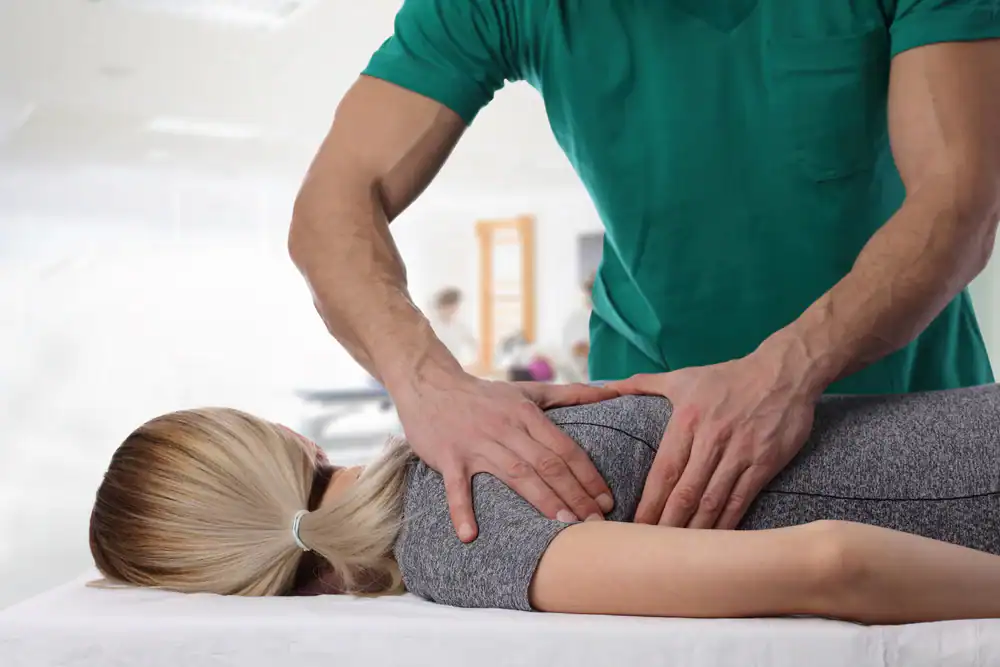
Once the problem areas are mapped out, treatment begins with mechanical spinal traction. You’ll lie on a specialized table that uses computer-controlled intermittent traction to gently stretch and relax your spine. This creates negative pressure inside the disc, which helps pull herniated or bulging material back into place and allows oxygen and nutrients to flow in. That’s what promotes healing.
Each session typically lasts 20 to 30 minutes. There’s no downtime. You can go right back to work, pick up your kids, or head to the gym if you’re cleared for it. Most patients start with a series of visits over several weeks. The exact plan depends on your condition, but the goal is always the same: long-term relief, not just a quick fix.
You’ll also get custom exercises designed to strengthen the areas that need support. These aren’t generic stretches—they’re specific to your body and your situation, and they make a real difference in how well the treatment holds.
Ready to get started?
Spinal traction in Harrison, NJ isn’t a one-size-fits-all approach. We use it to treat herniated discs, sciatica, spinal stenosis, degenerative disc disease, and chronic lower back pain. If you’ve been told surgery is your only option, this is worth exploring first.
Lumbar traction for sciatica is one of the most common applications. Sciatica happens when the sciatic nerve gets compressed, usually by a bulging disc or bone spur. The result is pain that shoots down your leg, sometimes all the way to your foot. Decompression therapy relieves that pressure, and in many cases, the pain improves significantly within a few weeks.
Cervical traction for neck pain works the same way, but it targets the upper spine. If you’re dealing with neck stiffness, headaches, or pain that radiates into your shoulders or arms, this can help. The treatment is gentle, controlled, and backed by research showing success rates between 75% and 89% in small studies.
Harrison sits right in the middle of a high-stress commuter corridor. Between Newark, Jersey City, and the NYC transit grind, a lot of people here are sitting for hours every day. That kind of repetitive strain adds up. Spinal decompression therapy gives your body a chance to reset and recover from that daily wear.
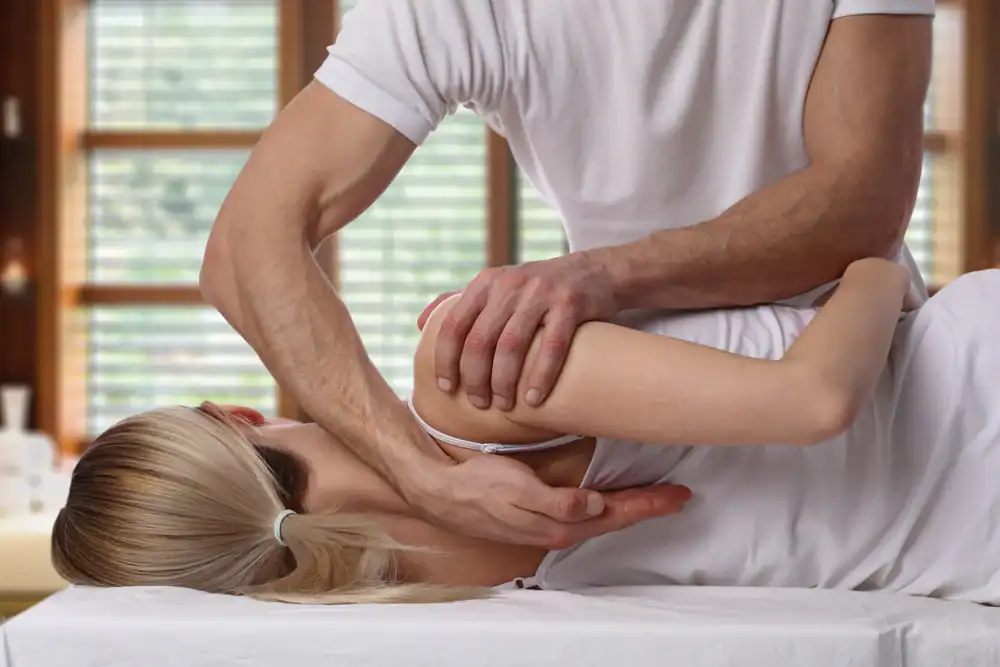
Chiropractic adjustments realign the spine and restore joint mobility. Spinal traction, or non-surgical spinal decompression therapy, focuses on creating space between vertebrae to relieve pressure on discs and nerves.
Both treatments work well together. Adjustments correct misalignments. Traction addresses the compression that’s causing pain, numbness, or tingling. If you have a herniated disc or sciatica, traction is often the more direct solution because it targets the disc itself, not just the surrounding joints.
At Roses Chiropractic in Harrison, NJ, Dr. Roses combines these approaches based on what your body needs. Some patients respond better to adjustments alone. Others need the added decompression to get lasting relief. We build the treatment plan around your specific condition, not a standard protocol.
Most people notice some improvement within the first few visits. That might mean less pain, better range of motion, or being able to sleep without waking up from discomfort.
Significant, lasting relief usually comes after about two weeks of consistent treatment. By the five- to six-week mark, many patients report feeling better than they have in months. The exact timeline depends on the severity of your condition and how your body responds.
Mild to moderate cases often improve faster. More severe disc herniations or long-term degeneration may take a bit longer. But even in those cases, the progress is usually noticeable early on. You’re not waiting months to find out if it’s working. You’ll know within the first couple of weeks whether this is the right path for you.
Yes, it’s safe. Mechanical spinal traction has been used for decades and is considered one of the safest non-surgical treatments for disc-related pain. The process is controlled by a computer, and the pressure is adjusted based on your comfort level and clinical needs.
It doesn’t hurt. Most people describe the sensation as a gentle pull or stretch. Some even find it relaxing. If at any point you feel discomfort, the treatment can be adjusted immediately.
There’s no recovery time. You walk in, get treated, and go about your day. Compare that to surgery, which comes with anesthesia risks, infection risks, and weeks or months of downtime. Spinal traction in Harrison, NJ offers a way to address serious pain without those trade-offs. It’s not invasive, and it doesn’t require medications that just cover up the problem.
Spinal traction is most commonly used for herniated discs, bulging discs, sciatica, spinal stenosis, degenerative disc disease, and chronic lower back pain. It’s also effective for cervical traction for neck pain, especially when that pain radiates into the shoulders or arms.
If you’ve been dealing with numbness, tingling, or weakness in your legs or arms, that’s often a sign of nerve compression. Lumbar traction for sciatica can relieve that pressure and restore normal nerve function. The same goes for upper spine issues that cause headaches or neck stiffness.
Not every case of back pain requires traction. But if your pain is related to disc issues or nerve compression, this is one of the most effective treatments available. Dr. Roses will assess your condition during the initial visit and let you know whether spinal decompression therapy is the right fit. If it’s not, he’ll tell you what is. The goal is to get you better, not to sell you a service you don’t need.
Many insurance plans do cover spinal decompression therapy, especially when it’s part of a chiropractic treatment plan for a diagnosed condition like a herniated disc or sciatica. Coverage varies depending on your provider and plan.
We work with most major insurance carriers. Our front desk can verify your benefits before you start treatment, so you know what to expect. If insurance doesn’t cover the full cost, payment plans are often available.
What matters more than the cost is whether the treatment works. Surgery for a herniated disc can run tens of thousands of dollars and comes with no guarantees. Spinal traction offers a fraction of that cost, zero recovery time, and proven results in the majority of cases. If you’ve been putting off care because you’re worried about the price, at least find out what your options are. A phone call takes five minutes and could save you months of pain.
Yes. In fact, combining non-surgical spinal decompression therapy with other treatments often leads to better outcomes. Dr. Roses may recommend pairing traction with chiropractic adjustments, custom exercises, or other therapies depending on your condition.
The exercises are especially important. They’re designed to strengthen the muscles that support your spine, which helps maintain the progress you make during traction sessions. Without that support, the problem can come back. With it, you’re building long-term stability.
Some patients also benefit from lifestyle adjustments—posture corrections, ergonomic changes at work, or modifications to how they lift or move. Dr. Roses will walk you through what’s realistic and what will actually make a difference. The approach is comprehensive, but it’s not complicated. You get a clear plan, and you know exactly what you need to do to get better and stay better.