
Hear from Our Customers

You’ve tried rest. You’ve tried medication. Maybe even injections or physical therapy that didn’t stick.
If you’re dealing with a herniated disc, bulging disc, sciatica, or degenerative disc disease, the problem isn’t just pain—it’s pressure. Pressure on nerves. Pressure on discs that can’t heal because they’re constantly compressed.
Non-surgical spinal decompression therapy in Harborside, NJ works by gently stretching your spine to create negative pressure inside the disc. That shift allows bulging or herniated material to retract. It also lets oxygen, water, and nutrients flow back into the disc so it can actually heal—not just feel better temporarily.
Most people notice relief within a few sessions. Some after just one. The treatment itself is comfortable—many patients fall asleep during it. You’re not being cracked or twisted. Just a slow, controlled pull that gives your spine the space it needs to recover.
This isn’t a Band-Aid. It’s a reset for discs that have been under too much pressure for too long.
Dr. Paul Roses has been practicing chiropractic care in Hudson County since 1981. That’s more than three decades helping people in Harborside, NJ and surrounding areas get out of pain without relying on prescriptions or going under the knife.
After September 11th, Dr. Roses provided on-site care for firefighters and police officers working at Ground Zero. That’s the kind of practitioner he is—someone who shows up when people need real help.
Our approach is straightforward: drug-free, non-invasive, and built around what actually works. Spinal traction is one of the most effective tools in our toolkit, especially for patients who’ve been told surgery is their only option. It’s not.
You’re not getting a sales pitch here. You’re getting someone who’s seen thousands of cases like yours and knows how to help.
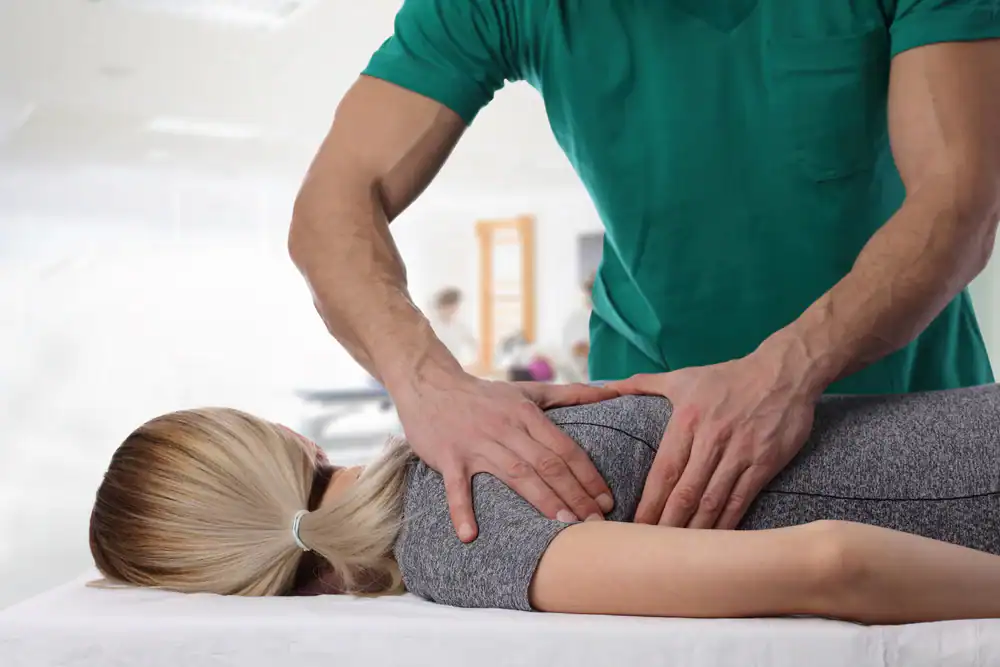
When you come in for spinal traction, you’ll lie comfortably on a specialized table. A harness fits around your hips or shoulders, depending on whether we’re treating your lower back or neck.
The table uses controlled, computerized traction to gently pull your spine. It’s not a sudden jerk—it’s a slow, rhythmic stretch that creates space between your vertebrae. That space reduces pressure on the discs and nerves causing your pain.
Each session lasts about 30 to 45 minutes. You might feel a gentle pulling sensation, but it shouldn’t hurt. Most people relax. Some even doze off.
Treatment plans typically run 20 to 28 sessions over five to seven weeks. That might sound like a lot, but compare it to months of recovery from surgery—or years of managing pain with pills that don’t fix anything.
Between sessions, you’ll likely notice improvements: less shooting pain, better range of motion, easier mornings. Those are signs the disc is decompressing and starting to heal.
This isn’t something you’ll need forever. The goal is to get you better and keep you there.

Ready to get started?
Spinal traction works for a range of conditions that all share one thing in common: nerve compression or disc damage. That includes herniated discs, bulging discs, degenerative disc disease, sciatica, facet syndrome, and spinal stenosis.
If you’ve got shooting pain down your leg, that’s often sciatica—caused by pressure on the nerve roots that feed into the sciatic nerve. Lumbar traction for sciatica in Harborside, NJ relieves that pressure so the nerve can calm down and the pain can fade.
Cervical traction for neck pain in Harborside, NJ works the same way, but for your upper spine. Neck pain, arm numbness, tingling in your hands—those symptoms often come from compressed cervical discs. Traction creates space, reduces inflammation, and gives your neck a chance to heal.
Hudson County has one of the highest concentrations of desk workers in New Jersey. That means repetitive stress injuries, forward head posture, and chronic lower back pain are incredibly common here. You’re not alone in this. And you’re not stuck with it.
Mechanical spinal traction benefits in Harborside, NJ are backed by research. A Stanford study found an 83% reduction in back pain after non-surgical decompression. MRI scans showed actual reduction in herniated disc size. This isn’t guesswork—it’s measurable relief.
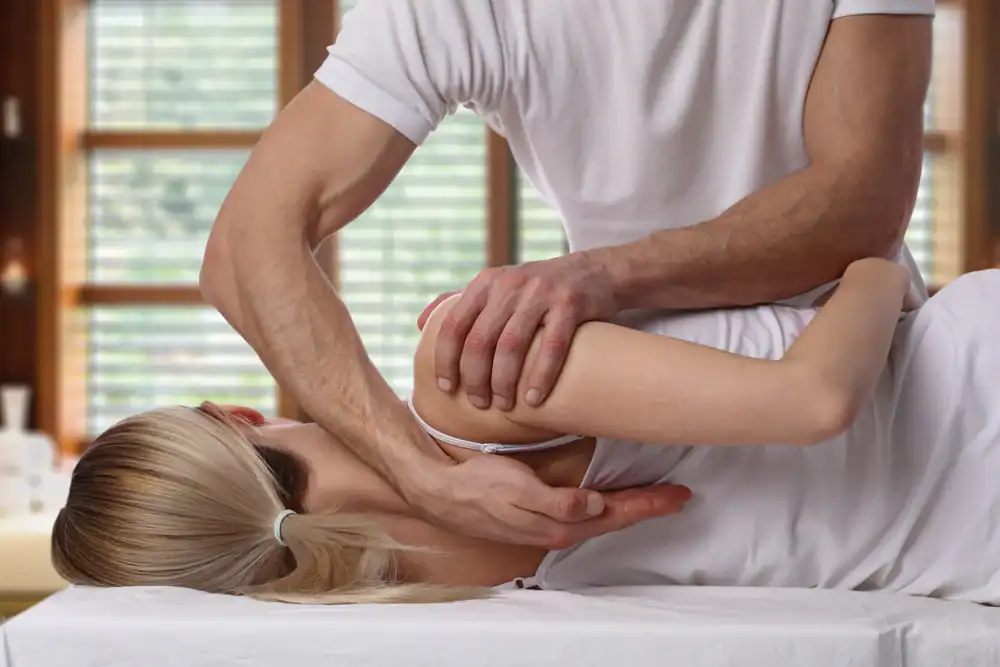
Chiropractic adjustments realign the spine and improve joint function. Spinal traction focuses specifically on decompressing the discs between your vertebrae.
Think of it this way: an adjustment corrects alignment. Traction creates space. Both are valuable, but they do different things.
If you have a herniated or bulging disc, traction addresses the root problem by reducing pressure inside the disc itself. That allows it to retract and heal. Adjustments can help with mobility and nerve function, but they don’t decompress a disc the way traction does.
Many patients benefit from both. We’ll recommend what makes sense for your specific condition—not just what’s available.
No. Most people describe it as a gentle, intermittent pulling sensation. It’s controlled, gradual, and completely tolerable.
You’re lying down the entire time. The table does the work. There’s no twisting, no cracking, no sudden movements.
Some patients feel immediate relief during the session itself—like their back is finally getting a break. Others just feel relaxed. A lot of people fall asleep, which tells you how non-aggressive the treatment is.
If at any point something doesn’t feel right, you can stop the session. But that’s rare. The whole point is to give your spine relief, not add stress.
Many patients notice improvement within the first few sessions. Some feel relief after just one.
A full treatment plan usually involves 20 to 28 sessions spread over five to seven weeks. That’s what it takes to create lasting change—not just temporary relief.
Your body needs time to heal. Discs don’t decompress overnight, and nerves don’t calm down instantly. Consistency matters here.
We’ll track your progress and adjust the plan as needed. If you’re responding well, great. If something needs to change, we’ll tell you. The goal is real improvement, not dragging out treatment for no reason.
No. This isn’t a lifetime commitment.
The goal of spinal traction is to decompress the disc, reduce nerve pressure, and give your body the environment it needs to heal. Once that happens, you’re done with active treatment.
Some patients come back for occasional maintenance sessions if they have a physically demanding job or a history of recurring issues. But that’s a choice, not a requirement.
Compare that to pain medication, which you have to keep taking just to function. Or surgery, which comes with risks, costs, and no guarantee you won’t need another procedure down the road.
Traction is about fixing the problem so you can move on with your life.
Coverage varies depending on your plan and your diagnosis. Some insurance companies cover spinal decompression under chiropractic care or physical therapy benefits. Others don’t.
Our office can verify your benefits before you start treatment. That way, you know what to expect upfront—no surprises.
Even if insurance doesn’t cover it fully, the cost of non-surgical decompression is a fraction of what spinal surgery runs. And there’s no hospital stay, no anesthesia, no months of recovery.
If cost is a concern, ask about payment options. The priority is getting you the care that works, not just the care that’s easiest to bill.
Yes. In fact, post-surgical patients are one of the groups that benefit most from spinal traction.
If you’ve had surgery and you’re still dealing with pain, it’s often because scar tissue, adjacent disc issues, or nerve irritation weren’t fully resolved. Traction can address those lingering problems without another invasive procedure.
It’s also helpful for people who’ve been told they need surgery but want to try a non-surgical option first. Research shows that many patients who “failed” conservative treatments like medication or physical therapy respond well to spinal decompression.
We’ve worked with plenty of post-surgical patients over our 30-plus years in practice. We know what to look for and how to adjust treatment based on your history. You’re not starting from scratch—you’re building on what’s already been tried.