

Hear from Our Customers

You’re not looking for temporary relief that wears off by dinner. You want to bend down without wincing. Put your socks on without help. Walk without that limp you’ve been compensating for.
Non-surgical spinal decompression therapy in Hamilton Park, NJ works by gently stretching the spine to relieve pressure on compressed discs and nerves. That pressure is what’s causing your sciatica to shoot down your leg, your lower back to lock up, or your neck to feel like it’s in a vice.
When that pressure comes off, your body can actually heal. Blood flow increases to the affected area. Nutrients reach damaged tissues. The constant inflammation starts to settle down.
Most people notice they’re moving differently within the first few sessions. Not because they’re trying to protect themselves, but because they don’t need to anymore. That’s when daily activities stop feeling like obstacles you have to navigate around.
We’ve been serving Hamilton Park and the broader Hudson County area for over 30 years. Dr. Paul Roses and Dr. Daniel Roses have built our practice on one straightforward principle: help people avoid unnecessary surgery and medication dependency when there’s a better option.
Hamilton Park residents deal with the same issues we see across Jersey City and Bayonne—long commutes, physical jobs, old injuries that never quite healed right. The difference is how we approach them. Every treatment plan starts with baseline imaging and a real conversation about what’s not working in your life right now.
We’re not interested in getting you to feel 10% better so you keep coming back forever. The goal is to fix the underlying problem so you can get back to your life.

Your first visit includes a thorough assessment. We use Titron Infrared Imaging to see what’s happening beneath the surface, and if needed, we’ll take x-rays to get the full picture. This isn’t about running up your bill—it’s about knowing exactly what we’re dealing with before we touch your spine.
Once we know what’s causing your pain, we create a treatment plan specific to your condition. Mechanical spinal traction benefits in Hamilton Park, NJ come from the precise, controlled decompression that happens during each session. You’ll lie on a specialized table that gently stretches your spine at specific angles and intervals.
The process is painless. Most people find it relaxing, actually. Each session typically lasts 20-30 minutes, and the decompression creates negative pressure inside your discs. That negative pressure pulls herniated or bulging disc material back into place and allows healing nutrients to flow in.
Between sessions, you’ll have specific exercises to do at home. These aren’t generic stretches—they’re designed for your exact problem. Patients who do their home exercises see dramatically better results. We’ve had people walk normally after just three adjustments when they’d been limping for months.

Ready to get started?
Lumbar traction for sciatica in Hamilton Park, NJ is just one component of what we do. Yes, the decompression sessions are central to your recovery, but they work better when combined with corrective exercises, lifestyle modifications, and ongoing adjustments as needed.
You’ll get a personalized exercise blueprint designed specifically for your condition. These movements reinforce the corrections happening during traction and help prevent re-injury. We’ll also walk through the activities and positions that are aggravating your condition—not to restrict your life, but so you know what to modify while you’re healing.
For neck issues, cervical traction for neck pain in Hamilton Park, NJ follows a similar approach but targets the upper spine. Herniated discs in your neck can cause pain that radiates into your shoulders, arms, and hands. The same decompression principles apply, but the positioning and technique adjust for the cervical spine’s unique structure.
Many Hamilton Park residents come to us after epidural shots didn’t work, after other chiropractors made minimal progress, or when their doctor suggested surgery as the next step. What sets this approach apart is that we’re addressing the mechanical problem causing your pain, not just managing symptoms. That’s why the results tend to stick.
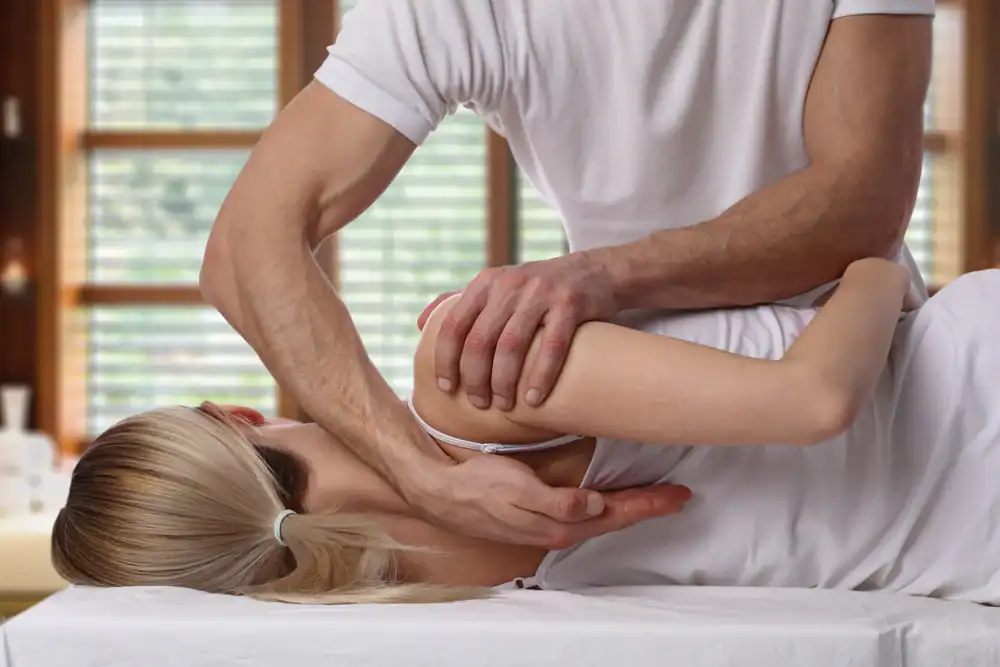
Most people start noticing real changes within the first week or two of treatment. That doesn’t mean you’re fully healed—it means the pressure on your nerves is decreasing enough that your pain levels drop and your mobility improves.
A complete treatment plan typically runs 4-8 weeks, depending on how severe your condition is and how long you’ve been dealing with it. Someone with a recent herniated disc will usually respond faster than someone who’s had chronic degeneration for years.
The key is consistency. Coming in for your scheduled sessions and doing your home exercises makes a massive difference in how quickly you improve. We’ve seen patients who suffered with sciatica for seven years start walking normally after three adjustments—but they followed the plan exactly as prescribed.
Not quite. Old-style traction used constant, static pulling that often triggered your muscles to tense up and resist. Modern spinal decompression uses computerized equipment that varies the pull in specific patterns designed to bypass that protective muscle response.
The table alternates between stretching and relaxing in precise intervals. This prevents your body from fighting the treatment and allows for much deeper decompression than traditional traction could achieve. It’s why people who didn’t respond to older traction methods often see significant improvement with current decompression technology.
The equipment we use can target specific spinal levels and adjust the angle of pull based on where your problem is located. That level of customization wasn’t possible with the traction equipment from even 10-15 years ago.
Surgery is rarely the only option, even if decompression doesn’t give you complete relief. That said, the success rate for non-surgical spinal decompression therapy is high when patients commit to the full treatment protocol.
The people who don’t respond well usually fall into specific categories: severe spinal instability, certain types of fractures, or cases where nerve damage has progressed too far. We identify those situations during your initial assessment, so you’re not wasting time on treatment that won’t help.
If we determine that your condition truly requires surgical intervention, we’ll tell you that upfront. But in over 30 years of practice, we’ve helped thousands of people avoid surgery who were told it was their only choice. Most back and neck problems respond well to conservative treatment when it’s done correctly and given adequate time to work.
Coverage varies significantly depending on your specific insurance plan. Some plans cover spinal decompression under chiropractic benefits, while others don’t. We recommend calling your insurance provider and asking specifically about “non-surgical spinal decompression” or “mechanical traction” coverage.
Our office can provide you with the necessary documentation and codes to submit to your insurance company. Even if your plan doesn’t cover the decompression itself, many cover the chiropractic adjustments, examinations, and x-rays that are part of your overall treatment.
We’re upfront about costs before you start treatment. Many patients find that even if they’re paying out of pocket, the total cost is a fraction of what surgery would run—and there’s no surgical recovery time keeping them out of work for weeks or months.
Yes, and this is actually one of the most common situations we treat. That car accident from five years ago, the work injury you pushed through, the sports injury that you “rehabbed” on your own—these often leave structural problems that your body compensated for but never truly fixed.
Over time, those compensations break down. You start getting pain that seems unrelated to the original injury, or the old injury site flares up worse than it ever did initially. Spinal decompression can address the disc problems and nerve compression that developed as a result of that incomplete healing.
The treatment approach is the same, but we pay close attention to any scar tissue, muscle imbalances, or postural changes that developed over the years. Correcting a chronic problem takes patience, but people are often surprised that an issue they’ve lived with for years can actually improve significantly with the right intervention.
The core principle is identical—create space between vertebrae to relieve pressure on discs and nerves. The difference is in positioning, the amount of force used, and the specific angles of decompression.
Lumbar traction for sciatica targets your lower back and typically involves more decompression force since the lower spine handles more weight and pressure. You’ll usually lie face-up with a harness around your pelvis while the table creates the stretch.
Cervical traction for neck pain uses less force and different positioning since your neck is more delicate. The decompression targets the upper spine where herniated discs might be compressing nerves that run into your shoulders and arms. Both approaches are completely painless and controlled—you’re never stretched beyond what’s comfortable and therapeutic.