
Hear from Our Customers

You’re not looking for temporary relief. You want to bend down without wincing. Walk without limping. Put on your shoes without needing help.
Mechanical spinal traction benefits in Exchange Place, NJ go beyond masking pain. The treatment creates negative pressure in your spinal discs, which pulls herniated or bulging material back into place. That pressure relief means less nerve irritation, better blood flow, and actual healing instead of just symptom management.
Most people notice changes within the first few sessions. Your range of motion improves. The shooting pain down your leg starts to fade. You sleep better because you’re not waking up every time you shift positions.
Studies show that 71-89% of patients experience meaningful pain relief and improved mobility with spinal decompression. You’re not gambling on hope. You’re choosing a treatment that works for most people who commit to it.
Dr. Paul Roses has been practicing chiropractic in the Hudson County area since 1981. That’s over 40 years of treating disc problems, sciatica, and chronic pain without drugs or surgery.
Exchange Place professionals deal with unique stressors. Long commutes into Manhattan. Desk jobs that wreck posture. High-pressure environments that create tension you carry in your neck and shoulders. We understand what daily life looks like here because we’ve been treating this community for decades.
Our practice uses advanced diagnostic technology, including Titron Infrared Imaging and targeted x-rays when needed. You get a clear picture of what’s actually wrong before treatment starts. No guessing. No cookie-cutter plans.
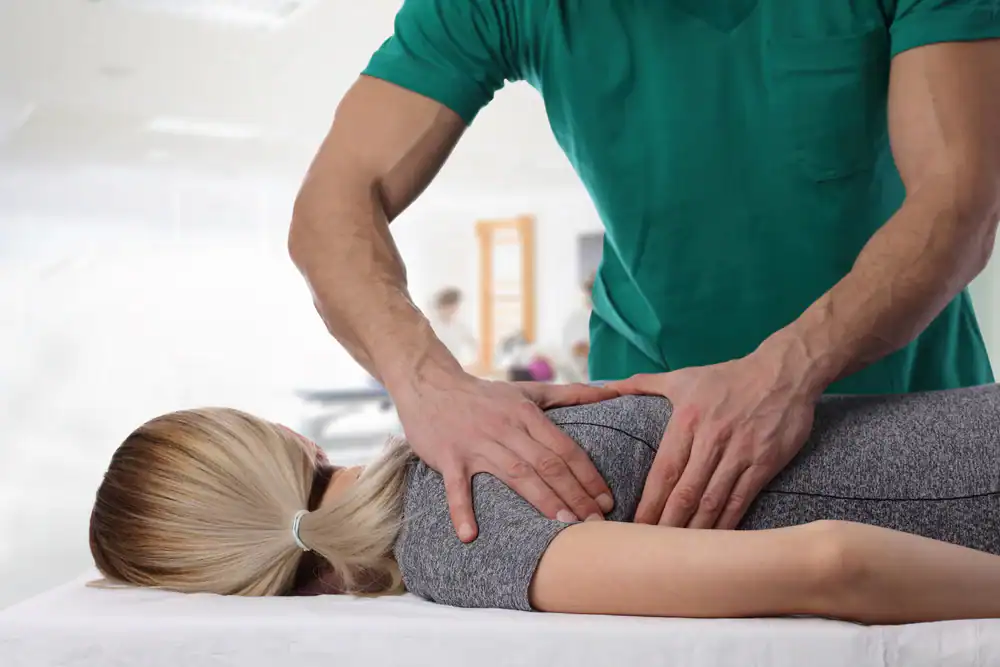
Your first visit includes a thorough assessment. We use infrared imaging to identify inflammation and nerve interference. If x-rays are warranted, you’ll know why and what we’re looking for.
Once the source of your pain is identified, treatment begins with mechanical traction sessions. You lie comfortably on a specialized table that gently stretches your spine in controlled intervals. The negative pressure created during lumbar traction for sciatica in Exchange Place, NJ relieves nerve compression and encourages disc material to retract.
Sessions typically last 20-30 minutes. Most treatment plans run 15-20 sessions over several weeks, depending on your condition’s severity. You can return to work immediately after each session.
Between visits, you’ll receive personalized exercises designed specifically for your condition. These aren’t generic stretches pulled from a handout. They’re targeted movements that support what’s happening during your traction sessions and speed up recovery.

Ready to get started?
Spinal traction in Exchange Place, NJ addresses both cervical and lumbar issues. If you’re dealing with neck pain, headaches, or arm numbness, cervical traction for neck pain in Exchange Place, NJ uses the same decompression principles applied to your upper spine.
Your treatment plan includes baseline diagnostic imaging, customized traction protocols, and home exercise programs. We also provide lifestyle coaching because how you sit, sleep, and move between sessions matters as much as the treatment itself.
Exchange Place residents often ask about treatment timing around work schedules. Sessions are available throughout the day, and because there’s no recovery period, you can schedule appointments during lunch or before heading into the city. No downtime means no disruption to your income or responsibilities.
The goal isn’t just pain relief. It’s restoring function so you can maintain the active, high-performance lifestyle that brought you to this area in the first place. Whether that means getting back to the gym, playing with your kids, or simply sitting through meetings without constant discomfort, the treatment focuses on your specific needs.
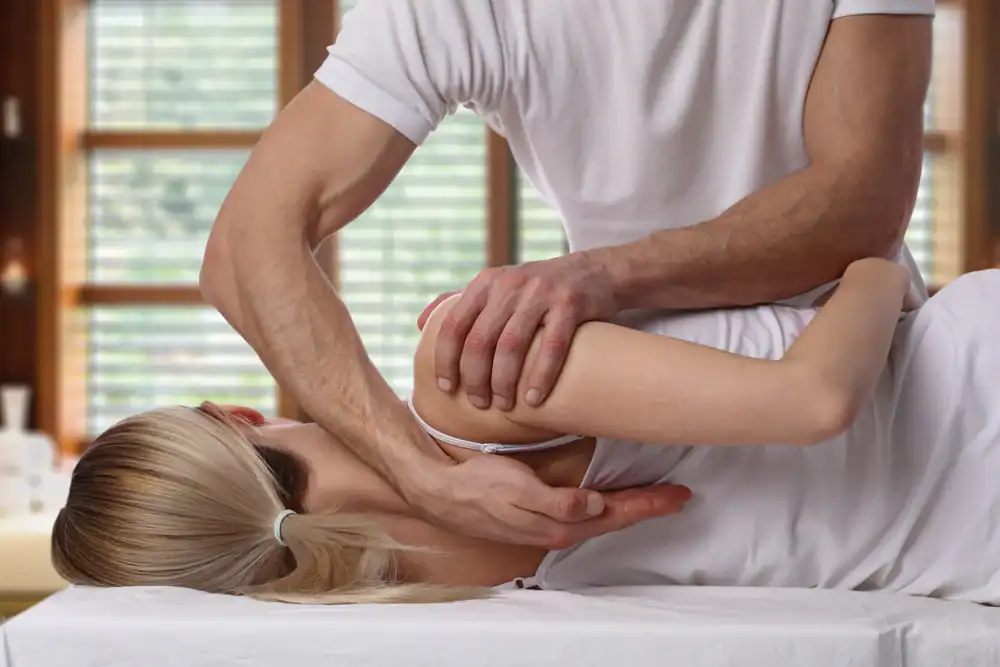
Adjustments realign vertebrae and restore joint mobility. Spinal traction addresses the discs between those vertebrae.
Think of it this way: if a disc is bulging or herniated, adjusting the bones around it helps, but it doesn’t necessarily pull that disc material back where it belongs. Traction creates negative pressure inside the disc space, which encourages herniated material to retract and allows nutrients to flow back into damaged tissue.
Many people need both. Adjustments keep your spine moving correctly. Traction heals the disc damage causing your pain. We’ll tell you exactly what combination makes sense for your specific condition after your initial assessment.
Most people notice some improvement within 3-6 sessions. Real, lasting change typically requires 15-20 sessions over 4-6 weeks.
Your timeline depends on how severe your condition is and how long you’ve been dealing with it. Someone with a recent herniation might respond faster than someone who’s had chronic degeneration for years. Age, overall health, and whether you follow the home exercise plan also affect results.
What you won’t get is false promises about overnight fixes. Disc healing takes time because you’re encouraging your body’s natural repair processes, not just covering up symptoms. The trade-off is that when you do improve, it tends to last because you’ve actually addressed the underlying problem.
No. Most people find it relaxing, almost like a gentle stretch.
The table applies controlled, gradual traction. You’re not being yanked or twisted. The pressure increases slowly, holds, then releases in cycles. Some people fall asleep during sessions.
You might feel sore afterward, similar to how you feel after a good workout. That’s normal and usually fades within a day. If you experience sharp pain during treatment, we adjust the settings immediately. The whole point is decompression, not adding more stress to an already irritated area.
Coverage varies significantly between insurance plans. Some cover spinal decompression fully, others partially, and some not at all.
The best approach is calling your insurance provider before your first visit. Ask specifically about “non-surgical spinal decompression” or “mechanical traction therapy” and whether it’s covered under your chiropractic benefits. Get the details in writing if possible.
We can provide documentation and billing codes to help you verify coverage. Even if insurance doesn’t cover everything, many patients find the cost worthwhile compared to surgery, which can run $50,000-$150,000 and requires months of lost work. A full course of decompression therapy costs a fraction of that and doesn’t come with surgical risks or recovery time.
Yes. Physical therapy and spinal decompression work differently, so failure with one doesn’t predict failure with the other.
PT typically focuses on strengthening muscles, improving flexibility, and teaching proper movement patterns. Those things matter, but if you have a herniated disc compressing a nerve, strengthening your core won’t pull that disc material back into place. Decompression directly addresses the disc problem.
Many people come to us after trying PT, pain management injections, and even other chiropractors without success. The mechanical traction approach offers something different because it targets the specific mechanism causing nerve compression. If your previous treatments didn’t create space in the disc, they weren’t addressing the root cause.
Spinal traction works best for herniated discs, bulging discs, degenerative disc disease, sciatica, spinal stenosis, and pinched nerves in the neck or lower back.
If your pain radiates down your leg or arm, gets worse when you sit or bend forward, or comes with numbness and tingling, you’re likely dealing with nerve compression that decompression can address. Conditions like facet joint problems, bone spurs causing nerve irritation, and foraminal stenosis also respond well.
What it won’t fix: fractures, tumors, severe osteoporosis, or certain types of spinal instability. That’s why the initial assessment matters. We need to see exactly what’s causing your symptoms before recommending treatment. If traction isn’t appropriate for your condition, we’ll tell you straight and point you toward what will actually help.