

Hear from Our Customers
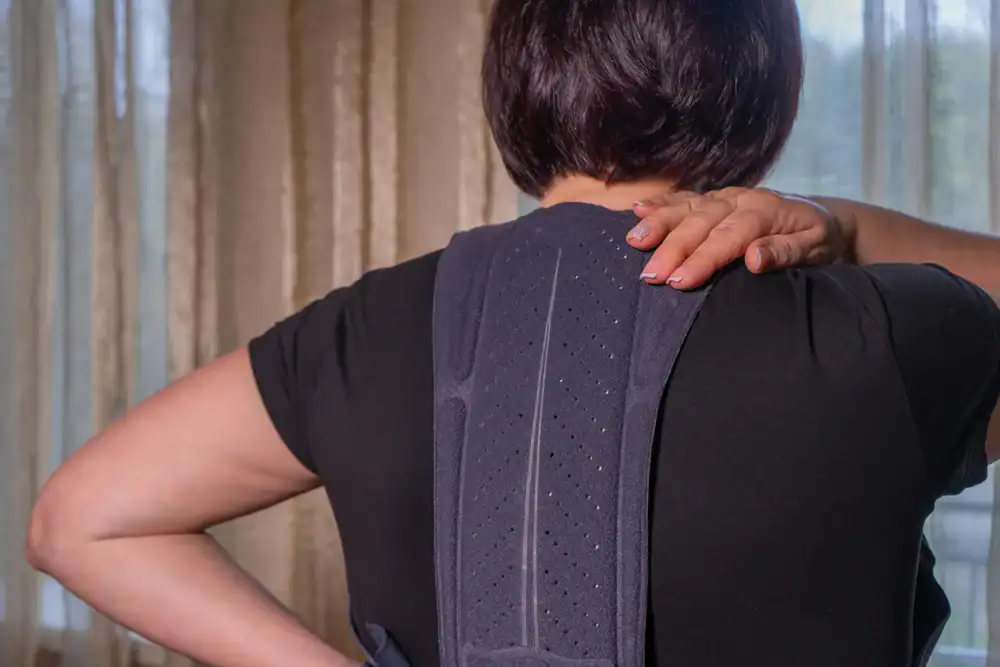
Your head weighs about 10-12 pounds. When you’re hunched over your phone or laptop, that weight can feel like 60 pounds on your neck and shoulders.
You already know this. You feel it every afternoon when your upper back starts burning. You notice it when you catch your reflection and see how far forward your head sits. Maybe you’ve tried stretching, better ergonomics, or even other chiropractors—but the pain keeps coming back.
Posture correction in Weehawken, NJ isn’t about sitting up straighter or remembering to pull your shoulders back. It’s about realigning your spine so your body can actually hold itself the way it’s supposed to. When that happens, the tension releases. The headaches stop. You can turn your head without wincing.
That’s what changes when the structure changes. Not just how you feel today, but how your body functions long-term.
Dr. Paul Roses has been serving Hudson County since 1981. We’ve seen what happens when posture problems go untreated—and what’s possible when you address them correctly.
Weehawken has one of the highest percentages of remote workers in New Jersey. That means more people sitting at kitchen tables, couches, and makeshift desks for 8+ hours a day. The result? A spike in forward head posture, text neck symptoms, and upper crossed syndrome across all age groups.
We use advanced spinal correction techniques that weren’t available even a decade ago. Our approach is straightforward: assess your spine with imaging, adjust what’s misaligned, and give you exercises designed specifically for your body. No generic stretches. No one-size-fits-all plans.
You’re not getting a massage or temporary relief. You’re getting a structural correction that holds.

First, you’ll get a baseline assessment using Titron Infrared Imaging. It’s painless, takes a few seconds, and shows exactly where your spine is out of alignment. If needed, we’ll take x-rays to get a complete picture.
From there, Dr. Roses creates a treatment plan based on what your spine actually needs—not a template. You’ll receive spinal adjustments that target the misalignments causing your forward head posture or rounded shoulders. These aren’t the old-school, forceful adjustments. The techniques are precise, controlled, and designed to correct the structure without unnecessary pressure.
You’ll also get a personalized exercise program. These aren’t random stretches you found on YouTube. They’re specific movements designed to strengthen the muscles that support your corrected posture and prevent the problem from coming back.
Most people notice a difference within the first few visits. Walking feels easier. The constant tension in your shoulders starts to fade. Your head sits where it’s supposed to instead of jutting forward.
The goal isn’t just pain relief. It’s getting your spine back to where it can support you without constant compensation.

Ready to get started?
Text neck symptoms are showing up in younger and younger patients. If you spend hours on your phone or computer, you’re likely dealing with some version of it—whether that’s neck stiffness, shoulder pain, or headaches that start at the base of your skull.
In Weehawken, where 14% of adults work fully remote and the median age is under 38, this isn’t a niche problem. It’s an epidemic. Studies show 61% of remote workers report worsening musculoskeletal pain, with neck and back pain leading the list.
Here’s what treatment includes: spinal adjustments to correct forward head posture and upper crossed syndrome, personalized exercises to retrain your muscles, and coaching on how to avoid re-aggravating the problem during work or daily activities. You’re not just getting adjusted and sent home. You’re learning how to maintain the correction.
The difference between this and what you’ve tried before? This targets the root cause. Rounded shoulders correction exercises in Weehawken, NJ won’t fix the problem if your spine is still misaligned. You need both—the structural correction and the muscular support.
Dr. Roses has treated patients who couldn’t bend down to tie their shoes, who walked with a limp from nerve pain, who tried epidurals and were told surgery was next. They’re walking normally now. That’s not luck. That’s what happens when you treat the spine correctly.

It depends on how long you’ve had the problem and how severe the misalignment is. Some people feel noticeably better after three adjustments. Others need a few weeks of consistent care to see lasting change.
Here’s what matters: forward head posture doesn’t develop overnight, and it won’t disappear overnight either. If you’ve been sitting hunched over a laptop for years, your muscles and ligaments have adapted to that position. Correcting it means realigning the spine and retraining the soft tissue to support the new structure.
Most patients start seeing improvement within the first month—less pain, better range of motion, and a visible change in how their head and shoulders sit. Full correction usually takes longer, but you’ll know it’s working well before then.
The key is sticking with the plan. If you only come in when it hurts, you’re chasing symptoms. If you follow through with adjustments and exercises, you’re fixing the problem.
Text neck symptoms include neck pain, stiffness, headaches at the base of the skull, shoulder tension, and sometimes numbness or tingling in your arms. You might also notice your posture looks off—head forward, shoulders rounded, upper back curved.
It’s caused by spending too much time looking down at your phone or computer. Every inch your head moves forward adds about 10 pounds of pressure on your neck. Do that for hours a day, and your spine starts to adapt in ways that create pain and dysfunction.
Chiropractic care helps because it addresses the structural problem. Adjustments realign your cervical spine so your head can sit where it’s supposed to. Then, targeted exercises strengthen the muscles that hold it there. You’re not just treating the pain—you’re reversing the pattern that caused it.
Studies show that modified cervical exercises performed for just four weeks can improve forward head posture caused by smartphone use. Combine that with spinal correction, and you’re looking at real, measurable change.
Yes. Rounded shoulders are usually caused by muscle imbalance and spinal misalignment, not structural damage that requires surgery. Upper crossed syndrome—the pattern behind most rounded shoulder cases—responds well to chiropractic care and corrective exercises.
Here’s what’s happening: the muscles in your chest and front of your shoulders get tight from sitting hunched forward. The muscles in your upper back and rear shoulders get weak and overstretched. Your spine compensates by shifting forward, and your shoulders roll inward to match.
Treatment focuses on realigning your thoracic spine, releasing the tight muscles, and strengthening the weak ones. It’s not complicated, but it has to be done in the right order. You can’t just stretch your chest and expect your shoulders to stay back if your spine is still misaligned.
We use a combination of spinal adjustments and personalized exercise programs to correct the imbalance. Most people see their shoulders start to pull back naturally within a few weeks as their body adapts to the new alignment. No surgery. No drugs. Just consistent, targeted care.
Upper crossed syndrome treatment includes spinal adjustments to correct misalignments in your cervical and thoracic spine, soft tissue work to release tight muscles in your chest and neck, and specific exercises to strengthen your upper back and rear shoulders.
The goal is to restore balance. Upper crossed syndrome happens when certain muscles become overactive (like your upper traps and pecs) while others become weak (like your lower traps and deep neck flexors). This creates a cross-pattern of tension and weakness that pulls your posture out of alignment.
Chiropractic care is one of the most effective treatments because it addresses both the muscular imbalance and the spinal dysfunction. You’re not just doing stretches—you’re correcting the root cause so your body can hold proper alignment on its own.
We’ll also coach you on what activities or positions to avoid while you’re healing. If you’re still sitting at a poorly set-up desk for 10 hours a day, you’ll keep re-creating the problem. Small adjustments to your workspace and daily habits make a big difference in how well the correction holds.
Many insurance plans cover chiropractic care, including treatment for posture-related conditions like forward head posture, text neck, and upper crossed syndrome. Coverage varies depending on your plan, so it’s worth calling your insurance provider to confirm your benefits.
We can help you understand what’s covered and what your out-of-pocket costs might look like. Some plans require a referral or have a limit on the number of visits per year. Others cover a percentage of each visit after you meet your deductible.
Even if your insurance doesn’t cover the full cost, many patients find that chiropractic care is more affordable than ongoing pain medication, physical therapy copays, or the alternative treatments they’ve already tried without success. You’re paying for a correction, not just temporary relief.
If cost is a concern, talk to our office. We’ll work with you to create a treatment plan that fits your budget and gets you the results you need. The goal is to fix the problem, not drag out care longer than necessary.
Posture correction through chiropractic care focuses on realigning your spine first, then strengthening the muscles to support that alignment. Physical therapy typically focuses on strengthening and stretching without addressing spinal misalignment.
Both can be helpful, but they approach the problem differently. If your spine is out of alignment, doing exercises to strengthen your muscles won’t fix the underlying issue. Your body will keep compensating around the misalignment, and the pain will keep coming back.
Chiropractic adjustments correct the structural problem so your muscles can function the way they’re supposed to. Once your spine is aligned, the exercises become more effective because your body isn’t fighting against itself anymore.
Some patients benefit from a combination of both—chiropractic care to correct the spine, and physical therapy to build strength and endurance. But if you’ve already tried PT without lasting results, the missing piece is likely spinal correction. That’s where chiropractic care makes the difference.