

Hear from Our Customers
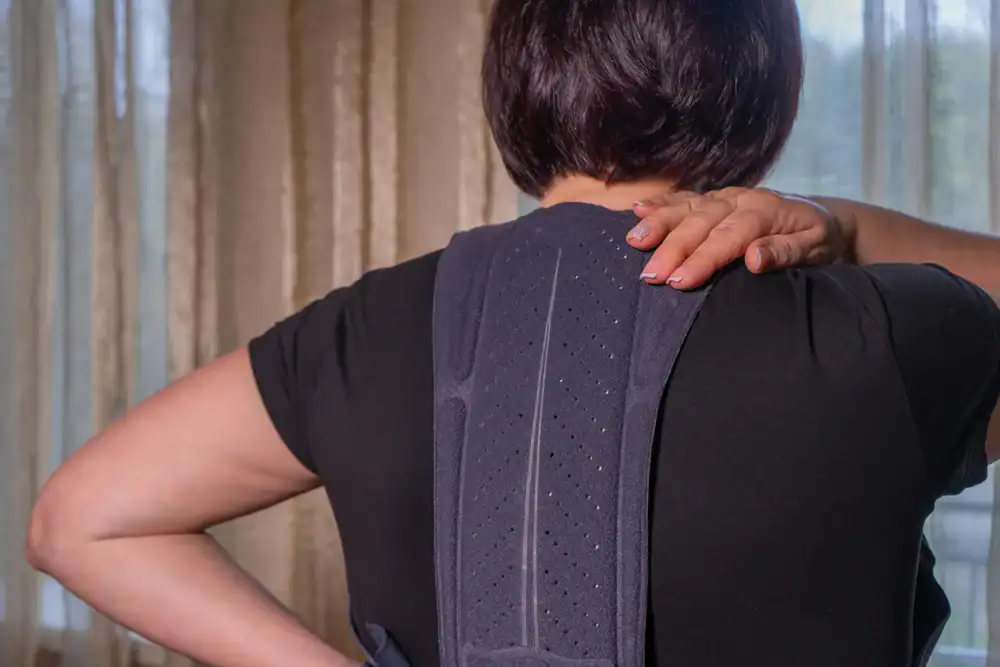
The headaches that start around 2 PM stop showing up. Your shoulders don’t feel like they’re carrying extra weight by the end of the day. You can turn your neck to check your blind spot without that sharp catch.
That’s what happens when forward head posture gets corrected properly. Not just adjusted once and forgotten, but actually treated through a process that retrains how your body holds itself.
Most people in State College, NJ dealing with text neck don’t realize their pain isn’t just from “bad posture.” It’s from specific muscle imbalances. Some muscles have gotten too tight from compensating. Others have weakened from underuse. When you’re hunched over a phone or laptop for hours, your body adapts in ways that create real structural problems.
Posture correction in State College, NJ addresses both sides. You get relief from the immediate discomfort, and you get the tools to maintain better alignment long-term. That means less pain during your workday, better sleep because your neck isn’t constantly strained, and more energy because your body isn’t fighting itself all day.
We’ve been serving State College, NJ for over 15 years. We’ve seen the shift in how people work and how that’s affected their bodies. More remote workers, more students hunched over laptops in coffee shops, more people dealing with chronic neck pain that didn’t exist a decade ago.
We’re not here to crack your back once and send you on your way. Our approach to posture correction in State College, NJ involves assessment first—figuring out which muscles are overworking and which have checked out. Then we build a treatment plan that actually addresses your specific imbalances.
You’ll work with us to understand that your rounded shoulders or forward head posture didn’t develop overnight, so fixing it takes more than a quick adjustment.

First visit, we assess your posture. Not just a quick look, but measuring how far forward your head sits, checking your shoulder position, testing your neck’s range of motion. This tells us what’s tight, what’s weak, and what’s causing your specific pain pattern.
Then we start the four-part process. Step one is releasing the overactive muscles—the ones in your chest and neck that have been working overtime. This usually involves manual therapy and specific techniques to get them to relax. You’ll feel the difference immediately, but this is just the beginning.
Step two is lengthening those same muscles through targeted stretching. We show you exactly how to stretch your chest, your neck flexors, and your upper traps. These aren’t generic stretches you’d find online. They’re specific to what we found during your assessment.
Step three is strengthening the underactive muscles. Your upper back, your deep neck flexors, your lower traps—these have likely been weak for a while. We guide you through exercises that rebuild strength in the right places. This is what prevents you from sliding back into old patterns.
Step four is integration. We teach you how to maintain proper alignment during your actual daily activities. How to sit at your desk, how to hold your phone, how to sleep in a way that supports what we’ve corrected. This is how the changes stick.

Ready to get started?
You get a full postural assessment that identifies your specific issues. Not everyone with forward head posture has the same problem. Some people have upper crossed syndrome—where your chest and upper traps are too tight and your mid-back and deep neck muscles are too weak. Others have different imbalances. We figure out yours.
Manual therapy is part of every treatment plan. This includes adjustments where needed, but also soft tissue work to release tight muscles that are pulling you out of alignment. For many people in State College, NJ dealing with text neck symptoms, this is the first time they’ve felt actual relief in months.
You’ll get a customized exercise program. These are rounded shoulders correction exercises and upper crossed syndrome stretches designed for your body and your schedule. We’re not handing you a generic sheet of exercises. We’re showing you exactly what to do, watching you do it, and adjusting as needed.
Education is a bigger part of this than most people expect. We explain what’s happening in your body, why you’re feeling pain where you’re feeling it, and what needs to change. When you understand the mechanics, you’re more likely to stick with the exercises and adjustments that actually work.
Most people see noticeable improvement within the first month. Your pain decreases, your range of motion improves, and you start catching yourself sitting up straighter without having to think about it. That’s when you know it’s working.

Most people see measurable improvement in 8-12 weeks with consistent treatment. That’s based on studies showing that specific exercises performed three times per week for 8 weeks create observable decreases in pain and improved posture measurements.
But here’s the reality: how long it takes depends on how severe your forward head posture is and how long you’ve had it. If you’ve been dealing with text neck for six months, you’ll likely improve faster than someone who’s had poor posture for six years. Your body has adapted to the position it’s been in, and retraining those patterns takes time.
During the first few weeks of posture correction in State College, NJ, you’ll notice less pain and tightness. Your neck won’t feel as stiff in the mornings. By week four to six, you’ll see changes in how you naturally hold yourself. By week eight to twelve, the improvements become more permanent because your muscles have actually strengthened and lengthened in the right places.
The most common symptom is a dull, aching pain in your neck that gets worse as the day goes on. It usually sits at the base of your skull or between your shoulder blades. You might also get headaches that start in your neck and move forward—those are tension headaches caused by tight neck muscles.
Shoulder tightness is another big one. Your shoulders feel like they’re constantly tensed up, and you catch yourself trying to roll them back throughout the day. Some people also notice their neck feels stiff when they first wake up, or they can’t turn their head as far as they used to without discomfort.
If you’re experiencing sharp pain that shoots down your arm, numbness in your fingers, or balance issues, those are signs that text neck has progressed further. Forward head posture changes your center of gravity and puts significant pressure on your cervical spine—up to 60 pounds of force when your head is tilted forward at 60 degrees. That kind of sustained pressure causes real structural problems that need professional treatment in State College, NJ.
Exercises are essential, but they work best when combined with manual therapy. Here’s why: your rounded shoulders are caused by tight chest muscles and weak upper back muscles. You can strengthen your back all day, but if your chest is still tight and pulling your shoulders forward, you’re fighting an uphill battle.
The most effective approach to rounded shoulders correction exercises starts with releasing the tight muscles first. That’s where manual therapy comes in—we loosen up your pecs, your front delts, and your upper traps so they stop pulling you into that hunched position. Then the strengthening exercises actually work because your muscles can move through their full range.
The exercises you need focus on your mid-traps, lower traps, and rhomboids—the muscles that pull your shoulders back and down. Rows, face pulls, and scapular squeezes done correctly will rebuild strength in these areas. But “done correctly” is key. Most people do these exercises with their shoulders still rolled forward, which just reinforces the wrong pattern. That’s why working with someone who can watch your form and correct it matters for posture correction in State College, NJ.
Upper crossed syndrome is a specific pattern of muscle imbalance that creates forward head posture and rounded shoulders. You have tight, overactive muscles in your chest and the back of your neck, and weak, underactive muscles in your upper back and the front of your neck. When you look at it from the side, these tight and weak muscles form an X pattern—that’s where the name comes from.
If you spend most of your day looking at screens, you probably have some degree of this. The position of looking down at your phone or leaning forward toward your computer screen causes exactly this pattern. Your chest muscles shorten from being in a constantly flexed position. Your upper traps and neck extensors work overtime trying to hold your head up. Meanwhile, your deep neck flexors and mid-back muscles barely engage, so they weaken.
You can test this yourself: stand sideways in front of a mirror and relax completely. If your ear is in front of your shoulder instead of directly above it, you have forward head posture. If your shoulders round forward and you can see more of your chest than your back, that’s the rounded shoulder component. Both together indicate upper crossed syndrome, and both respond well to targeted upper crossed syndrome stretches combined with strengthening work.
Many insurance plans cover chiropractic care, including treatment for posture-related issues like forward head posture and text neck. Coverage varies significantly depending on your specific plan, but most plans that include chiropractic benefits will cover at least a portion of your treatment.
The key is how the treatment is coded and documented. When you’re coming in for neck pain, headaches, or reduced range of motion caused by postural issues, that’s typically covered under your chiropractic benefits. We document the medical necessity—the pain, the functional limitations, the measurable postural deviations—which is what insurance companies need to see.
What’s usually not covered is purely preventive or wellness care. If you have no pain and just want to improve your posture, that might be out-of-pocket. But if you’re dealing with actual symptoms—pain, stiffness, headaches, reduced mobility—that’s medical treatment, and it’s generally covered. We recommend calling your insurance company before your first visit to ask specifically about your chiropractic benefits, how many visits are covered per year, and whether you need a referral. That way you know exactly what to expect for posture correction in State College, NJ.
The exercises you learn during treatment become part of your routine. Not forever, but long enough that your body adapts to the new positions as normal. Most people need to do their specific stretches and strengthening exercises 3-4 times per week for several months after active treatment ends.
Your daily habits matter more than you’d think. How you set up your workspace, how you hold your phone, how you sleep—these either support your improved posture or slowly pull you back into old patterns. We teach you the specifics: monitor at eye level, phone held up instead of looking down, pillow that supports your neck’s natural curve.
You’ll also learn to recognize when you’re slipping back into forward head posture. Most people develop an awareness during treatment—they start noticing when their shoulders are creeping up or their head is jutting forward. That awareness lets you self-correct throughout the day before the old patterns fully return. Some people come back for occasional tune-up visits every few months, especially if they’ve had a particularly stressful period or spent more time than usual hunched over their computer.