

Hear from Our Customers
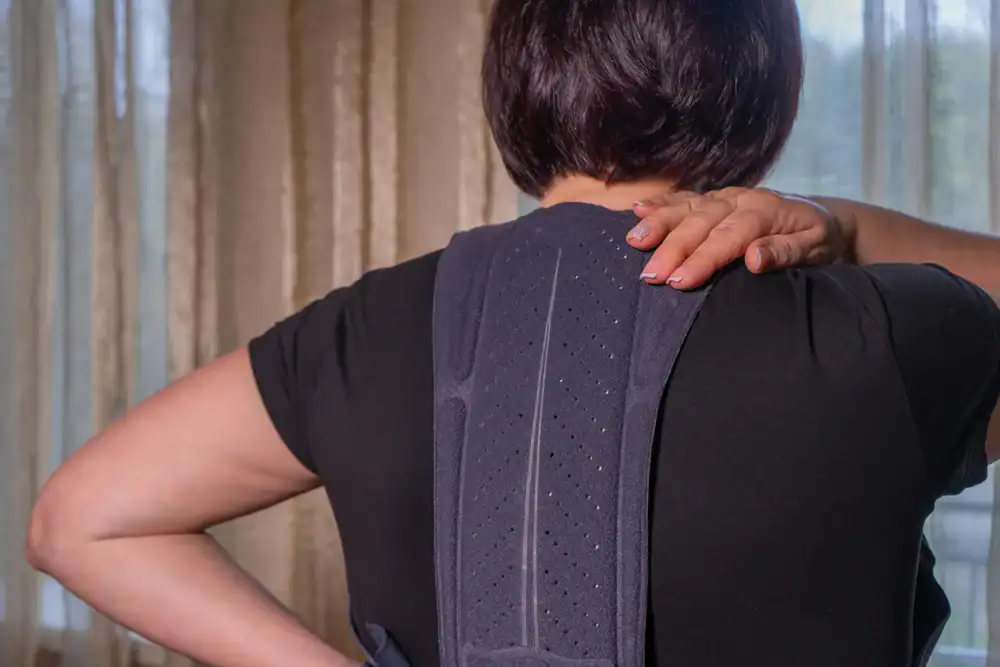
Your neck stops aching by 3 PM. You don’t feel that burning between your shoulder blades after an hour at your desk. Your headaches either disappear or become rare enough that you forget they used to run your life.
That’s what happens when we address the actual structural problem instead of just telling you to “sit up straighter.” Posture correction in Secaucus, NJ isn’t about willpower or remembering to pull your shoulders back every ten minutes.
It’s about restoring the natural curves in your spine that got flattened from years of looking down at screens, sitting in car traffic on the Turnpike, or just compensating around an old injury. When those curves come back, your body stops fighting gravity. You use less energy to stand. You breathe easier because your ribcage isn’t compressed.
Most people notice the pain relief first. Then they realize they’re sleeping better. Then someone mentions they look taller, or asks if they lost weight. That’s what proper alignment does.
Dr. Paul Roses has been treating posture problems in Hudson County since before “text neck” had a name. He’s seen the shift from factory workers with repetitive strain to remote employees hunched over laptops in Secaucus apartments and offices.
Our approach hasn’t changed much because the spine hasn’t changed. What works is precise spinal correction combined with exercises you can actually do at home, not some idealized routine that requires an hour and special equipment.
You’re not getting a new chiropractor every visit or a different treatment plan every week. You’re getting someone who’s been doing this since 1981, who treated first responders on-site during 9/11, and who still practices in the same community. That consistency matters when you’re trying to undo years of forward head posture or rounded shoulders.

First visit involves a real assessment. That means Titron Infrared Imaging to see where your spine is actually misaligned, not just where it hurts. Most people are surprised to learn their neck pain is coming from their mid-back, or that their headaches trace back to how their pelvis tilts.
Once there’s a baseline, you get adjusted. These aren’t the dramatic twisting moves you’ve seen in videos. It’s specific, controlled pressure applied to joints that aren’t moving the way they should. The goal is to restore motion and position, which takes the strain off muscles that have been overworking for months or years.
Between visits, you do exercises. Not generic stretches from YouTube, but movements designed for your specific pattern. If you have upper crossed syndrome, common in Secaucus commuters who drive with their head forward, you’re strengthening the deep neck flexors and stretching the pecs. If your issue is text neck from phone use, you’re working on cervical retraction and thoracic extension.
Most people come twice a week initially, then weekly, then every other week as things stabilize. Total timeline depends on how long you’ve had the problem and how much damage accumulated, but you should feel different within the first few visits. Not perfect, but different enough to know it’s working.

Ready to get started?
Posture correction in Secaucus, NJ means more than showing up and getting adjusted. You get a personalized exercise blueprint that addresses your specific dysfunction, whether that’s forward head posture, rounded shoulders, or the full upper crossed syndrome pattern that’s epidemic among office workers.
You also get lifestyle coaching that’s actually relevant to how you live. If you’re commuting to New York daily, we’ll talk about car seat position and neck support. If you’re working from home in Secaucus, we’ll give you guidance on monitor height and keyboard placement. These aren’t handouts, they’re specific recommendations based on what’s breaking down your posture.
There’s follow-up between visits if something flares up or if you’re not sure you’re doing an exercise correctly. You’re not left guessing whether that sharp pain is normal or a sign to stop. After 30 years, Dr. Roses has heard every variation of “is this supposed to feel like this,” and the answer matters.
The imaging technology provides objective progress tracking. You’re not relying on how you feel day-to-day, which fluctuates. You’re seeing measurable changes in spinal curves and alignment. That data keeps you motivated when progress feels slow, and it tells you when you’re actually done rather than when you just feel better temporarily.

Depends entirely on how long you’ve had it and how severe the curve loss is. If you’re in your twenties or thirties and caught it early, you might see significant improvement in 8-12 weeks with consistent treatment and home exercises. If you’re fifty-plus and have been dealing with this for a decade, you’re looking at several months to restore proper cervical lordosis.
The first few weeks focus on pain relief and restoring some mobility. You’ll likely feel better before your posture actually looks better. The structural correction takes longer because you’re retraining muscles and ligaments that have adapted to the wrong position.
Most patients in Secaucus doing posture correction come twice weekly initially, then taper to weekly and eventually maintenance visits every few weeks. Missing appointments or skipping home exercises extends the timeline significantly. Your spine doesn’t care about your intentions, it responds to consistent mechanical input.
Text neck is the cause, forward head posture is the result. Text neck describes the position your head and neck assume when you’re looking down at your phone for extended periods. Do that enough hours per day, and your spine starts to remodel into that position permanently.
Forward head posture is the measurable change in your cervical curve. Normally your neck has a gentle C-shaped curve that acts like a shock absorber. With forward head posture, that curve flattens or even reverses. Your head shifts forward relative to your shoulders, which puts exponentially more strain on neck muscles and upper back.
The treatment is the same regardless of what caused it. You need spinal adjustments to restore joint mobility, exercises to strengthen the muscles that pull your head back into proper position, and stretches to release the tight muscles holding you forward. Whether you got here from texting, computer work, or just years of poor ergonomics doesn’t change the correction protocol.
Yes, unless there’s structural bone damage or a severe congenital deformity, which is rare. Most rounded shoulders come from muscle imbalances and thoracic spine stiffness, both of which respond well to chiropractic care and corrective exercise.
The typical pattern is tight pecs and weak mid-back muscles. Your chest muscles pull your shoulders forward and inward, while the muscles that should pull them back have essentially given up. Add in a stiff mid-back that won’t extend properly, and you get that hunched look even when you’re trying to stand up straight.
Treatment involves adjusting the thoracic spine to restore extension mobility, stretching the anterior muscles that are short and tight, and strengthening the posterior chain. You’ll do exercises like prone Y-raises, wall angels, and band pull-aparts. These aren’t complicated, but they need to be done consistently. Most people see visible changes in shoulder position within 6-8 weeks if they’re compliant with the program.
Upper crossed syndrome is a specific pattern of muscle imbalances that creates a characteristic posture: forward head, rounded shoulders, and a hunched upper back. It’s called “crossed” because if you draw lines connecting the tight muscles and the weak muscles, they form an X across your upper body.
The tight muscles are typically your upper traps, levator scapulae, and pecs. The weak, overstretched muscles are your deep neck flexors and lower traps. This pattern is extremely common in Secaucus office workers, remote employees, and anyone who spends significant time at a computer or looking at their phone.
You probably have some degree of it if you get tension headaches, your shoulders creep up toward your ears when you’re stressed or concentrating, you have a visible hump at the base of your neck, or someone’s told you that you slouch. The good news is it’s very treatable with the right combination of adjustments and exercises. The bad news is it won’t fix itself, and it typically gets worse over time if ignored.
Initial consultation and imaging typically runs $150-250, depending on what diagnostic work is needed. Individual adjustment visits range from $60-100. If you’re coming twice weekly for the first month, then weekly for two months, then tapering off, you’re looking at roughly $1,500-2,500 total for a complete corrective program.
That’s significantly less than ongoing pain management, which many people spend on massage, physical therapy, or medications that only provide temporary relief. It’s also considerably less than surgical intervention for chronic neck or shoulder problems, which can run tens of thousands and comes with real risks.
Many insurance plans cover chiropractic care, though coverage varies widely. Some plans cover the full visit, others cover a percentage, and some have visit limits per year. It’s worth calling your insurance to verify benefits before your first appointment. Even without insurance, most people find the cost reasonable compared to the quality of life improvement and the alternative treatments they’ve already tried without success.
Only if you go back to doing exactly what caused the problem in the first place without any maintenance. If you spend eight hours daily in the same hunched position that created your forward head posture, never do your exercises, and don’t come in for periodic adjustments, then yes, you’ll likely regress.
But most people don’t do that because they remember how bad it felt before treatment. Once you’ve experienced what it’s like to sit at your desk without neck pain, or to wake up without a headache, you tend to protect that. You keep your monitor at eye level. You take breaks to move. You do at least some of the exercises most days.
Maintenance care helps too. Coming in once a month or every six weeks for an adjustment keeps small problems from becoming big ones again. Think of it like getting your car aligned periodically rather than waiting until your tires are bald and you’re pulling hard to one side. Your spine experiences daily stress from gravity, sitting, and movement patterns. Periodic tune-ups keep everything tracking properly.