

Hear from Our Customers
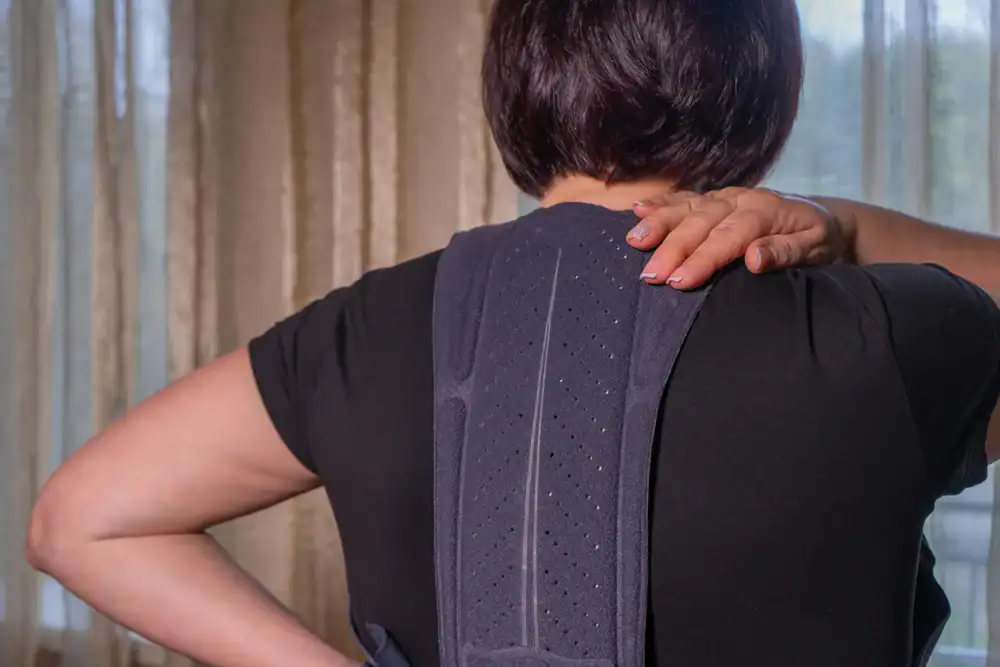
Your head weighs about 10-12 pounds. For every inch it shifts forward, your neck carries an extra 10 pounds of pressure. That’s why your shoulders ache after a day at your desk, why you get headaches by 3 PM, and why you can’t turn your head to check your blind spot without wincing.
How to fix forward head posture in Palisade, NJ starts with understanding what’s actually happening. Your muscles have adapted to the wrong position. The front of your chest is tight. The back of your neck is overstretched and weak. Your spine isn’t stacked the way it should be.
When we correct that, you notice it immediately. Your shoulders drop back where they belong. You breathe easier because your ribcage isn’t compressed. The tension headaches fade. You can sit through a meeting or drive to Fort Lee without that burning sensation between your shoulder blades.
Dr. Paul Roses has been practicing chiropractic in Hudson County since 1981. That’s over 40 years of treating the exact problems you’re dealing with right now.
Palisade, NJ has one of the highest concentrations of office workers and healthcare professionals in Bergen County. You’re sitting more than ever, staring at screens more than ever, and your posture is paying the price. Dr. Roses has watched this trend unfold and has refined his approach to address exactly what’s causing your pain.
This isn’t about cracking your back and sending you on your way. It’s about identifying why your posture collapsed in the first place, then rebuilding the strength and alignment you need to maintain it.

First, we assess where you are. That means looking at how you stand, how you sit, and where your head actually sits relative to your shoulders. We use infrared imaging that takes seconds but shows us exactly what’s going on with your spine.
Then we adjust. Specific chiropractic adjustments realign your cervical spine and upper back. This isn’t generic. It’s based on what your body needs, not a one-size-fits-all protocol.
After that, we give you exercises. These aren’t complicated. They’re designed to strengthen the muscles that have gotten weak and stretch the ones that have gotten tight. You’ll do some in the office so we can make sure you’re doing them right. Then you’ll do them at home because this only works if you’re consistent.
Text neck symptoms and treatment in Palisade, NJ require a combination approach. The adjustments restore mobility and reduce nerve interference. The exercises rebuild the muscular support your spine needs. Together, they give you lasting results instead of temporary relief.

Ready to get started?
Rounded shoulders correction exercises in Palisade, NJ are part of every posture correction plan here. You’ll learn how to strengthen your posterior chain—the muscles along your back that pull your shoulders into proper position. You’ll also learn how to release the tight pectorals that are pulling you forward.
Upper crossed syndrome stretches in Palisade, NJ target the specific imbalance most desk workers develop. Your upper traps and levator scapulae are overactive and tight. Your deep neck flexors and lower traps are weak and underused. We address both sides of that equation.
You’ll also get ergonomic coaching. Where’s your monitor? How’s your chair height? What’s your phone habit doing to your neck? Small changes in your daily setup make a massive difference in whether your posture improves or keeps deteriorating.
Palisade has a median household income over $101,000 and a workforce dominated by professionals and healthcare workers. You’re not doing manual labor that’s breaking your body. You’re sitting in positions that slowly destroy your posture. That requires a different approach, and that’s exactly what you’ll get here.

Most people notice a difference within the first few visits. You’ll stand taller, your neck will feel less stiff, and that constant tension between your shoulder blades starts to ease up.
But real, lasting correction takes longer. Studies show that structured programs combining chiropractic adjustments with specific exercises typically run 10-12 weeks. That’s not because we’re dragging it out. It’s because your muscles and connective tissues need time to adapt to the new position.
Your body spent months or years learning the wrong posture. It needs consistent reinforcement to learn the right one. Some patients feel dramatically better after three adjustments. Others take six weeks to really turn the corner. It depends on how severe your forward head posture is and how consistent you are with your exercises.
Yes, and the research backs it up. Text neck is just forward head posture caused by looking down at your phone for hours every day. The average person spends 2-4 hours daily hunched over a device. That’s up to 1,400 hours a year of terrible posture.
Chiropractic adjustments restore normal movement to the joints in your neck and upper back. When those joints move properly, the muscles around them can function the way they’re supposed to. Manual therapy releases the tight spots, and targeted exercises rebuild strength in the weakened areas.
The key is addressing all three components: joint mobility, muscle tension, and muscle weakness. If you only stretch, you’ll feel better temporarily but the problem comes back. If you only adjust, same thing. You need the full approach, and that’s what chiropractic posture correction provides.
Rounded shoulders happen when the muscles in the front of your chest get tight and the muscles in your upper back get weak. Sit at a desk long enough with your arms forward on a keyboard, and this imbalance is almost guaranteed.
Your pectorals shorten. Your anterior deltoids adapt to the forward position. Meanwhile, your rhomboids, mid traps, and rotator cuff muscles basically shut off because they’re not being used. Over time, your shoulders roll forward even when you’re standing.
It’s absolutely fixable, but it requires consistent work. You need to lengthen the tight muscles through stretching and manual therapy. You need to strengthen the weak muscles through resistance exercises. And you need spinal adjustments to make sure your thoracic spine—your mid-back—has the mobility to support proper shoulder position. Do all three, and your shoulders will pull back where they belong.
Not always. If you’re dealing with basic postural issues from desk work and there’s no history of trauma or injury, we can often start treatment based on a thorough physical assessment and postural analysis.
We use infrared imaging to get a clear picture of your spinal alignment and muscle tension patterns. That’s usually enough to design an effective treatment plan for forward head posture and rounded shoulders.
However, if you have severe pain, numbness, or weakness, or if there’s any concern about underlying structural issues, X-rays make sense. They help us see exactly what’s happening with your cervical curve and rule out anything that would change our approach. We’ll let you know if imaging is necessary during your initial consultation.
No. The goal is to fix the problem, give you the tools to maintain it, and send you on your way. This isn’t a lifetime subscription model.
Most posture correction cases follow a clear progression. You start with more frequent visits—usually twice a week for the first few weeks—to create momentum and start shifting your alignment. As you improve, visits spread out. Eventually, you’re coming in once a month or less, just for maintenance.
Some people choose to continue periodic adjustments because they like how they feel and want to stay ahead of problems. Others complete their treatment plan, keep up with their exercises, and don’t need to come back unless something flares up. It’s your call. We’re not here to keep you dependent. We’re here to get you better.
Many insurance plans do cover chiropractic care, and coverage has actually expanded in recent years. Most plans will cover treatment when it’s medically necessary—meaning you have pain, restricted movement, or documented postural dysfunction.
The specifics depend on your plan. Some cover a set number of visits per year. Others require a copay per visit. A few have deductibles that need to be met first.
We recommend calling your insurance provider before your first visit to ask about chiropractic coverage. Ask specifically about coverage for posture-related conditions and how many visits are included. If you’re not covered or if you’ve used up your visits, we also offer affordable self-pay options. The important thing is getting the treatment you need, and we’ll work with you to make that happen.