

Hear from Our Customers
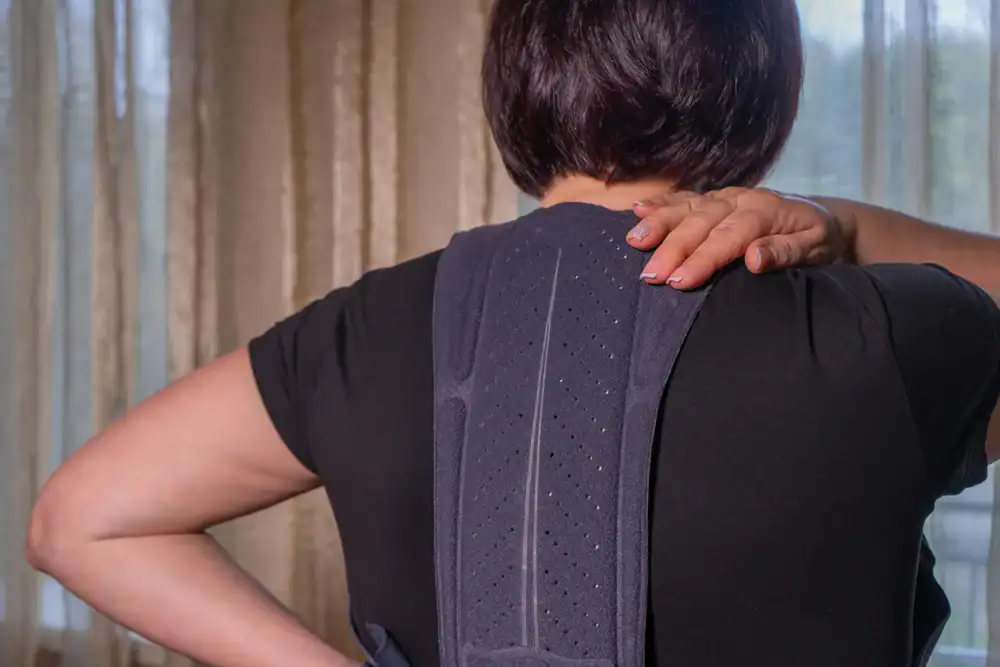
You’ll notice the difference in how you feel during your workday. That dull ache between your shoulder blades starts to fade. Your head doesn’t feel like it weighs twenty pounds by 3 PM.
Forward head posture Our Lady of Mercy residents deal with—what most people call text neck—puts about 60 pounds of pressure on your spine when your head tilts just a few inches forward. That’s not something stretching alone can fix.
When your spine is properly aligned, your muscles stop overcompensating. You breathe easier because your chest isn’t collapsed. You have more energy because your body isn’t fighting itself all day. These aren’t small changes—they’re the difference between getting through your day and actually enjoying it.
The goal isn’t perfect posture. It’s a body that moves the way it should, without pain holding you back from work, exercise, or just playing with your kids without wincing.
We’ve been serving Our Lady of Mercy, NJ and the surrounding areas with hands-on spinal care that actually addresses the root cause. Not quick fixes. Not temporary relief that wears off by tomorrow.
Dr. Roses understands what happens when you spend eight hours at a desk, another two on your phone, and then wonder why your neck and shoulders are a mess. The people who come here aren’t looking for someone to tell them what they already know—they want someone who can actually help.
This isn’t about selling you a long-term plan you don’t need. It’s about honest assessment, real treatment, and giving you the tools to maintain the improvements we make together. Our Lady of Mercy residents deal with the same postural stress as anyone working in the area—long commutes, desk jobs, tech overload. We get it because we see it every day.
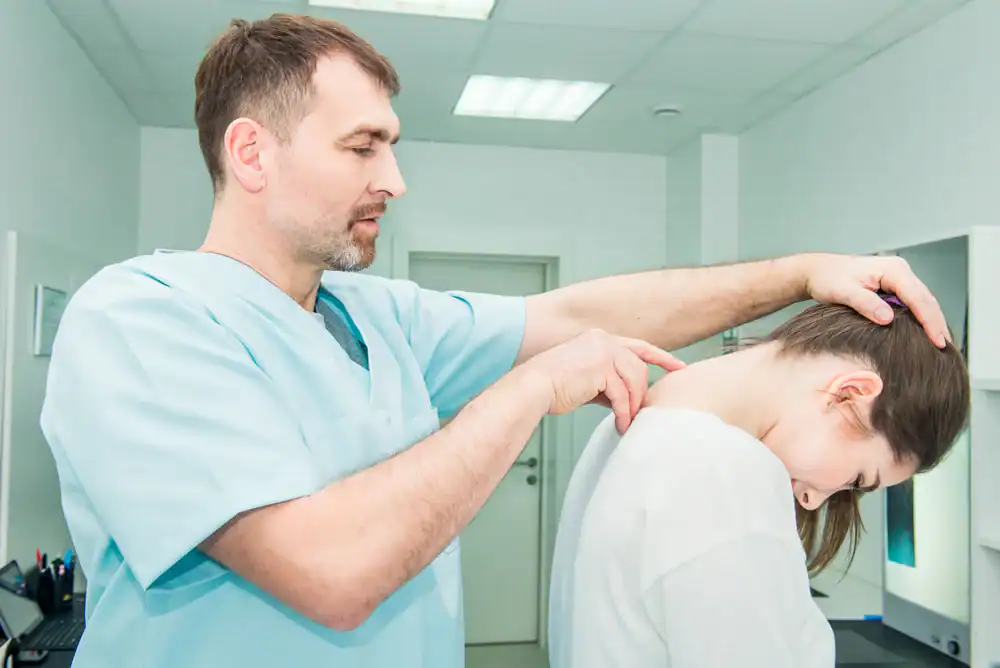
First, we assess where your posture has gone wrong. That means looking at how you stand, how you sit, where your head sits relative to your shoulders, and how your spine curves. Sometimes X-rays help us see what’s happening beneath the surface.
Then we start correcting it. Spinal adjustments realign the vertebrae that have shifted out of place. This isn’t about cracking your back and sending you home—it’s precise, targeted work on the areas causing your symptoms.
You’ll also get specific exercises and stretches. Rounded shoulders correction exercises Our Lady of Mercy patients use at home strengthen the muscles that have gotten weak while loosening the ones that have gotten too tight. Upper crossed syndrome stretches Our Lady of Mercy residents need focus on the chest, neck, and upper back—the areas most affected by desk work and phone use.
Most people start with two visits per week for a few weeks, then scale back as things improve. You’ll notice changes fairly quickly—less pain, easier movement, better energy. The timeline depends on how long you’ve had the problem and how severe it is, but most adults see considerable improvement within a month.

Ready to get started?
You’re getting a full postural assessment that identifies exactly where the problem is. Not guesswork—actual analysis of your spine, your muscle balance, and your movement patterns.
You’re getting manual spinal adjustments that restore proper alignment. When vertebrae are out of position, they put pressure on nerves and strain muscles. Adjustments fix that.
You’re getting a custom plan with exercises you can do at home. Text neck symptoms and treatment Our Lady of Mercy professionals recommend always include strengthening work—your neck extensors, your mid-back, your shoulder stabilizers. These muscles have been underworked for months or years. They need to be rebuilt.
You’re also getting education on how to set up your workspace, how to hold your phone, how to sleep, and how to move throughout your day without making things worse. Small changes in your daily habits make a massive difference in whether the improvements stick.
Our Lady of Mercy has a workforce that’s largely desk-based or service-oriented—both of which wreak havoc on posture. The treatment we provide accounts for that. We’re not just treating your spine in a vacuum. We’re treating how you actually live.

Most adults see noticeable improvement in two to three weeks with twice-weekly adjustments, then continue with weekly visits for another few weeks. That’s the typical timeline for forward head posture Our Lady of Mercy patients deal with—the kind that comes from years of desk work and phone use.
But here’s the truth: how long it takes depends on how long you’ve had the problem. If your posture has been off for five years, it’s not going to correct in five days. Your muscles have adapted to the wrong position. Your spine has shifted. Fixing that takes consistent work.
You’ll feel better before you’re fully corrected. Pain usually decreases within the first week or two. Full structural correction takes longer. And maintaining it means keeping up with the exercises and ergonomic changes we give you, not just relying on adjustments forever.
Text neck happens when you spend hours with your head tilted forward looking at a screen. For every inch your head moves forward, it adds about 10 pounds of pressure on your spine. At a 60-degree angle—what most people use when texting—that’s 60 pounds of force your neck is trying to support.
Over time, this causes the muscles in your chest and front of your neck to tighten and shorten. The muscles in your upper back and back of your neck get overstretched and weak. Your spine starts to curve forward. You end up with pain, stiffness, headaches, and that constant feeling of tension.
Chiropractic care addresses this by realigning your spine and rebalancing your muscles. Adjustments restore proper position. Exercises strengthen what’s weak and stretch what’s tight. It’s not a band-aid—it’s actually reversing the structural changes that caused the problem. Text neck symptoms and treatment Our Lady of Mercy chiropractors provide focus on the root cause, not just masking pain.
Yes. Rounded shoulders are almost always fixable without surgery unless there’s been significant structural damage or a specific injury that requires surgical intervention—which is rare.
Rounded shoulders happen because of muscle imbalance. Your chest muscles get tight from sitting hunched over. Your upper back muscles get weak from not being used properly. Your shoulders roll forward, and over time, that position becomes your new normal.
Rounded shoulders correction exercises Our Lady of Mercy patients use target both sides of the problem. You need to strengthen your mid-back—your rhomboids, your lower traps. You need to stretch your chest and the front of your shoulders. And you need spinal adjustments to make sure your thoracic spine isn’t locked up in a forward curve.
This is completely reversible with consistent treatment and home exercises. Most people see their shoulders start to pull back within a few weeks. Full correction takes longer, but it happens. You just have to actually do the work.
Upper crossed syndrome is a specific pattern of muscle imbalance that creates the classic “tech posture”—forward head, rounded shoulders, hunched upper back. It’s called “crossed” because if you draw lines connecting the tight muscles and the weak muscles, they form an X across your upper body.
The tight muscles are your upper traps, your levator scapulae, your chest, and the muscles in the front of your neck. The weak muscles are your deep neck flexors, your lower traps, your rhomboids, and your serratus anterior. This imbalance pulls your posture out of alignment and keeps it there.
Treatment involves adjusting the spine to restore mobility, stretching the tight muscles, and strengthening the weak ones. Upper crossed syndrome stretches Our Lady of Mercy residents need include doorway chest stretches, neck stretches, and upper trap releases. Strengthening focuses on chin tucks, rows, and scapular stabilization exercises.
The good news: upper crossed syndrome is not only treatable, it’s fully reversible. It just takes a structured approach and consistency. You can’t stretch your way out of it alone, and you can’t adjust your way out of it alone. You need both.
Cost depends on how many visits you need and what your insurance covers. Many insurance plans cover chiropractic care, especially when it’s being used to treat pain or a diagnosed condition like cervical strain or thoracic dysfunction.
We’ll verify your insurance before you start so you know exactly what you’re paying. If you don’t have coverage, we’ll talk through cash options that make sense for your situation. The goal is to get you better, not to lock you into a plan that doesn’t fit your budget.
Most people need about 8 to 12 visits over the course of a month or two to see significant, lasting improvement. That’s not a forever commitment—that’s a focused treatment window. After that, some people come in occasionally for maintenance. Others just use the exercises we’ve given them and they’re good to go.
What you’re paying for is real correction, not temporary relief. If you’ve been dealing with neck pain, shoulder pain, or headaches for months, the cost of a few chiropractic visits is a lot less than the cost of living with it—or the cost of more invasive treatments down the road.
Not always, but sometimes they’re helpful. X-rays let us see the exact curvature of your spine, the spacing between your vertebrae, and whether there are any structural issues we need to know about before we start treatment.
If your posture problem is obvious and your symptoms are straightforward, we might not need them. But if you’ve had chronic pain for a long time, if you’ve had previous injuries, or if something doesn’t add up during the physical exam, X-rays give us a clearer picture.
The decision isn’t automatic. It’s based on what we find during your initial assessment and what’s actually necessary to treat you safely and effectively. We’re not ordering X-rays just to order them—we’re using them when they help us do a better job.
If you’ve had recent imaging done elsewhere, bring it with you. We can often use that instead of taking new films. The goal is to get the information we need without unnecessary cost or radiation exposure.