

Hear from Our Customers
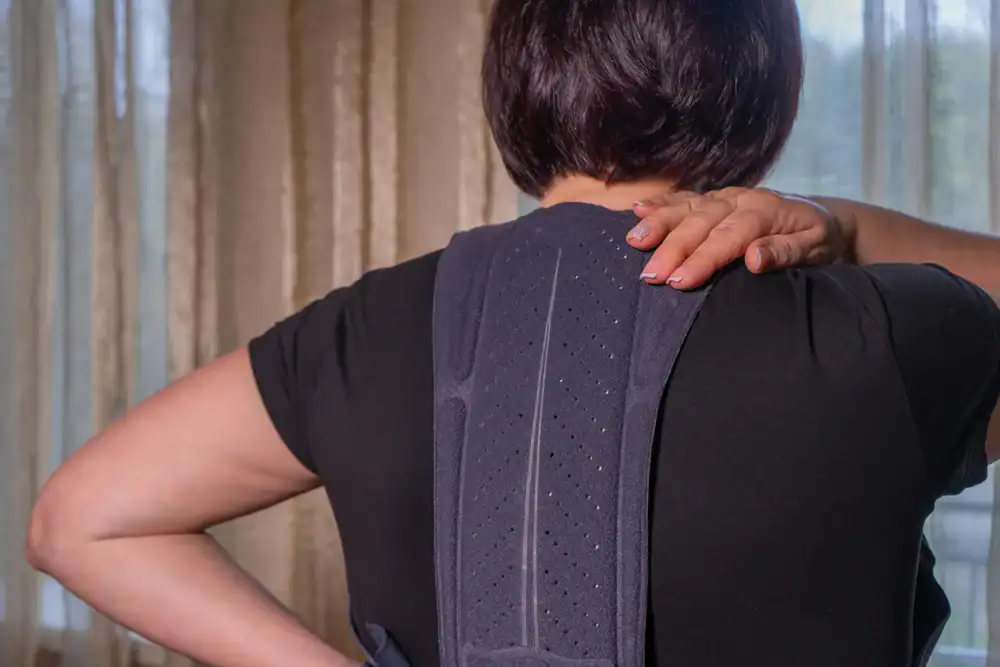
Your neck stops aching by the end of the workday. You’re not reaching for ibuprofen every afternoon because your shoulders are screaming.
That 33-minute commute into work doesn’t leave you stiff anymore. You can turn your head to check your blind spot without wincing.
The headaches that show up after staring at screens all day start disappearing. You stand taller without thinking about it. Your body stops fighting you just to get through normal activities like putting on socks or reaching into the back seat of your car.
This is what happens when someone who knows how to fix forward head posture in Kearny, NJ actually addresses the root problem instead of just telling you to “sit up straight.” Your muscles rebalance. Your spine realigns. You move like you’re supposed to.
We’ve been treating posture problems in Hudson County since 1981. We’ve seen what happens when office workers, warehouse staff, and commuters ignore the early warning signs of text neck and rounded shoulders.
Kearny has 2,694 people working office jobs and another 1,919 in management roles. Most of them are hunched over keyboards or phones for hours every day. Add in those 33-minute commutes, and you’ve got a recipe for forward head posture that gets worse every year.
We don’t just crack your back and send you home. We use corrective exercises designed specifically for your posture issues, plus lifestyle coaching that actually fits into your real life. No unnecessary drugs. No vague advice about “better ergonomics.” Just straightforward treatment that gets your body working right again.

First, you get a comprehensive postural screening. We use Titron Infrared Imaging to see exactly what’s going on with your spine and posture. This isn’t guesswork. You’ll see the baseline assessment yourself.
Then comes the actual correction. Chiropractic adjustments realign your spine and take pressure off the nerves that are causing pain. These aren’t the scary, aggressive adjustments you might be worried about. Modern techniques are safer and more comfortable than ever.
You’ll also get a “blueprint” of corrective exercises built specifically for your posture problems. These are exercises you do at home to strengthen the muscles that have gotten weak from years of slouching. They’re designed to fix text neck symptoms and treatment needs in Kearny, NJ by addressing the muscle imbalances causing your rounded shoulders and forward head posture.
Most people start seeing improvement in four to six weeks. Your craniovertebral angle improves. Your shoulders pull back naturally. The constant tension in your upper back starts letting go. We also coach you on the daily habits that are making things worse so you can stop sabotaging your own progress.

Ready to get started?
You’re getting spinal adjustments that target the specific misalignments causing your posture problems. We focus on the cervical spine and thoracic region where forward head posture and upper crossed syndrome do the most damage.
The corrective exercise program includes stretches for your tight chest muscles and strengthening exercises for your weak upper back. These are the rounded shoulders correction exercises in Kearny, NJ that actually reverse the muscle imbalances from sitting at a desk all day. You’ll also get upper crossed syndrome stretches in Kearny, NJ designed to open up your chest and pull your shoulders back where they belong.
Ergonomic coaching is part of the package too. We’ll walk you through how to set up your workspace, how to hold your phone without destroying your neck, and what positions to avoid during your commute. This matters in Kearny because nearly 6% of workers here have super commutes over 90 minutes. That’s a lot of time to develop bad postural habits.
You also get ongoing assessments to track your progress. You’ll see the measurements improve as your posture corrects. No guessing whether it’s working.

Most people see noticeable improvement in four to six weeks with consistent treatment and home exercises. That’s not a cure in a month and a half, but it’s when you start feeling real relief.
The timeline depends on how severe your forward head posture is and how long you’ve had it. If you’ve been slouching at a desk for 10 years, it’s going to take longer than someone who just started experiencing text neck symptoms six months ago. Research shows that modified cervical exercises performed for just four weeks can improve forward head posture, and significant craniovertebral angle improvement happens after about 18 sessions.
You’re not just getting adjustments and hoping for the best. We give you specific exercises to do at home between visits. The people who actually do those exercises see results faster. The ones who skip them and just show up for adjustments take longer to improve.
Text neck happens when you tilt your head forward to look at your phone or computer for hours every day. When your head tilts forward 60 degrees, it puts 60 pounds of force on your cervical spine. That’s like carrying a bowling ball on your neck all day.
In Kearny, where most people work office jobs or management positions, this is incredibly common. You’re staring at screens during work, then looking at your phone during your 33-minute commute, then watching TV or scrolling at night. Your head is constantly forward, and the muscles in your chest get tight while your upper back muscles get weak and overstretched.
Treatment for text neck symptoms in Kearny, NJ involves chiropractic adjustments to realign your cervical spine, plus specific stretches to loosen your chest muscles and exercises to strengthen your upper back. We also teach you how to hold your devices differently and set up your workspace so you’re not constantly reinforcing the problem. You can’t just adjust away years of bad habits without changing the habits themselves.
Yes, but only if you do them consistently and combine them with adjustments. Rounded shoulders happen because your chest muscles are tight and your upper back muscles are weak. Exercises alone won’t fix the spinal misalignments that developed while your posture was deteriorating, and adjustments alone won’t fix the muscle imbalances.
The exercises we prescribe target both problems. You’ll get stretches that open up your chest and pull your shoulders back, plus strengthening exercises for your rhomboids, middle traps, and lower traps. These are the muscles that have been overstretched and weakened from years of slouching.
Research shows that therapeutic exercises including strength training, stretching, and comprehensive movement patterns effectively reduce forward head posture, rounded shoulders, and thoracic kyphosis. The key is doing them correctly and often enough. Most people need to do their exercises at least five days a week to see real improvement. We’ll show you exactly how to perform each exercise so you’re not wasting time on movements that don’t help.
Upper crossed syndrome is a specific pattern of muscle imbalances that creates forward head posture and rounded shoulders. Your chest muscles and upper traps get tight and overactive, while your deep neck flexors and lower traps get weak and underactive. This creates a “crossed” pattern of dysfunction.
If you work at a desk, drive for a living, or spend hours on your phone, there’s a good chance you have some degree of upper crossed syndrome. Studies show it affects anywhere from 11% to 60% of different populations depending on age and occupation. In Kearny, where office and administrative support occupations employ 2,694 people, it’s extremely common.
You probably have it if your shoulders naturally round forward when you’re standing relaxed, if your head juts forward past your shoulders when you look at yourself from the side, or if you get tension headaches and neck pain regularly. Upper crossed syndrome stretches in Kearny, NJ focus on lengthening your tight pec muscles and upper traps while strengthening your weak lower traps and deep neck flexors. We can assess your posture during your first visit and tell you exactly what’s going on.
Many insurance plans cover chiropractic care, but coverage varies significantly depending on your specific plan. Some plans cover a certain number of visits per year, others require a referral from your primary care doctor, and some don’t cover chiropractic at all.
The best approach is to call your insurance company before your first appointment and ask specifically about chiropractic coverage. Ask how many visits are covered per year, whether you need a referral, what your copay is, and if there are any chiropractors you’re required to see. Then call us and verify we accept your insurance.
Even if your insurance doesn’t cover treatment, many people find that paying out of pocket for posture correction is worth it compared to the alternative. Chronic pain medications add up over time, and they don’t actually fix the problem. Surgery for cervical spine issues costs tens of thousands of dollars and comes with significant risks. Chiropractic care is typically the most cost-effective option for fixing forward head posture and related postural problems, especially when you factor in the long-term costs of ignoring the issue.
Yes, if your headaches and neck pain are coming from postural problems. Forward head posture puts enormous strain on your cervical spine and the muscles in your neck and upper back. That strain causes tension headaches, neck pain, and sometimes even pain that radiates into your shoulders and arms.
When your head is positioned correctly over your shoulders, your neck muscles don’t have to work nearly as hard to hold your head up. But when your head is jutting forward, those muscles are constantly straining. Over time, they develop trigger points and chronic tension that leads to daily headaches and neck pain.
Posture correction in Kearny, NJ addresses the root cause by realigning your spine and rebalancing your muscles. As your posture improves, the strain on your neck decreases. The muscles relax. The headaches become less frequent and less severe. Most people notice their neck pain improving within the first few weeks of treatment, and their headaches often follow shortly after. This isn’t a guarantee that all headaches will disappear, but if poor posture is contributing to your pain, fixing your posture will help.