

Hear from Our Customers
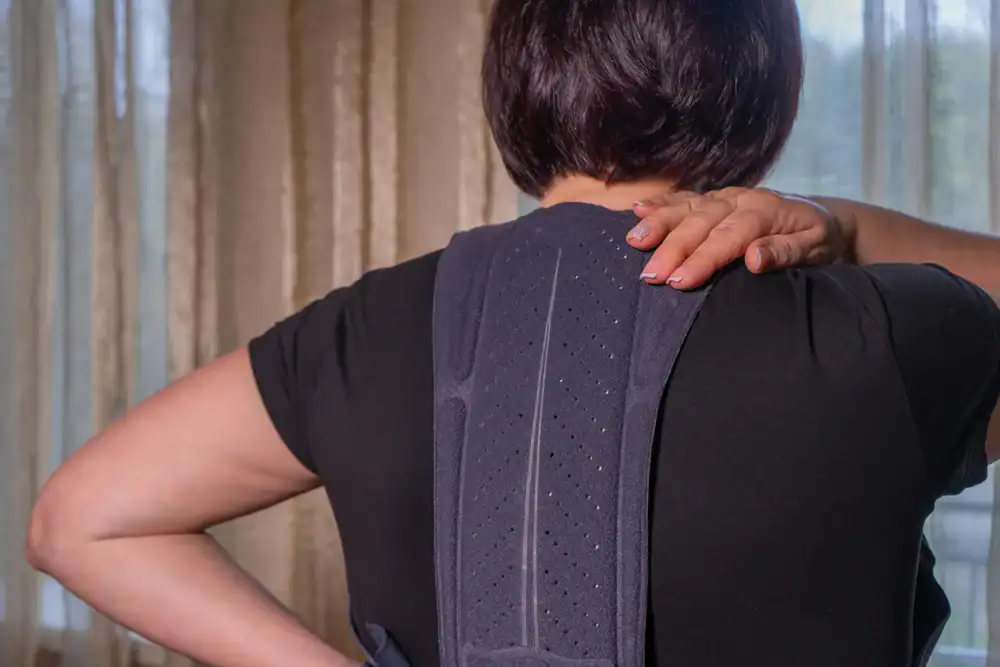
You’ll notice the headaches first. They start fading within the first few weeks as we realign your cervical spine and take pressure off those overworked neck muscles. Your shoulders drop back where they belong instead of rounding forward over your keyboard.
The stiffness you feel every morning starts loosening up. You can turn your head to check your blind spot without wincing. Your energy comes back because your body isn’t fighting against itself all day.
And yeah, you stand taller. People notice. But more importantly, you feel the difference when you’re sitting at your desk for hours or commuting through the PATH station. Your body remembers what it’s like to move without that constant ache in your upper back.
This isn’t about perfect posture. It’s about your spine working the way it should so you can get through your day without pain.
We’ve been serving Journal Square and the surrounding Jersey City area with one focus: getting people out of pain and keeping them that way. We’re right near the PATH station because we know most of our patients are commuters dealing with text neck symptoms and treatment needs from hours spent hunched over phones and laptops.
We don’t do cookie-cutter adjustments. Every person who walks in gets a full spinal assessment—standing, sitting, moving—so we can see exactly what’s going on with your posture. Then we build a treatment plan around your specific problem, not a generic protocol.
You’re not a number here. You’re someone dealing with real pain who needs real answers, and that’s what we give you.

First visit, we evaluate. We look at your spine alignment while you’re standing, sitting, and moving through normal positions. We measure the angle of your head position and check how your shoulders, neck, and upper back are compensating. This tells us where the problem actually is.
Then we start treatment. Spinal adjustments realign your cervical spine and take pressure off the nerves causing your pain. We’re targeting the root cause—not just masking symptoms. You’ll feel some immediate relief, but the real change builds over several sessions as your body relearns proper alignment.
We also give you specific exercises. These aren’t generic stretches you could find on YouTube. They’re rounded shoulders correction exercises and upper crossed syndrome stretches designed for your exact postural issues. Strengthening the weak muscles and loosening the tight ones is how the correction actually sticks.
Between visits, we show you how to set up your workspace, how to hold your phone, how to sit without undoing the progress. Small changes that make a big difference when you’re doing them 8-10 hours a day.

Ready to get started?
You get hands-on spinal adjustments that address the misalignment causing your forward head posture. We’re realigning vertebrae, releasing nerve pressure, and restoring the natural curve of your neck that gets flattened from constant phone use.
You get a customized exercise program. Not printouts of random stretches—actual targeted movements for your specific postural dysfunction. Strength work for the muscles that have gone weak from disuse. Stretches for the ones that are chronically tight and pulling you forward.
You get ergonomic coaching for your real life. Journal Square is full of commuters and office workers spending serious time at desks and on trains. We’ll walk you through desk setup, monitor height, keyboard position—the stuff that either supports your progress or sabotages it.
And you get ongoing assessment. We track your improvement with measurable markers, not guesswork. Head angle, range of motion, pain levels. You’ll see the progress in numbers, not just how you feel. Though how you feel matters most.

Most people start feeling relief within 2-3 weeks, but actual postural correction takes longer. We’re talking 8-12 weeks of consistent treatment and exercises to see lasting change in your alignment.
Here’s why: your body has been in that forward head position for months or years. The muscles have adapted, the ligaments have stretched, and your nervous system thinks that’s normal. We have to retrain all of it.
The first phase focuses on pain relief and initial realignment through adjustments. The second phase builds strength in the weakened muscles and restores flexibility. The third phase is about maintaining the correction so you don’t slide back into old patterns. If you’re only coming in for adjustments but not doing the exercises at home, you’re looking at a much longer timeline.
The most common complaint is persistent neck pain that gets worse as the day goes on. It usually starts as a dull ache at the base of your skull and spreads into your shoulders. By evening, it’s a constant throb.
Headaches are next. They typically start at the back of your head and wrap around to your temples. These aren’t migraines—they’re tension headaches from muscle strain and nerve compression in your neck.
You’ll also see shoulder tightness and reduced neck mobility. Patients tell us they can’t look over their shoulder comfortably or they feel a sharp catch when they turn their head. Some people get tingling or numbness down their arms from nerve impingement. And a lot of people don’t realize their jaw pain or clicking is connected to their forward head posture until we show them how everything’s linked.
Yes, but only if you’re doing the right ones consistently. Random shoulder stretches from the internet won’t cut it because they’re not addressing your specific muscle imbalances.
Rounded shoulders happen because your chest muscles get tight and short while your upper back muscles get weak and overstretched. You need to lengthen the pectorals and strengthen the rhomboids and lower trapezius. That requires targeted exercises with proper form, not just pulling your shoulders back and hoping for the best.
We typically prescribe a combination of doorway stretches for the chest, scapular retraction exercises for the upper back, and rotator cuff strengthening. Done correctly 4-5 times per week, you’ll see noticeable improvement in 6-8 weeks. But here’s the thing: if your spine is misaligned, the exercises alone won’t fully correct the problem. You need the adjustments to restore proper joint position, then the exercises to maintain it.
Upper crossed syndrome is one of the most common patterns we see, especially in office workers and commuters. It’s that combination of forward head posture, rounded shoulders, and a hunched upper back that comes from sitting at computers all day.
Treatment involves manual therapy to address the spinal restrictions and muscle tension, plus specific upper crossed syndrome stretches that target the tight muscle groups. We focus on loosening your upper trapezius, levator scapulae, and pectorals while strengthening your deep neck flexors and lower trapezius.
The adjustments restore normal movement to your thoracic spine and neck. The stretches and exercises rebalance the muscle tension. And the ergonomic changes prevent you from recreating the same pattern at work. Most patients see significant improvement within 2-3 months if they’re consistent with all three components. It’s not a quick fix, but it’s a permanent one when done right.
Initial consultation and assessment typically runs between $75-150, depending on what’s included. That covers the full postural evaluation, spinal examination, and treatment plan development.
Follow-up adjustment sessions usually range from $45-85 per visit. Most treatment plans involve 2-3 visits per week initially, then taper down to once weekly, then maintenance visits every 2-4 weeks. Total investment over 12 weeks generally falls between $800-1,500.
Many insurance plans cover chiropractic care, which can significantly reduce your out-of-pocket costs. We’ll verify your benefits before you start treatment so you know exactly what you’re paying. Some patients use HSA or FSA funds to cover the costs. We’re upfront about pricing because the last thing you need when you’re already in pain is surprise bills.
The treatment itself is the same—spinal adjustments, corrective exercises, and postural retraining. But the ergonomic coaching looks different because your setup is different.
Office workers usually have standardized desks and chairs. Remote workers are often hunched over laptops on kitchen tables or working from their couch. That creates different postural stresses that we need to address specifically.
We spend more time on home workspace setup with remote workers. Monitor height, laptop stands, chair support, keyboard position—all of it matters when you’re sitting there 8-10 hours a day. We also focus on movement breaks because there’s no commute or walk to the conference room forcing you to stand up. The postural correction only sticks if your daily environment supports it, and for remote workers in Journal Square, that means getting your home office right.