

Hear from Our Customers
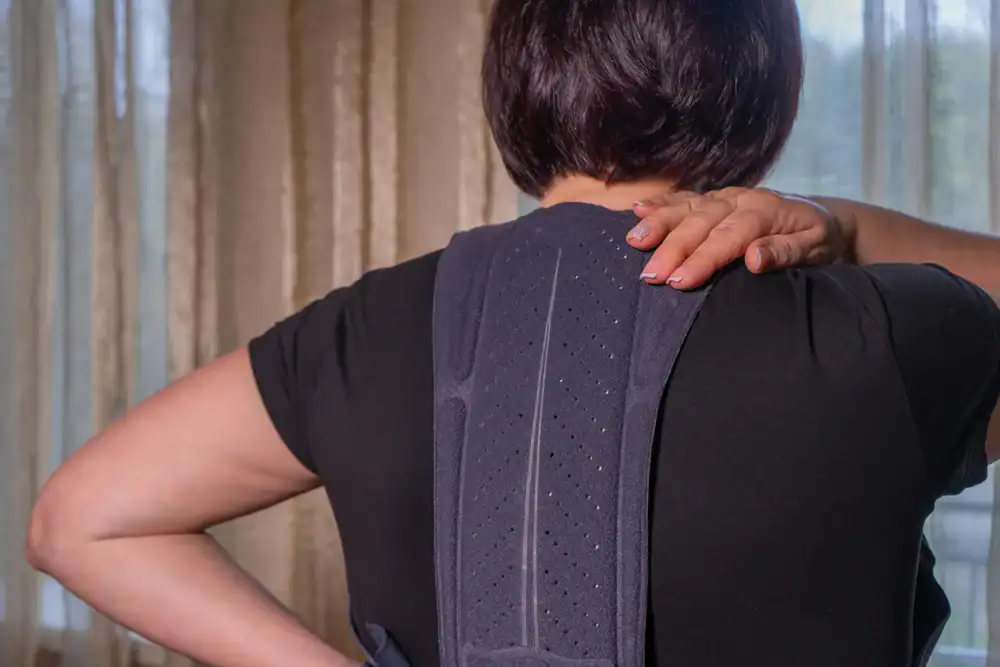
Your head stops jutting forward every time you look at your phone. Your shoulders roll back naturally instead of curling in toward your chest. The dull ache between your shoulder blades starts to fade because your spine isn’t fighting gravity all day.
You stop getting called out in meetings or by family members who keep telling you to straighten up. You look more confident in photos without trying. And you’re not constantly adjusting your position every ten minutes just to feel comfortable.
That’s what posture correction in Jersey City looks like when it’s done right. Not a temporary fix. Not a list of stretches you’ll forget by next week. Real structural change that holds because we’re addressing what’s actually causing the problem—not just managing symptoms.
Dr. Paul Roses has been practicing chiropractic in Hudson County for over 30 years. He’s seen the shift—how forward head posture and text neck went from occasional complaints to daily problems for people working in Jersey City’s office buildings and tech companies.
He’s treated everyone from first responders after 9/11 to parents who’ve been hunched over laptops since the pandemic started. His approach isn’t about quick adjustments that feel good for an hour. It’s about spinal realignment that actually corrects the underlying issue, combined with exercises you can do at home that make the changes stick.
You’re not getting a one-size-fits-all plan. You’re getting a blueprint built around what’s happening in your spine right now—and what needs to happen to fix it.

First, we do a baseline assessment using Titron Infrared Imaging. It’s painless, takes a few seconds, and shows us exactly where your spine is misaligned. Most people with forward head posture in Jersey City also have what’s called upper crossed syndrome—tight chest muscles, weak upper back muscles, and a neck that’s constantly straining forward.
Once we know what we’re dealing with, Dr. Roses performs spinal adjustments using techniques that are more precise and comfortable than what most people expect from chiropractic care. These aren’t generic adjustments. They’re targeted corrections designed to realign your spine and take pressure off the areas that have been compensating for years.
Then comes the part that makes it last: custom exercises. You’ll get a specific set of movements designed for your posture issues—whether that’s rounded shoulders, text neck, or a combination. These aren’t complicated. They’re things you can do at home in ten minutes that reinforce what we’re doing in the office.
We also talk about what you’re doing during the day that’s making things worse. Small changes to your workspace setup, how you hold your phone, or how you sleep can make a massive difference in how fast you improve.

Ready to get started?
Every posture correction plan at Roses Chiropractic includes spinal adjustments, postural screenings, and a personalized exercise program. But what that looks like depends on what’s happening with your spine.
If you’re dealing with text neck—that forward head position from looking down at screens all day—we focus on restoring the natural curve in your neck and loosening up the muscles that have locked into that position. For rounded shoulders, we work on opening up your chest and strengthening the muscles between your shoulder blades that have been overstretched and weak.
Jersey City has one of the highest concentrations of office workers in New Jersey. That means we see a lot of the same postural patterns: too much sitting, not enough movement, and years of compensation that’s created pain in places you wouldn’t expect. Lower back pain, headaches, even jaw tension—all of it can trace back to posture.
You’ll also get coaching on ergonomics and daily habits. We’re not just fixing the problem. We’re teaching you how to avoid recreating it every time you sit down at your desk.

It depends on how long you’ve had it and how severe it is. Most people start noticing changes within the first few weeks—less tension in the neck, fewer headaches, a bit more range of motion when they turn their head.
Real structural correction usually takes longer. If you’ve had forward head posture for years, your muscles and ligaments have adapted to that position. We need to retrain them, and that doesn’t happen overnight. For most people, we’re looking at a few months of consistent care to see lasting improvement.
The good news is that you’re not locked into appointments forever. Once your posture improves and you’ve built the strength to maintain it, you’re done. Some people come back for occasional tune-ups. Others don’t need to. It depends on your job, your habits, and how well you stick with the exercises.
Yes, but not with adjustments alone. Rounded shoulders are usually part of a bigger pattern called upper crossed syndrome. Your chest muscles are tight, your upper back muscles are weak, and your shoulders have rolled forward to compensate.
Chiropractic adjustments help by realigning your spine and improving mobility in your thoracic spine—the part of your back between your shoulder blades. But if we don’t also address the muscle imbalances, your shoulders will just roll forward again.
That’s why we combine adjustments with specific exercises that strengthen your upper back and stretch your chest. It’s not complicated, but it does require consistency. Most people see their shoulders start to pull back naturally within a few weeks once we get the right muscles firing again.
Text neck happens when you spend hours every day looking down at your phone or laptop. Your head weighs about 10-12 pounds. When it’s in a neutral position, your neck handles that weight easily. But for every inch your head moves forward, the strain on your neck doubles.
Over time, that constant forward pull changes the curve in your neck. The muscles in the front get tight and short. The muscles in the back get overstretched and weak. And your neck starts to hurt—not just when you’re looking at your phone, but all the time.
We treat text neck by restoring the natural curve in your neck through spinal adjustments, then strengthening the muscles that support that curve. We also work on releasing the tension in your upper traps and the muscles at the base of your skull. Most people feel relief pretty quickly, but fixing the underlying structure takes a bit longer.
Not always. We use Titron Infrared Imaging for most posture assessments because it gives us a clear picture of where your spine is misaligned without radiation. It’s fast, painless, and accurate.
X-rays are helpful if we suspect there’s something structural going on that we can’t see from a physical exam—like a previous injury, arthritis, or significant degeneration. But for most people dealing with forward head posture or rounded shoulders, we don’t need them.
If Dr. Roses thinks an X-ray would give us useful information, he’ll let you know. But we’re not ordering imaging just to order it. We’re focused on what’s actually going to help us fix your posture as efficiently as possible.
Only if you go back to doing exactly what caused it in the first place. If you spend eight hours a day hunched over a laptop with your head forward and your shoulders rounded, yeah—your posture will probably slide back.
But that’s why we don’t just adjust your spine and send you on your way. We teach you how to set up your workspace so it’s not constantly pulling you into bad positions. We give you exercises that keep the muscles strong enough to hold your posture where it should be. And we help you recognize when you’re slipping back into old habits so you can correct it before it becomes a problem again.
Most people find that once their posture improves, it’s easier to maintain than they expected. Your body actually prefers being in alignment. It’s less work, less strain, and less pain. The hard part is getting there. Staying there is usually simpler.
Regular chiropractic adjustments focus on relieving pain and restoring mobility. Posture correction does that too, but it goes further—it’s about changing the structural alignment of your spine so the problem doesn’t keep coming back.
When you come in for posture correction in Jersey City, we’re not just adjusting the spots that hurt. We’re looking at your entire spine to see where the compensation patterns are. We’re identifying which muscles are too tight, which ones are too weak, and what’s causing your body to default to poor posture.
Then we build a plan that addresses all of it. Adjustments to realign your spine. Exercises to retrain your muscles. Ergonomic coaching to stop recreating the problem every day at work. It’s more comprehensive because the goal isn’t just pain relief—it’s lasting structural change.