

Hear from Our Customers
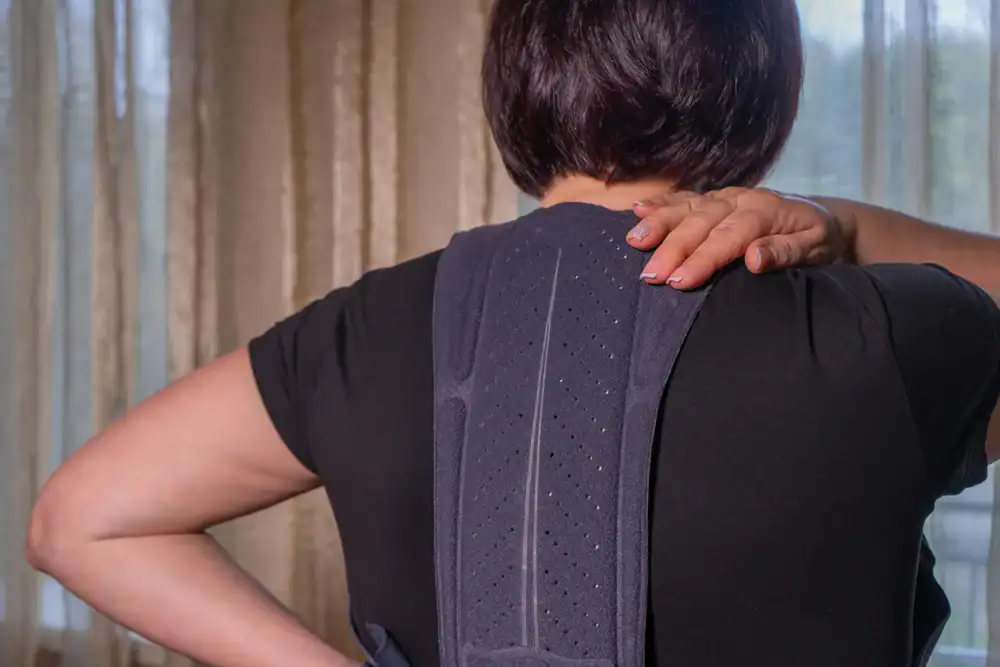
You’ll notice the headaches first. They start happening less often, then they’re gone. That’s because 80% of headaches don’t come from your head—they come from your neck.
Your shoulders drop back where they belong. You can take a full breath again without that tight feeling across your chest. Sleep gets easier because you’re not shifting around trying to find a position that doesn’t hurt.
The fatigue you’ve been blaming on work or stress? A lot of that clears up too. When your spine isn’t fighting gravity all day, you have energy left over. You sit through meetings without constantly adjusting. You look up from your phone without wincing.
This isn’t about standing up straighter because someone told you to. It’s about fixing the structural problem so your body can actually hold itself the way it’s supposed to.
Dr. Paul Roses has been practicing in this area since 1981. He’s seen what happens when desk workers ignore neck pain for years, and he’s seen what’s possible when you actually address the root cause.
Jackson Hill has its share of commuters and remote workers—people spending 8-10 hours a day in front of screens. That’s the reality. We don’t lecture you about it. We work with it, using adjustments and specific exercises that fit into your actual life.
We use Titron Infrared Imaging to get a baseline of what’s happening in your spine. It takes seconds, doesn’t hurt, and shows you exactly where the problems are. No guessing.
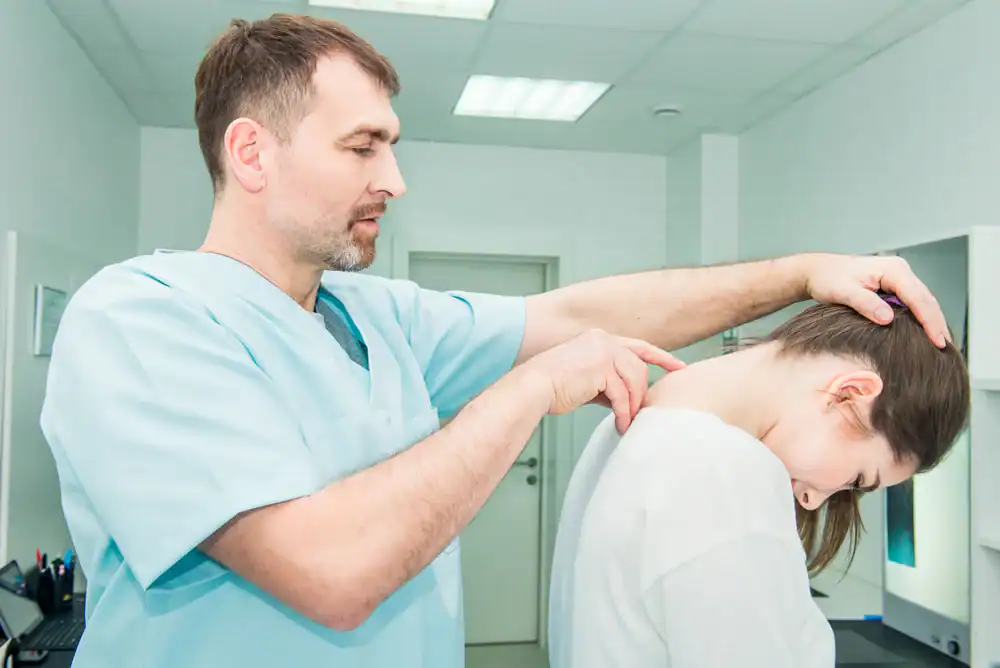
First visit, you get a full assessment. That includes the infrared scan and a conversation about what you’re dealing with—how long the pain’s been there, what makes it worse, what you’ve already tried.
Dr. Roses explains what he’s seeing and what needs to happen. If you’ve got forward head posture in Jackson Hill, NJ from years of computer work, he’ll show you how far forward your head is sitting and what that’s doing to your neck. If it’s text neck symptoms and treatment Jackson Hill, NJ you need, he’ll map out the plan.
Treatment starts with adjustments to realign your spine. These aren’t random cracks—they’re specific corrections to the joints that have locked up or shifted out of place. You’ll also get exercises designed for your specific issues. These aren’t generic stretches. They’re targeted to strengthen what’s weak and loosen what’s tight.
Most people feel some relief after the first few visits. Real correction—the kind that lasts—takes consistency. You’re retraining your body to hold itself differently, and that doesn’t happen overnight.

Ready to get started?
You get chiropractic adjustments that target the exact areas causing your posture problems. For most Jackson Hill residents dealing with upper crossed syndrome stretches Jackson Hill, NJ, that means work on the neck, upper back, and shoulders.
You also get a personalized exercise plan. These are movements you can do at home in 10-15 minutes that reinforce what’s happening in the office. They’re not complicated. They’re effective.
Dr. Roses will walk you through ergonomic changes too—how to set up your workspace so you’re not undoing progress every time you sit down. Small adjustments to monitor height, chair position, and keyboard placement make a real difference when you’re sitting 40+ hours a week.
The goal isn’t to keep you coming forever. It’s to fix the problem, teach you how to maintain it, and get you back to your life without constant pain. Jackson Hill has plenty of people working from home now, and the spike in neck and shoulder issues is real. Our approach addresses that directly.

Most people start feeling better within 3-6 visits, but actual structural correction takes longer. Think 8-12 weeks of consistent treatment and exercises.
Forward head posture in Jackson Hill, NJ doesn’t develop overnight. You’ve been sitting at a desk, looking at your phone, or driving with your head pushed forward for years. Your muscles have adapted to hold you in that position, and your joints have stiffened up to match.
Chiropractic adjustments start freeing up those stiff joints right away. You’ll notice you can turn your head further or look up without pain pretty quickly. But retraining the muscles and ligaments to hold your head in the right position? That takes time and repetition. The exercises Dr. Roses gives you are critical here—they’re what make the changes stick.
Neck pain, headaches, and shoulder tension are the big three. You might also notice numbness or tingling down your arms, or a burning sensation between your shoulder blades.
Text neck symptoms and treatment Jackson Hill, NJ have become more common as more people work remotely. When you’re looking down at your phone or laptop for hours, your neck is holding up what feels like 40-60 pounds instead of the normal 10-12. That constant strain creates inflammation in the joints and overworks the muscles.
The headaches usually start at the base of your skull and radiate forward. The shoulder tension feels like a constant knot that won’t release no matter how much you stretch. Some people describe a “heavy” feeling in their neck by the end of the day. All of these respond well to adjustments combined with posture correction exercises that strengthen your neck and upper back.
Exercises help, but if your spine is misaligned, you’re trying to strengthen around a structural problem. You need both.
Rounded shoulders correction exercises Jackson Hill, NJ work on the muscular imbalances—tight chest muscles, weak upper back muscles. Those exercises are important. But if your thoracic spine (mid-back) is locked up or your neck vertebrae are out of position, no amount of rowing or stretching will fix that.
Chiropractic adjustments restore proper joint motion and alignment. Then the exercises can actually do their job because your body is in the right position to use those muscles correctly. It’s like trying to build strength on a crooked foundation—you can try, but you won’t get far. Fix the foundation first, then strengthen. That’s the approach that gets results.
Upper crossed syndrome stretches Jackson Hill, NJ target the specific muscle imbalances that create forward head posture and rounded shoulders. You’re stretching what’s tight and strengthening what’s weak.
The “upper cross” refers to the X-pattern of imbalances: tight chest muscles and tight upper neck muscles crossing with weak deep neck flexors and weak mid-back muscles. The stretches focus on opening up your chest (pec stretches), releasing your upper traps and levator scapulae (the muscles that get rock-hard when you’re stressed), and loosening your suboccipital muscles at the base of your skull.
Dr. Roses will show you the specific stretches that match your pattern. Some people need more chest opening. Others need more neck release. It’s not one-size-fits-all. You’ll do these daily, usually holding each stretch for 30-60 seconds. Combined with strengthening exercises for your mid-back and deep neck muscles, these stretches help rebalance your posture from the muscular side while adjustments handle the structural side.
Many insurance plans cover chiropractic care, but coverage varies widely. Some plans cover posture correction treatment fully, others partially, and some not at all.
The best approach is to call your insurance company before your first visit and ask specifically about chiropractic benefits. Ask how many visits per year are covered, whether you need a referral, and what your copay or coinsurance will be. We can also verify your benefits if you provide your insurance information.
Even if your insurance doesn’t cover posture correction in Jackson Hill, NJ, many people find the out-of-pocket cost worth it compared to ongoing pain medication, missed work, or eventual surgery. A typical treatment plan might run 8-12 weeks. Compare that cost to what you’re spending on pain relievers, massage, or other temporary fixes that don’t address the root problem. Most patients find they’re spending less overall and actually fixing the issue instead of just managing symptoms.
Only if you go back to the exact same habits without maintaining what you’ve learned. That’s why the exercise component and ergonomic changes matter so much.
Dr. Roses doesn’t just adjust you and send you on your way. You learn specific exercises that keep your posture stable after active treatment ends. You learn how to set up your workspace correctly. You understand what positions and habits caused the problem in the first place.
Most patients do periodic maintenance visits—maybe once a month or once a quarter—just to keep things in check. But you’re not dependent on constant treatment if you maintain the changes. Think of it like going to the gym. If you build strength and then stop doing anything, yeah, you’ll lose it. But if you keep up with even basic maintenance, you hold onto the improvements. Your posture works the same way.