

Hear from Our Customers
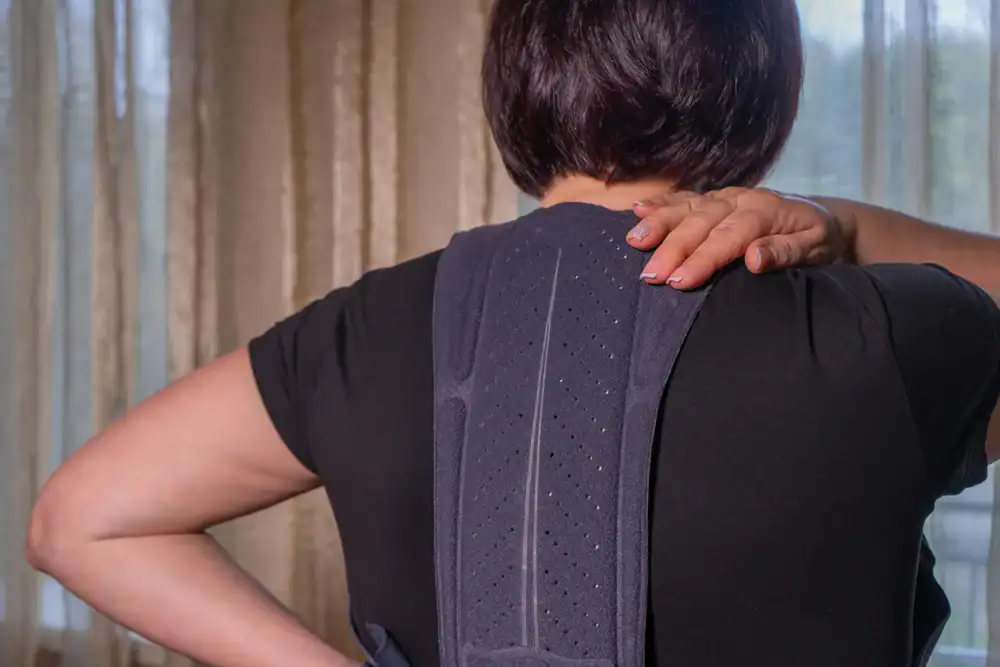
Your neck stops aching by mid-afternoon. Your shoulders don’t feel like they’re carrying extra weight. You can sit through a meeting or finish your workday without that nagging pull between your shoulder blades.
When you tilt your head forward just 60 degrees, you’re putting 60 pounds of force on your cervical spine. That’s the reality for most people working in Harborside’s office buildings, staring at screens for hours. Your body wasn’t built for that kind of sustained pressure.
Posture correction in Harborside, NJ isn’t about standing straighter for a photo. It’s about reducing the mechanical stress that’s causing your pain right now. When we address forward head posture, rounded shoulders, and the compensations your body has made, you get relief that actually lasts. Most patients notice they’re moving differently within three weeks. Some feel the difference after just a few adjustments.
Dr. Roses has been practicing chiropractic since 1981. That’s over 40 years of understanding how posture breaks down and what it takes to rebuild it. He’s seen the shift from occasional computer use to the reality most Harborside professionals face now: screens all day, phones during commutes, tablets at home.
We use Titron Infrared Imaging to get a baseline assessment in seconds. No guessing. You see exactly where the problems are, and you get a specific plan to address them. The adjustments are precise, and you’ll get exercises designed specifically for your posture issues that you can do at home.
This isn’t a franchise or a rotating door of practitioners. It’s one doctor who’s spent his career serving Hudson County, and who understands that your time matters as much as your results.
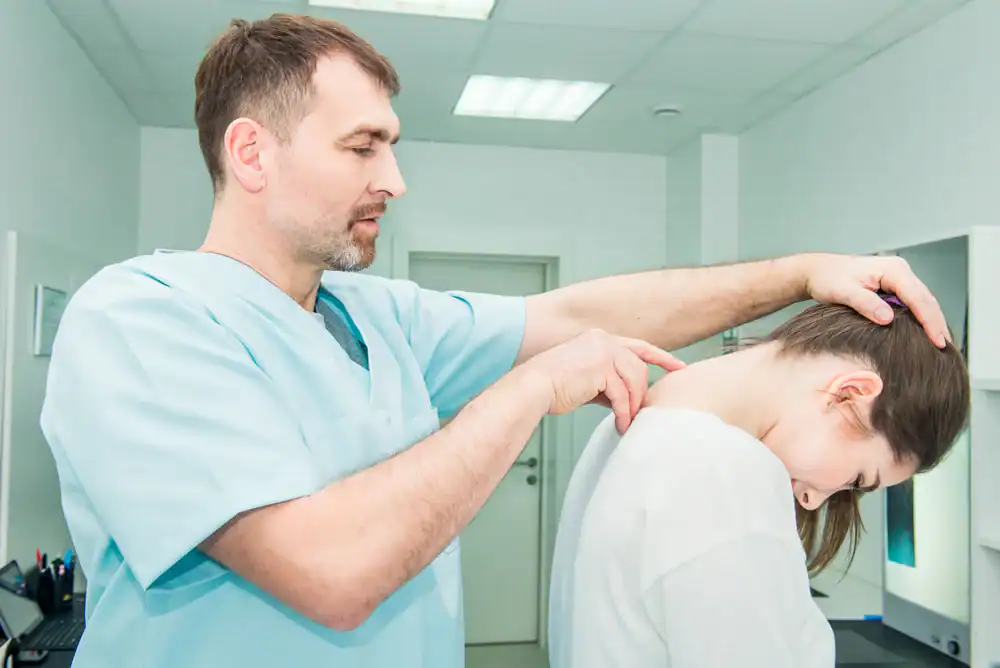
First, you get a spinal and postural screening. The Titron Infrared Imaging takes a few seconds and shows exactly where your alignment is off. You’ll see it yourself. Then Dr. Roses explains what’s happening mechanically and why you’re feeling pain where you are.
Your first adjustment addresses the primary misalignments. Most people are surprised by how gentle the process is compared to what they expected. This isn’t about cracking your back as hard as possible. It’s about precise corrections that let your spine start functioning the way it should.
You’ll get a set of exercises built specifically for your posture pattern. These aren’t generic stretches. They’re designed to reinforce the adjustments and retrain the muscles that have been compensating for your forward head posture or rounded shoulders. Doing them at home makes a significant difference in how quickly you improve.
Follow-up visits track your progress and make adjustments as your posture changes. The goal isn’t endless treatment. It’s getting you to a place where your body maintains proper alignment on its own, and you know what to do if you start slipping back into old patterns.

Ready to get started?
Text neck is what happens when you spend hours with your head tilted forward looking at devices. If you work in Harborside, you probably spend 5-7 hours a day in that position. The symptoms show up as neck pain, shoulder tension, headaches, and that feeling like your upper back is constantly tight.
Treatment for text neck symptoms in Harborside starts with spinal adjustments that address the cervical curve that’s been flattened or reversed by constant forward head posture. You’ll also get specific guidance on upper crossed syndrome stretches in Harborside that target the tight muscles in your chest and neck while strengthening the weak muscles in your upper back.
Rounded shoulders correction exercises in Harborside, NJ focus on opening up your chest and pulling your shoulder blades back into proper position. When your shoulders round forward, your entire upper body compensates. Fixing that compensation pattern is part of the treatment, not just treating the pain it causes.
You’ll also get coaching on what activities or positions are making things worse. Sometimes it’s your desk setup. Sometimes it’s how you’re holding your phone. Small changes in your daily habits combined with adjustments and exercises create results that actually stick.

Most people start feeling different within three weeks. That doesn’t mean you’re done in three weeks, but you’ll notice your neck doesn’t hurt as much and you’re not fighting to hold your head up by the end of the day.
Full correction depends on how long you’ve had the problem and how severe it is. If you’ve been working at a desk for 10 years with your head forward, your body has adapted to that position. Muscles have shortened, others have weakened, and your spine has changed shape. Reversing that takes consistent treatment, usually a few months of regular adjustments combined with exercises.
The difference between this and other approaches is that you’re not just doing stretches and hoping for the best. The adjustments directly address the spinal misalignment, and the exercises reinforce those corrections. That combination is what creates lasting change, not temporary relief.
Neck pain is the obvious one, but it’s rarely the only symptom. You might get headaches that start at the base of your skull. Your shoulders might feel tight or elevated, like you’re constantly shrugging. Some people feel pain between their shoulder blades that won’t go away no matter how much they stretch.
You might notice your range of motion is limited. Turning your head to check your blind spot while driving becomes uncomfortable. Looking up feels strained. These are signs that your cervical spine has lost its normal curve and the muscles around it are working overtime to compensate.
Tingling or numbness in your hands can also show up with severe forward head posture. When your neck is constantly flexed forward, it can put pressure on the nerves that run down your arms. If you’re experiencing that, it’s worth getting checked sooner rather than later, because nerve compression doesn’t usually improve on its own.
Exercises help, but they’re only addressing part of the problem. If your spine is misaligned, stretching and strengthening the muscles around it will only get you so far. You might feel temporarily better, but the underlying mechanical issue is still there.
Rounded shoulders happen because of muscle imbalances, but also because your thoracic spine has likely increased its kyphotic curve. That’s a structural change. Exercises can improve the muscle component, but they can’t realign your spine. That’s where adjustments come in.
The most effective approach combines both. Adjustments correct the spinal alignment, and exercises retrain your muscles to support that new alignment. One without the other leaves you with incomplete results. You want both working together so the changes actually last.
Upper crossed syndrome is a specific pattern where certain muscles get tight and others get weak. Your chest muscles and upper traps get overactive and shortened. Your deep neck flexors and lower traps get weak and lengthened. Regular stretching doesn’t address that pattern specifically.
Upper crossed syndrome stretches in Harborside target the tight muscles that are pulling your posture forward and down. You’re stretching your pecs, your levator scapulae, and your upper traps. But stretching alone won’t fix the syndrome because you also need to strengthen the weak muscles that have stopped doing their job.
That’s why you need a targeted program, not just generic flexibility work. We design exercises that address your specific pattern. If your right side is worse than your left, the program accounts for that. If your neck flexors are extremely weak, you’ll get progressions that build strength without straining. It’s individualized based on what your assessment shows.
Many insurance plans cover chiropractic care, including treatment for posture-related issues. Coverage varies depending on your specific plan, your deductible, and whether the treatment is considered medically necessary. It’s worth calling your insurance company to ask about chiropractic benefits before your first visit.
Some plans require a referral from your primary care doctor. Others let you see a chiropractor directly. Some cover a set number of visits per year, while others cover treatment as long as it’s deemed necessary. Knowing your benefits upfront helps you plan for any out-of-pocket costs.
If insurance doesn’t cover everything or you don’t have coverage, we can discuss payment options. The goal is to make treatment accessible, because living with chronic neck and shoulder pain affects your work, your sleep, and your quality of life. Getting it addressed is worth the investment, and there are usually ways to make it work financially.
If you’re asking the question, it’s probably worth getting checked. Pain is your body’s way of telling you something isn’t working right. If you have consistent neck pain, shoulder tension, or headaches that don’t resolve with rest, that’s your signal.
You don’t need to wait until you can’t turn your head or until the pain is unbearable. In fact, addressing posture problems early makes treatment faster and more effective. The longer your body compensates for poor alignment, the more ingrained those patterns become and the harder they are to reverse.
A postural screening takes minutes and gives you concrete information about what’s going on with your spine. You’ll see where you’re misaligned, and Dr. Roses will explain what that means for your long-term health. From there, you can make an informed decision about treatment. But waiting and hoping it gets better on its own rarely works when the root cause is structural.