

Hear from Our Customers
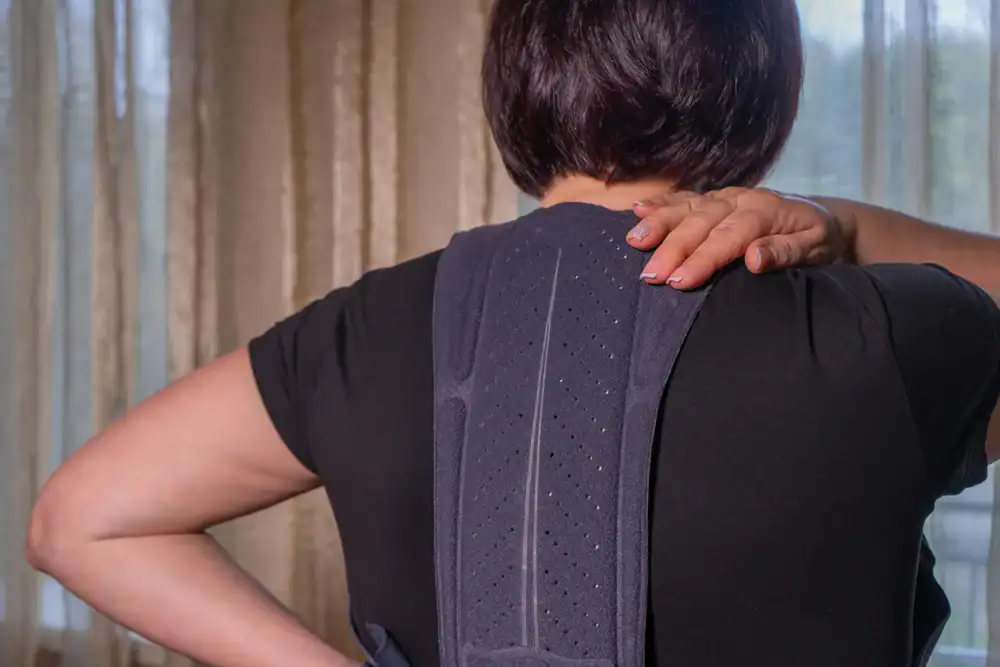
When your head sits three inches forward, your neck muscles carry an extra 30 pounds of pressure. That’s why your shoulders feel tight by noon and your headaches start before dinner.
Posture correction in Hamilton Park, NJ addresses the actual problem. Your spine gets realigned through specific adjustments that move your head back over your shoulders where it belongs. The constant muscle tension drops. The headaches ease up.
You’ll notice your neck moves easier when you check blind spots. Your shoulders drop down from your ears. That nagging pain between your shoulder blades finally lets up because your muscles aren’t fighting gravity all day.
Most people dealing with text neck symptoms in Hamilton Park, NJ spend years trying stretches that don’t stick or buying ergonomic pillows that don’t address the root issue. Real correction happens when someone actually measures your cervical curve, identifies where your alignment shifted, and applies the right force in the right direction to move it back.
Dr. Paul Roses has spent over 30 years correcting spinal alignment in Hamilton Park, NJ and the surrounding Bayonne area. He’s seen the shift from occasional neck pain to the epidemic of forward head posture that now affects up to 90% of the population.
Hamilton Park residents deal with the same postural breakdown as everyone else who commutes to Manhattan, sits at a desk for eight hours, then scrolls through their phone on the couch. The difference is having someone local who knows how to reverse it.
We use Titron Infrared Imaging to measure exactly where your posture shifted. You get a baseline assessment in seconds, then a correction plan built around your specific curve loss. No guessing. No generic adjustments.
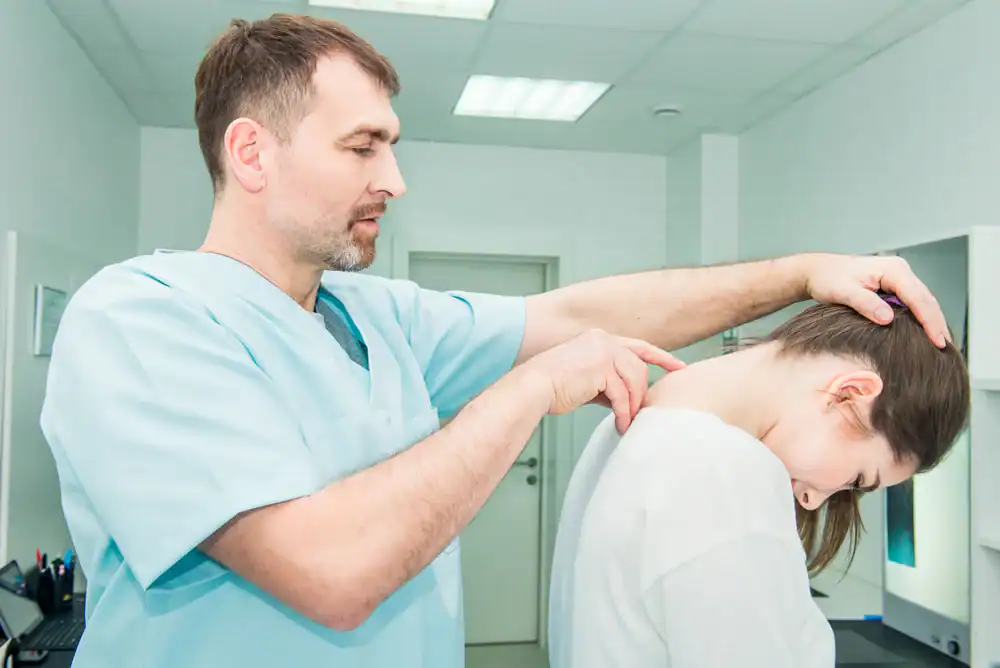
Your first visit includes a postural screening and infrared imaging to measure your current alignment. If needed, x-rays show exactly where your cervical curve flattened or reversed. You’ll see the measurements yourself.
Once Dr. Roses identifies where your spine shifted, you’ll start getting specific adjustments designed to move your head back over your body’s centerline. These aren’t the generic “crack your neck” adjustments. They’re targeted corrections applied to specific vertebrae based on your imaging results.
Between visits, you’ll do exercises designed for your particular postural deviation. If you’ve got rounded shoulders and upper crossed syndrome, your exercise plan looks different than someone who just has text neck. The movements strengthen the muscles that hold your correction in place.
Most people in Hamilton Park, NJ start feeling relief within the first few weeks as their neck muscles stop working overtime. Full correction takes longer because you’re reversing years of forward drift, but you’ll notice your posture improving as your body relearns where your head should sit.

Ready to get started?
Posture correction in Hamilton Park, NJ includes the spinal adjustments, but that’s just part of what changes your alignment long-term. You’ll receive specific exercises that target the exact muscles causing your forward head posture. These aren’t generic stretches you could find online. They’re prescribed based on what your imaging shows.
You’ll also get coaching on what’s sabotaging your posture throughout the day. Most Hamilton Park residents don’t realize their laptop height, their sleeping position, or how they hold their phone is actively pulling their head forward. Small changes to these habits make your adjustments hold better.
For people dealing with text neck symptoms and treatment needs, the approach includes cervical traction exercises you can do at home. Studies show that modified cervical exercises performed for just four weeks improve forward head posture measurably. When combined with adjustments, the results compound.
If you’ve developed upper crossed syndrome, where your chest muscles tighten and your upper back weakens, you’ll get stretches that release the front and strengthen the back. This muscular rebalancing is what keeps your shoulders from rounding forward again after your spine gets adjusted.

Most people see noticeable improvement in 4-8 weeks, but full correction takes 3-6 months depending on how long you’ve had the problem. If your head has been sitting forward for ten years, your spine won’t snap back in two weeks.
The research shows that modified cervical exercises performed for four weeks produce measurable changes in forward head posture. When you add specific spinal adjustments to those exercises, you’re addressing both the muscular imbalance and the structural misalignment.
You’ll feel relief from neck pain and headaches within the first few weeks as the constant muscle tension eases. But the actual reshaping of your cervical curve and the retraining of your postural muscles takes consistent work over several months. The people who stick with their exercise plan and come in for their scheduled adjustments get the lasting correction.
Text neck happens when you spend hours looking down at your phone or laptop with your cervical spine flexed forward. Over time, this constant forward position flattens your neck’s natural curve and pulls your head in front of your shoulders permanently.
Yes, chiropractic treatment can reverse it through specific spinal adjustments that restore your cervical curve. The key is combining those adjustments with exercises that strengthen the muscles responsible for holding your head upright. Your deep neck flexors need to get stronger while your chest muscles need to release.
Studies show that treatment programs focused on forward head posture produce major changes to the craniovertebral angle and moderate improvement in neck pain. The earlier you address it, the faster it corrects. If you’ve developed text neck symptoms like headaches, shoulder pain, or numbness down your arm, those typically improve as your alignment improves. But you can’t just get adjusted and go back to the same phone habits that caused the problem.
Exercises help, but they’re fighting an uphill battle if your spine is locked in a forward position. Think of it this way: if your vertebrae are stuck in misalignment, no amount of stretching will move bone. You need the adjustment to restore joint mobility first.
Rounded shoulders typically develop alongside forward head posture as part of upper crossed syndrome. Your chest muscles get tight, your upper back muscles get weak, and your shoulder blades rotate forward. Stretching your pecs and strengthening your rhomboids addresses the muscular component.
But if your thoracic spine is also flexed forward and your ribs aren’t moving properly, the exercises won’t produce full correction. The adjustment restores normal joint motion so your muscles can actually pull your shoulders back into proper position. Then the exercises maintain that position. You need both components working together for lasting correction, especially if you’ve had rounded shoulders for years.
Forward head posture causes neck pain, but it also triggers headaches that start at the base of your skull, shoulder tightness that won’t release, and jaw pain from the altered position of your head. Some people develop pain that radiates down their arm because the forward position compresses nerves in their neck.
You might notice your balance feels off or you have a harder time walking normally. That’s because forward head posture shifts your entire center of gravity. Your body compensates by adjusting your hip position and your gait pattern, which can lead to lower back pain even though the problem started in your neck.
Many people with severe forward head posture also deal with reduced lung capacity because their ribcage can’t expand fully when their upper back is rounded forward. You might feel like you can’t take a deep breath. Sinus problems can worsen too because the altered neck position affects drainage. These symptoms improve as your posture corrects because your body stops compensating for a head that’s sitting three inches too far forward.
If you can stand against a wall and easily touch the back of your head to the wall without tilting your chin up, your posture might just need better daily habits. If your head won’t touch the wall, or you have to strain to get it there, you’ve got structural forward head posture that needs correction.
Better ergonomics help prevent posture problems from getting worse, but they won’t reverse existing misalignment. Raising your monitor, adjusting your chair height, and holding your phone at eye level are smart moves. They reduce the daily forward pull on your neck.
But if you already have text neck symptoms, rounded shoulders, or chronic neck pain, ergonomic changes alone won’t restore your cervical curve or pull your head back over your shoulders. You need targeted treatment that addresses the structural component. Once your alignment improves, good ergonomics help you maintain the correction instead of sliding back into forward head posture. Most Hamilton Park, NJ residents need both: correction for the existing problem and habit changes to prevent recurrence.
Upper crossed syndrome stretches will help release tight chest muscles and strengthen weak upper back muscles, which improves the muscular component of poor posture. You’ll likely feel some relief from shoulder tension and you might notice your shoulders sit slightly farther back.
But stretches alone won’t fix the underlying spinal misalignment that’s often driving the muscle imbalance. If your thoracic spine is locked in flexion or your cervical vertebrae are stuck in a forward position, stretching the surrounding muscles provides temporary relief at best.
The most effective approach combines specific adjustments to restore proper spinal alignment with targeted exercises that rebalance the muscles. Research shows that stabilization exercises performed three times daily for six weeks reduce pain and improve posture, but those studies typically include some form of manual therapy or spinal manipulation alongside the exercises. You get faster, more complete correction when you address both the structural and muscular components rather than just stretching tight muscles around a misaligned spine.