

Hear from Our Customers
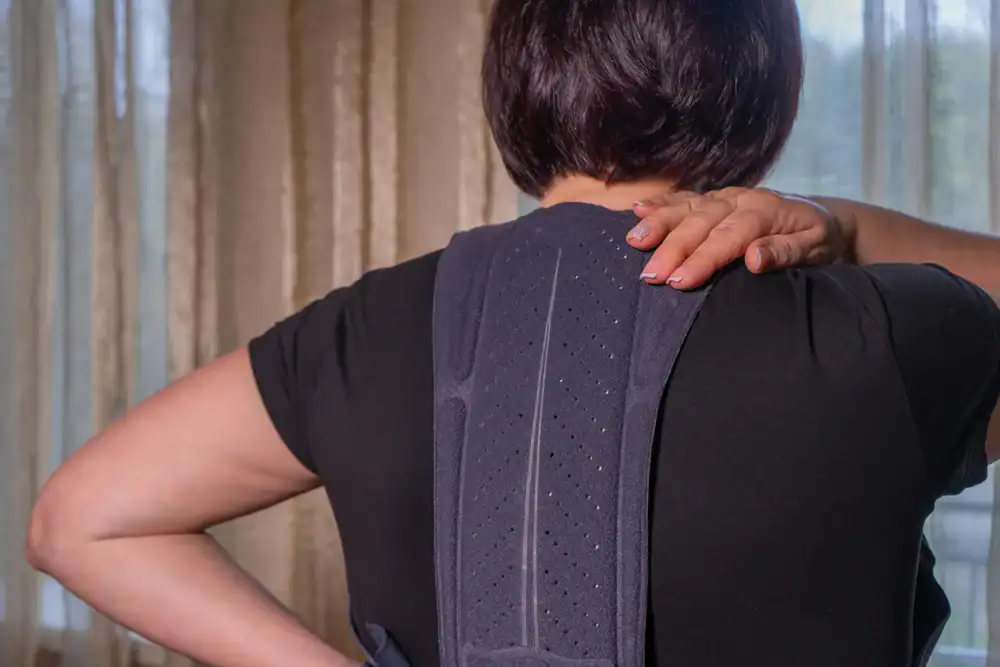
Your neck stops aching by mid-afternoon. You can turn your head to check your blind spot without wincing. That tension headache that shows up every day around 3 PM? Gone.
Posture correction in Beacon, NJ isn’t about standing up straighter for a photo. It’s about reducing the chronic load on your cervical spine so your body can function the way it’s supposed to. When your head sits where it belongs—directly over your shoulders instead of three inches forward—your muscles stop working overtime just to hold you upright.
Most people dealing with text neck symptoms and treatment in Beacon, NJ don’t realize how much energy they’re burning just maintaining their current position. Fix the alignment, and suddenly you’re not exhausted by 2 PM. You sleep better because your neck isn’t locked up. You can work at your desk without needing to stretch every twenty minutes.
That’s what actually matters. Not perfect posture. Just a body that doesn’t hurt when you use it.
Dr. Paul Roses has been treating posture-related pain in Hudson County since before “tech neck” had a name. Back then it was called “secretary’s neck.” Same problem, different decade.
We serve Beacon, NJ with the kind of care that doesn’t require you to commit to twice-weekly visits for the rest of your life. You come in, we figure out what’s actually wrong, we fix it, and we teach you how to keep it fixed. That’s it.
We use Titron Infrared Imaging for baseline assessments—takes a few seconds, completely painless, and shows exactly where the stress is building in your spine. No guessing. No generic treatment plans. Just targeted correction based on what your body actually needs.
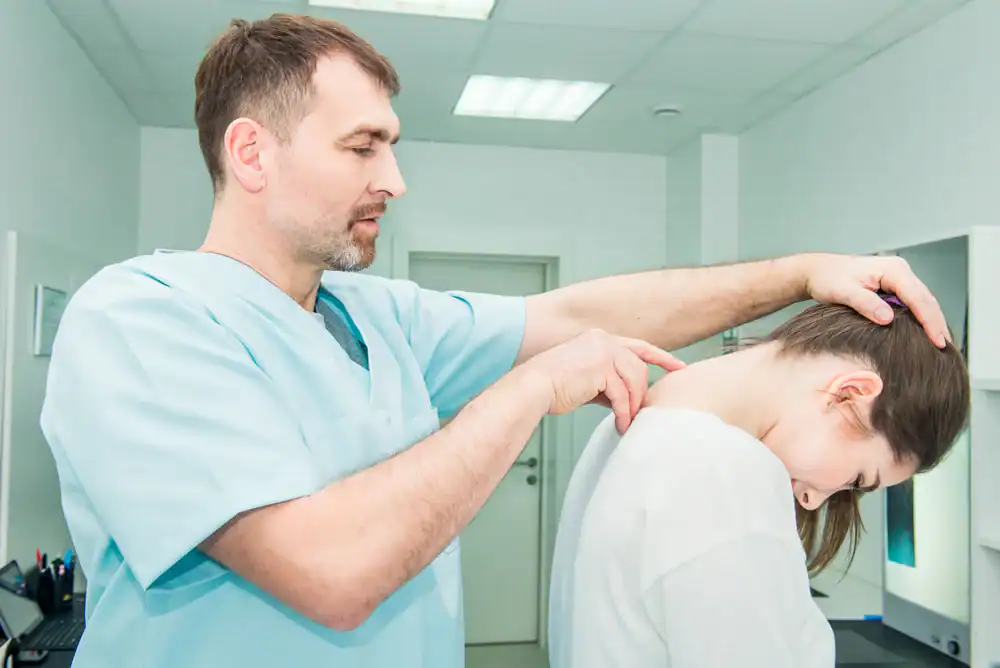
First visit starts with that infrared scan. It maps the temperature variations along your spine, which tells us where inflammation and nerve stress are concentrated. Takes about thirty seconds. Then we do a physical assessment—range of motion, postural measurements, the basics.
Once we know what we’re dealing with, treatment starts. Spinal adjustments restore mobility to the joints that have locked up from months or years of forward head posture. These aren’t the dramatic twisting moves you’ve seen in videos. They’re controlled, specific corrections to the cervical spine that reduce nerve interference and allow proper movement.
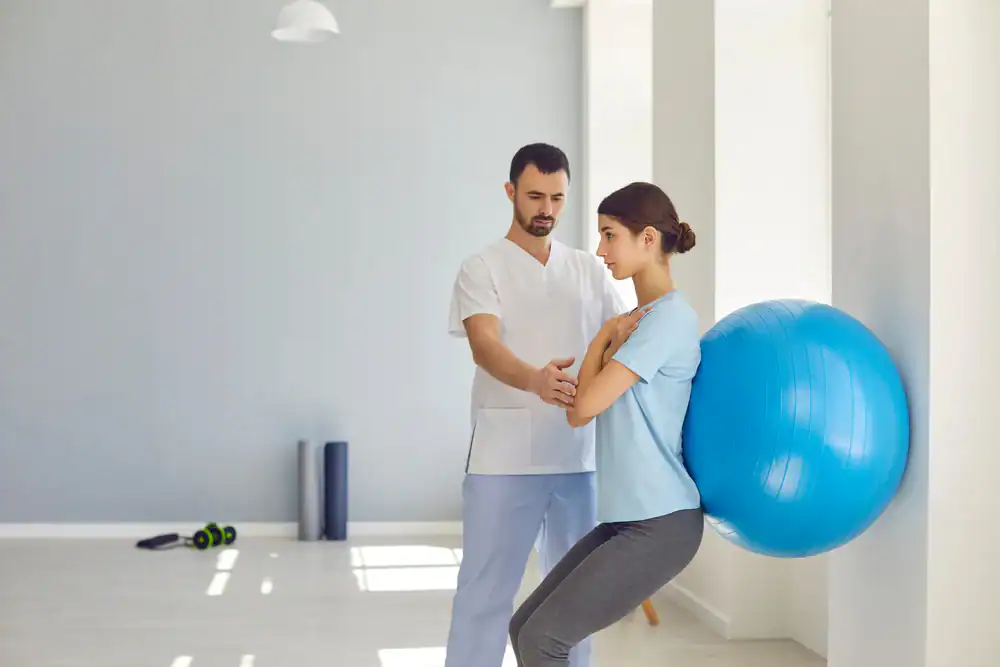
You’ll also get a personalized exercise program—what Dr. Roses calls your “blueprint exercises.” These aren’t generic stretches you could find on YouTube. They’re designed specifically for your posture issues, targeting the exact muscles that need strengthening or lengthening. You do them at home, on your schedule.
Most people notice improvement within the first few visits. Not “cured,” but measurably better. Less pain. More range of motion. The ability to sit through a meeting without your shoulders screaming at you. Real progress builds from there.

Ready to get started?
Treatment for rounded shoulders correction exercises in Beacon, NJ addresses the whole kinetic chain, not just your neck. Upper crossed syndrome—that’s the technical term for the forward head, rounded shoulders, hunched upper back combo—requires work on your chest, shoulders, neck, and upper back simultaneously.
You get spinal adjustments to restore proper cervical alignment. You get soft tissue work to release the tight muscles pulling you forward (usually your pecs and upper traps). You get activation exercises for the weak muscles that have stopped doing their job (your deep neck flexors and mid-back stabilizers).
The treatment also includes coaching on the daily habits that created this problem in the first place. How you set up your workstation matters. How you hold your phone matters. How you sleep matters. We’ll walk through the specifics that apply to your situation—not a generic ergonomics lecture, but actual adjustments based on your work setup and daily routine.
Beacon, NJ has its share of commuters and office workers, which means a lot of people spending 60+ minutes in a car followed by 8+ hours at a desk. That’s a recipe for postural breakdown. Treatment accounts for that reality and builds solutions around it.
Depends on how long you’ve had it and how severe it is. Someone who’s been dealing with text neck for six months will respond faster than someone who’s had forward head posture for ten years.
Most people see noticeable improvement within 4-6 weeks of consistent treatment and home exercises. That doesn’t mean you’re done—it means the pain is reducing and your range of motion is improving. Full correction of the postural pattern usually takes 3-6 months, sometimes longer if there’s significant structural change needed.
The key word is “consistent.” If you come in for adjustments but skip the home exercises, progress slows way down. If you do the exercises but keep your monitor at chest height so you’re craning your neck down all day, you’re working against yourself. Treatment works when you actually do all the parts.
Neck pain is the obvious one, but it’s rarely the only one. Most people with text neck in Beacon, NJ also deal with shoulder pain, upper back tightness, and headaches that start at the base of the skull and radiate forward.
You might notice your shoulders are visibly rounded when you look in the mirror. You might feel a burning sensation between your shoulder blades after sitting for a while. Some people get numbness or tingling in their hands because the forward head position is compressing nerves in the neck.
The less obvious symptoms: difficulty taking a deep breath (your rib cage can’t expand properly when your upper back is locked in flexion), chronic fatigue (your body is working overtime just to hold your head up), and trouble sleeping (you can’t find a comfortable position because your neck won’t relax). If you’re dealing with more than just occasional neck soreness, it’s worth getting evaluated.
No. The goal is to fix the problem and teach you how to maintain the correction on your own.
Initial treatment is more frequent—usually 2-3 times per week for the first few weeks while we’re making the structural changes and retraining the muscles. As you improve, visits spread out. Once you’re stable and pain-free, you might come in once a month for maintenance, or only when something flares up.
Some people choose to continue periodic adjustments because they like how they feel afterward. That’s fine. But it’s not required. The home exercise program exists specifically so you can maintain your posture correction without needing constant professional intervention. We’re not interested in creating dependency—we’re interested in getting you functional and keeping you that way.
Yes. Rounded shoulders are a muscular imbalance issue, not a structural defect that requires surgical intervention.
The problem is that your chest muscles (pecs) and front shoulder muscles are tight and shortened from being in a forward position all day. Meanwhile, your mid-back muscles and rear shoulder muscles are weak and overstretched from being constantly pulled forward. That imbalance creates the rounded appearance.
Correction involves lengthening what’s tight (through stretching and soft tissue work) and strengthening what’s weak (through targeted exercises). Spinal adjustments help restore proper movement to the thoracic spine, which is usually locked up in people with rounded shoulders. It takes time and consistent effort, but it’s completely reversible without surgery. Most cases of postural rounding respond well to conservative treatment—you only need surgery if there’s actual bone deformity, which is rare.
Upper crossed syndrome stretches in Beacon, NJ need to target four specific areas: tight chest muscles, tight upper traps, weak deep neck flexors, and weak lower traps and rhomboids.
For the tight areas, you’re looking at doorway pec stretches (hold 30-60 seconds, multiple times per day) and upper trap stretches (gentle side bending to lengthen the muscles running from your neck to your shoulders). For the weak areas, chin tucks strengthen your deep neck flexors—the muscles that pull your head back into proper alignment. Rows and scapular squeezes strengthen your mid-back muscles so they can actually hold your shoulders back where they belong.
The specific exercises you need depend on your individual pattern. Some people have more tightness on one side. Some people have more weakness in certain muscle groups. That’s why the “blueprint exercises” Dr. Roses prescribes are customized to your assessment findings. Generic stretches help a little. Targeted exercises based on your specific imbalances help a lot more.
Most insurance plans cover chiropractic care, including treatment for posture-related conditions like forward head posture, text neck, and upper crossed syndrome. Coverage varies by plan, so you’ll need to check your specific benefits.
Typically, if you’re being treated for pain or functional limitation caused by postural issues, insurance will cover it the same way they’d cover treatment for any other musculoskeletal condition. The diagnosis might be cervical strain, thoracic dysfunction, or myofascial pain syndrome—all of which are directly related to poor posture.
We can verify your insurance benefits before you start treatment so you know what to expect for out-of-pocket costs. Some plans require a copay per visit. Some have a deductible you need to meet first. Some cover a certain number of visits per year. It’s worth a five-minute phone call to get clarity before your first appointment.