Knee Pain Isn’t Always the Knee: How Hip/Ankle Mechanics Create Knee Problems
Share:
Summary:
When your knee hurts, the problem often isn’t in your knee. It’s in how your hips and ankles are moving—or not moving. This article explains the “chain reaction” behind knee pain, showing how restricted hip mobility and poor ankle alignment force your knee to compensate in ways it wasn’t built for. You’ll learn simple mobility checks to try at home and understand why chiropractic services that address your entire kinetic chain offer more lasting relief than treatments focused only on the knee.
Table of contents
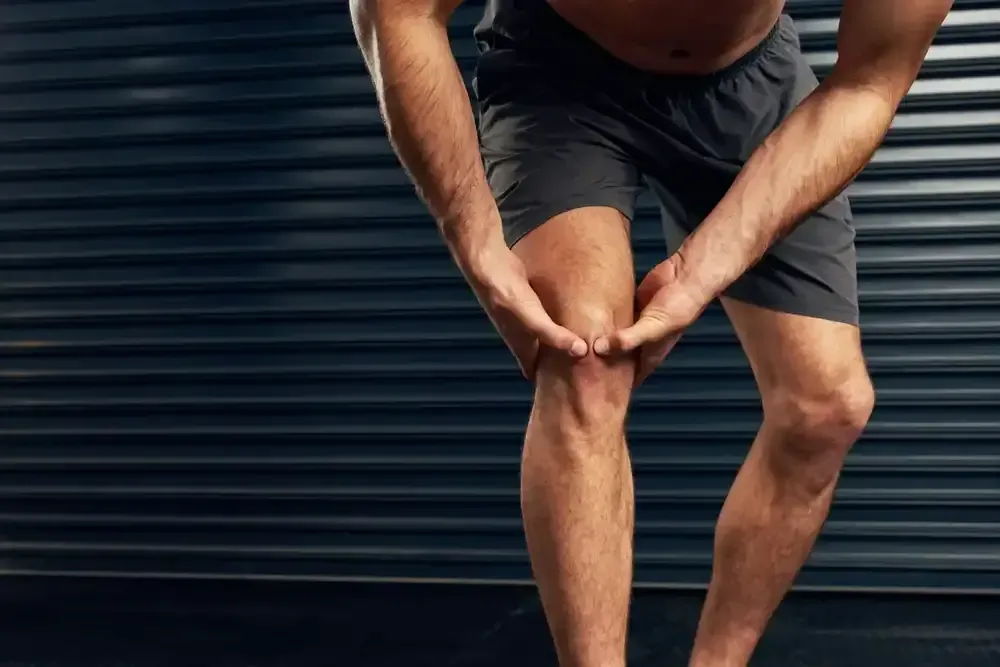
You’ve been dealing with knee pain for weeks—maybe months. You’ve rested it, iced it, maybe even tried a brace. But the pain keeps coming back, especially when you’re climbing stairs or getting out of your car. Here’s what most people don’t realize: your knee might not be the problem. The real issue could be happening inches above or below it—in your hips or ankles. When these joints don’t move the way they should, your knee gets stuck in the middle, absorbing stress it was never designed to handle. This isn’t guesswork. It’s biomechanics. And understanding how your body’s kinetic chain works can finally explain why your knee pain won’t go away—and what actually needs to change.
Why Knee Pain Often Starts Somewhere Else
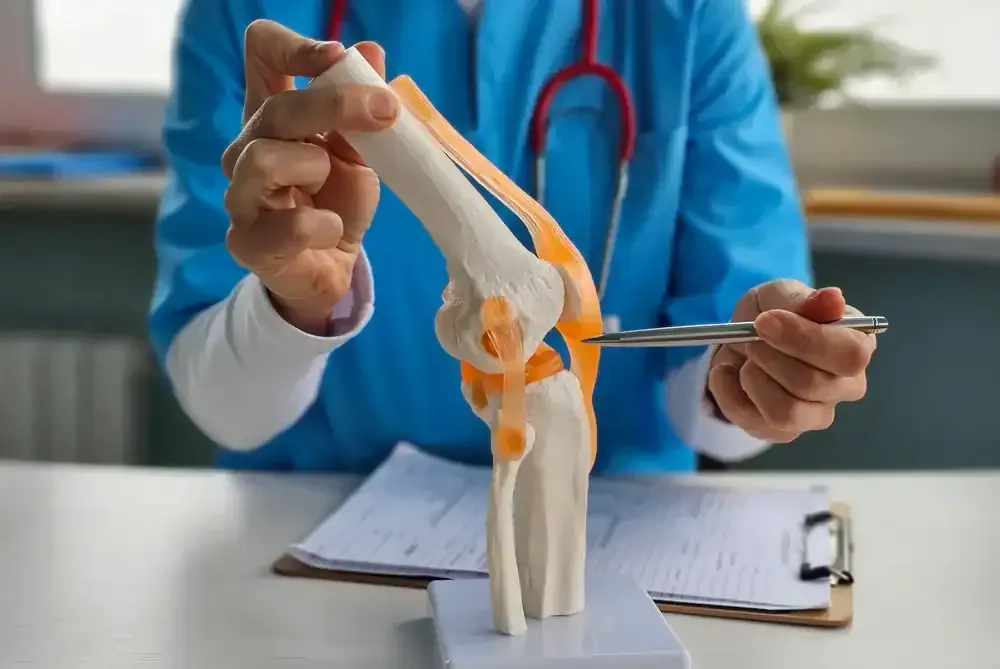
Your knee is a hinge joint. It bends and straightens. That’s pretty much it.
It doesn’t rotate well. It doesn’t stabilize side-to-side on its own. And it definitely doesn’t function in isolation. For people across Hudson County dealing with persistent knee discomfort, this is often the missing piece in understanding why conventional knee pain treatment hasn’t worked.
Every time you take a step, your foot hits the ground, your ankle flexes, your knee absorbs impact, and your hip controls the direction and stability of your entire leg. If any part of that chain isn’t working right, the knee compensates. Over time, that compensation turns into pain, inflammation, and wear you can feel every single day.
How the Kinetic Chain Controls Knee Function
Think of your lower body as a chain of joints working together—your foot, ankle, knee, and hip. When one link is stiff or weak, the others have to pick up the slack.
Research backs this up. Studies on knee osteoarthritis patients show that changes in knee mechanics directly affect range of motion and stress patterns in both the ankle and hip. The reverse is also true. When your ankle can’t flex properly or your hip lacks mobility, your knee ends up twisting, shifting, or absorbing forces it shouldn’t.
This is called the kinetic chain. And it’s why treating knee pain without looking at your hips and ankles is like trying to fix a wobbly table by only adjusting one leg.
Here’s what happens in real movement. Your ankle needs to dorsiflex—meaning your shin moves forward over your foot when you walk or squat. If your ankle is stiff from old injuries, tight calves, or years of wearing the wrong shoes, that movement gets blocked. So your body finds another way. Your foot rolls inward. Your knee rotates. Your hip drops.
None of that is supposed to happen. But your body will do whatever it takes to keep you moving. The problem? Your knee pays the price.
The same thing happens at the hip. Weak glutes, tight hip flexors, or limited hip rotation force your knee to take on jobs it’s not built for. Your kneecap starts tracking off-center. The tendons around your knee get irritated. You feel pain—not because your knee is damaged, but because it’s being overworked by joints that aren’t pulling their weight.
This is why so many people with knee pain don’t see results from knee-focused treatments. The pain is in the knee. But the problem is in the chain.
What Happens When Your Hips or Ankles Don't Move Right
Let’s get specific. When your hip mobility is limited—whether from sitting too much, old injuries, or muscle imbalances—your knee has to make up for it.
Weak hip muscles, especially the glutes, are one of the most common contributors to knee pain. These muscles stabilize your pelvis and control how your thigh bone moves. When they’re not doing their job, your femur rotates inward with every step. That inward rotation pulls your kneecap out of alignment and increases pressure on the inside of your knee joint.
This is often what’s happening in people who feel pain on the inside of their knee or under their kneecap. The knee itself might look fine on an X-ray. But the way it’s being forced to move—because of what’s happening at the hip—is creating the problem.
Tight hip flexors are another issue. If you sit for hours every day, your hip flexors shorten and pull your pelvis forward into an anterior tilt. This changes your posture, tightens your hamstrings, and shifts how your knee tracks during movement. You end up walking or running with altered mechanics that put extra strain on your knee joint.
Now let’s talk about your ankles. Limited ankle dorsiflexion—your ability to bring your shin forward over your foot—is a silent saboteur of knee health.
When your ankle can’t flex enough, your body compensates by turning your foot outward or letting your heel lift too early during a step. Both of these compensations change the angle and rotation forces going through your knee. Over time, this abnormal loading wears down cartilage, irritates tendons, and creates chronic pain.
Flat feet and overpronation—where your foot rolls inward excessively—add another layer. When your arch collapses with every step, it forces your lower leg to rotate inward. That rotation travels up to your knee, creating a twisting force the joint wasn’t designed to handle. The result? Pain, instability, and a feeling like your knee might give out.
Ankle instability from old sprains has a similar effect. If your ankle doesn’t provide a stable foundation, your knee has to work overtime to keep you balanced. That extra work shows up as soreness, stiffness, and eventually, chronic knee pain.
The point is this: your knee is caught in the middle. It’s a hinge being asked to do the job of a ball-and-socket joint because the joints above and below it aren’t functioning properly. And no amount of rest, ice, or knee braces will fix that. You have to address the chain.
Want live answers?
Connect with a DR Roses expert for fast, friendly support.
Simple Mobility Checks You Can Try at Home
You don’t need fancy equipment to start understanding what’s happening in your kinetic chain. A few simple tests can reveal whether your hips or ankles are contributing to your knee pain.
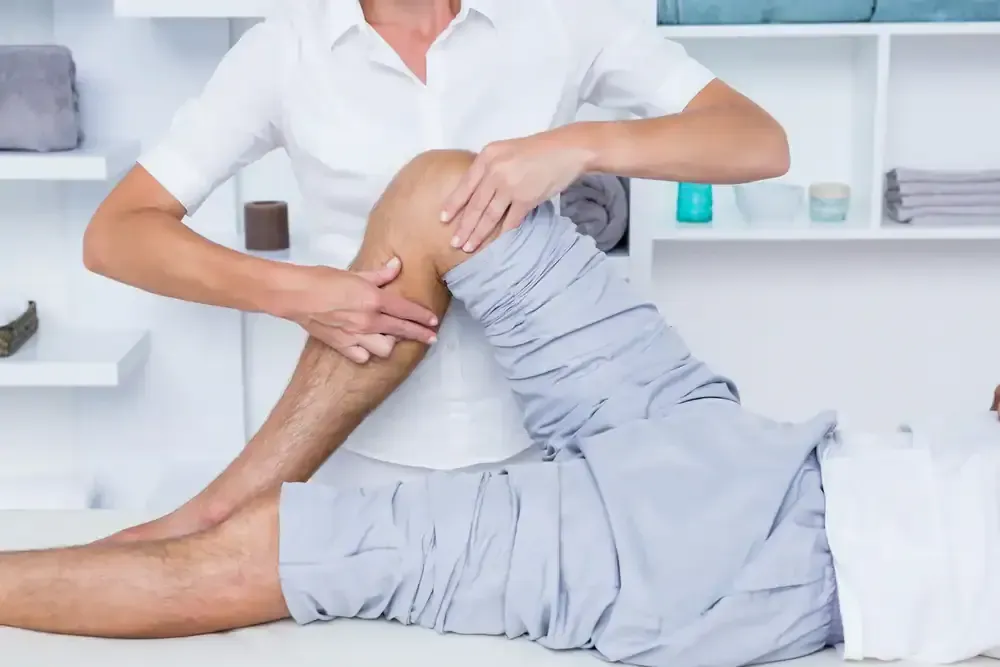
These aren’t diagnostic tools—they’re clues. If you notice restrictions or imbalances, they’re worth discussing with a chiropractor who understands gait mechanics and alignment. But they’ll give you a starting point for understanding your own body.
How to Check Your Ankle Mobility
Stand facing a wall with your toes about four inches away. Keep your heel flat on the ground and try to touch your knee to the wall without lifting your heel.
If you can’t do it, your ankle dorsiflexion is limited. That restriction is likely forcing compensations higher up the chain—including at your knee.
Try the same test on both sides. If one ankle is significantly tighter than the other, that asymmetry could be contributing to uneven stress on your knees. It’s common for people to favor one leg without realizing it, and over time, that imbalance creates problems.
Tight calves are usually the culprit behind limited dorsiflexion. The gastrocnemius and soleus muscles cross the back of your ankle joint and control how far your shin can move forward. When they’re tight—from sitting, wearing heels, or just not stretching—they act like short ropes that block ankle movement.
But it’s not just tightness. Weakness in the muscles that control your ankle also plays a role. If your ankle doesn’t have the strength to stabilize during movement, your body will compensate by changing how your foot hits the ground. That altered gait pattern puts extra stress on your knee.
Here’s another simple check: watch how you walk. Do your feet turn outward like you just got off a horse? That’s often a sign of poor ankle mobility or tight hips forcing your feet into external rotation. When your feet point outward, your knees aren’t tracking over your toes the way they should. Instead, they’re twisting with every step.
If you notice this pattern, it’s a red flag that your kinetic chain needs attention. The good news? Once you identify the restriction, it can be addressed through targeted adjustments, stretches, and exercises that restore normal ankle function.
How to Check Your Hip Mobility and Strength
Lie on your back and pull one knee toward your chest. Can you bring it all the way up without your lower back lifting off the floor? If not, your hip flexion is restricted.
Now try hip rotation. Sit in a chair and cross one ankle over the opposite knee. Let your crossed knee drop toward the floor. If it stays high in the air or you feel tightness in your hip, that’s limited external rotation—a common issue that forces your knee to compensate during walking and squatting.
Weak glutes are harder to self-assess, but there’s a simple test. Stand on one leg. Does your hip drop on the opposite side? That’s called a Trendelenburg sign, and it indicates weak hip abductors—the muscles that stabilize your pelvis. When these muscles don’t fire properly, your knee takes on extra stress with every step.
Hip strength and mobility are especially important for anyone dealing with knee pain. The hip is meant to be a mobile, powerful joint. It controls the direction of your thigh bone and stabilizes your pelvis during movement. When it’s weak or stiff, your knee has to work harder to keep you balanced and moving forward.
Sitting for long periods is one of the biggest contributors to hip dysfunction. When you sit, your hip flexors stay shortened and your glutes essentially turn off. Over time, this creates a pattern where your hip flexors are tight and overactive, while your glutes are weak and underactive. That imbalance changes how you walk, run, and even stand.
Overtraining in one direction—like running or cycling without cross-training—can also create hip stiffness. Repetitive motion in a single plane of movement doesn’t challenge your hips to move through their full range. Eventually, you lose mobility in the directions you’re not using, and that limitation shows up as knee pain during other activities.
If you’re noticing restrictions in any of these areas, it’s a sign that your kinetic chain needs work. The knee pain you’re feeling is real. But the solution isn’t in your knee—it’s in restoring proper movement and strength to the joints above and below it.
Treating the Chain, Not Just the Pain
Knee pain is frustrating, especially when rest and basic treatments don’t seem to help. But once you understand how your hips and ankles influence knee function, it starts to make sense why knee-focused care often falls short.
Your body doesn’t work in isolated parts. It works as a system. And when one part of that system isn’t moving right, the rest of it compensates. The knee, caught in the middle of the kinetic chain, is often where that compensation shows up as pain.
Our chiropractic services address the full kinetic chain—evaluating your gait mechanics, hip mobility, ankle alignment, and spinal function—to offer a more complete solution. By correcting the restrictions and imbalances that are overloading your knee, we’re not just treating the pain. We’re treating the cause.
If you’re in Hudson County, NJ and dealing with knee pain that won’t go away, it might be time to look beyond the knee. We’ve been helping people in Bayonne understand and resolve these kinds of movement problems for over 40 years. Sometimes the answer isn’t where you expect it to be.