

Hear from Our Customers

Your baby stops arching their back during feedings. The constant spit-up slows down, then stops. You’re not changing onesies five times a day or wondering if something’s seriously wrong.
Sleep becomes possible again—for both of you. Your baby feeds without crying, keeps food down, and actually seems comfortable in their own body. That’s what infant silent reflux relief in St. Pete looks like when you address what’s causing the problem instead of just managing symptoms.
Chiropractic care for infant reflux in St. Pete, NJ targets the nervous system imbalances that often trigger reflux in the first place. When the upper spine is misaligned—often from birth trauma or positioning during delivery—it can interfere with the nerves that control digestion. Gentle adjustments restore proper function so your baby’s body can do what it’s supposed to do: digest, rest, and grow.
We’ve been serving families in St. Pete, NJ and the surrounding Jersey City area with specialized pediatric chiropractic care. We’re not a general practice that occasionally sees infants—we work with babies dealing with colic and reflux regularly, and we know what gentle baby adjustments actually look like.
St. Pete’s diverse community means we work with families from all backgrounds who share the same concern: they want their baby to feel better without resorting to medications they’re not comfortable with. You’re not alone in that. Many parents in this area are looking for natural remedies for baby reflux, and they’re finding that chiropractic care offers a safe, effective option.
We take the time to explain what we’re doing and why. You’ll never feel rushed, and you’ll always know what to expect before we start.
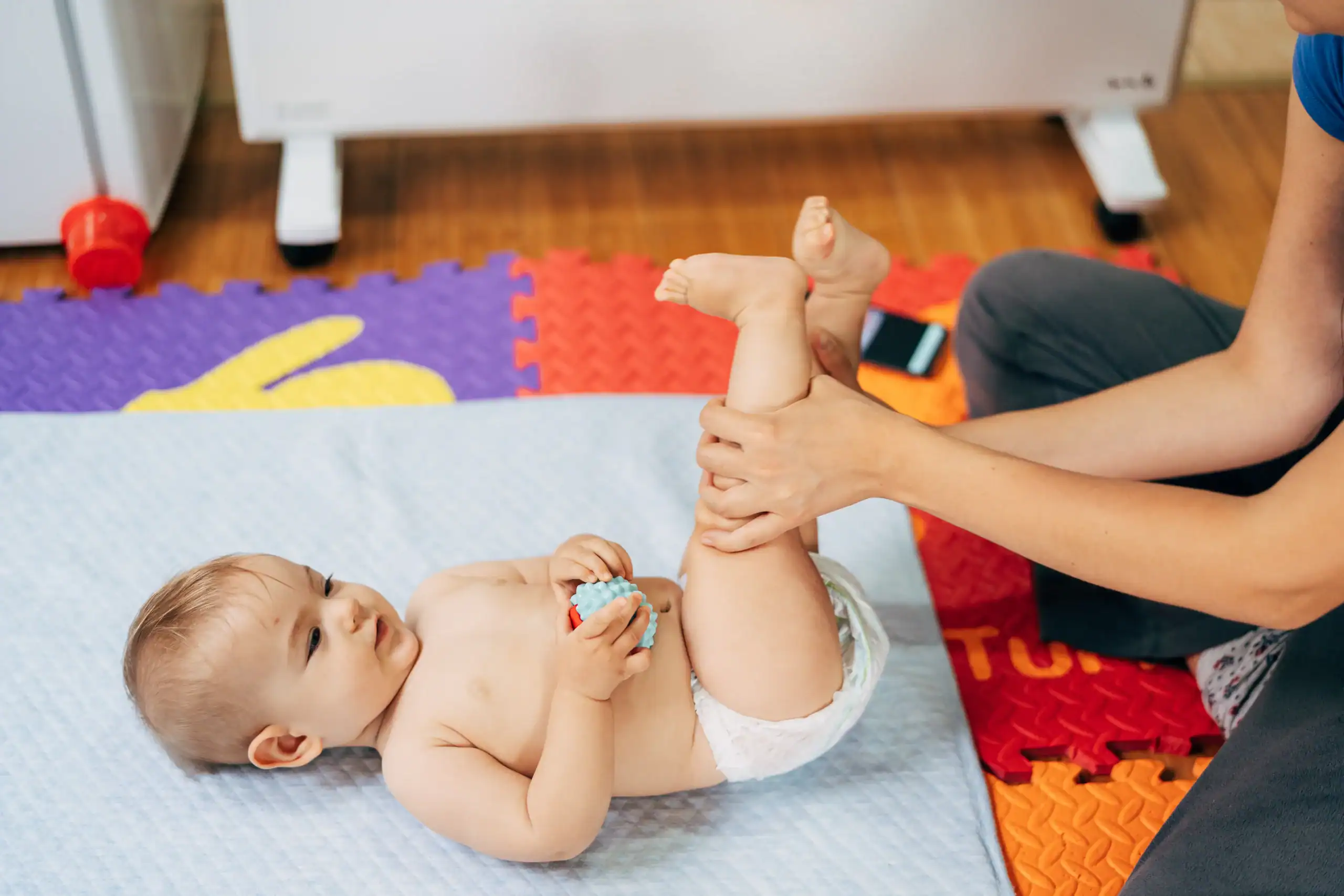
First, we talk. You’ll tell us about your baby’s symptoms—how often they’re spitting up, whether they’re arching their back, if they seem uncomfortable after feeding, and how sleep is going. We’ll ask about the birth: was it a long labor, were there interventions, was there any pulling or twisting during delivery. These details matter because they help us understand where tension or misalignment might be.
Then we do a gentle assessment. We’re looking at your baby’s spine and nervous system to identify signs your baby has a nervous system imbalance. This isn’t invasive—we’re using light touch and observation to see how their body is functioning.
The adjustment itself uses about as much pressure as you’d use to test if a tomato is ripe. We’re not cracking or popping anything. Most babies stay calm or even fall asleep during the process. The goal is to remove interference in the nervous system so the body can regulate digestion properly.
Many parents ask how many sessions for infant reflux they should expect. Most babies show improvement within the first few visits, but we typically recommend a short series of adjustments to support lasting change. Every baby is different, so we’ll give you a realistic timeline based on what we find.

Ready to get started?
You’re getting more than just an adjustment. You’re getting a full evaluation of your baby’s nervous system, spine, and overall development. We look at how they’re feeding, how they’re sleeping, and whether there are other signs of discomfort like painful gas in newborns in St. Pete that might be connected to the same root issue.
We also talk about what you can do at home. Positioning during feeds, how you’re holding your baby, and even small changes to your routine can support the work we’re doing in the office. This isn’t a one-and-done situation—it’s a partnership.
St. Pete families often deal with the same challenges other parents face nationwide, but the pace of life here and the diversity of birthing experiences means every baby’s story is a little different. Whether your baby was born at a local hospital or through a home birth, we’ve worked with families in similar situations. We understand the concerns parents have about trying something outside the conventional medical model, and we’re here to answer every question you have.

Yes, when it’s done by someone trained in pediatric chiropractic. The techniques we use for infants are completely different from what you’d experience as an adult. There’s no forceful manipulation or sudden movements.
Research shows that adverse reactions during chiropractic treatment for infants occur in less than 0.12% of visits, and those reactions are typically minor—things like temporary fussiness or sleepiness. Serious complications are extremely rare. The pressure applied during a gentle baby adjustment is lighter than what you’d use to rub your own eye.
We also screen every baby before we adjust. If there’s any reason chiropractic care isn’t appropriate, we’ll tell you and refer you to the right provider. Your baby’s safety is the baseline—not something we compromise on.
Medication reduces stomach acid to minimize the burning sensation, but it doesn’t fix why the reflux is happening. Your baby might feel less discomfort, but they’re still spitting up, still struggling to keep food down, and still dealing with the underlying issue.
Chiropractic care for infant reflux in St. Pete, NJ focuses on the nervous system. If there’s a misalignment in the upper spine—often caused by birth trauma—it can interfere with the nerves that control the lower esophageal sphincter. That’s the valve that’s supposed to keep stomach contents from coming back up. When we correct the misalignment, the nervous system can regulate that valve properly.
Many parents come to us after trying medication and not seeing the results they hoped for. They’re concerned about long-term side effects or they’re just not comfortable giving their newborn drugs every day. Chiropractic offers a drug-free option that addresses the root cause instead of masking symptoms.
You might notice your baby arches their back frequently, especially during or after feeding. They may have trouble latching or seem uncomfortable while nursing or taking a bottle. Excessive crying that doesn’t respond to typical soothing methods is another sign.
Other symptoms include difficulty sleeping, frequent startling, sensitivity to touch or movement, and one-sided preference—always turning their head to the same side or favoring one side of the body. Painful gas in newborns in St. Pete often shows up alongside reflux because the same nerve interference that affects digestion can also affect how the intestines move and process food.
If your baby seems constantly uncomfortable, isn’t gaining weight as expected, or if you just feel like something’s off, trust that instinct. A nervous system imbalance doesn’t always show up in obvious ways, but parents usually know when their baby isn’t thriving the way they should be.
Most babies show some improvement within the first one to four visits. You might notice they’re spitting up less, sleeping better, or seem more comfortable during feedings. That said, we typically recommend a series of adjustments over a few weeks to support lasting change.
How many sessions for infant reflux depends on a few factors: how severe the symptoms are, how long they’ve been going on, and what we find during the initial assessment. A baby with mild reflux that started recently might need fewer visits than a baby who’s been struggling for months.
We’ll give you a clear plan after the first visit. We’re not interested in dragging things out or keeping you coming back indefinitely. The goal is to get your baby feeling better and functioning properly so you can get back to enjoying those early months instead of just surviving them.
Yes, especially if the spitting up is connected to a nervous system issue. When your baby is spitting up after every feeding in St. Pete, it’s often because the valve at the top of the stomach isn’t closing properly. That valve is controlled by nerves that exit the upper part of the spine.
If there’s misalignment or tension in that area—common after difficult births, C-sections, or even just from how the baby was positioned in the womb—those nerves can’t do their job effectively. Gentle adjustments remove that interference so the valve can function the way it’s supposed to.
We’ve seen babies go from spitting up constantly to keeping most of their feeds down within a few visits. It doesn’t happen overnight for everyone, but when the root cause is addressed, the body often responds quickly. You’ll also get guidance on feeding positions and other strategies that can support the adjustments we’re making.
Plan for about 30 to 45 minutes. We’ll start with a conversation about your baby’s health history, birth story, and current symptoms. We want to know everything—how they’re eating, sleeping, whether they’re hitting developmental milestones, and what’s been tried so far.
Then we’ll do a physical assessment. We’re checking spinal alignment, muscle tone, reflexes, and how your baby moves. This is all done gently—most babies stay calm or even fall asleep. If we identify areas that need attention, we’ll explain what we found and what we recommend.
The first adjustment is usually short and gentle. We’ll show you exactly what we’re doing and answer any questions before we start. After the adjustment, we’ll talk about what to watch for at home and when to come back. Some babies seem more relaxed immediately, others take a day or two to show changes. Every baby responds a little differently, and we’ll prepare you for what’s normal.
Other Services we provide in St. Pete