Summary:
What Parents Don't Know About School Scoliosis Screenings
Most schools in Hudson County do some form of scoliosis screening between grades 5 and 8. A nurse or health aide has kids bend forward, checks for uneven ribs or shoulders, and sends a note home if something looks off. It takes maybe 30 seconds per child.
The problem? Those screenings miss a lot. They’re designed to catch obvious curves, not the mild-to-moderate ones that are about to get worse. And they definitely don’t account for how your child’s posture has been affected by years of looking down at screens.
Research shows that typical school screening tests aren’t accurate enough and depend too heavily on who’s doing the checking. There’s no national standard, which means one school’s “pass” might be another school’s “refer to a specialist.” Some districts use trained nurses. Others rely on volunteers or aides who’ve had minimal training. The result is inconsistent at best.
Why Subtle Curves Get Missed Until It's Too Late
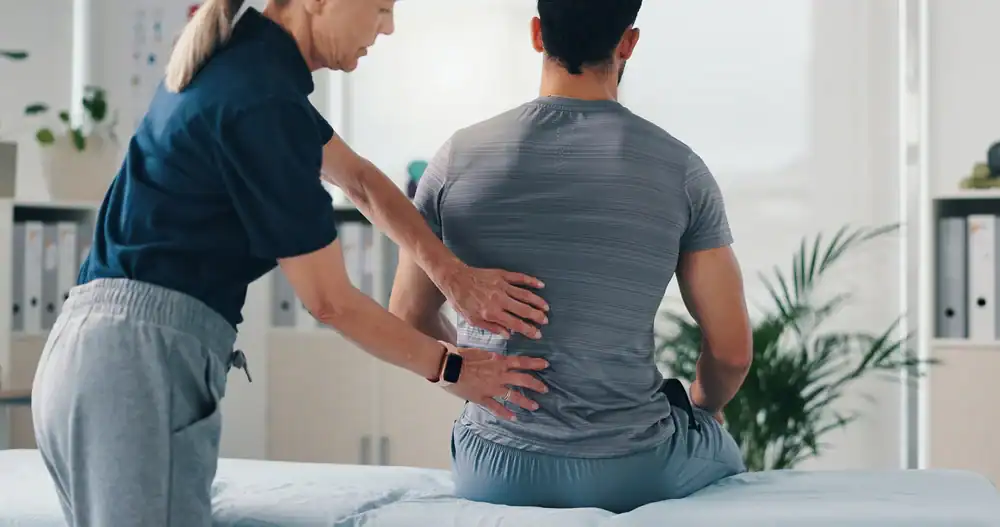
Here’s what happens when a child has a small spinal curve that doesn’t get flagged during a school screening. The curve sits there, quietly, causing no pain and no obvious visual signs. Your child grows. Their spine grows. And during a growth spurt—especially the big one right before puberty—that small curve can jump from 10 degrees to 25 or 30 degrees in a matter of months.
At 10 degrees, you’re watching and waiting. At 20 degrees, you’re talking about bracing. At 30 degrees, you’re looking at a much higher risk of needing surgery down the line. The window for non-invasive correction is narrow, and it closes fast once puberty kicks in.
School screenings are set up to catch surface-level asymmetry. They’re not designed to predict which kids are at risk for rapid progression. A child with a 12-degree curve and another year of growth left might fly under the radar entirely, only to show up at the pediatrician’s office a year later with a 28-degree curve and limited options.
And then there’s the tech neck factor. Kids today spend an average of 5 to 7 hours a day with their heads tilted forward, staring at phones, tablets, or laptops. That’s nearly 2,000 hours a year of forward head posture, which puts enormous strain on the developing cervical spine. When you combine that kind of repetitive stress with an undetected spinal curve, you’re stacking risk factors that schools simply aren’t equipped to assess.
The other issue is false negatives. A child might have early signs of scoliosis that aren’t visible during a quick forward-bend test. Maybe their curve is rotational. Maybe it’s in the lower spine where it’s harder to see. Maybe the screener just didn’t catch it because they were moving through 30 kids in 20 minutes. Whatever the reason, the child gets cleared, the parents assume everything’s fine, and the curve keeps progressing.
By the time it becomes obvious—clothes hanging unevenly, one shoulder higher than the other, visible rib hump when bending—the curve has often advanced beyond the point where simple interventions work. That’s the gap that early, detailed screening is designed to close.
How a Child Chiropractor Screens Differently
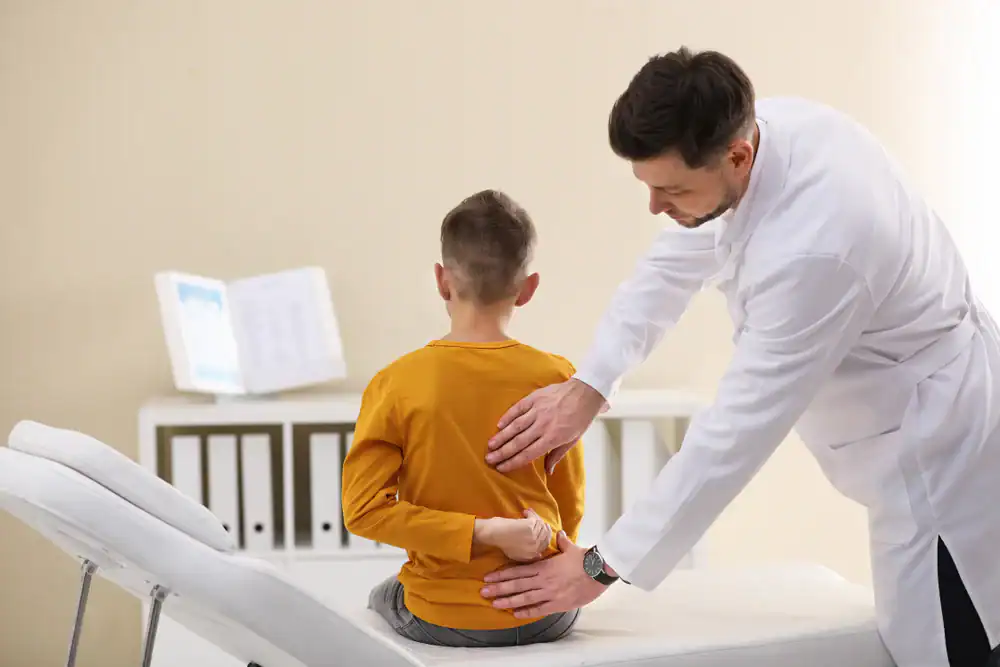
A child chiropractor doesn’t just look at your kid’s back and call it a day. The screening process is more thorough, more hands-on, and more focused on catching the things that standard screenings miss.
It starts with a full postural assessment. That means looking at shoulder height, hip alignment, head position, and how the spine sits when your child is standing naturally. Then comes the movement assessment—how does the spine move when your child bends forward, twists, or shifts their weight? Are there restrictions? Asymmetries? Areas where the vertebrae aren’t tracking the way they should?
From there, we’ll often use palpation to feel for misalignments, muscle tension, or areas where the spine isn’t moving freely. This is where subtle curves show up that you’d never catch with a visual check alone. A vertebra that’s slightly rotated. A section of the thoracic spine that’s locked up. Muscle imbalances that suggest the body is compensating for something deeper.
If there’s any concern, imaging comes next. X-rays give a clear picture of the spine’s alignment and allow for precise measurement of any curvature. That’s when you get a Cobb angle—the standard measurement used to determine whether a curve qualifies as scoliosis and how severe it is. Anything over 10 degrees is considered scoliosis. Anything over 25 degrees typically requires intervention.
But here’s the key difference: we’re not just screening for scoliosis. We’re also looking at the bigger picture—posture, spinal mechanics, muscle balance, and how years of tech use might be affecting your child’s developing spine. That comprehensive view is what allows for early detection, and early detection is what keeps treatment options open.
The goal isn’t to scare parents. It’s to catch problems when they’re still small, when corrective exercises and adjustments can actually make a difference, and when you can avoid the more invasive treatments that become necessary once a curve progresses too far.
Want live answers?
Connect with a DR Roses expert for fast, friendly support.
Signs of Scoliosis in Teenagers and Younger Kids
Scoliosis doesn’t announce itself. Most kids don’t have pain, especially in the early stages. They’re not complaining about their back. They’re not limping or struggling to move. They just look a little… off. And even that can be hard to spot if you’re not specifically looking for it.
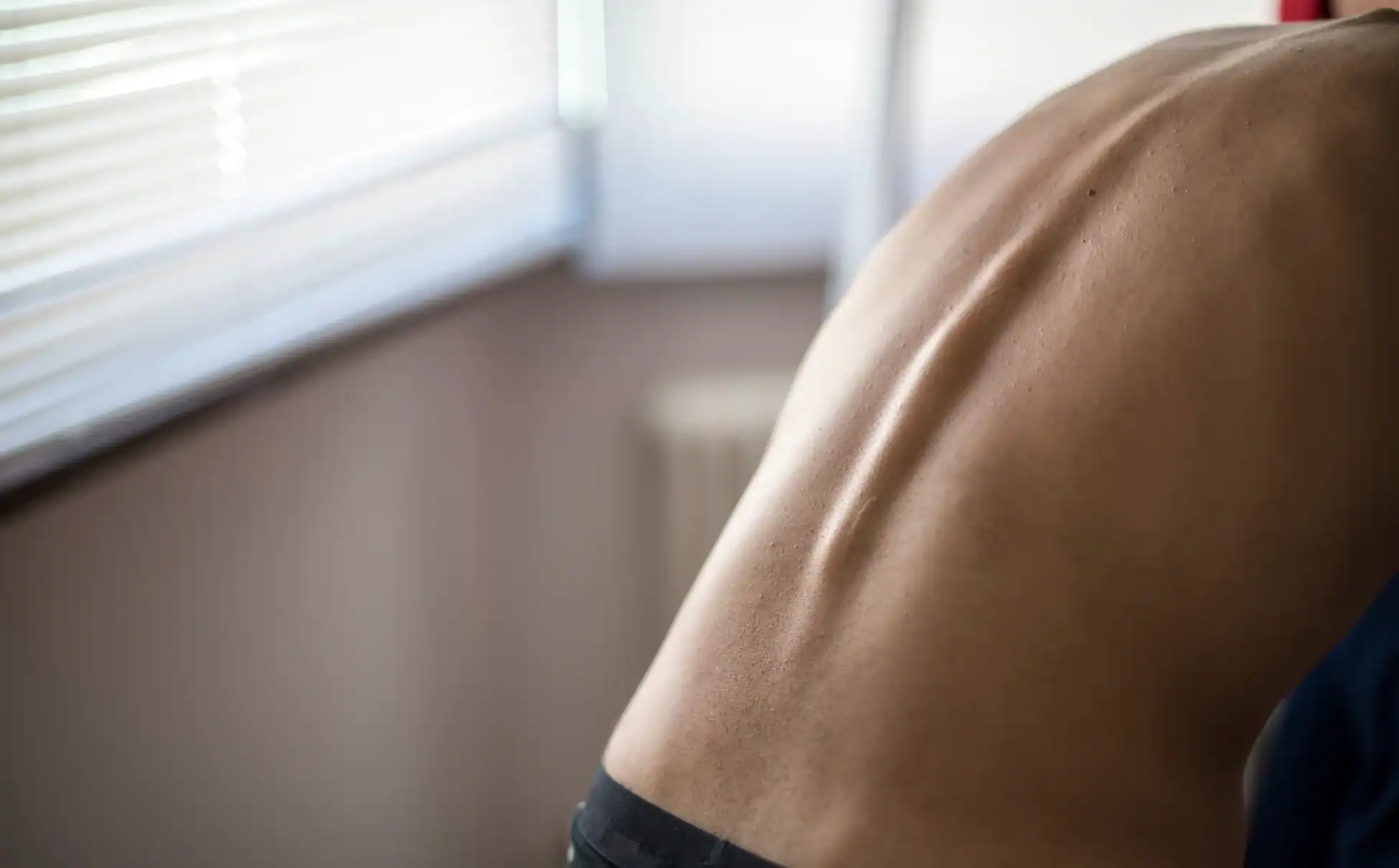
The most common signs parents notice first are visual. One shoulder sits higher than the other. The waistline looks uneven. Clothes don’t hang straight—hems are crooked, shirt collars twist to one side, or pants seem longer on one leg. When your child bends forward to touch their toes, you might see a rib hump on one side or notice that one side of the back is more prominent than the other.
These are the signs that show up once a curve has been developing for a while. But there are earlier, subtler clues that often get overlooked.
What to Watch for During Growth Spurts
Growth spurts are when scoliosis tends to accelerate. The spine is lengthening rapidly, and if there’s any underlying imbalance or asymmetry, it gets amplified. For girls, the highest-risk period is between ages 9 and 13. For boys, it’s between 12 and 16. These are the years when mild curves can turn into moderate or severe ones in a short amount of time.
During a growth spurt, your child might shoot up several inches in a matter of months. Their clothes suddenly don’t fit. Their coordination might seem off because their body is adjusting to new proportions. And their spine is under more stress than it’s ever been.
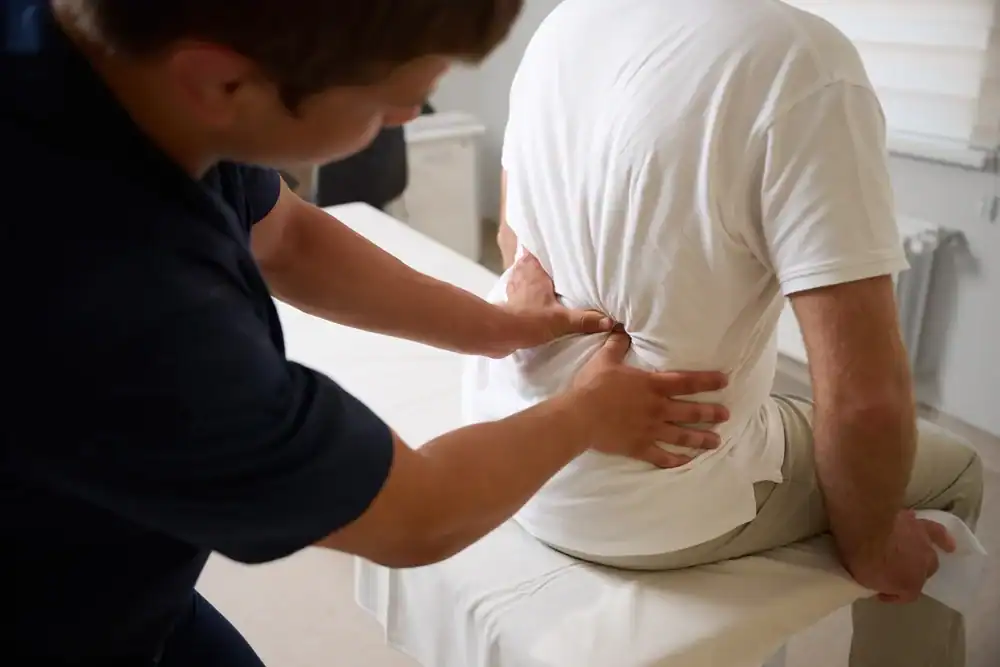
This is the time to be watching. Check your child’s posture regularly. Have them stand in front of you with their back exposed—sports bra for girls, shirtless for boys—and look for asymmetry. Are the shoulders level? Are the hips even? Does the head sit centered over the body, or does it tilt to one side?
Then have them bend forward at the waist with their arms hanging down. Look at the back from behind. Is one side of the rib cage higher than the other? Is there a hump or bulge on one side? Does the spine look like it’s curving instead of running straight down the middle?
If you see any of these signs, don’t wait. Growth spurts don’t last forever, but the damage a curve can do during that window can be permanent if it’s not addressed. A child with a 15-degree curve at the start of a growth spurt could easily end up with a 30-degree curve by the end of it. That’s the difference between monitoring and bracing, or between bracing and surgery.
And don’t assume that because your child isn’t in pain, everything’s fine. Scoliosis in kids is usually painless until the curve becomes severe. By the time pain shows up, the curve has often progressed to the point where conservative treatment options are limited.
Tech Neck and Spinal Health in Kids
Tech neck isn’t just a buzzword. It’s a real, measurable problem that’s affecting kids younger and younger. When your child tilts their head forward to look at a screen, the weight of the head on the neck increases dramatically. A head that weighs 10 to 12 pounds in a neutral position can exert up to 60 pounds of force on the cervical spine when tilted forward at a 60-degree angle.
Now multiply that by hours. Kids spend an average of 4 to 6 hours a day on screens, often in terrible postures—slouched on the couch, hunched over a desk, or curled up in bed with a tablet. That’s thousands of hours a year of repetitive strain on a spine that’s still developing.
The result is forward head posture, rounded shoulders, and increased stress on the upper back and neck. Over time, this can lead to muscle imbalances, restricted movement, and changes in the natural curves of the spine. And when you layer that on top of an undetected scoliosis curve, the two problems compound each other.
A child with early-stage scoliosis who also has chronic forward head posture is at higher risk for rapid progression. The muscles that should be supporting the spine are tight and fatigued. The vertebrae aren’t moving the way they should. And the body is constantly compensating, which creates more imbalance and more strain.
This is where our role becomes critical. Addressing tech neck isn’t just about telling your kid to sit up straight. It’s about restoring proper spinal mechanics, releasing tight muscles, and retraining the body to hold itself in better alignment. Adjustments help restore mobility to restricted areas of the spine. Corrective exercises strengthen the muscles that support good posture. And lifestyle coaching helps families create habits that protect spinal health long-term.
The earlier you address these issues, the better. A 10-year-old with mild tech neck and a small scoliosis curve has a much better shot at correction than a 15-year-old who’s been dealing with both problems for years without intervention. Time matters. Growth spurts matter. And catching problems early—before they become entrenched—matters most of all.
Getting Your Child Screened Before Problems Progress
Scoliosis screening isn’t something you do once and forget about. It’s something you revisit, especially during the high-risk years when growth spurts hit. School screenings are a starting point, but they’re not enough. If your child spends hours on devices, if there’s a family history of scoliosis, or if you’ve noticed any of the signs we’ve talked about, a more detailed screening is worth the time.
We can provide that level of detail. A full structural analysis, hands-on assessment, and imaging if needed—all designed to catch problems while they’re still manageable. Early detection opens the door to non-invasive options like corrective exercises and adjustments, which can prevent curves from progressing to the point where bracing or surgery becomes necessary.
The goal is simple: catch it early, address it proactively, and give your child’s spine the best chance to grow straight and strong. If you’re in Hudson County and want peace of mind about your child’s spinal health, we offer specialized pediatric spinal screenings designed to catch what school checks miss.