

Hear from Our Customers
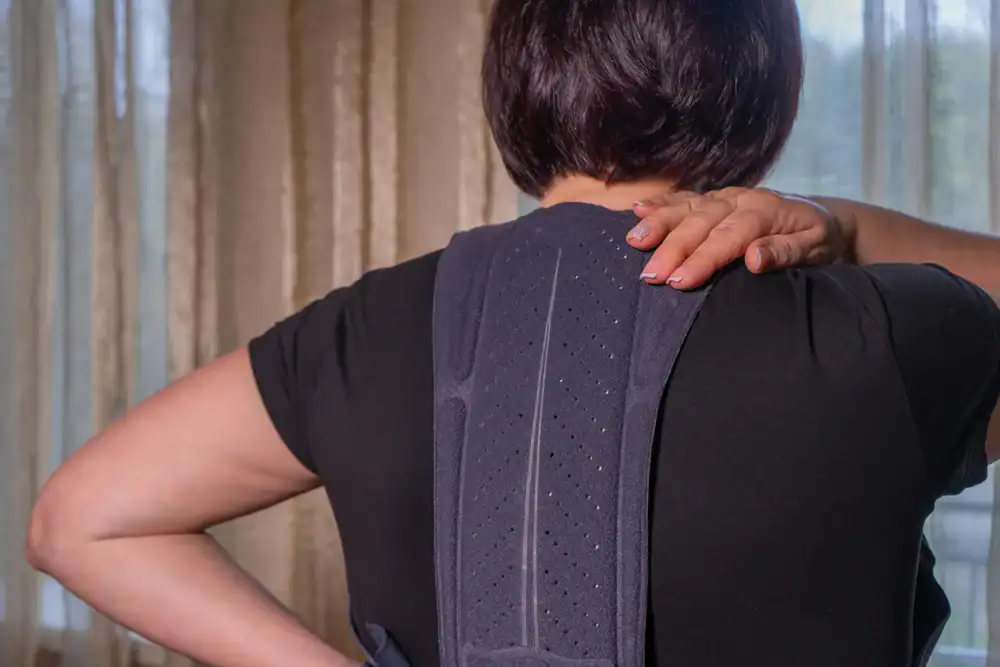
Your head weighs about 10-12 pounds. But when you’re looking down at your phone or hunched over your keyboard, that weight multiplies. For every inch your head tilts forward, you add 10 pounds of pressure on your neck. Three inches forward? That’s 30 extra pounds your neck muscles are fighting all day.
You already know this isn’t sustainable. The burning between your shoulder blades. The headaches that start mid-afternoon. The stiffness that makes turning your head in the car uncomfortable.
When posture correction in Western Slope, NJ actually works, you notice it immediately. Your shoulders drop back where they belong. You breathe deeper because your chest isn’t collapsed. The constant tension in your neck starts to release. You stand taller without thinking about it. And those nagging pains that you thought were just part of working at a desk? They fade.
This isn’t about standing up straighter for a few minutes. It’s about retraining the muscles that have been compensating for years of forward head posture and rounded shoulders. When that happens, you don’t just feel better temporarily—you function better permanently.
Dr. Paul Roses has been treating posture-related pain in Western Slope, NJ for over two decades. He knows exactly what happens when you spend years sitting at a desk, staring at screens, and ignoring the warning signs your body sends.
Western Slope has over 42,000 residents, and nearly 35% of you commute using public transit. That means long periods of sitting, looking down at phones, and hunching forward. It’s not your fault—it’s the reality of modern work life. But it doesn’t have to wreck your spine.
We don’t just adjust your back and send you home. We identify what’s causing your forward head posture, your text neck symptoms, or your upper crossed syndrome. Then we fix it using targeted adjustments, corrective exercises, and real education about how to maintain the results.

First, we assess what’s actually wrong. Not every posture problem looks the same. Some of you have classic forward head posture from years of computer work. Others have upper crossed syndrome—where your chest and upper traps are tight while your neck flexors and mid-back muscles are weak. We measure the degree of misalignment and identify which muscles are overworking and which have checked out.
Then we start with adjustments. These aren’t dramatic—they’re precise movements that restore proper joint function in your neck and upper back. When your spine moves correctly, your muscles can start doing their actual jobs instead of compensating for misalignment.
Next comes the corrective work. We give you specific exercises and stretches that target the exact imbalances causing your posture problems. These aren’t generic stretches you could find on YouTube. They’re based on your assessment and designed to strengthen weak muscles while releasing the tight ones.
Throughout treatment, we’re also teaching you how to set up your workspace, how to hold your phone, and how to move throughout your day without undoing the progress. Because the goal isn’t just fixing your posture for a few weeks—it’s making sure it stays fixed.

Ready to get started?
You get a complete postural assessment that identifies the specific pattern of dysfunction you’re dealing with. We’re looking at forward head posture, rounded shoulders, and upper crossed syndrome—the three most common problems we see in Western Slope, NJ office workers.
You get chiropractic adjustments that restore proper alignment to your cervical spine and thoracic spine. These adjustments reduce the mechanical stress on your neck and allow your nervous system to function without interference.
You get a customized exercise program. Not a printout of generic stretches—actual corrective exercises that address your weak points. If your deep neck flexors are weak and your upper traps are overactive, we’re giving you movements that fix that specific imbalance.
You also get ergonomic coaching. Since most posture problems develop at work, we talk through how you’re sitting, where your monitor is, and how you’re using your phone. Small changes here prevent you from recreating the same problems we just fixed.
The data is clear: 86% of American workers sit for long periods, and 65% develop pain because of it. In Western Slope, where over a third of residents commute via public transit and work in office environments, these numbers are even more relevant. You’re not dealing with a rare condition—you’re dealing with an epidemic. And we’ve been treating it successfully for over 20 years.

It depends on how long you’ve had it and how severe the misalignment is. If you’ve been dealing with forward head posture for a few months, you might see significant improvement in 4-6 weeks. If it’s been years, expect 8-12 weeks of consistent treatment and corrective exercise.
Here’s what actually happens during that time. The first few adjustments start restoring mobility to joints that have been stuck. You’ll feel less stiff almost immediately. Then the corrective exercises begin retraining the muscles that have been either overworking or underperforming. This part takes longer because you’re literally changing movement patterns your body has been using for years.
Most people notice they’re standing taller and experiencing less neck pain within the first month. But full correction—where your posture stays improved without constant attention—takes longer. That’s not a sales pitch. It’s just how long it takes to reverse years of sitting hunched over a keyboard.
Yes, but only if you’re also willing to change how you use your phone. Text neck happens because you’re bending your head forward to look at a screen, which puts up to 60 pounds of pressure on your cervical spine. Chiropractic adjustments can restore proper alignment and reduce the pain, but if you go right back to the same head position for 5-6 hours a day, you’ll recreate the problem.
We treat text neck by adjusting the joints in your neck and upper back, releasing the tight muscles in your chest and upper traps, and strengthening the weak muscles in your mid-back and deep neck flexors. That combination reduces pain, improves posture, and prevents future degeneration.
But we also teach you how to hold your phone at eye level, how to take breaks, and how to recognize when you’re slipping back into that forward head position. Treatment works when you combine professional care with smarter daily habits.
Upper crossed syndrome is a specific pattern of muscle imbalance that creates a “crossed” appearance when you look at which muscles are tight and which are weak. Your chest muscles and upper traps get tight and overactive. Your deep neck flexors and mid-back muscles get weak and lengthened. The result is forward head posture, rounded shoulders, and a lot of pain between your shoulder blades.
If you work at a desk, spend hours on your phone, or commute long distances while sitting, there’s a good chance you have some degree of upper crossed syndrome. The telltale signs are neck pain, shoulder pain, headaches, and that burning sensation between your shoulder blades that gets worse as the day goes on.
The good news is that upper crossed syndrome is completely reversible. It’s not a permanent condition. With the right combination of adjustments, stretches for the tight muscles, and strengthening exercises for the weak ones, you can fully correct it. We see this every day in Western Slope, NJ, and the results are consistent when people stick with the treatment plan.
Once your posture is corrected and the underlying muscle imbalances are resolved, you don’t need ongoing treatment at the same frequency. But here’s the reality: if you go back to sitting at a desk for 8-10 hours a day without any maintenance, the problem will eventually return.
Think of it like going to the gym. You can get in great shape, but if you stop working out entirely, you’ll lose that fitness. Posture correction works the same way. We fix the alignment, retrain the muscles, and teach you how to maintain it. Most people transition to occasional maintenance visits—maybe once a month or once every few months—just to make sure things stay on track.
The key is continuing the corrective exercises we give you and being mindful of your workspace setup and phone use. If you do that, the improvements stick. If you don’t, you’ll start sliding back into old patterns. We’re not trying to keep you dependent on care—we’re trying to make sure the work we do actually lasts.
Many insurance plans cover chiropractic care, including treatment for posture-related conditions like forward head posture, text neck, and upper crossed syndrome. Coverage varies depending on your specific plan, but if you’re experiencing neck pain, shoulder pain, or headaches related to posture problems, there’s a good chance your insurance will cover at least part of the treatment.
We recommend calling your insurance provider before your first visit to ask about chiropractic benefits. Specifically, ask if they cover spinal adjustments and corrective exercises for musculoskeletal conditions. Most plans have a copay per visit, and some have a limit on the number of visits per year.
If your insurance doesn’t cover chiropractic care or if you have a high deductible, we can discuss payment options. The cost of treating posture problems now is significantly less than dealing with chronic pain, spinal degeneration, or more invasive treatments down the road. We’re upfront about costs and never surprise you with hidden fees.
Stretches help, but they don’t fix the underlying joint dysfunction or the specific muscle imbalances causing your posture problems. You might feel temporary relief from stretching your chest or your neck, but if your cervical spine is misaligned and your deep neck flexors are weak, those stretches won’t solve the root issue.
Posture correction in Western Slope, NJ combines chiropractic adjustments with targeted corrective exercises. The adjustments restore proper joint motion and alignment, which allows your muscles to function correctly. Then the exercises retrain the specific muscles that are weak or overactive. It’s a systematic approach that addresses the cause, not just the symptoms.
Generic stretches you find online aren’t tailored to your specific dysfunction. We assess exactly which muscles are tight, which are weak, and which joints aren’t moving properly. Then we create a plan that fixes your particular pattern of imbalance. That’s why professional treatment gets results that stretching alone doesn’t.