

Hear from Our Customers
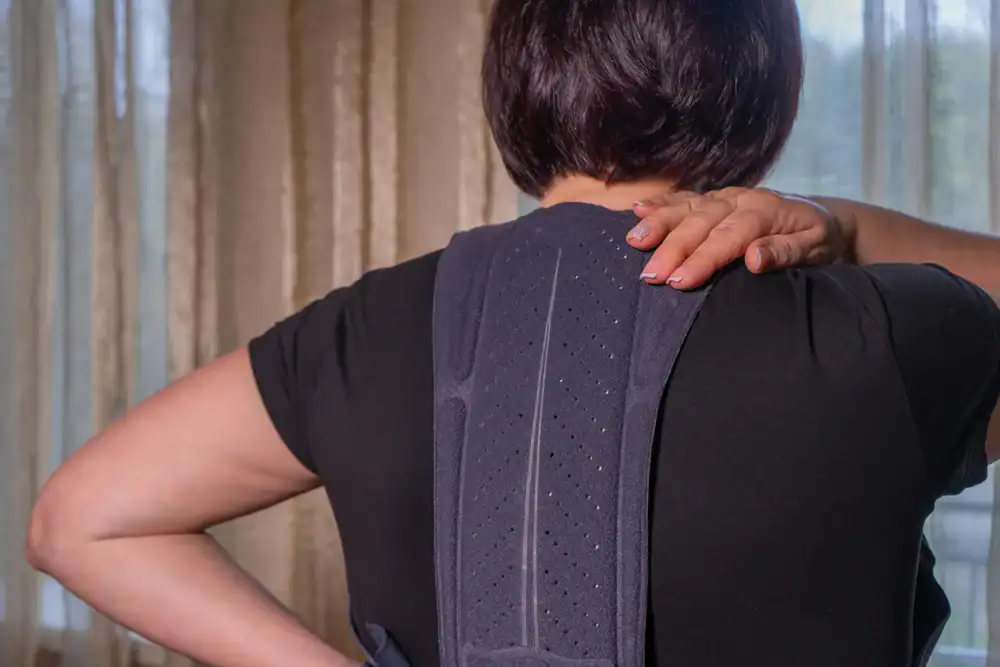
You stop waking up with that stiff neck. Your shoulders don’t ache by 2 PM anymore. You can sit through meetings without shifting every five minutes trying to get comfortable.
That’s what happens when forward head posture in West New York, NJ gets corrected the right way. Not with temporary adjustments or generic stretches you found online, but with a plan built around what’s actually causing your body to collapse forward.
Most people dealing with text neck symptoms don’t realize their pain comes from years of compensation. Your head weighs about 10-12 pounds. For every inch it sits forward, your neck muscles work like they’re holding 10 extra pounds. That’s why your shoulders round, your upper back tightens, and your energy tanks by midday.
Posture correction in West New York, NJ means identifying where your spine lost its natural alignment and rebuilding the strength and mobility to support it. You’ll notice the difference in how you feel during your commute, at your desk, even when you’re just standing in line at the grocery store.
We’ve been helping people in West New York, NJ fix their posture problems since before “text neck” was even a term. Dr. Paul Roses graduated from Life Chiropractic College and has spent three decades treating everyone from office workers to first responders who needed care after 9/11.
This isn’t a corporate clinic where you’re a number. You’re working with someone who’s been part of this community for over 30 years, who understands what daily life looks like here—the commute to Manhattan, the long hours at a desk, the stress that builds up in your shoulders without you realizing it.
When you’re dealing with chronic neck pain or rounded shoulders in West New York, NJ, you need someone who’s seen it before and knows how to fix it for the long term. That’s what you get here.
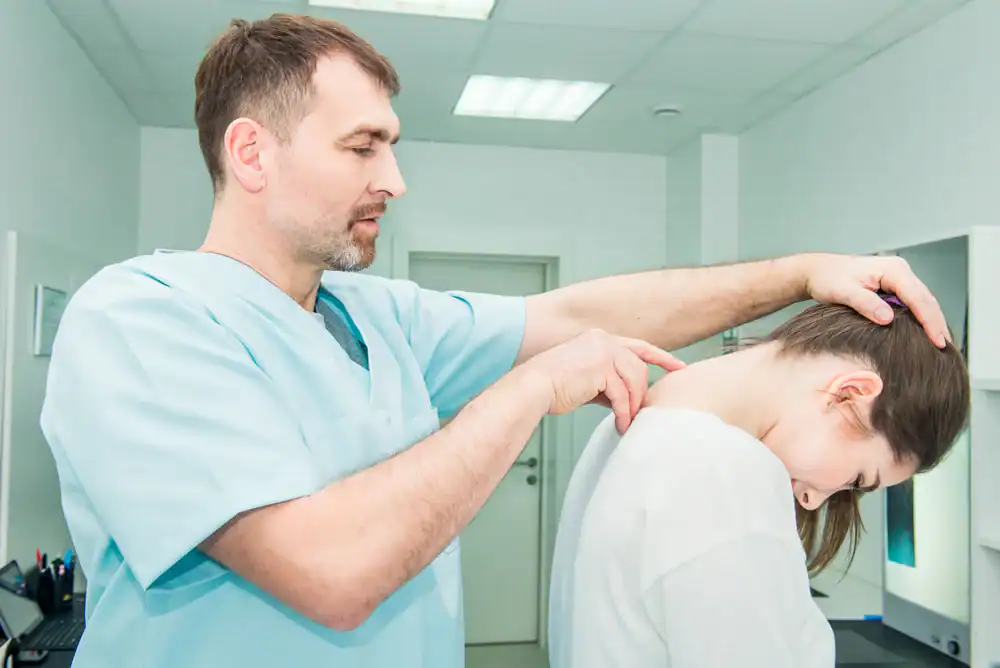
First, we figure out what’s actually wrong. That means a full postural screening to see where your spine is misaligned, how your shoulders are sitting, and what’s causing your forward head posture in West New York, NJ. We’re looking at the root cause, not just where it hurts.
Then we build your correction plan. This combines spinal adjustments to restore proper alignment with corrective exercises designed specifically for upper crossed syndrome—that pattern of tight chest muscles and weak upper back muscles that’s probably driving your rounded shoulders. You’ll know exactly what we’re doing and why.
Treatment isn’t a one-and-done thing. Your posture didn’t collapse overnight, and it won’t fix itself in a single visit. But you’ll start feeling relief quickly, and over time, your body will learn to hold itself the way it’s supposed to. We’ll teach you how to maintain it so you’re not dependent on coming in forever.
Most people notice less pain within the first few weeks. The bigger changes—standing taller without thinking about it, getting through your workday without tension headaches—those build as your body adapts. You’ll get stronger, more mobile, and way more comfortable in your own skin.

Ready to get started?
You’re getting a complete postural assessment that maps out exactly where your alignment is off. We’re checking your spine, your shoulders, your neck—everything that contributes to text neck symptoms and rounded shoulders in West New York, NJ.
From there, you’ll receive targeted spinal adjustments using advanced techniques that restore proper joint function and take pressure off your nerves. This isn’t about cracking your back and sending you home. It’s about precise corrections that let your body heal the way it’s designed to.
You’ll also get customized corrective exercises. These aren’t random stretches. They’re specific movements that strengthen weak muscles and loosen tight ones, addressing the upper crossed syndrome pattern that’s keeping you stuck in poor posture. You’ll do some of these at home, and we’ll progress them as you get stronger.
West New York has one of the highest concentrations of commuters in New Jersey. That means a lot of people spending hours hunched over steering wheels or crammed into trains, then sitting at desks all day. Your posture correction plan accounts for that reality. We’re not treating you like you have unlimited time to do exercises—we’re giving you what actually works within the life you’re living.

Most people start feeling relief within 2-3 weeks, but real correction takes longer. Your forward head posture developed over months or years of sitting at computers, looking down at phones, and compensating for stress and fatigue. Reversing that takes time.
Typically, you’re looking at 8-12 weeks of consistent treatment to see significant postural changes. That includes regular adjustments and doing your corrective exercises at home. Some people need more time depending on how severe the misalignment is and how long it’s been there.
The good news is you won’t feel like you’re waiting months to get relief. Pain and tension usually improve quickly once we start addressing the root cause. The longer timeline is about retraining your body to hold itself correctly so the changes stick.
The most obvious one is neck pain that gets worse the longer you’re on your phone or computer. But text neck in West New York, NJ shows up in other ways too.
You might get headaches that start at the base of your skull and wrap around to your forehead. Your shoulders probably feel tight and knotted, especially at the end of the day. Some people notice their upper back aches or they can’t turn their head as far as they used to without discomfort.
You might also feel tingling or numbness in your arms and hands if the forward head posture is compressing nerves. And a lot of people don’t realize their constant fatigue is connected—when your neck muscles are working overtime to hold up your head, it drains your energy. If you’re dealing with any combination of these, it’s worth getting checked.
Exercises help, but they’re usually not enough by themselves if your spine is already misaligned. Here’s why: rounded shoulders in West New York, NJ typically happen because of upper crossed syndrome—a pattern where your chest muscles get tight and your upper back muscles get weak and overstretched.
Stretching and strengthening can address the muscle imbalance, but if your thoracic spine (mid-back) is locked up or your neck joints aren’t moving properly, the exercises won’t have much to work with. You’re trying to build on a faulty foundation.
That’s why combining spinal adjustments with corrective exercises works better. The adjustments restore proper joint movement and alignment, and the exercises retrain your muscles to support that new position. You need both pieces. Doing exercises alone is like trying to straighten a crooked fence without fixing the posts first—you might see some improvement, but it won’t hold.
Upper crossed syndrome is a postural pattern where certain muscles get tight while others get weak, creating an “X” shape of imbalance across your upper body. Your chest muscles and the muscles at the base of your skull get short and tight. Meanwhile, your deep neck flexors and the muscles between your shoulder blades get weak and stretched out.
The result? Your head drifts forward, your shoulders round, and your upper back curves more than it should. If you work at a desk, commute to New York City, or spend a lot of time on your phone, there’s a good chance you’re dealing with this in some form.
You probably have upper crossed syndrome if your shoulders naturally sit forward when you’re relaxed, if you can’t stand against a wall with your head touching it comfortably, or if someone’s ever told you that you’re slouching even when you’re trying to sit up straight. It’s extremely common in West New York, NJ because of how many people work desk jobs or have long commutes. The good news is it’s very treatable with the right approach.
Regular chiropractic care often focuses on pain relief and maintaining joint function. Posture correction in West New York, NJ goes deeper—it’s about identifying and fixing the structural patterns that caused your pain in the first place.
A standard adjustment might make your neck feel better for a few days. Posture correction looks at why your neck keeps getting tight, traces it back to your forward head posture and rounded shoulders, and builds a plan to change the underlying mechanics. That means specific adjustments to restore spinal curves, targeted exercises to rebalance muscles, and often some education about how you’re sitting, standing, and moving throughout your day.
You’re not just getting adjusted and leaving. You’re actively rebuilding how your body holds itself. The adjustments are more precise and progressive, and the corrective exercises are designed specifically for your postural pattern. It takes more time and commitment, but the results last because you’re fixing the cause, not just managing symptoms.
Many insurance plans cover chiropractic care, including treatment for posture-related issues like forward head posture, text neck, and upper crossed syndrome. Coverage varies depending on your specific plan, but if you’re dealing with pain or functional problems caused by poor posture, there’s a good chance your insurance will cover at least part of your treatment.
We work with most major insurance providers and can verify your benefits before you start. That way you’ll know what your coverage looks like and what your out-of-pocket costs will be. Some plans cover a set number of visits per year, while others require a copay per visit.
Even if your insurance doesn’t cover everything, we’ll work with you on a treatment plan that fits your budget. The goal is to get you the care you need without creating financial stress. Posture correction is an investment in your long-term health, but it shouldn’t be something you can’t afford. Call us and we’ll figure out exactly what your insurance covers and what your options are.