

Hear from Our Customers
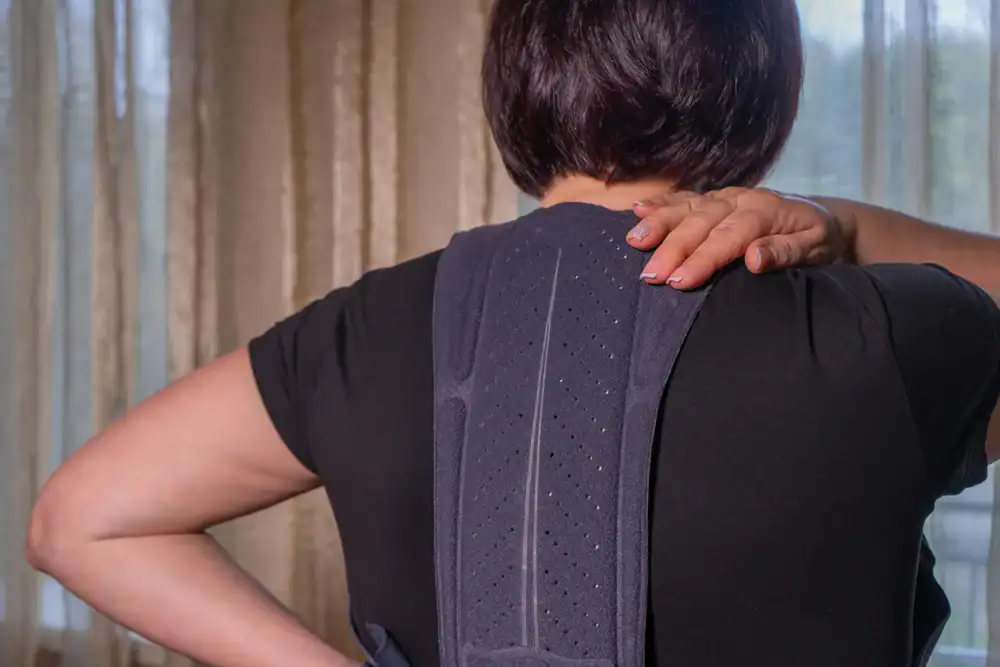
You stop reaching for pain relievers every afternoon. Your shoulders drop back where they belong, and that constant tension headache finally lets up.
When your head sits properly over your spine instead of jutting forward, your body stops fighting gravity all day. You breathe deeper because your ribcage can actually expand. You have energy past 3 PM because your muscles aren’t working overtime just to hold you upright.
The difference shows up in ways you didn’t expect. You look taller in photos. You don’t avoid certain shirts because they make your rounded shoulders obvious. You can turn your head to check your blind spot without wincing.
This is what happens when text neck symptoms and treatment in Mill Creek, NJ actually address the root problem instead of just managing pain. Your body remembers how to hold itself correctly, and the chronic ache that’s been your background noise for months or years starts to fade.
Dr. Paul Roses, Dr. Toniann Roses, and Dr. Dean Sottile have been serving Hudson County for years, and we’ve seen what happens when people ignore forward head posture. It doesn’t get better on its own.
Mill Creek residents deal with the same postural issues as the rest of the country—too many hours on devices, makeshift home offices, long commutes—but you also have access to advanced diagnostic technology most practices don’t use. Titron Infrared Imaging gives us a baseline assessment in seconds, and we’ve published results in the Asian Pacific Chiropractic Journal documenting real patient improvements.
We’re not interested in temporary fixes or selling you a dozen visits you don’t need. You’ll know exactly what’s wrong, what it takes to correct it, and how long that realistically takes.

First, we figure out what’s actually wrong. Visual assessment shows us how far forward your head sits and how rounded your shoulders have become. Digital imaging and spinal X-rays reveal what’s happening at the structural level—where the compensation patterns started and what’s paying the price now.
Then we build a plan specific to your spine, not a generic protocol. That usually means spinal adjustments to restore proper alignment, but it also includes exercises you can do at home. The best outcomes come from combining techniques, not relying on one magic fix.
You’ll also learn how to set up your workspace so you’re not undoing progress every time you sit down at your desk. Small changes to monitor height, chair position, and how you hold your phone make a bigger difference than most people realize.
Most patients notice pain reduction within the first few weeks. Full correction takes longer because we’re retraining your body to hold itself differently, but you’ll feel the difference before you see it on a follow-up X-ray.

Ready to get started?
You get a complete postural analysis using technology that most practices in Mill Creek, NJ don’t have. Infrared imaging picks up muscle imbalances and inflammation patterns that explain why one side of your neck always feels tighter than the other.
Spinal adjustments target the areas where your vertebrae have shifted out of alignment—usually the upper cervical spine and mid-back. These aren’t the quick cracks you’ve seen in videos. They’re precise corrections based on what your imaging shows.
You’ll also receive personalized exercises for rounded shoulders correction and upper crossed syndrome stretches specific to Mill Creek, NJ patients dealing with desk work and device use. These aren’t generic stretches from a printout. They’re chosen based on which muscles have gotten weak and which ones are chronically tight in your body.
Ergonomic coaching is part of the package because your posture at work matters as much as what happens in our office. We’ll walk through how you’re sitting, where your screen is, and what you’re doing with your neck when you look at your phone. If you’re working from home like 35% of employees in the area, we’ll help you set up a workspace that doesn’t destroy your progress.

Most people see noticeable pain relief within the first month, but fully correcting forward head posture takes longer—usually three to six months depending on how severe it is and how long you’ve had it.
Your head didn’t shift forward overnight, and it won’t shift back overnight. We’re not just reducing pain. We’re retraining muscles that have been holding you in the wrong position for months or years, and we’re restoring proper alignment to vertebrae that have adapted to the wrong position.
The timeline depends on a few factors: how far forward your head sits (every inch forward adds about 10 pounds of pressure), how much time you spend on devices, whether you’re willing to do exercises at home, and how well you adjust your workspace. Patients who make ergonomic changes and stay consistent with their exercises see faster results than those who only show up for adjustments.
Text neck shows up as persistent neck pain, stiffness, and headaches that start at the base of your skull. You might also notice shoulder pain, a burning sensation between your shoulder blades, or tingling in your arms and hands if nerves are getting compressed.
The symptoms happen because your head is too far forward, which increases the load on your neck muscles and spine. When you’re looking down at your phone for hours a day, your neck is supporting the equivalent of a 60-pound weight instead of the normal 10-12 pounds.
Treatment for text neck symptoms in Mill Creek, NJ starts with spinal adjustments to restore proper cervical alignment. We also address the muscle imbalances that develop—your chest and front neck muscles get tight while your upper back and deep neck flexors get weak. You’ll get specific stretches and strengthening exercises to correct this pattern, plus guidance on how to use your devices without recreating the problem. Most patients report significant improvement after about a month of consistent treatment.
Yes. Rounded shoulders are usually a muscular and postural issue, not a structural deformity, which means they respond well to chiropractic care and corrective exercises.
Rounded shoulders happen when your chest muscles and front shoulder muscles get tight from hunching forward, while your upper back muscles get overstretched and weak. This creates a forward pull that rounds your shoulders even when you’re trying to stand up straight. It’s called upper crossed syndrome, and it’s extremely common in people who work at desks or spend a lot of time on their phones.
Correction involves spinal adjustments to improve mid-back mobility, specific stretches for the tight muscles in your chest and front shoulders, and strengthening exercises for your upper back and shoulder blade stabilizers. We also look at your workspace setup because if your monitor is too low or your chair doesn’t support proper posture, you’ll keep recreating the problem. Most people see visible improvement in shoulder position within two to three months when they’re consistent with treatment and exercises.
The most effective exercises target the deep neck flexors (muscles that pull your head back) and the upper back muscles that have gotten weak from slouching.
Chin tucks are simple but powerful. You pull your chin straight back like you’re making a double chin, hold for a few seconds, and repeat. This strengthens the muscles that hold your head in proper alignment. Rows and scapular squeezes strengthen your upper back and help pull your shoulders back where they belong.
You also need to stretch the muscles that have gotten tight—your chest, your upper traps, and the muscles at the base of your skull. Doorway stretches for your chest and gentle neck stretches help release that chronic tension.
But here’s the thing: the right exercises depend on your specific imbalances. Some people need more stretching, others need more strengthening, and doing the wrong exercises can actually make things worse. That’s why we assess your posture first and give you exercises based on what your body actually needs, not a generic list. When you come in for posture correction in Mill Creek, NJ, you’ll get a personalized program that targets your specific problem areas.
Many insurance plans cover chiropractic care, including treatment for posture-related issues like forward head posture, text neck, and upper crossed syndrome. Coverage varies depending on your specific plan and whether you need a referral.
Most plans categorize this as treatment for neck pain, back pain, or musculoskeletal disorders rather than “posture correction” specifically. As long as there’s a documented medical need—which there is if you’re dealing with pain, limited range of motion, or functional problems—it’s usually covered to some degree.
We recommend calling your insurance company before your first visit to ask about chiropractic coverage, copays, and whether you need a referral from your primary care doctor. Our office can also verify your benefits and let you know what to expect. Even if your plan doesn’t cover the full cost, many patients find that the relief and long-term health benefits are worth the investment, especially compared to the alternative of ongoing pain medication or eventually needing more invasive treatment down the road.
Forward head posture increases the mechanical load on your neck and changes how forces distribute through your spine. Your head weighs about 10-12 pounds in neutral position, but for every inch it shifts forward, you add roughly 10 pounds of additional strain on your neck muscles and cervical vertebrae.
When your head is constantly forward, the muscles at the base of your skull and in your upper neck have to work overtime to keep your head from dropping further. They never get a break, so they develop trigger points and chronic tension. That tension refers pain up into your head, causing tension headaches and migraines that typically start at the base of the skull and wrap around to your forehead or temples.
The misalignment also affects the joints in your cervical spine. When vertebrae aren’t stacked properly, they compress nerves and irritate the facet joints, which causes localized neck pain and can radiate into your shoulders and arms. Over time, this chronic stress can lead to degenerative changes in your spine. The good news is that correcting the alignment and retraining the muscles eliminates the root cause, which is why people often see their headaches reduce or disappear entirely once their posture improves.