

Hear from Our Customers
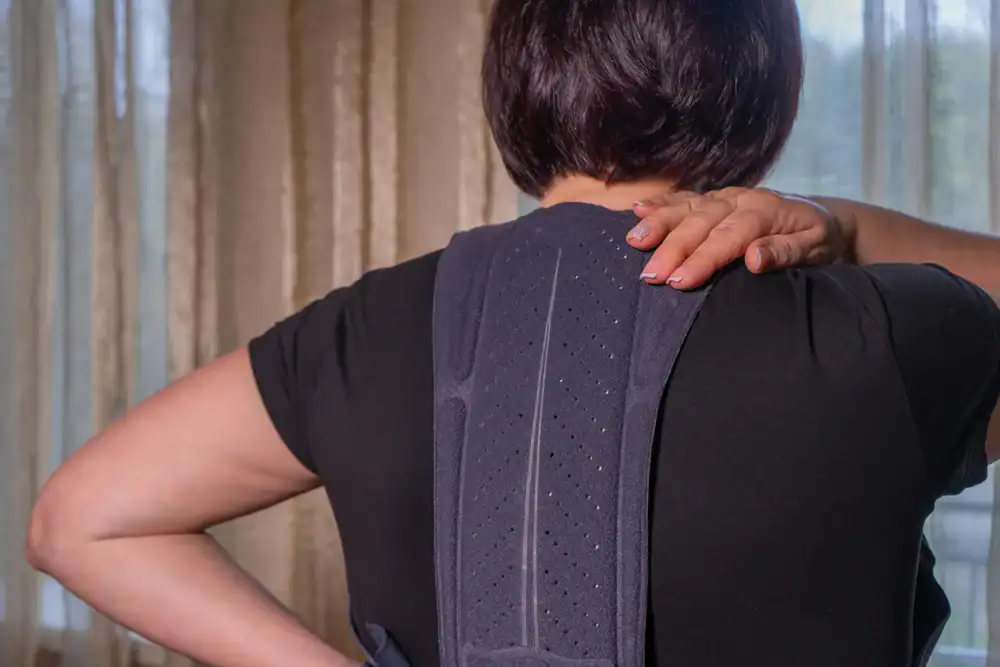
Your neck stops aching by the end of the workday. You don’t wake up with that stiff, locked-up feeling in your shoulders anymore. The tension headaches that used to hit every afternoon start disappearing.
When you fix forward head posture in Hudson City, NJ, you’re not just standing straighter. You’re removing the constant strain that’s been pulling on your neck muscles for months or years. Every inch your head sits forward adds roughly 10 pounds of pressure on your spine. At the typical 60-degree angle most people use while looking at their phones, that’s 60 pounds of force your neck is fighting against all day.
The difference shows up fast. You’ll notice it when you’re sitting at your desk, when you’re driving, when you’re just existing without thinking about how much everything hurts. That’s what actually getting treated for text neck symptoms does—it gives you your normal back.
Dr. Paul Roses has been treating posture problems in Hudson City, NJ and throughout Hudson County since opening his practice in 2000. He’s seen thousands of patients dealing with the same forward head posture, rounded shoulders, and text neck issues you’re probably dealing with right now.
This isn’t a new practice trying to figure things out. We’re a chiropractic office that’s been voted Hoboken’s Best Chiropractor and has over 300 five-star Google reviews because the treatments actually work. Hudson County has one of the highest concentrations of desk workers and commuters in New Jersey, which means posture correction is something we handle every single day.
You’re not getting a cookie-cutter approach here. Dr. Roses evaluates your specific posture issues and builds a treatment plan around what your body actually needs, not what some protocol says to do.

First visit, we assess your posture. That means looking at how far forward your head sits, how rounded your shoulders are, and where the restrictions are in your spine. We use 3D posture analysis to get a complete picture of your alignment from multiple angles at once.
Then we start treatment. You’ll get chiropractic adjustments that restore normal movement to the joints in your neck and upper back. We combine that with targeted exercises that strengthen the weak muscles and stretch the tight ones—specifically the upper back muscles that have been overstretched and the front neck and chest muscles that have shortened from years of poor posture.
You’ll also get corrective exercises to do at home. These aren’t complicated. They’re simple stretches and strengthening movements that take a few minutes but make a real difference when you do them consistently. Research shows that doing these exercises three times a week for 8-10 weeks creates measurable improvement in your craniovertebral angle and reduces neck pain significantly.
Most patients feel noticeably better after the first visit. Real correction takes longer—usually several weeks of consistent treatment—but you’ll know pretty quickly that this is working.

Ready to get started?
You get chiropractic adjustments that address the joint restrictions causing your posture problems. Manual therapy and trigger point massage release the tight muscles in your neck, shoulders, and upper back. Corrective exercises target the specific muscle imbalances that are keeping you stuck in poor posture—weak upper back muscles and tight chest muscles.
We also address upper crossed syndrome, which is the pattern almost everyone with desk jobs develops: tight chest and front neck muscles, weak upper back and deep neck flexors. Upper crossed syndrome stretches in Hudson City, NJ are part of every posture correction plan because you can’t fix forward head posture without addressing this imbalance.
Hudson County has a median age of 35.8 and a workforce that spends hours commuting into Manhattan or sitting at computers in Jersey City and Hoboken. That means text neck and forward head posture are epidemic here. You’re not alone in dealing with this, and the treatment approach we use has been proven effective in thousands of local patients over the past two decades.
You’ll also get ergonomic advice for your workspace and daily habits. Small changes in how you set up your desk or hold your phone make a big difference in whether your posture stays corrected long-term.

Most people see noticeable improvement in 8-10 weeks with consistent treatment. That means coming in for adjustments and doing your home exercises as prescribed—usually three times per week.
The timeline depends on how severe your forward head posture is and how long you’ve had it. If your head sits 2-3 inches forward and you’ve been like that for years, it takes longer than if you caught it early. Research shows that a 10-week program of targeted exercises combined with chiropractic care produces measurable changes in your craniovertebral angle and significant reduction in neck pain.
You’ll feel relief faster than that—many patients report feeling better after the first visit. But actual structural correction, where your posture stays improved without you constantly thinking about it, takes weeks of retraining your muscles and restoring normal joint movement.
Text neck symptoms include neck pain and stiffness, shoulder pain, headaches that start at the base of your skull, and that forward head position that makes you look like you’re always leaning into your phone. You might also notice upper back pain between your shoulder blades and reduced range of motion when you try to look up or turn your head.
Treatment absolutely helps because text neck is a mechanical problem with a mechanical solution. When you tilt your head forward 60 degrees to look at your phone, you’re putting 60 pounds of force on your neck. Do that for hours every day and your muscles adapt to that position—some get overstretched and weak, others get tight and shortened.
Chiropractic adjustments restore normal movement to the joints. Targeted exercises rebalance the muscles. The combination addresses both the joint restriction and the muscular dysfunction that’s keeping you stuck in that forward head position. Studies show this approach produces major improvements in alignment and moderate to significant reduction in pain.
Rounded shoulders correction exercises work when you do them consistently and combine them with chiropractic treatment. The exercises strengthen your upper back muscles and stretch your chest muscles, which reverses the imbalance causing your shoulders to round forward.
It’s not permanent damage in most cases. It’s an adaptation your body made to how you’ve been sitting and moving. Your muscles and connective tissue changed shape to match your habits. The good news is they can change back with the right intervention.
The key is consistency. Doing the exercises sporadically won’t cut it. Three times per week for at least 8 weeks is what the research shows produces real change. You also need to address the habits that caused the problem—how you sit at your desk, how you hold your phone, how you position your computer screen. If you correct your posture but keep doing the same things that caused it, you’ll slide back into old patterns.
Upper crossed syndrome is the muscle imbalance pattern that almost everyone with forward head posture develops. You have tight, shortened muscles in your chest and front of your neck, and weak, overstretched muscles in your upper back and deep neck flexors. It’s called “crossed” because if you draw lines connecting the tight muscles and the weak muscles, they form an X across your upper body.
You don’t need completely different treatment for it—upper crossed syndrome is part of what we’re correcting when we treat posture problems. The stretches target your tight pec muscles and upper traps. The strengthening exercises focus on your rhomboids, lower traps, and deep neck flexors. Chiropractic adjustments restore normal movement to the thoracic spine and neck joints that have been restricted by the muscle imbalance.
Upper crossed syndrome stretches in Hudson City, NJ are built into every posture correction plan because you can’t fix one without addressing the other. They’re not separate problems—they’re different ways of describing the same postural dysfunction.
Cost varies based on how many visits you need and what your insurance covers. We accept most insurance plans that offer out-of-network benefits, and we can verify your coverage before you start treatment so you know what to expect.
Workers’ compensation in New Jersey is covered at 100%, which matters if your posture problems are related to your job. Given that Hudson County has a huge population of office workers and commuters, work-related posture issues are common and often qualify for workers’ comp coverage.
The investment makes sense when you consider the alternative. Left untreated, forward head posture and text neck lead to chronic pain, premature arthritis, and potentially permanent issues—especially in younger patients whose bodies are still developing. The cost of ongoing pain management, medications, or eventual surgery far exceeds the cost of correcting the problem now with conservative chiropractic care.
Yes, and they should. Text neck is epidemic in kids and teens who spend 5-7 hours per day with their heads flexed forward looking at devices. Studies show that 15-28% of school-age adolescents already have neck and shoulder pain, and the prevalence is climbing every year.
The concern with young patients is that their spines are still developing. Poor posture during these years can lead to permanent structural changes—kyphosis (excessive rounding of the upper back), chronic pain that follows them into adulthood, and premature arthritis in their neck joints.
Treatment for kids and teens follows the same principles as adults but tends to work faster because their bodies are more adaptable. Chiropractic adjustments are gentle and appropriate for younger patients. The exercises are simple enough that they’ll actually do them. The key is catching it early before the postural changes become ingrained. If your teenager is constantly hunched over their phone and complaining about neck pain, that’s not something to wait out.