

Hear from Our Customers
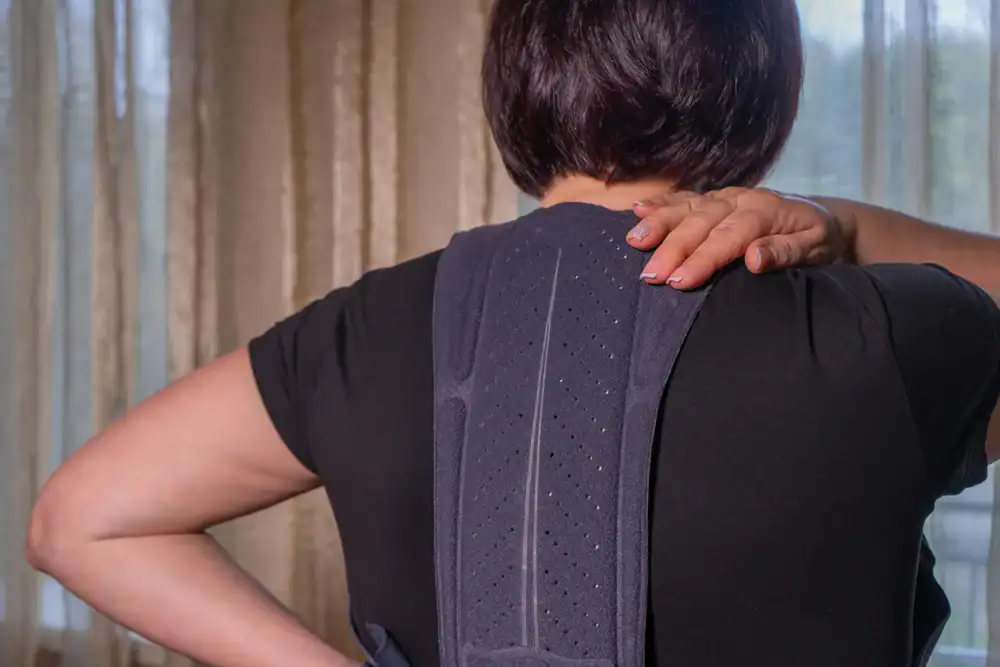
You stop reaching for pain relievers every afternoon. Your shoulders don’t ache after an hour at your desk. That tension headache that shows up like clockwork? Gone.
When you fix forward head posture in Downtown Jersey City, NJ, you’re not just standing straighter. You’re removing the constant strain on your neck that makes your head feel like it weighs 50 pounds instead of 12.
Your body stops compensating. Your muscles stop overworking. You get through your workday without that burning sensation between your shoulder blades. You look up from your phone without wincing. You sleep better because your neck isn’t locked in the same forward position it’s been stuck in all day.
This is what happens when posture correction addresses the actual misalignment—not just the symptoms.
Dr. Paul Roses has been treating posture-related problems since 1981. That’s over 40 years of working with office workers, remote employees, and anyone else whose job keeps them hunched over a screen.
He’s seen what happens when text neck symptoms go untreated in Downtown Jersey City, NJ—and he’s built our practice around stopping that progression before it becomes permanent. Our approach combines advanced spinal imaging, personalized adjustments, and exercises you can do at home to reinforce what happens in the office.
You’re not getting a one-size-fits-all adjustment. You’re getting a treatment plan based on where your spine actually is versus where it should be. That’s the difference between temporary relief and lasting correction.
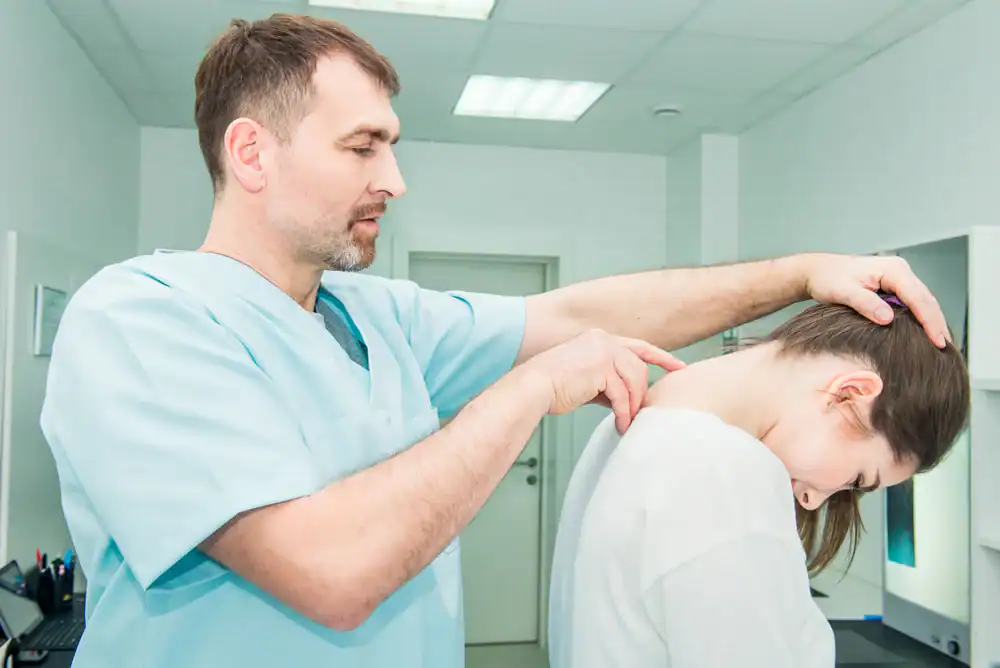
First, you get a baseline. Dr. Roses uses Titron Infrared Imaging to see exactly where your spine is misaligned. It takes seconds and shows what’s actually happening beneath your symptoms.
Then you get a plan. Based on your imaging and exam, Dr. Roses maps out the adjustments needed to realign your spine and the exercises that’ll help keep it there. These aren’t generic stretches—they’re specific to your posture problem.
Treatment starts with spinal adjustments that address the root misalignment causing your forward head posture or rounded shoulders in Downtown Jersey City, NJ. Each adjustment is designed to restore proper alignment and take pressure off the nerves being compressed by your posture.
Between visits, you do the exercises. They’re simple enough to do at home but targeted enough to make a real difference. Most patients notice improvement within the first few visits—less pain, better range of motion, easier movement throughout the day.

Ready to get started?
You get a full spinal and postural screening that reveals what’s causing your pain. You get advanced imaging that shows the degree of misalignment. You get adjustments using techniques that weren’t available even a decade ago.
But here’s what matters more: you get a plan you can follow. Dr. Roses doesn’t just adjust your spine and send you on your way. We show you the activities that are making your posture worse and what to do instead.
If you’re working from home in Downtown Jersey City, NJ with a laptop on your kitchen table, that setup is destroying your posture. If you’re spending hours on your phone with your head tilted down, you’re adding 40+ pounds of pressure to your cervical spine. Upper crossed syndrome stretches help, but they’re not enough if you’re still sitting in positions that undo the progress.
You leave each visit knowing what to do, what to avoid, and why it matters. That’s how posture correction becomes permanent instead of temporary.

It depends on how long you’ve had it and how severe the misalignment is. Some patients feel noticeably better after three adjustments. Others need several weeks of consistent treatment to see lasting change.
Forward head posture doesn’t develop overnight. If you’ve been sitting at a desk for years or staring down at your phone for hours a day, your spine has adapted to that position. Correcting it takes time because you’re retraining muscles, realigning joints, and reversing patterns your body has learned.
The good news? You don’t have to wait until you’re “fully corrected” to feel better. Most people notice less pain and better mobility within the first few visits. The timeline just depends on your starting point and how consistently you follow the treatment plan.
Neck pain is the big one. It usually starts as stiffness at the end of the day and progresses to constant discomfort. Headaches are next—especially the kind that start at the base of your skull and radiate forward.
Shoulder pain and upper back tension are also common with text neck in Downtown Jersey City, NJ. Your shoulders round forward to compensate for your head being out of alignment, which overworks the muscles in your upper back. That’s where the burning sensation between your shoulder blades comes from.
Some people also experience tingling or numbness in their arms and hands. That happens when the nerves in your neck get compressed by the misalignment. It’s not carpal tunnel—it’s your posture putting pressure on the wrong spots. Fixing the alignment usually resolves the tingling.
Yes. Most cases of rounded shoulders respond well to chiropractic care and targeted exercises. Surgery is rarely necessary unless there’s structural damage that can’t be corrected through alignment.
Rounded shoulders happen when your chest muscles get tight and your upper back muscles get weak. Your shoulders pull forward, your upper back curves, and your head follows. Correcting it means adjusting the spine, stretching what’s tight, and strengthening what’s weak.
Rounded shoulders correction exercises in Downtown Jersey City, NJ work best when they’re paired with adjustments. The exercises help, but if your spine is still misaligned, you’re fighting an uphill battle. Adjustments restore proper alignment so the exercises can actually do their job. Most patients see improvement within weeks, not months.
Upper crossed syndrome is a postural pattern where your shoulders round forward, your upper back curves excessively, and your head juts out in front of your body. It’s called “crossed” because of the muscle imbalances—tight chest and neck muscles cross with weak upper back and neck stabilizers.
If you spend most of your day at a computer, there’s a good chance you have some degree of it. The telltale signs are visible: rounded shoulders, a hunched upper back, and forward head posture. The symptoms are what bring people in—neck pain, shoulder tension, headaches, and restricted range of motion.
Upper crossed syndrome stretches help address the tight muscles, but you also need to strengthen the weak ones and correct the spinal misalignment that’s holding the pattern in place. That’s where chiropractic care comes in. We treat this exact pattern regularly in Downtown Jersey City, NJ, and the treatment plan is straightforward: adjust, stretch, strengthen, repeat.
Many insurance plans cover chiropractic care, including treatment for posture-related problems. Coverage varies depending on your specific plan, so it’s worth calling your insurance company to ask about chiropractic benefits.
Some plans cover a set number of visits per year. Others require a copay per visit. A few cover the initial exam and X-rays but not ongoing adjustments. It depends entirely on what you’re paying for.
If your plan doesn’t cover chiropractic or you don’t have insurance, Dr. Roses can discuss payment options during your first visit. The goal is to make posture correction in Downtown Jersey City, NJ accessible, not to create another financial stressor. Most people find that investing in fixing the problem now costs less than managing the pain indefinitely.
The pattern usually tells you. If your neck pain gets worse as the day goes on, especially after sitting or looking at screens, posture is likely the culprit. If it’s worse in the morning or doesn’t change based on activity, something else might be going on.
Posture-related neck pain typically improves with movement and worsens with prolonged static positions. It’s often accompanied by shoulder tension, upper back discomfort, and headaches that start at the base of your skull. You might also notice it’s worse on days when you’re at your desk longer or spent more time on your phone.
The only way to know for sure is to get evaluated. Dr. Roses can assess your posture, check your spinal alignment, and determine whether your pain is coming from text neck, forward head posture, or something else entirely. From there, you get a clear answer and a plan to fix it—not just guesses and generic advice.