

Hear from Our Customers
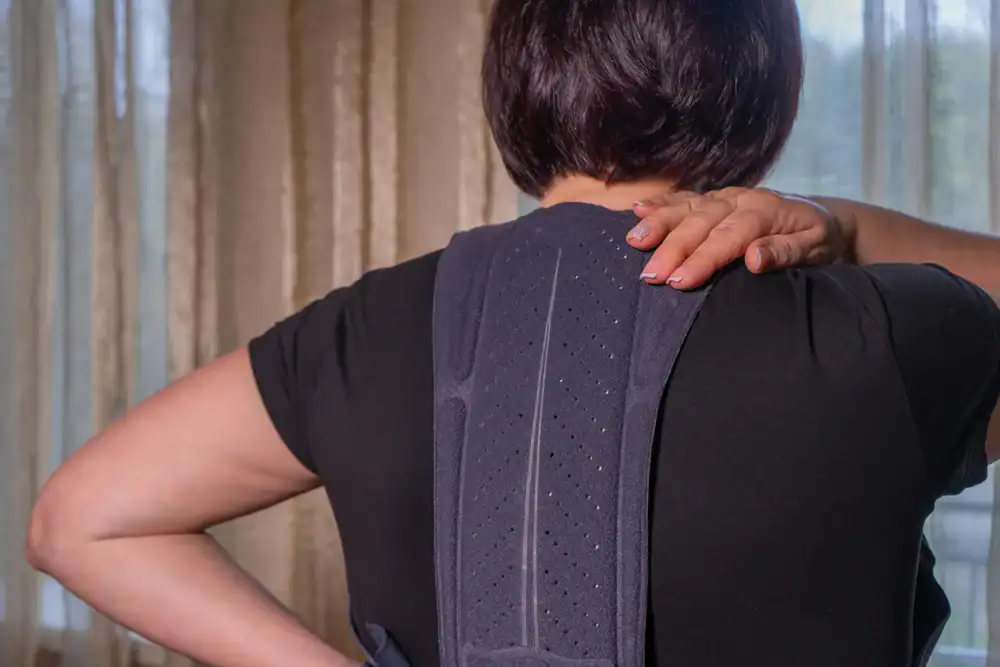
You stop reaching for pain meds every afternoon. Your shoulders drop away from your ears. That constant tension headache finally lets up.
When you fix forward head posture in Croxton, NJ, you’re not just standing straighter—you’re removing the mechanical stress that’s been grinding down your neck and upper back for years. Every inch your head sits forward adds 10 pounds of pressure on your spine. Reverse that, and your body stops fighting itself.
You’ll notice it first in how you feel at your desk. Then in how your clothes fit across your shoulders. Then in the fact that you’re not constantly rubbing the base of your skull or rolling your neck to find relief. That’s what happens when the structure underneath gets corrected, not just stretched or massaged temporarily.
Dr. Paul Roses has spent over 30 years helping people in Croxton, NJ undo the postural damage that comes with professional work. He’s not interested in quick fixes or temporary relief—he’s focused on spinal correction that actually holds.
Croxton has one of the highest concentrations of executive and management professionals in the country. That means long hours, high stress, and a lot of people dealing with text neck symptoms and treatment needs they didn’t even know had a name. We understand that world because we’ve been working in it since before smartphones made the problem exponentially worse.
Our approach is straightforward: identify the misalignment, correct it with precise adjustments, and give you the tools to maintain it. No gimmicks. No upselling. Just chiropractic care that works because it addresses the root cause.
First, we assess where your spine has shifted out of alignment. Dr. Roses uses Titron Infrared Imaging to get a baseline—it’s painless, takes seconds, and shows exactly where the problems are. No guessing.
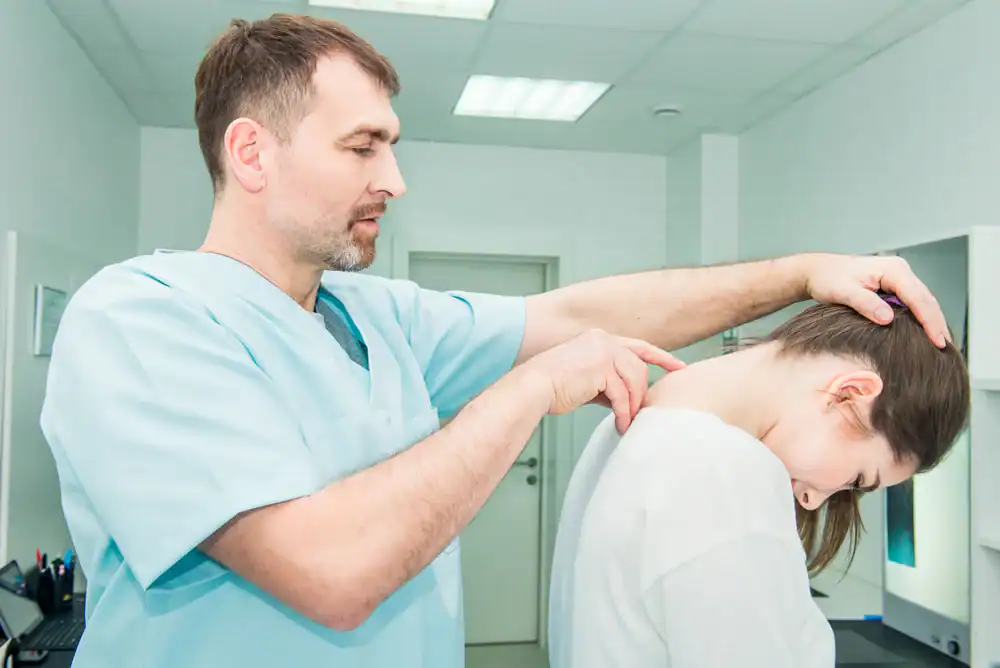
Then comes the correction. Using hands-on adjustments, Dr. Roses realigns the vertebrae that have shifted forward, rotated, or compressed over time. This isn’t about cracking your back and sending you home. It’s about restoring the natural curves in your cervical and thoracic spine so your head sits where it’s supposed to and your shoulders can actually relax.
You’ll also get a customized exercise program designed specifically for your posture issues—whether that’s rounded shoulders correction exercises, upper crossed syndrome stretches, or movements to reinforce proper head position. These aren’t generic stretches you could find online. They’re targeted to your specific misalignments and designed to make your adjustments hold longer.
Most people feel a difference within the first few visits. One patient was walking normally after just three adjustments. But real correction takes consistency—your posture didn’t break overnight, and it won’t fully rebuild in one session either.

Ready to get started?
You get a full postural and spinal assessment using advanced imaging technology. You get hands-on chiropractic adjustments that target the exact vertebrae causing your forward head posture, rounded shoulders, or upper back pain. And you get a personalized exercise plan to strengthen the muscles that support proper alignment.
Dr. Roses also provides lifestyle coaching—because how you sit, how you work, and how you use your phone all matter. If you’re spending 8 hours a day in Croxton’s corporate offices staring at a screen, those habits will undo your progress unless you learn how to modify them. That’s part of the care here.
This isn’t a one-size-fits-all program. If you’re dealing with tech neck from years of smartphone use, your treatment plan will look different than someone with upper crossed syndrome from poor gym form. The goal is the same—restore natural spinal alignment and eliminate pain—but the path is tailored to what your body actually needs.
Croxton has a dense, fast-paced professional population. You don’t have time for treatments that don’t work. This is efficient, evidence-based care that respects your schedule and actually delivers results you can feel.

It depends on how long you’ve had it and how severe the misalignment is. Some people notice improvement within a few visits—less tension, better range of motion, fewer headaches. But full correction usually takes weeks to months of consistent care.
Your spine has been sitting in that forward position for years, maybe decades. The muscles have adapted, the ligaments have stretched, and the vertebrae have shifted. Reversing that takes time and repetition. Dr. Roses will give you a realistic timeline after your initial assessment based on what he sees in your imaging and exam.
The good news is that progress is usually noticeable early on. You’ll feel less strain at your desk. Your neck won’t feel as stiff when you wake up. Those are signs the corrections are starting to hold. Stick with the plan, do your exercises, and the results compound.
Text neck shows up as stiffness in your neck, pain between your shoulder blades, headaches that start at the base of your skull, and that constant feeling that you need to stretch or crack your neck for relief. Some people also get tingling in their hands or arms if the nerve compression is bad enough.
It’s caused by looking down at your phone or laptop for extended periods. Your cervical spine is in flexion, your head is forward, and the muscles in the front of your neck get tight while the ones in the back get overstretched and weak. Over time, this creates structural changes that don’t just go away with stretching.
Chiropractic works because it corrects the underlying spinal misalignment causing those symptoms. Dr. Roses adjusts the cervical vertebrae back into proper position, which takes pressure off the nerves and muscles. Then he gives you exercises to retrain the muscles so your head stays in the right position. It’s not a Band-Aid—it’s a fix.
Yes. Most cases of rounded shoulders are postural, not structural—meaning they’re caused by muscle imbalances and spinal misalignments, not bone deformities. That means they respond well to chiropractic adjustments and corrective exercises.
Rounded shoulders usually happen when your thoracic spine develops too much forward curve (kyphosis) and your shoulder blades rotate forward and down. This is common in people who sit at desks all day or do a lot of chest-focused training without balancing it with upper back work. The muscles in your chest get tight, the muscles in your upper back get weak, and your posture collapses forward.
Dr. Roses addresses this by adjusting the thoracic spine to reduce the excessive curve, then prescribing specific rounded shoulders correction exercises to strengthen your rhomboids, lower traps, and posterior deltoids. These muscles pull your shoulders back and hold them there. Combined with stretches for your pecs and front delts, this approach reverses the imbalance and restores normal shoulder position. No surgery needed.
Upper crossed syndrome is a postural pattern where certain muscles get tight and others get weak, creating an “X” shape of dysfunction across your upper body. Your upper traps and pecs are tight. Your deep neck flexors and lower traps are weak. The result is forward head posture, rounded shoulders, and a lot of neck and shoulder pain.
It’s extremely common in Croxton’s professional population because it’s directly caused by prolonged sitting, computer work, and looking down at screens. Your body adapts to the positions you spend the most time in, and if that’s hunched over a keyboard, this is what happens.
Treatment involves two things: adjusting the spine to correct the misalignments in your cervical and thoracic regions, and retraining the muscles with upper crossed syndrome stretches and strengthening exercises. Dr. Roses will stretch your tight upper traps and pecs, then strengthen your weak neck flexors and scapular stabilizers. This rebalances the system so your posture can actually hold in the correct position. It’s not a quick fix, but it’s a permanent one if you stay consistent.
Regular chiropractic adjustments focus on relieving pain and restoring joint mobility. Posture correction goes a step further—it’s about reshaping the curves in your spine and retraining your body to hold proper alignment long-term.
When you come in for posture correction in Croxton, NJ, Dr. Roses isn’t just adjusting wherever you feel tight or sore. He’s looking at the overall structure of your spine—where your head sits relative to your shoulders, how much curve you have in your neck and upper back, whether your shoulders are level. Then he’s making specific corrections designed to restore those natural curves and positions.
You also get exercises and ergonomic coaching, which you don’t always get with standard adjustments. That’s because posture correction requires you to actively participate in the process. Dr. Roses can realign your spine in the office, but if you go back to the same desk setup and the same habits, it won’t hold. The combination of adjustments, exercises, and lifestyle changes is what makes posture correction effective and lasting.
It depends on your plan. Many insurance policies cover chiropractic care, especially when it’s being used to treat diagnosed conditions like cervical misalignment, thoracic kyphosis, or chronic neck and back pain. Posture correction falls under that umbrella when it’s medically necessary.
Our office can verify your benefits and let you know what’s covered before you start treatment. Some plans cover a certain number of visits per year. Others require a referral or have a copay. If your plan doesn’t cover chiropractic, we can discuss cash payment options.
What matters most is whether the treatment works, not just whether insurance pays for it. A lot of people in Croxton have tried physical therapy, massage, or pain management with minimal results. Posture correction through chiropractic addresses the structural cause of the problem, which is why it tends to work when other approaches don’t. If you’re tired of temporary relief and want actual correction, it’s worth the investment.