
Hear from Our Customers

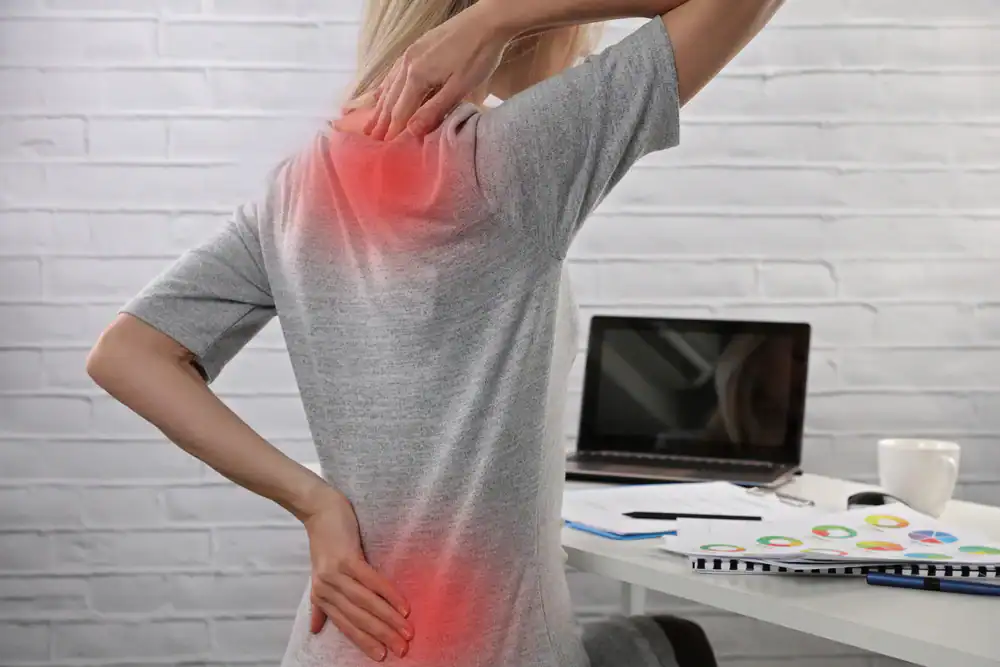
You stop limping to your car. You bend down without wincing. You sleep through the night instead of waking up every time you shift positions.
Non-surgical spinal decompression therapy in Pavonia, NJ works by gently stretching your spine to relieve pressure on compressed discs and pinched nerves. That pressure is what’s causing your pain, numbness, or shooting sensations down your leg.
When that pressure lifts, your body can actually heal. Blood flow increases. Nutrients reach damaged tissue. Inflammation drops. You start getting back to normal—not because we’re hiding the pain, but because we’re addressing what’s causing it.
Most people notice a difference within the first few sessions. Not just less pain, but better movement. More energy. The ability to do things they’ve been avoiding for months or years.
Dr. Paul Roses has been practicing chiropractic care since 1981. That’s four decades of helping people in Hudson County get out of pain without drugs or surgery.
We’re located right in Bayonne, just minutes from Pavonia. We’ve worked with patients who’ve tried everything—other chiropractors, pain management doctors, epidural injections—and still weren’t getting better.
Our approach is different. We use advanced spinal traction technology combined with corrective exercises designed specifically for your condition. No cookie-cutter treatment plans. No pushing you toward unnecessary procedures. Just focused care that gets results.
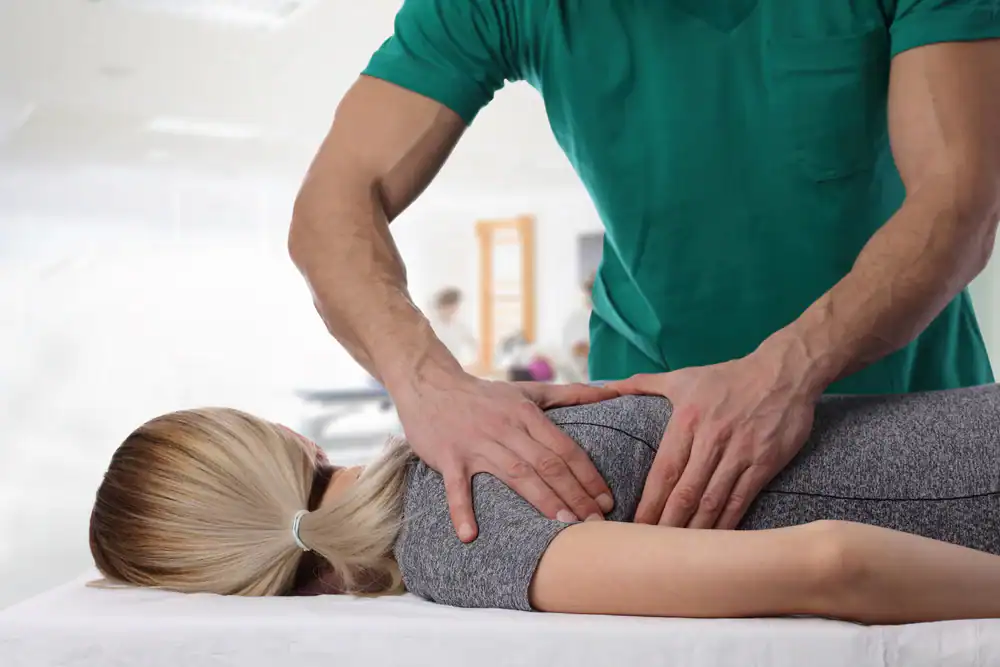
First, we assess your spine using Titron Infrared Imaging. It’s painless, takes seconds, and shows us exactly where the problem is. No guessing.
Then we create a treatment plan based on your specific condition—whether that’s a herniated disc, sciatica, degenerative disc disease, or spinal stenosis. Mechanical spinal traction benefits in Pavonia, NJ come from precision, not generic protocols.
During each session, you’re positioned on a specialized table that gently stretches your spine. This creates negative pressure inside the discs, which pulls herniated material back into place and increases circulation to the area. Sessions typically last 20-30 minutes.
Between visits, you’ll do targeted exercises we teach you. These strengthen the muscles supporting your spine and help lock in the progress you’re making. Most patients need 15-20 sessions over several weeks, but you’ll likely feel improvement much sooner than that.
Ready to get started?
Lumbar traction for sciatica in Pavonia, NJ targets the lower back—the area where most herniated discs and nerve compression happen. If you’ve got shooting pain down your leg, numbness in your foot, or weakness when you walk, this is built for that.
Cervical traction for neck pain in Pavonia, NJ works the same way, but for your upper spine. If you’re dealing with headaches, shoulder pain, or tingling in your arms, we address the nerve compression in your neck.
Both approaches use controlled, gentle force to decompress your spine. Studies show success rates between 71-89% for pain relief and improved mobility. That’s comparable to surgery—but without the risks, the recovery time, or the $50,000 price tag.
You’re not just getting temporary relief. You’re getting a treatment that addresses the root cause so your body can heal properly. And you’re working with someone who’s been doing this since 1981, not a rotating staff or a franchise model.
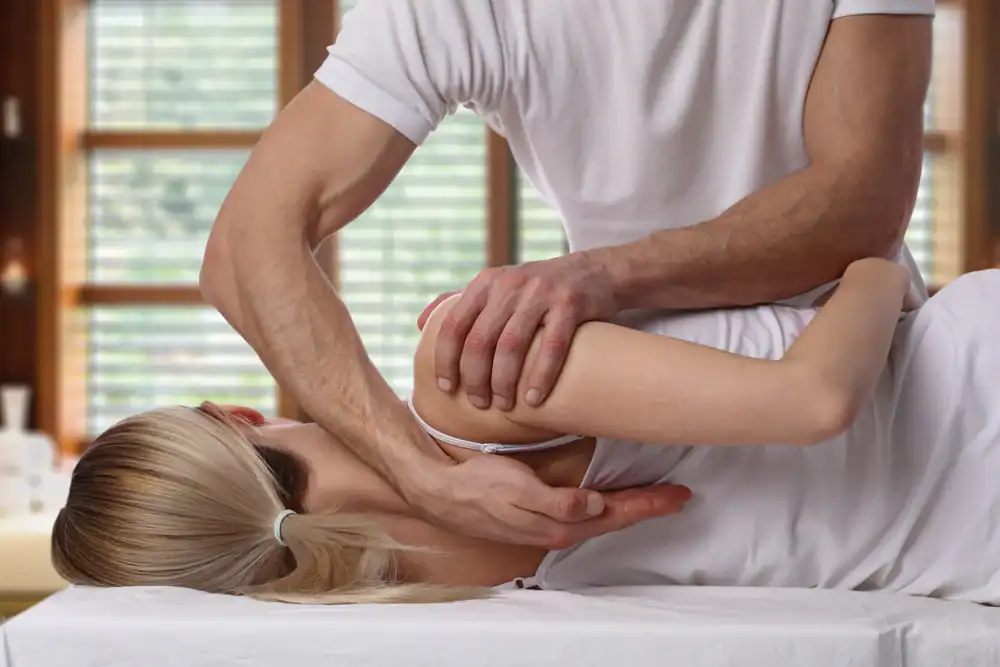
Regular chiropractic adjustments realign your spine, which is helpful. But spinal traction goes further by creating space between your vertebrae and decompressing the discs themselves.
If you’ve got a herniated disc or pinched nerve, adjustments alone might not be enough. Traction pulls the herniated material back where it belongs and takes pressure off the nerve. That’s why people who didn’t improve with standard chiropractic care often see results with traction.
We combine both approaches. You get the alignment correction and the decompression. That’s what makes the difference for stubborn cases—the ones where you’ve already tried other treatments and they didn’t work.
Most people don’t. The success rate for non-surgical spinal decompression is 71-89%, which is actually in line with surgical outcomes—but without the infection risk, the 10-20% failure rate, or the 3-12 month recovery.
Surgery is usually only necessary if there’s severe structural damage or if conservative treatment has truly been exhausted. And even then, getting traction first can improve your surgical outcome if you do eventually need it.
The reality is that most herniated discs, even the ones causing serious pain, can heal without surgery if you give them the right environment. Traction creates that environment. We’ve worked with patients who were scheduled for surgery and cancelled it after a few weeks of treatment because they didn’t need it anymore.
Most people notice some improvement within the first 3-5 sessions. That doesn’t mean you’re fully healed—it means the pressure is starting to come off and your body is responding.
Full recovery usually takes 15-20 sessions over 6-8 weeks, depending on how severe your condition is and how long you’ve had it. Someone with a fresh injury will heal faster than someone who’s been dealing with chronic pain for years.
But here’s what matters: you’re not waiting months to see if it’s working. You’ll know pretty quickly whether your body is responding. And unlike surgery, you can go right back to your normal activities between sessions. No downtime, no restrictions, no waiting around to heal.
Many insurance plans do cover spinal decompression and traction therapy, especially when it’s medically necessary for conditions like herniated discs or sciatica. We can verify your coverage before you start.
Even if your plan doesn’t cover it fully, the out-of-pocket cost is a fraction of what surgery runs—often thousands less. And you’re avoiding the indirect costs too: time off work, hiring help at home, months of physical therapy after surgery.
We’re upfront about pricing from the start. No surprises, no hidden fees. If cost is a concern, talk to us. We’d rather work with you on a payment plan than watch you suffer or rush into surgery because you think it’s your only option.
Spinal traction works for herniated discs, bulging discs, sciatica, degenerative disc disease, spinal stenosis, and pinched nerves. It’s also effective for chronic lower back pain and neck pain that hasn’t responded to other treatments.
If your pain is caused by compression—meaning something is pressing on a nerve or a disc is out of place—traction can help. If it’s caused by something else, like a fracture or a tumor, traction won’t be the right fit. That’s why we do a full assessment first.
We’ve treated patients who couldn’t put on their own socks, who were walking with a limp, who tried epidural injections and still had intolerable pain. If your condition involves nerve compression or disc issues, there’s a strong chance traction will help.
Yes. In fact, spinal traction is often a better option for older adults because surgery carries higher risks after age 70—anesthesia complications, longer recovery, higher infection rates.
Traction is non-invasive and doesn’t put stress on your cardiovascular system. We adjust the treatment intensity based on your age, bone density, and overall health. It’s gentle enough for seniors but still effective.
We’ve worked with patients in their 70s and 80s who got significant relief and avoided surgery entirely. Age isn’t the issue—your specific condition is. As long as your spine can tolerate gentle stretching, which most people’s can, traction is a safe and effective option.