
Hear from Our Customers

You’ve probably tried everything. Rest didn’t work. Physical therapy helped a little, then plateaued. Pain meds just mask it. And now someone’s mentioned surgery, which sounds expensive, risky, and honestly terrifying.
Here’s what most people don’t know: spinal traction in Our Lady of Mercy, NJ uses computerized technology to gently stretch your spine and create negative pressure inside the discs. That pressure change pulls herniated or bulging material back where it belongs, taking pressure off the nerves that have been screaming at you for months.
The result? Many people feel relief during their first session. Not everyone, but enough that it’s worth understanding how it works. Over a series of treatments, you’re giving your body the space it needs to actually heal instead of just coping with the damage.
Dr. Paul Roses has been practicing in Hudson County since 1981. That’s over 30 years of adjustments, consultations, and real conversations with people whose backs have given out on them.
He’s not new to this. He treated first responders after 9/11. He’s worked with everyone from construction workers to office employees in Our Lady of Mercy, NJ dealing with the same disc issues, the same sciatic pain shooting down their legs, the same fear that this might be permanent.
His approach is straightforward: your body can heal itself when it’s properly aligned and given the right conditions. Spinal traction creates those conditions without drugs you don’t want to take or surgeries you’re trying to avoid.
You stay fully clothed. That’s the first thing people ask, so let’s get it out of the way.
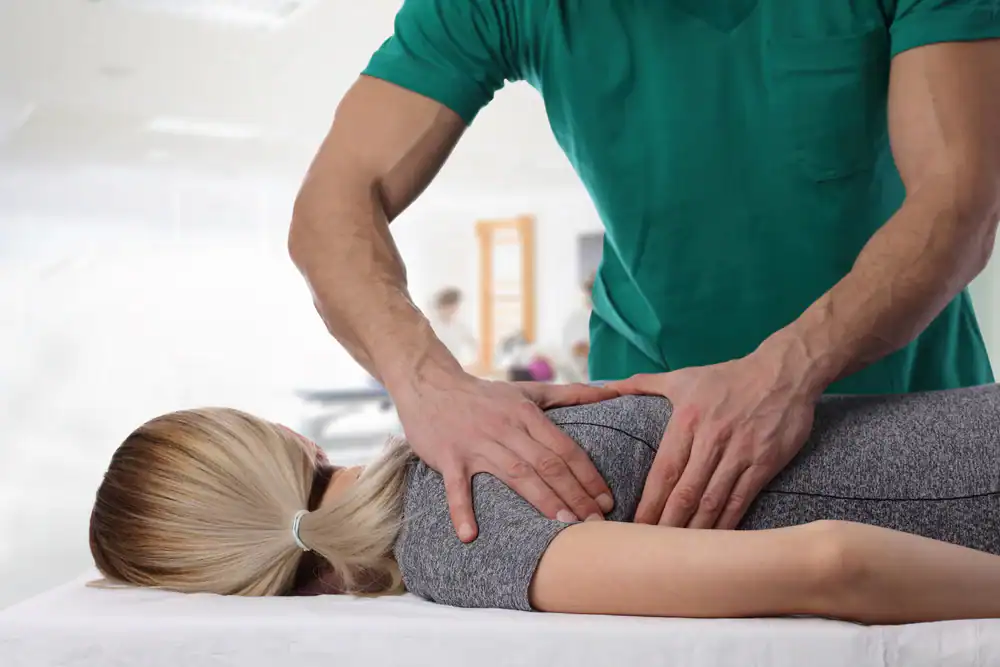
You’ll lie on a specialized table while Dr. Roses operates a computer-controlled system that applies gentle, targeted traction to your spine. The machine slowly stretches specific segments, creating that negative pressure inside your discs. You’re not being yanked or twisted—it’s controlled, gradual, and most people find it surprisingly comfortable.
Each session lasts up to 45 minutes. During that time, the traction cycles on and off, giving your spine the decompression it needs while preventing muscle guarding that can happen if the stretch is constant.
Depending on your condition, Dr. Roses might combine your traction session with massage therapy, ultrasound, or a chiropractic adjustment. The goal is addressing the root cause, not just your symptoms. Most treatment plans involve multiple sessions over several weeks because real healing takes time.
Ready to get started?
Spinal traction in Our Lady of Mercy, NJ works particularly well for herniated discs, bulging discs, degenerative disc disease, sciatica, and pinched nerves. If you’ve got shooting pain down your leg, numbness in your feet, or chronic lower back pain that won’t respond to anything else, you’re exactly who this treatment was designed for.
Here’s what matters for Our Lady of Mercy residents: you’re part of a community where 28% of adults report chronic lower back or sciatic pain. You’re not alone in this. The median age here is 36, which means you’re likely dealing with work-related strain, lifting injuries, or the cumulative damage of sitting at a desk for years.
We also offer cervical traction for neck pain in Our Lady of Mercy, NJ to address similar issues in your upper spine. Neck pain, arm numbness, headaches that start at the base of your skull—these often come from compressed cervical discs, and traction can provide the same decompression benefits.
Research shows that 92% of patients in one study of 778 cases showed improvement with spinal decompression. That’s not a guarantee, but it’s a hell of a lot better than doing nothing or jumping straight to surgery.
Physical therapy focuses on strengthening muscles, improving flexibility, and teaching you exercises to manage pain. That’s valuable, but it doesn’t directly address disc problems.
Spinal traction uses mechanical force to create space between your vertebrae and change the pressure inside your discs. It’s targeting the structural issue—the herniation, the bulge, the compression—not just the surrounding muscles. Think of it this way: PT teaches your body to work around the problem. Traction addresses the problem itself.
Many people do both. You might get traction to relieve the immediate disc issue, then do PT to strengthen your core so it doesn’t happen again. They’re complementary, not competing approaches.
Most people don’t find it painful. You’ll feel a stretching sensation, similar to a good stretch you might do on your own, but controlled and sustained. Some people fall asleep during treatment because it’s actually relaxing once your body stops fighting it.
As for immediate results—some people walk out of their first session feeling noticeably better. Others need a few sessions before they notice a difference. It depends on how severe your condition is, how long you’ve had it, and how your body responds to decompression.
What you shouldn’t expect is a miracle cure in one visit. Real disc healing takes time. But if you’re going to feel relief, you’ll usually know within the first few sessions whether this approach is working for you.
There’s no one-size-fits-all answer, but most treatment plans run between 12 and 20 sessions over four to six weeks. That’s based on clinical research showing that consistent, repeated decompression gives your discs the best chance to heal.
Dr. Roses will assess your specific condition during your initial consultation and give you a realistic timeline. If you’ve got a minor bulge that’s recent, you might need fewer sessions. If you’re dealing with multiple herniated discs and years of degeneration, you’ll likely need more.
The key is consistency. Skipping sessions or spacing them too far apart reduces effectiveness because your discs need regular decompression to maintain the healing environment. Think of it like physical therapy—you wouldn’t expect results from going once a month.
Most insurance policies include chiropractic benefits, and spinal traction often falls under that coverage. But every plan is different, so you’ll need to check your specific policy or call your insurance company.
We can verify your benefits before you start treatment so you know what you’re looking at cost-wise. Some plans cover the full treatment, others cover a portion, and some have visit limits per year.
Even if you’re paying out of pocket, compare the cost to surgery. A surgical consultation, the procedure itself, anesthesia, hospital stay, and recovery time can easily run into tens of thousands of dollars. Spinal traction is a fraction of that cost and doesn’t come with surgical risks or months of recovery.
Yes, if your sciatica is caused by a herniated or bulging disc pressing on your sciatic nerve. That’s the most common cause, and it’s exactly what lumbar traction for sciatica in Our Lady of Mercy, NJ is designed to treat.
When the disc material pushes back into place and pressure comes off that nerve, the shooting pain, numbness, and tingling in your leg often improve dramatically. Some people notice the leg pain decreasing before their back pain does, which makes sense—you’re removing the nerve irritation.
If your sciatica is caused by something else, like piriformis syndrome or spinal stenosis, traction might not be the right approach. That’s why the initial evaluation matters. Dr. Roses needs to understand what’s actually causing your symptoms before recommending treatment.
Don’t immediately go lift heavy boxes or do yard work. Your spine just got decompressed, and you want to give it time to stabilize in that new position.
Most people can return to normal activities right away, but avoid heavy lifting or strenuous exercise for a few hours after treatment. Drink plenty of water—decompression increases circulation to your discs, and hydration supports that healing process.
You might feel sore the next day, similar to post-workout soreness. That’s normal and usually means your body is responding to the treatment. If you have sharp pain or your symptoms get significantly worse, call our office. But for most people, any mild discomfort fades within a day or two, and each session gets easier as your body adapts.