
Hear from Our Customers

You sleep through the night without waking up to reposition. You sit through meetings or drive to work without that constant ache reminding you it’s there. You pick up your kids or grandkids without second-guessing whether your back can handle it.
That’s what happens when spinal traction in Meadowlands, NJ actually works. Studies show that 71-89% of patients experience significant pain relief and improved mobility with non-surgical spinal decompression therapy. We’re talking about real, measurable changes confirmed by MRI scans showing disc healing.
This isn’t about masking symptoms with another pill or pushing through the pain. Mechanical spinal traction benefits your spine by creating negative pressure that allows herniated or bulging discs to retract, takes pressure off pinched nerves, and promotes actual healing by improving nutrient flow to damaged areas. You’re addressing the root cause, not just managing discomfort.
For people in Meadowlands dealing with sciatica, herniated discs, degenerative disc disease, or chronic neck pain, this treatment offers what surgery promises but without the risks, recovery time, or potential complications. You’re looking at short sessions, minimal downtime, and the ability to return to normal activities while you heal.
We serve the Meadowlands area with state-of-the-art spinal decompression technology and treatment protocols based on clinical research, not guesswork. Dr. Paul Roses brings evidence-based chiropractic care to a community where commutes are long, desk jobs are common, and people need solutions that fit into demanding schedules.
You’re not getting cookie-cutter adjustments or vague promises. You’re getting computerized spinal traction that monitors your body’s response hundreds of times per second and automatically adjusts to prevent muscle guarding and maximize decompression. This is the kind of advanced treatment that wasn’t available even a decade ago.
We understand that people in Meadowlands, NJ can’t afford weeks of recovery or multiple failed attempts at pain relief. That’s why our approach focuses on proven techniques with documented success rates and treatment plans designed around your specific condition and timeline.
Your first visit involves a thorough evaluation to determine if you’re a candidate for spinal traction. We look at your history, symptoms, and any imaging you already have. Not everyone needs this treatment, and we’ll tell you straight if something else makes more sense for your situation.
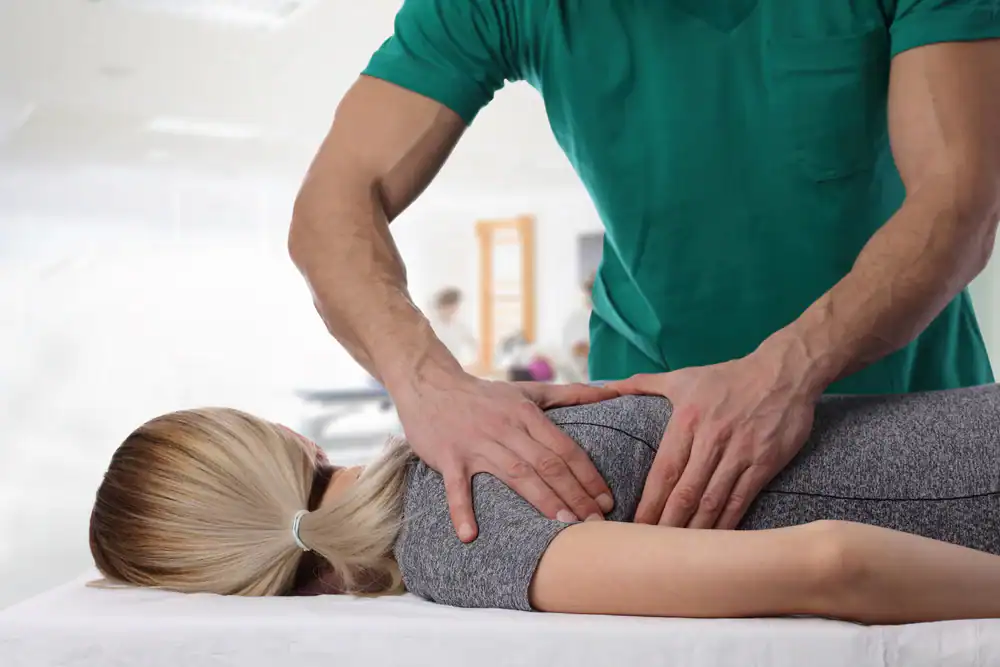
If spinal decompression is right for you, treatment sessions typically last 15-20 minutes. You lie comfortably on a specialized table while the computerized system applies gentle, controlled traction to your spine. For lumbar traction for sciatica in Meadowlands, NJ, this targets your lower back. For neck issues, cervical traction for neck pain in Meadowlands, NJ focuses on your upper spine.
The system creates negative pressure between your vertebrae, which allows bulging or herniated disc material to retract and takes pressure off compressed nerves. You’ll feel a gentle pulling sensation, but it shouldn’t hurt. Most people find it relaxing.
Treatment plans usually involve multiple sessions over several weeks. You might notice improvement after just a few visits, but real healing takes time. We track your progress and adjust the protocol based on how your body responds. Many patients report significant pain reduction within 6-8 weeks, with improvements continuing as the disc tissue heals and inflammation decreases.
Ready to get started?
Spinal traction in Meadowlands, NJ effectively treats herniated discs, bulging discs, degenerative disc disease, sciatica, pinched nerves, spinal stenosis, and chronic neck or back pain that hasn’t responded to other conservative treatments. If you’ve been told surgery is your only option, or if you’re trying to avoid that route, this is worth exploring.
The Meadowlands area has a high concentration of office workers, commuters, and people whose daily routines involve prolonged sitting or repetitive strain. Nearly 27% of people deal with low back pain at any given time, and it’s the leading cause of missed work for adults under 40. You’re not alone in this, and you’re not stuck with only two options (live with it or go under the knife).
What makes this treatment different is the technology. Advanced sensors monitor muscle tension in real-time and adjust the decompression force automatically. This prevents your muscles from fighting the traction, which is what often limits the effectiveness of older traction methods. You get deeper decompression, better disc rehydration, and faster results.
Clinical studies show average pain scores dropping from 6.0 to 1.8 for cervical cases and 6.6 to 2.3 for lumbar cases. Those aren’t minor improvements. That’s the difference between constant suffering and getting back to your life.
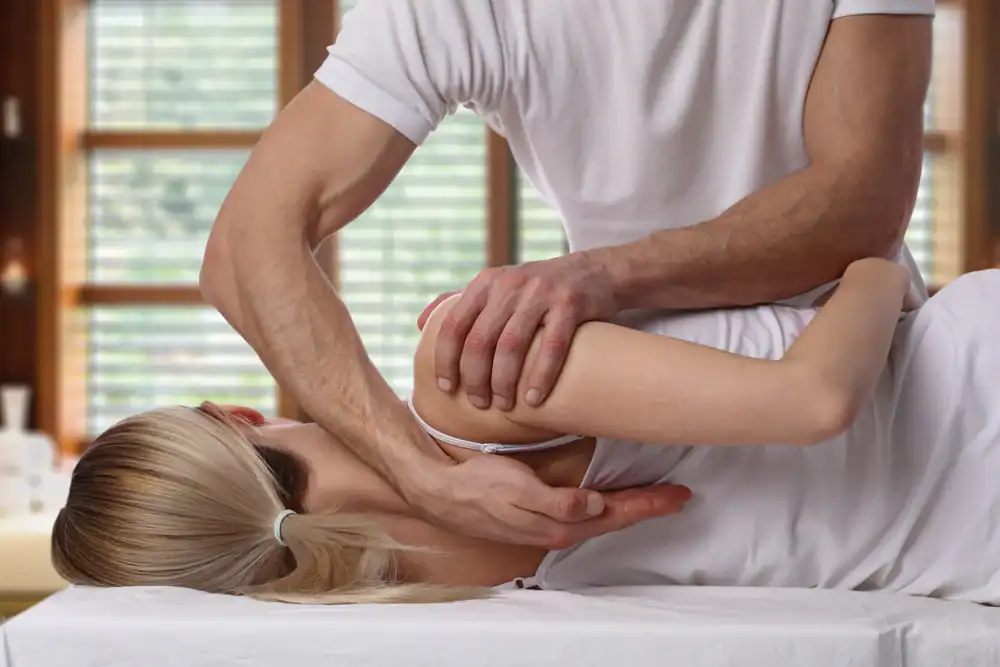
Chiropractic adjustments realign vertebrae and restore joint mobility through quick, controlled movements. Spinal decompression uses sustained, computer-controlled traction to create negative pressure inside your spinal discs. Think of it this way: adjustments fix alignment issues, while decompression addresses disc problems.
If you have a herniated disc, bulging disc, or degenerative disc disease, the issue isn’t just that your spine is out of alignment. The disc itself is damaged, compressed, or pushing into spaces where it shouldn’t be. Decompression creates the space and conditions needed for that disc material to retract and for healing to occur.
Many patients benefit from both treatments. We use spinal traction to address the disc pathology and adjustments to maintain proper alignment and mobility. They work together, but they’re solving different problems.
Non-surgical spinal decompression therapy in Meadowlands, NJ is extremely safe when performed correctly with modern equipment. The computerized systems we use monitor your body’s response continuously and adjust in real-time to prevent muscle guarding or excessive force. You’re in control—if anything feels uncomfortable, you can stop the session immediately.
Most people describe the sensation as a gentle pulling or stretching. It shouldn’t hurt. If you experience pain during treatment, that’s a sign something needs to be adjusted, and we’ll modify the protocol. Some patients feel mild soreness afterward, similar to what you might feel after stretching muscles that haven’t been used in a while, but this typically resolves quickly.
Compare this to surgery, which carries risks of infection, failed back surgery syndrome (occurs in 10-20% of cases), and months of recovery. Spinal traction gives you similar success rates (71-89% vs. 70-80% for surgery) without those risks. For older adults or people with health conditions that make surgery risky, this is often the better option.
Many patients notice some improvement within the first few sessions, but meaningful, lasting relief typically develops over 6-8 weeks of consistent treatment. This isn’t an instant fix, because you’re not just covering up symptoms—you’re allowing damaged tissue to heal.
Your discs don’t have direct blood supply, so they heal slowly. Decompression works by creating the negative pressure needed for disc retraction and improving the diffusion of nutrients into the disc tissue. That process takes time. Think of it like physical therapy for a torn muscle: you might feel better quickly, but full healing requires consistent treatment over weeks.
Treatment plans usually involve 15-20 sessions spread over several weeks. The exact timeline depends on your specific condition, how long you’ve had the problem, and how your body responds. We track your progress throughout and adjust the plan if needed. Some people get relief faster, others need more time. What matters is that the improvement is real and sustainable, not just temporary.
Coverage varies significantly by insurance provider and plan. Some insurance companies cover spinal decompression when it’s deemed medically necessary and performed by a licensed chiropractor, while others don’t. We recommend calling your insurance provider directly to ask about coverage for non-surgical spinal decompression therapy or mechanical spinal traction.
When you call, ask specifically about CPT codes related to spinal traction and decompression. Have your policy information ready and ask about your deductible, copay, and any pre-authorization requirements. Get the information in writing if possible.
Our office can provide documentation of medical necessity and work with you on insurance claims, but we can’t guarantee coverage. If your insurance doesn’t cover the treatment, we’ll discuss payment options upfront so you can make an informed decision. Many patients find that even paying out of pocket costs less than ongoing medications, repeated injections, or the long-term costs of living with chronic pain.
Yes. Lumbar traction for sciatica in Meadowlands, NJ is one of the most effective applications of this treatment. Sciatica happens when something (usually a herniated or bulging disc) compresses the sciatic nerve as it exits your spine. That compression causes the shooting pain, numbness, or tingling that radiates down your leg.
Spinal decompression creates negative pressure that allows the disc material to retract away from the nerve. As pressure on the nerve decreases, inflammation goes down and symptoms improve. Clinical research shows significant pain reduction for sciatica patients treated with decompression therapy, with many people able to return to activities they’d given up.
The key is addressing the source of the nerve compression, not just managing the leg pain. Pain medications might dull the symptoms temporarily, but they don’t fix the disc problem causing the nerve irritation. Decompression targets the actual cause. You’ll typically notice the leg pain improving before the back pain fully resolves, which is a good sign that the nerve pressure is decreasing.
Spinal decompression isn’t appropriate for everyone. You’re not a candidate if you’re pregnant, have severe osteoporosis, have certain types of spinal fractures, have spinal tumors or infections, or have had spinal fusion surgery in the area being treated. Advanced spinal instability or severe nerve damage may also rule out this treatment.
That’s why the initial evaluation is so important. We need to understand your complete medical history and see any relevant imaging before recommending decompression. If you have metal implants, previous surgeries, or other health conditions, we’ll assess whether treatment is safe and likely to be effective for your specific situation.
If you’re not a candidate for spinal traction, we’ll tell you honestly and discuss alternative approaches that might help. There’s no point in pursuing a treatment that isn’t right for your condition. Our goal is to find what actually works for you, whether that’s decompression, traditional chiropractic care, or a referral to another specialist if that’s what your situation requires.