
Hear from Our Customers

You stop planning your day around pain. That’s what happens when spinal traction takes the load off compressed discs and pinched nerves.
Non-surgical spinal decompression therapy in Liberty State Park uses controlled, motorized traction to gently stretch your spine. This creates space between vertebrae, allowing herniated or bulging discs to retract and relieving pressure on surrounding nerves. More space means less pain, less inflammation, and better nutrient flow to damaged tissue.
Most people dealing with sciatica, herniated discs, or chronic lower back pain have tried everything—medications, injections, physical therapy. Those treatments might dull the pain temporarily, but they don’t address what’s actually happening in your spine. Mechanical spinal traction benefits Liberty State Park residents because it targets the root cause: compressed discs that are pressing on nerves and limiting your movement.
You’re not just masking symptoms. You’re creating the conditions your body needs to heal itself—without surgery, without opioids, and without the risks that come with either.
Dr. Paul Roses has been practicing chiropractic care in Bayonne since 1981. That’s over 40 years of treating herniated discs, sciatica, spinal stenosis, and chronic pain in people who live and work around Liberty State Park, NJ.
He’s seen what works and what doesn’t. He’s treated commuters whose long drives wreck their lower backs, warehouse workers with lifting injuries, and office employees with neck pain from poor posture. The common thread: most wanted to avoid surgery, and most didn’t want to rely on pain medication long-term.
We use spinal traction alongside other chiropractic techniques because we’ve watched it help people get back to normal life. Our office on Avenue C is a few minutes from Liberty State Park, and we’ve built our practice on straightforward care that respects your time and your goals.
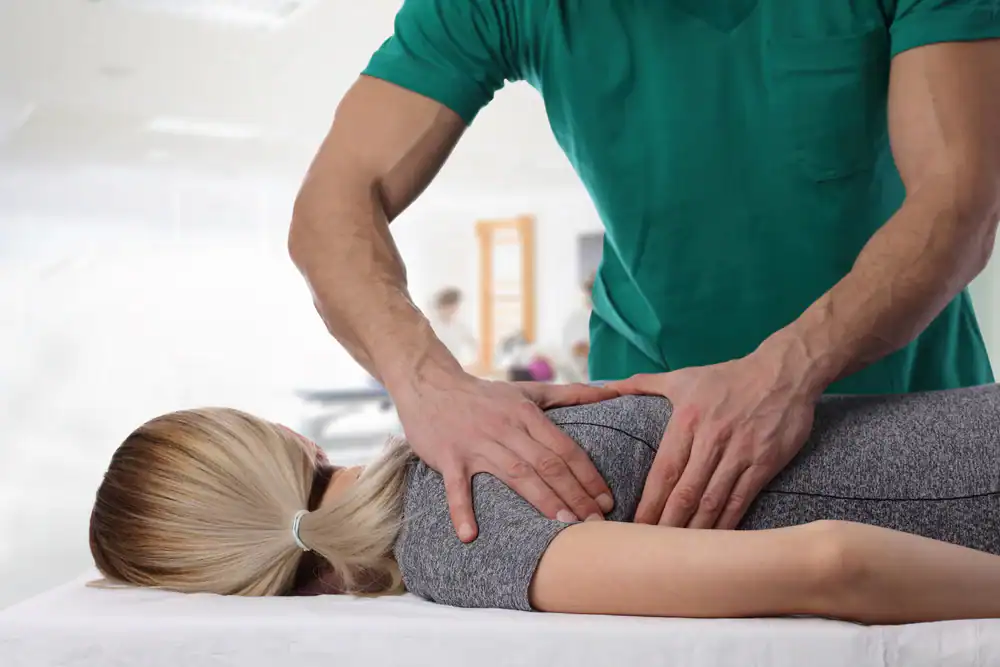
First, you’ll have a consultation and exam. Dr. Roses will review your history, assess your spine, and determine if spinal traction is appropriate for your condition. If imaging is needed, he’ll let you know. No surprises.
During the actual treatment, you lie on a specialized traction table. The table uses a computerized system to apply gentle, controlled pulling force to your spine—either your lower back for lumbar traction for sciatica in Liberty State Park or your neck for cervical traction for neck pain in Liberty State Park. The stretch is gradual and painless. Most people feel a mild pulling sensation, but nothing sharp or uncomfortable.
Sessions typically last 20 to 30 minutes. The traction creates negative pressure inside your spinal discs, which helps pull herniated material back into place and allows oxygen, water, and nutrients to flow into the damaged area. That’s how healing actually happens.
You’ll likely need multiple sessions over several weeks. Some people feel relief after just a few treatments. Others take longer depending on the severity of their condition. We’ll map out a realistic treatment plan based on what your spine needs, not what sounds good on paper.
Ready to get started?
Spinal traction works best for conditions caused by disc problems or nerve compression. That includes herniated discs, bulging discs, degenerative disc disease, sciatica, pinched nerves, and spinal stenosis. If your pain shoots down your leg, makes it hard to stand up straight, or gets worse when you sit for long periods, traction might be exactly what you need.
Liberty State Park, NJ has a large commuter population—people driving into Manhattan or sitting at desks all day. That kind of repetitive stress compresses your spine over time. Add in the 70,738 residents in the area, many between 25 and 64, and you’ve got a lot of people dealing with work-related back and neck pain. Spinal traction addresses that mechanical wear and tear directly.
We also use traction for patients who’ve been told they need surgery but want to try a conservative approach first. It’s not a guarantee, but many people avoid the operating room entirely when they give their spine a chance to decompress naturally. Even if you’ve had failed treatments before, traction offers a different mechanism of action—one that actually changes the pressure dynamics inside your discs.
You’ll also get education on posture, ergonomics, and movement patterns that contribute to your pain. The goal isn’t just to feel better for a few weeks. It’s to keep the problem from coming back.
No, spinal traction shouldn’t hurt. You’ll feel a gentle stretch in your back or neck, similar to a mild pulling sensation, but nothing sharp or painful.
The traction table is controlled by a computer that applies gradual force. Dr. Roses adjusts the settings based on your tolerance and condition. If anything feels off, you can stop the session immediately. Most people find it relaxing—some even fall asleep during treatment.
The stretch might feel unusual the first time, especially if your muscles are tight or your spine hasn’t moved much due to pain. But discomfort during traction usually means the settings need adjustment, not that the treatment itself is painful. We monitor every session to make sure you’re comfortable and getting the therapeutic benefit without unnecessary strain.
Most people need between 15 and 25 sessions spread over four to six weeks, but it depends on your specific condition and how long you’ve been dealing with pain.
Some patients feel significant relief after three to five sessions. Others take longer, especially if they’re dealing with severe disc herniations or chronic degeneration. We’ll give you a realistic timeline after your initial exam. We’re not going to promise overnight results, but we will tell you what’s reasonable based on what we see in your spine.
Treatment frequency usually starts at three to five sessions per week, then tapers as you improve. The goal is to create lasting change in your disc health and nerve function, not just temporary relief. That takes time. If you’re not seeing progress after a reasonable number of sessions, we’ll reassess and adjust the plan or recommend a different approach.
Yes, lumbar traction for sciatica in Liberty State Park is one of the most common reasons people seek this treatment. Sciatica happens when something—usually a herniated disc—presses on the sciatic nerve in your lower back.
Spinal traction creates space between your lumbar vertebrae, which reduces pressure on the nerve root. When that pressure comes off, the shooting pain, numbness, and tingling in your leg often improve. It’s not magic—it’s mechanical. You’re changing the physical relationship between the disc and the nerve.
That said, not all sciatica responds to traction. If your sciatica is caused by something other than disc compression—like piriformis syndrome or spinal stenosis—you might need a different approach. We’ll evaluate your specific case and let you know if traction is likely to help or if another treatment makes more sense. We’re not going to waste your time or money on something that won’t work for your situation.
Many insurance plans in New Jersey cover spinal decompression therapy when it’s medically necessary, but coverage varies by carrier and plan. Some classify it under chiropractic care, others under physical therapy or rehabilitation services.
Our office can verify your benefits before you start treatment. We’ll contact your insurance company, find out what’s covered, and let you know what your out-of-pocket cost will be. No guessing, no surprises after the fact.
If your plan doesn’t cover traction or you don’t have insurance, we offer payment options. The cost of a full treatment plan is still a fraction of what back surgery runs—and without the recovery time, risk, or potential for failed back surgery syndrome. Given that back pain costs the U.S. about $86 billion annually and causes 186.7 million lost workdays, investing in non-surgical treatment that actually works makes financial sense.
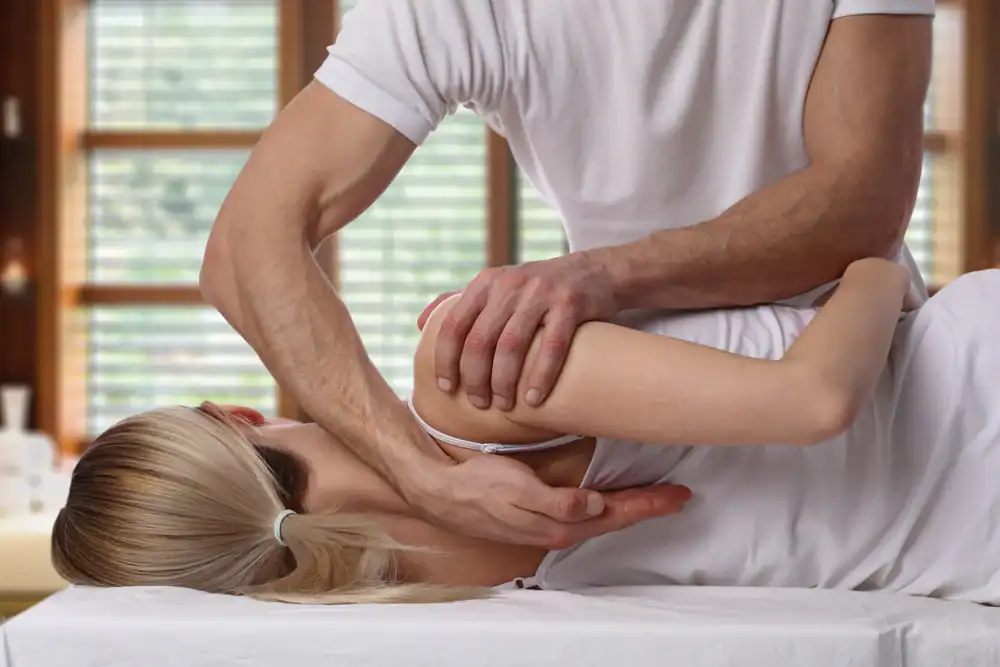
Chiropractic adjustments realign vertebrae and restore joint mobility. Spinal traction decompresses discs and relieves nerve pressure. They work differently, and we often use them together for better results.
An adjustment is a quick, targeted force applied to a specific joint. It improves movement and reduces irritation in the surrounding tissues. Traction is a sustained, gentle stretch that creates negative pressure inside your spinal discs. That negative pressure helps pull herniated disc material back into place and allows nutrients to flow into damaged areas.
Think of it this way: adjustments fix alignment problems, traction fixes pressure problems. If you’ve got a bulging disc pressing on a nerve, an adjustment alone might not be enough. Adding mechanical spinal traction benefits Liberty State Park patients by addressing the disc issue directly. We’ll evaluate your spine and recommend the combination of treatments that makes sense for your condition—not just what’s easiest or most familiar.
It depends on what kind of surgery you had and how your spine healed. Some post-surgical patients benefit from traction, others don’t. We’ll need to review your surgical history and imaging before making that call.
If you’ve had a fusion, traction might not be appropriate for the fused segment—but it could still help other areas of your spine that are compensating for the fusion. If you’ve had a discectomy or laminectomy, traction might be useful depending on how much disc material remains and whether you’re dealing with scar tissue or nerve adhesions.
Failed back surgery syndrome is real. It happens when surgery doesn’t relieve pain or when pain returns after an initial improvement. In those cases, non-surgical spinal decompression therapy in Liberty State Park offers an option that doesn’t involve another operation. We’ve worked with plenty of patients who’ve had surgery and are looking for a way forward that doesn’t involve going under the knife again. We’ll be straight with you about whether traction is likely to help or if your situation requires a different approach.