

Hear from Our Customers

You’re not looking for temporary relief. You want to sleep through the night without waking up in pain. You want to commute to work without that shooting pain down your leg. You want to pick up your kid or go for a run without wondering if your back will give out.
Spinal traction in Hoboken Yards gives your discs the space they need to heal. When we decompress your spine, we’re creating negative pressure that pulls herniated material back into place and allows nutrient-rich fluids to flow back into damaged discs. That’s not masking pain—that’s addressing why you hurt in the first place.
Most people notice a difference within two weeks. Not because we’re doing anything magical, but because your body is incredibly good at healing itself when you give it the right conditions. Clinical studies show 71-89% of patients get significant relief from mechanical spinal traction therapy—without the risks, costs, or recovery time of surgery.
Dr. Paul Roses has spent over 30 years helping people in Hudson County find relief without unnecessary drugs or invasive procedures. That’s not a tagline—it’s how we’ve built a practice that people trust and refer their friends to.
We’re located in Bayonne, easily accessible from Hoboken Yards via NJ Transit, PATH, or the Hudson-Bergen Light Rail. You’re dealing with enough already. Getting to treatment shouldn’t add to your stress.
Our approach is straightforward: use proven, FDA-approved technology to create the conditions your spine needs to heal, then support that healing with the right exercises and lifestyle adjustments. No gimmicks. No overselling. Just consistent results for people who’ve often tried everything else first.

Your first visit starts with a real conversation about what’s going on and what you’ve already tried. We’ll do a thorough exam to understand exactly where the problem is—whether it’s a herniated disc, spinal stenosis, degenerative disc disease, or a pinched nerve causing your sciatica.
If spinal traction is right for you, we’ll get you started on a computerized decompression table. You’ll be positioned comfortably while the table applies gentle, controlled traction to your spine. The technology is smart enough to avoid triggering muscle spasms, which is what makes this different from older traction methods that often made things worse.
Each session typically lasts 20-30 minutes. The table cycles through periods of decompression and relaxation, creating negative pressure that pulls herniated disc material away from nerves and allows healing fluids to flow back in. Most treatment plans run 5-6 weeks, with sessions several times per week initially, then tapering as you improve.
We’ll also work with you on exercises and adjustments to support your recovery and prevent future problems. The goal isn’t just to get you out of pain—it’s to keep you out of pain.

Ready to get started?
Spinal traction in Hoboken Yards isn’t a one-size-fits-all approach. We treat both lumbar issues—like sciatica, herniated discs in your lower back, and degenerative disc disease—and cervical problems causing neck pain, arm numbness, and headaches.
Your treatment plan includes the decompression sessions themselves, but also targeted exercises to strengthen the muscles supporting your spine. We’ll talk through what’s happening at work or in your daily routine that might be contributing to the problem. If you’re commuting into Manhattan every day, standing on crowded PATH trains, or sitting at a desk for hours, those patterns matter.
Hoboken Yards residents deal with unique stressors—long commutes, high-pressure jobs, active lifestyles that don’t leave much room for chronic pain. You need treatment that fits into your life, not the other way around. That’s why we focus on efficient sessions near public transit and practical advice you can actually use. We’re not going to tell you to quit your job or stop exercising. We’re going to help you do those things without pain.
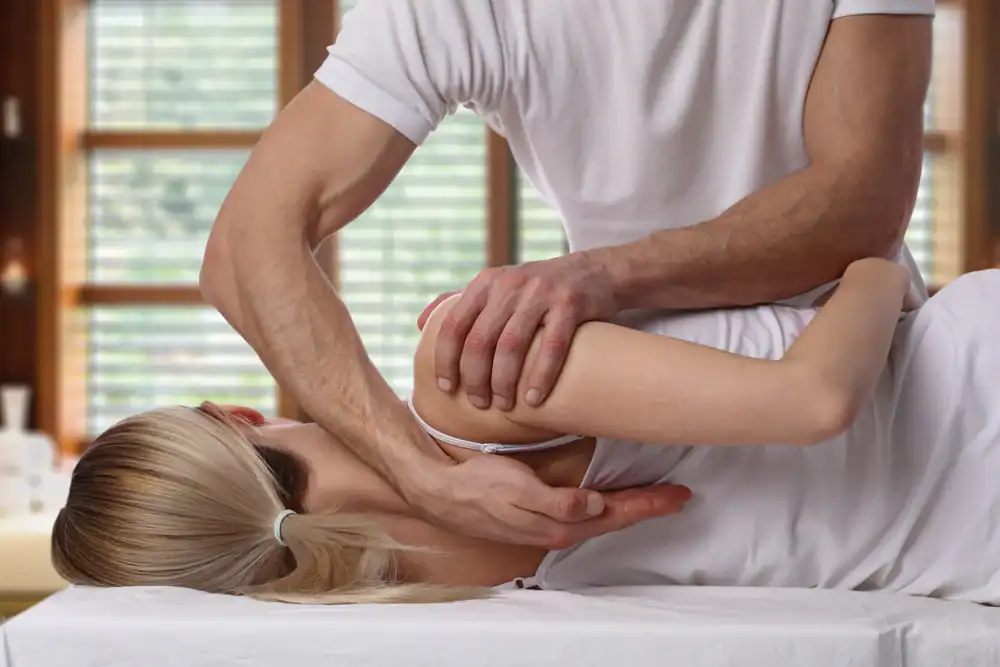
Physical therapy and chiropractic adjustments are valuable, but they work differently than spinal decompression therapy. PT focuses on strengthening muscles and improving flexibility around your spine. Adjustments realign vertebrae and improve joint mobility. Both can help, and we often incorporate elements of both into treatment plans.
Spinal traction does something neither of those approaches can do on their own: it creates negative pressure inside your discs. That negative pressure physically pulls herniated disc material back toward the center, away from the nerves it’s pressing on. It also creates a vacuum effect that draws water, oxygen, and nutrients back into degenerated discs.
Think of it this way: if you have a herniated disc pushing on your sciatic nerve, strengthening your core helps support your spine, and adjustments can improve alignment—but neither directly addresses the herniation itself. Mechanical spinal traction in Hoboken Yards targets the actual structural problem. That’s why we often see results in patients who’ve already tried PT or adjustments alone without getting the relief they needed.
Clinical research shows that 71-89% of patients with herniated discs get significant, lasting relief from non-surgical spinal decompression therapy. Those aren’t just feel-good numbers—they’re from peer-reviewed studies tracking patient outcomes over time. Many people who were told they’d eventually need surgery have avoided it entirely through consistent decompression treatment.
Surgery should be a last resort, not a first option. Spinal surgery comes with real risks: infection, nerve damage, failed back surgery syndrome (which affects 10-15% of patients), and a recovery period that can take months. It also costs $50,000 or more in many cases. For most people dealing with herniated discs, spinal stenosis, or degenerative disc disease, surgery isn’t necessary if you address the problem early enough with proven conservative treatment.
That said, there are situations where surgery is the right call—severe cases with progressive neurological damage, for example. But if you’re reading this because you’re in pain and want to avoid surgery, spinal traction gives you a legitimate, evidence-based option. The key is starting treatment before the problem progresses too far.
Most people notice improvement within the first two weeks of treatment. That doesn’t mean you’re completely healed in two weeks—it means the pain starts to decrease, you sleep better, you can move more freely. Full treatment protocols typically run 5-6 weeks, with the most intensive sessions happening in the first few weeks.
Here’s what that timeline looks like in practice: Week one, you’re getting familiar with the treatment and your body is starting to respond. Week two or three, you notice you’re not reaching for pain medication as often, or you make it through a workday without that constant ache. By week four or five, you’re doing things you’d stopped doing—bending over without bracing yourself, walking without limping, sleeping in positions that were impossible before.
Results last because we’re treating the underlying problem, not just symptoms. When disc material moves back into place and your discs rehydrate, that’s a structural change. Combine that with exercises that strengthen your core and adjustments to how you move through your day, and you’re setting yourself up for long-term relief. Some patients come back for occasional maintenance sessions, especially if they’re very active or have physically demanding jobs. But you’re not looking at endless treatment—you’re looking at a concentrated protocol that gets you better and keeps you better.
Spinal traction doesn’t hurt. Most people find it surprisingly comfortable—some even fall asleep during sessions. You’re lying on a padded table, either face-up or face-down depending on whether we’re treating your neck or lower back. The table is split into sections that move independently, creating the decompression effect.
You’ll feel a gentle pulling or stretching sensation as the table applies traction. It’s controlled and gradual—nothing sudden or jarring. The computerized system adjusts the force throughout the session, cycling between periods of decompression and relaxation. That cycling is important because it prevents your muscles from tensing up and fighting the treatment, which is what happened with older traction methods.
After your first session, you might feel a little sore—similar to how you feel after a good stretch or a massage. That’s normal and typically goes away quickly. By your second or third session, your body adapts and most people just feel relaxed during and after treatment. If you’re coming in with severe pain, you might feel immediate relief as pressure comes off compressed nerves. The key is that lumbar traction for sciatica in Hoboken Yards should make you feel better, not worse.
Spinal decompression therapy works best for conditions where disc problems or nerve compression are causing your pain. That includes herniated or bulging discs, which are probably the most common reasons people come in. When disc material pushes out and presses on nerves, you get pain, numbness, tingling, or weakness—often radiating down your arms or legs.
Sciatica responds particularly well to treatment. If you have that shooting pain down your leg, or numbness in your foot, or pain that gets worse when you sit or stand for too long, there’s a good chance a lumbar disc is compressing your sciatic nerve. Cervical traction for neck pain in Hoboken Yards addresses similar issues in your neck—herniated cervical discs causing arm pain, shoulder pain, or headaches.
We also treat degenerative disc disease (where discs lose height and hydration over time), spinal stenosis (narrowing of the spinal canal), and pinched nerves from various causes. The common thread is that these are all structural problems that benefit from decompression—creating space, reducing pressure, allowing healing. Spinal traction won’t fix everything—it’s not the right treatment for fractures, tumors, or certain inflammatory conditions—but for disc-related pain and nerve compression, it’s one of the most effective non-surgical options available.
Spinal decompression therapy is significantly less expensive than surgery, and often more cost-effective than months of medication or repeated injections that only provide temporary relief. Spinal surgery typically costs $50,000 or more when you factor in the procedure itself, hospital stays, anesthesia, and follow-up care. That doesn’t include lost wages during recovery, which can stretch for months.
A full course of spinal traction treatment costs a fraction of that. Many insurance plans cover spinal decompression therapy, especially when it’s medically necessary and you’ve tried other conservative treatments first. We’ll work with you to understand your coverage and what your out-of-pocket costs will be before you commit to treatment.
But cost isn’t just about the dollar amount—it’s about value. If you spend money on treatment that doesn’t work, that’s expensive no matter how little you paid. Non-surgical spinal decompression therapy in Hoboken Yards has a 71-89% success rate in clinical studies. You’re investing in an approach that has a strong track record of actually solving the problem, not just managing symptoms temporarily. For most people dealing with chronic back or neck pain that’s affecting their work, sleep, and quality of life, that’s worth a lot more than the cheapest option that doesn’t deliver results.