
Hear from Our Customers

You’re not looking for temporary relief. You want to bend down without wincing, sleep through the night, and stop planning your day around pain.
Mechanical spinal traction benefits Bergen Section residents by creating negative pressure in the discs of your spine. That pressure pulls herniated or bulging disc material back into place, takes stress off compressed nerves, and lets oxygen and nutrients flow back into damaged tissue. The result isn’t just less pain—it’s actual healing.
Most people dealing with sciatica, degenerative disc disease, or pinched nerves have tried other treatments that didn’t work. Spinal traction works differently because it addresses the root cause: the physical compression in your spine. When that pressure releases, inflammation drops, nerve irritation stops, and your body can finally do what it’s been trying to do all along—repair itself.
This isn’t about masking symptoms. It’s about creating the conditions your spine needs to heal so you can get back to the things that matter.
Dr. Paul Roses has been serving patients in Bergen County since earning his Doctor of Chiropractic degree in 1981. That’s over 40 years of hands-on experience treating real people with real spine problems—not just textbook cases.
Bergen Section residents deal with the same issues we see across the county: long commutes that wreck your lower back, physical jobs that wear down your spine, and the frustration of being told surgery is your only option. We’ve built our practice around offering something better.
At Roses Chiropractic, you’re not getting a one-size-fits-all approach. You’re getting state-of-the-art spinal decompression technology combined with the kind of clinical judgment that only comes from decades of practice. We’ve seen what works, what doesn’t, and how to adjust treatment when your body isn’t responding the way the textbook says it should.
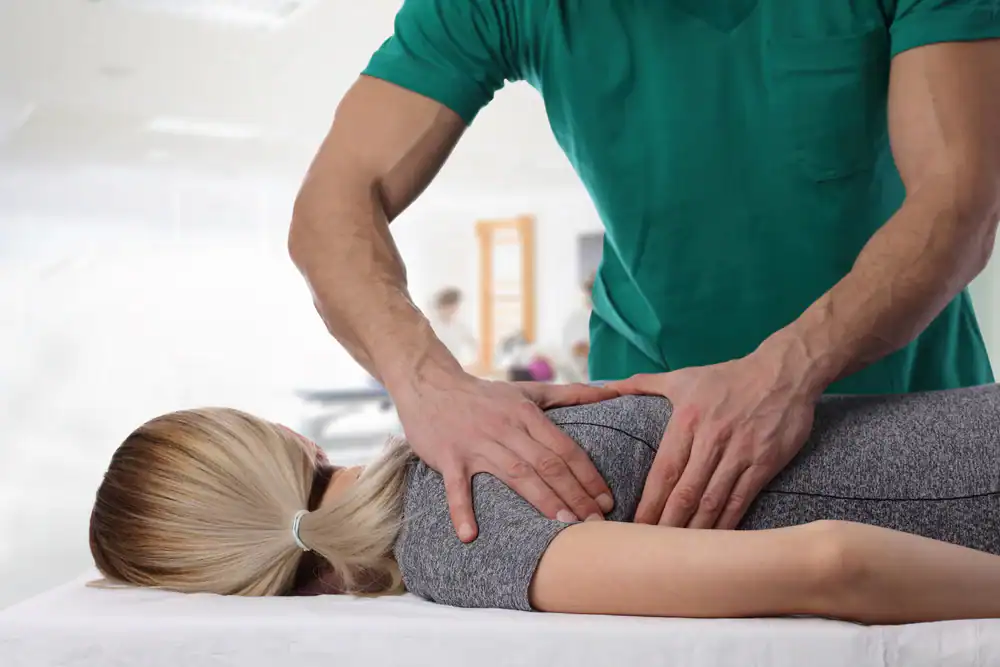
Spinal traction uses a computer-controlled table that’s split into upper and lower sections. You lie down, and the table applies precise, controlled force to gently stretch your spine. This isn’t a medieval rack—it’s carefully calibrated based on your specific condition, weight, and tolerance.
The stretch creates negative pressure inside your spinal discs. Think of it like a vacuum effect. Herniated disc material that’s been pressing on nerves gets pulled back toward the center where it belongs. Compressed spaces between vertebrae open up, giving pinched nerves room to breathe.
Each session typically lasts 20 to 30 minutes. Most patients feel a gentle pulling sensation—not painful, just different. Some people feel relief immediately. Others notice gradual improvement over several sessions as inflammation decreases and healing kicks in.
Between sessions, we often recommend specific exercises designed for your condition. These aren’t generic stretches—they’re targeted movements that reinforce what the traction is doing and help your spine hold the corrections we’re making. The combination of in-office decompression and at-home work gives you the best shot at lasting results.

Ready to get started?
Lumbar traction for sciatica in Bergen Section addresses one of the most common complaints we hear: shooting pain down your leg that makes it hard to walk, sit, or sleep. Sciatica happens when something in your lower back—usually a herniated disc or bone spur—compresses the sciatic nerve.
Cervical traction for neck pain in Bergen Section works the same way but targets your upper spine. If you’re dealing with neck pain that radiates into your shoulders or arms, numbness in your hands, or headaches that start at the base of your skull, cervical decompression can relieve the nerve compression causing those symptoms.
Both approaches are non-surgical and drug-free. You’re not covering up the problem with medication or risking the complications that come with spinal surgery. Research shows that mechanical traction significantly reduces pain and improves function in patients with lumbar disc herniation—often more effectively than conventional physical therapy alone.
Bergen County has one of the highest median ages in New Jersey, and with that comes a higher incidence of degenerative disc disease and spinal stenosis. You’re not alone in dealing with this, and you don’t have to just live with it. Spinal decompression gives your body a real chance to heal without going under the knife.
Most patients notice some level of improvement within the first few sessions, but real, lasting relief typically builds over several weeks. Your spine didn’t get this way overnight, and it won’t heal overnight either.
A typical treatment plan involves 15 to 20 sessions spread over 4 to 6 weeks. Some people feel significantly better after just a handful of visits. Others need the full course before they experience major changes. It depends on how severe your condition is, how long you’ve had it, and how well your body responds to decompression.
What matters more than speed is whether the relief lasts. We’re not just chasing short-term comfort—we’re trying to create structural changes in your spine that hold up over time. That takes consistency and patience, but it’s worth it when you can finally move without pain.
Spinal traction is one of the safest treatments available for disc-related pain. It’s non-invasive, doesn’t involve drugs, and carries virtually none of the risks associated with surgery or long-term painkiller use.
During treatment, you’ll feel a gentle pulling or stretching sensation. It shouldn’t hurt. If it does, we adjust the force immediately. The whole process is controlled by a computer, and we’re monitoring you the entire time to make sure you’re comfortable.
Some people feel a little sore after their first session or two, similar to how you might feel after a good workout. That’s normal and usually goes away quickly. Serious side effects are extremely rare, especially when treatment is done correctly by someone who knows what they’re doing.
Spinal traction is most effective for conditions caused by compression in your spine. That includes herniated discs, bulging discs, degenerative disc disease, sciatica, pinched nerves, foraminal stenosis, and facet joint problems.
If your pain is coming from a disc pressing on a nerve, or from vertebrae squeezing together and irritating surrounding tissue, decompression can help. It’s especially useful when you’ve tried other treatments—physical therapy, injections, medications—and they haven’t given you lasting relief.
That said, it’s not a cure-all. If your pain is coming from something other than spinal compression—like a muscle strain, arthritis in other joints, or a systemic condition—traction might not be the right fit. That’s why we do a thorough evaluation before recommending treatment. We’re not interested in selling you something that won’t work.
Chiropractic adjustments realign your spine and restore proper movement to joints that aren’t moving correctly. Spinal traction decompresses the discs and creates space between vertebrae. They’re different tools, and they work well together.
Think of it this way: if a disc is herniated and pressing on a nerve, an adjustment alone might not be enough to pull that disc material back into place. Traction creates the negative pressure needed to do that. Once the disc is decompressed and the nerve irritation calms down, adjustments help keep everything aligned and moving the way it should.
We often combine both approaches depending on what your spine needs. Some patients do better with traction first to reduce inflammation and pain, then adjustments to restore alignment. Others need ongoing traction alongside regular adjustments to maintain progress. It’s not one-size-fits-all.
Coverage varies depending on your insurance plan, but many policies do cover spinal decompression when it’s deemed medically necessary. We recommend calling your insurance provider to ask specifically about coverage for non-surgical spinal decompression therapy or mechanical traction.
When you call, ask whether chiropractic services are covered, if there’s a limit on the number of visits, and whether you need a referral. Some plans cover it fully. Others require a copay or apply it toward your deductible.
We can also provide you with the documentation and codes you’ll need to submit claims or get pre-authorization. If insurance doesn’t cover it, we’ll talk through your options. The goal is to make treatment accessible without putting you in a financial bind. Spinal surgery costs tens of thousands of dollars and comes with serious risks—traction is a fraction of that cost and far safer.
In many cases, yes. Spinal decompression is specifically designed as a non-surgical alternative for people dealing with disc problems, nerve compression, and chronic back pain. Research shows it can be highly effective, and many patients who were told they needed surgery find significant relief through traction instead.
That said, there are situations where surgery is necessary—like severe spinal instability, fractures, or cases where nerve damage is progressing rapidly. But for the majority of people dealing with herniated discs, sciatica, or degenerative disc disease, surgery isn’t the only option. It’s often not even the best option.
Up to half of spinal surgery patients experience a return of symptoms within months or years—a condition called Failed Back Surgery Syndrome. Traction gives you a chance to heal without that risk. If it works, you’ve avoided an invasive procedure, a long recovery, and the potential for complications. If it doesn’t, surgery is still on the table. You’re not closing any doors by trying a conservative approach first.