

Summary:
What Is TMJ and Why Does It Cause Headaches?
Your temporomandibular joint—the TMJ—is the hinge that connects your lower jaw to your skull, sitting just in front of each ear. It’s one of the most complex and frequently used joints in your body, responsible for talking, chewing, yawning, and every other jaw movement you make throughout the day.
When this joint becomes inflamed, misaligned, or overworked, you develop what’s called temporomandibular joint disorder, or TMD. The symptoms go way beyond jaw discomfort. Because the muscles that control your jaw are closely tied to those in your face, neck, and head, tension in one area radiates to others. That’s why TMJ dysfunction so often triggers headaches—especially tension-type headaches and cervicogenic headaches that originate from the neck.
The pain can feel like pressure around your temples, a dull ache at the base of your skull, or even sharp discomfort behind your eyes. Some people experience all of the above.

How Jaw Tension and Neck Misalignment Stack Together
Most people think of the jaw and neck as separate systems. They’re not. The muscles involved in jaw movement—like the masseter and temporalis—are directly connected to muscles in your neck and head. When your jaw is under stress, those neck muscles compensate. When your neck is misaligned, your jaw has to work harder to function properly.
Here’s where it gets interesting. The upper cervical spine—specifically the atlas (C1) and axis (C2) vertebrae—sits right at the base of your skull. These two bones support your head, facilitate movement, and play a major role in nerve communication between your brain and body. If they’re even slightly out of alignment, they can disrupt the nerve signals that control jaw muscles. That disruption leads to muscle imbalances, increased tension, and eventually, pain that shows up in your jaw, face, and head.
Research shows that neck pain is associated with TMD about 70% of the time. That’s not a coincidence. Your jaw and neck function as a connected system. Trauma to the upper neck—whether from an old injury, poor posture, or repetitive strain—can affect the temporomandibular joint or irritate the trigeminal nerve, which controls the muscles of your jaw. Over time, this creates a cycle: neck tension worsens jaw function, jaw tension increases neck strain, and headaches become a regular companion.
Forward head posture is one of the biggest culprits. Spending hours hunched over a phone or computer shifts your head forward, putting extra strain on both your neck and jaw. For every inch your head moves forward, it adds significant weight and pressure to your cervical spine. That extra load forces your jaw muscles to overcompensate, leading to clenching, grinding, and eventually, pain.
Signs Your Headaches Are Actually Coming from Your Jaw
Not all headaches are created equal. If your headaches are tied to TMJ dysfunction, they’ll usually come with other telltale signs. Recognizing the pattern can help you understand what’s really going on.
Jaw-related headaches often feel like a dull, aching pain on both sides of your face or around your temples. The discomfort might worsen when you chew, talk, or clench your teeth. You might notice that the pain intensifies throughout the day, especially during stressful moments or after activities that require prolonged jaw use—like eating a tough meal or chewing gum.
Clicking, popping, or grinding sounds when you open or close your mouth are red flags. These noises indicate that the disc inside your TMJ is shifting out of place. While occasional clicking without pain is fairly common and not always a concern, frequent or painful clicking suggests something’s wrong. Your jaw might also feel stiff or lock up, making it difficult to open your mouth fully.
Tenderness around your jaw, temples, or the muscles in your face and neck is another sign. You might feel soreness when you touch these areas or notice that your jaw muscles feel tight even when you’re not actively using them. Some people also experience ear pain, ringing in the ears, or a feeling of fullness in the ear canal—all because the TMJ sits so close to the ear.
Headaches that start at the base of your skull and radiate forward are often cervicogenic, meaning they originate from the neck. If your headaches follow this pattern and you also have jaw symptoms, there’s a strong chance your upper cervical spine is involved. Neck stiffness, shoulder tension, and difficulty turning your head are additional clues that your jaw pain and headaches share a common source.
Want live answers?
Connect with a DR Roses expert for fast, friendly support.
How Upper Cervical Chiropractic Care Addresses Both Issues
Upper cervical chiropractic care focuses on the alignment of the top two vertebrae in your neck—the atlas and axis. These bones are uniquely positioned at the base of your skull, and even small misalignments here can have widespread effects on your jaw, head, and overall nervous system.
The approach is precise and gentle. Unlike traditional chiropractic adjustments that might involve forceful twisting or cracking, upper cervical care uses targeted, controlled movements to restore proper alignment. The goal is to reduce nerve interference, relieve muscle tension, and allow your body to function the way it’s supposed to. When your upper cervical spine is aligned, the pressure on your jaw joint decreases, muscle imbalances correct themselves, and the cascade of tension that leads to headaches starts to unwind.
This type of care doesn’t just mask symptoms. It addresses the root cause, which is why the results tend to last longer than temporary fixes like pain medication or mouthguards.
What Happens During an Upper Cervical Assessment
If you’ve never been to an upper cervical chiropractor, the process might surprise you. It’s thorough, precise, and built around understanding your specific alignment issues.
The first step is a detailed consultation. We’ll ask about your symptoms—when they started, what makes them better or worse, and whether you’ve had any injuries or accidents that might have affected your neck. We’ll also ask about your daily habits, posture, and stress levels, since all of these factors can contribute to misalignment.
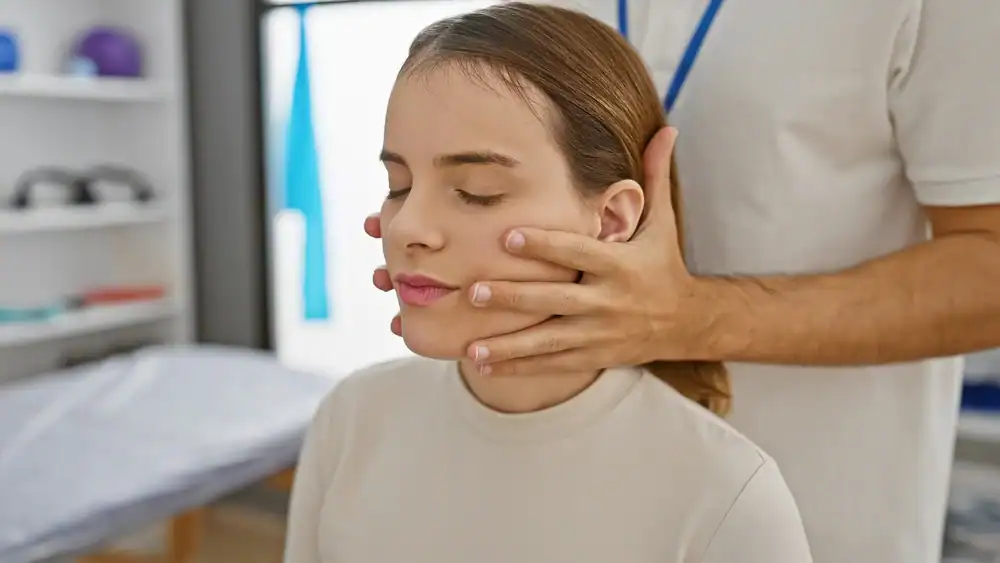
Next comes the physical examination. We’ll assess your posture, check the range of motion in your neck and jaw, and palpate the muscles around your upper cervical spine and TMJ to identify areas of tension or tenderness. We’re looking for signs of misalignment and how your body is compensating for it.
In many cases, X-rays or other imaging are used to get a clear picture of your upper cervical alignment. These images allow us to see exactly where the misalignment is and how severe it is. This precision is key—upper cervical adjustments are highly specific, and knowing the exact angle and direction of the misalignment ensures the adjustment is both safe and effective.
Once the assessment is complete, we’ll create a personalized treatment plan. This plan might include a series of gentle adjustments to correct the misalignment, along with recommendations for exercises, posture improvements, or lifestyle changes that support long-term alignment and reduce the risk of future issues.
The adjustments themselves are gentle and controlled. There’s no forceful twisting or popping. Instead, we use precise pressure to guide the vertebrae back into their proper position. Many people are surprised by how subtle the adjustment feels—but the results can be significant. As your upper cervical spine realigns, nerve communication improves, muscle tension decreases, and the symptoms that brought you in start to resolve.
Why This Approach Works When Other Treatments Don't
If you’ve already tried mouthguards, over-the-counter pain relievers, or muscle relaxers without lasting relief, you’re not alone. These treatments can help manage symptoms temporarily, but they don’t address the underlying problem. A mouthguard might prevent you from grinding your teeth at night, but it won’t fix the misalignment that’s causing your jaw muscles to tense up in the first place. Pain medication might dull the ache, but it doesn’t restore proper function to your jaw or neck.
Upper cervical chiropractic care works differently because it targets the root cause. Misalignments in the upper cervical spine disrupt nerve signals and create muscle imbalances that affect the jaw. By correcting those misalignments, you’re not just covering up symptoms—you’re restoring the body’s ability to function properly. That’s why many people experience relief from both jaw pain and headaches after upper cervical adjustments, even when other treatments have failed.
Another reason this approach is effective is that it’s holistic. We’re not just looking at your jaw or your neck in isolation. We’re assessing how your entire musculoskeletal system is working together. Tight jaw muscles can pull on the neck. Poor posture can strain the jaw. Stress can cause clenching, which worsens both. Upper cervical care addresses all of these factors, not just one piece of the puzzle.
The results tend to be long-lasting because the treatment focuses on alignment and function, not just symptom relief. Once your upper cervical spine is properly aligned, your body can maintain that alignment more easily—especially if you follow through with any recommended exercises or lifestyle adjustments. Many people find that their symptoms improve significantly after just a few adjustments, and with ongoing care, they’re able to prevent flare-ups and maintain better overall function.
It’s also worth noting that upper cervical chiropractic care is non-invasive and drug-free. There’s no surgery, no injections, and no reliance on medication. For people who want a natural approach that works with their body’s own healing processes, this type of care offers a compelling alternative to more aggressive treatments.
Finding Relief for TMJ Pain and Headaches in Hudson County, NJ
If jaw pain and headaches have been holding you back, understanding the connection between your upper cervical spine and your TMJ is the first step toward real relief. The symptoms you’re experiencing—clicking, tension, pain—aren’t random. They’re signs that something in your musculoskeletal system is out of balance, and that imbalance can be corrected.
Upper cervical chiropractic care offers a non-invasive, evidence-based approach that addresses the root cause of both TMJ dysfunction and headaches. By restoring proper alignment to the top of your spine, you’re giving your body the foundation it needs to function without pain. The results speak for themselves: reduced tension, fewer headaches, better jaw function, and a return to the activities you’ve been avoiding.
If you’re in Hudson County, NJ and ready to explore a solution that actually works, we’re here to help. With decades of experience and a focus on personalized, patient-centered care, we understand how to identify and correct the misalignments that are causing your pain. You don’t have to live with jaw pain and headaches. Reach out and take the first step toward lasting relief.